The fleeting glimpse he had gained of a young fair-haired woman through the half-opened doorway to the inner sanctum of the Jade Phoenix had nagged at the detective. Of late, Chinese camps were acquiring a reputation among certain of the Wimmera youth for the unwholesome diversions they afforded. Alluring as these places may have appeared to some of tender years, especially to the wayward and unchristian among them, they were commonly reckoned iniquitous dens.
One sixteen-year-old girl undertook a week-long, hundred-and-forty-mile journey from her home at Ballan, only fifty miles out of Melbourne, in quest, so she said, of a situation at Horsham. Playing upon the compassion of publicans she visited along the way, she obtained overnight board and a shilling here and there to buy meals on the road. Her real destination turned out, after a circuitous detour, to be the house of a suspect European woman at the Deep Lead Chinese camp, where she took up quarters.
Hearing news of her arrival, Constable Hillard went out to interview her and, disbelieving her story, gave her notice to quit. When she spun him more yarns, attempting to fob him off and contrive to remain, he brought her up on vagrancy before the Stawell bench. The magistrate discharged her after a sound admonition, and the next thing you know, off she went to live with a Chinese gardener at Doctor’s Creek. Not a week later, Hillard ferreted out a second one, not even sixteen, who deserted her family home for the camp, because, she explained, of her father’s cruelty and the lack of comforts at home.
This same girl was already known to the police, having recently preferred a rather serious charge against a young man from Stawell, which he was to answer at the next General Sessions. There was something wrong in the state of Denmark, the magistrate informed Forster in writing, when girls such as these sought the association of a Chinese camp, proposing that if an example were made of those who harboured them there, it might prove a deterrent.
Dark-eyed Miss Chan – Forster addressed her as such, for the woman’s unassailable poise checked in him any impulse he may have felt to assume the familiarity of ‘Lili’ – acknowledged, when he called on her the next day, that she had indeed engaged a young white woman as a waitress and housekeeper, and he was welcome to meet her; she was just now in the back garden feeding the chickens. This he did. No ragamuffin, but a strapping, jocular red-haired Irish colleen of nineteen she was, radiating goodwill and health, and obviously unsoiled by the demons of opium and rum.
Perhaps, Forster reflected, the growing distaste for the Chinese immigrant as ignorant pagan and filthy barbarian had little basis beyond plain bigotry and the biased reporting of the newspapers. There was the old enmity of rival gold-miners, resulting in thuggery and atrocity at Buckland River, Lambing Flats, and as close by as Ararat itself, less than twenty years ago.
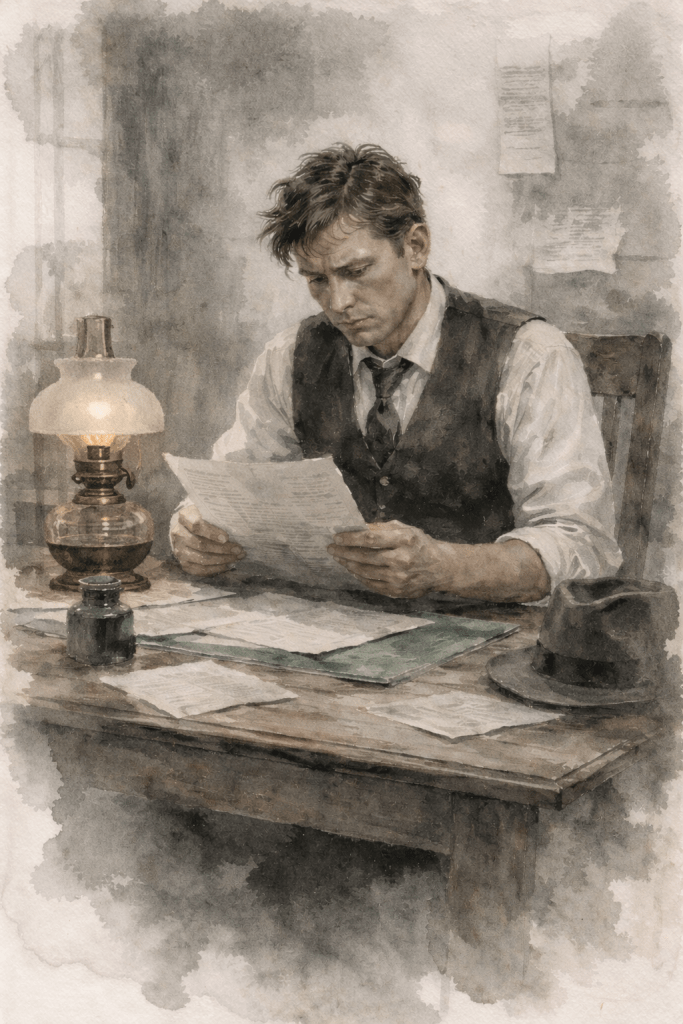
Disgruntled unionists were, he presumed, at the root of the more recent political pressure to exclude Chinese sailors and stokers from working on steamers trading to and about the Australian ports. Invariably cheerful and obliging Chinese fishmongers and hawkers of all sorts of useful wares had now become the targets of insult and violence from many working-class Australians, owing to a general animus against the Australian Steam Navigation Company, which had been hiring Chinese. Most unworthy of a great, free people. And what did this rabble know of China, a country they so despised? Most likely little, if anything, more than he did.
If Lili Chan and his other new acquaintance, the mysterious Mow Fung – full of surprises he was, publican-cum-priest of some sort, evidently – were a measure, the Chinese had much to contribute to this country, and especially to a far-flung region like this. In idle moments, he found his thoughts wandering in their direction – and in Lili Chan’s, he cautioned himself, rather too often. He could entertain not the slightest likelihood that such a woman might have any possible interest in a crusty, ill-oiled bachelor such as he, even despite her situation, which was a morally tenuous one in the eyes of most. He could only wonder at what had brought her here, to the middle of nowhere, when clearly her talents and charms – that trace of a cultured American accent – would have fitted her for a rewarding position in Melbourne, at least. Enigma indeed. Her skin was of such a subdued olive hue, her features of such subtlety, that she might well pass for white, given the right circumstances and Western attire. Now, there he went, off again on mad imaginings …
It was in the midst of reflecting on her features that he recalled having paused, some months earlier, on an item in the weekly Victorian Police Gazette – one that had caught his eye by departing from the usual notices concerning people wanted for questioning, prisoners discharged from gaol and the like. He retrieved the number from the bottom of a tea chest packed with old copies of the journal in a corner of the storeroom by the stables.
“The whereabouts of a missing heiress are sought. The Cantonese woman, of Anglo-Chinese descent, has been traced from the United States, where she spent several years after leaving China, to the Colony. Information has come to light concerning her entitlement to a handsome fortune, of which she is not likely to be aware. Contact should be made with Chief Commissioner Chomley.”
The memory of the notice clung to him. The next day he rode to the Jade Phoenix, and presently laid the gazette before Miss Chan. The proprietress looked up from the page and bathed the detective in the cool liquid of her unblinking gaze.
“I was not aware, Sergeant, that you took such an interest in the minutiae of my appearance and background. Your detective’s training, no doubt. The innocent Miss Finnegan discovered in the employ of this humble if disreputable establishment – that speaks well for your skill. Are you ever able to separate yourself from your duties as a … copper?”
Mincing by their armchairs just as her name was mentioned, the lusty Molly Finnegan, playing at saucy Irish soubrette, flourished her feather duster and made her exit.
“Have you ever thought of entering the gambling line? Your attention to detail and, I suspect, your talent for handling disturbances would be invaluable,” Lili Chan said.
“I dare say the references would prove difficult.”
“On the contrary, Sergeant. In certain establishments, a good blow and a discreet silence recommend a man admirably.”
“I suspect I should make a very poor ornament to such a profession.”
“A poor ornament may still have his uses,” Lili said.
She lowered her eyes to the gazette again. “In some houses, usefulness is the rarer quality.”
He watched her a moment. “Miss Chan, does this notice mean anything to you?”
“My origins are too humble, I fear, to promise any inheritance beyond poverty and woe; but if it will put your mind at ease, you may enquire with the Chief Commissioner on my behalf.” What harm, she reflected, could come of agreeing to so much, when to refuse would only raise suspicion.
• • •
“Where were we?” said the voice of Huish-Huish, accompanied by the gentle jangle of a consecrated shamanic rattle, amid the light aroma of incense.
“I recall, the zither.”
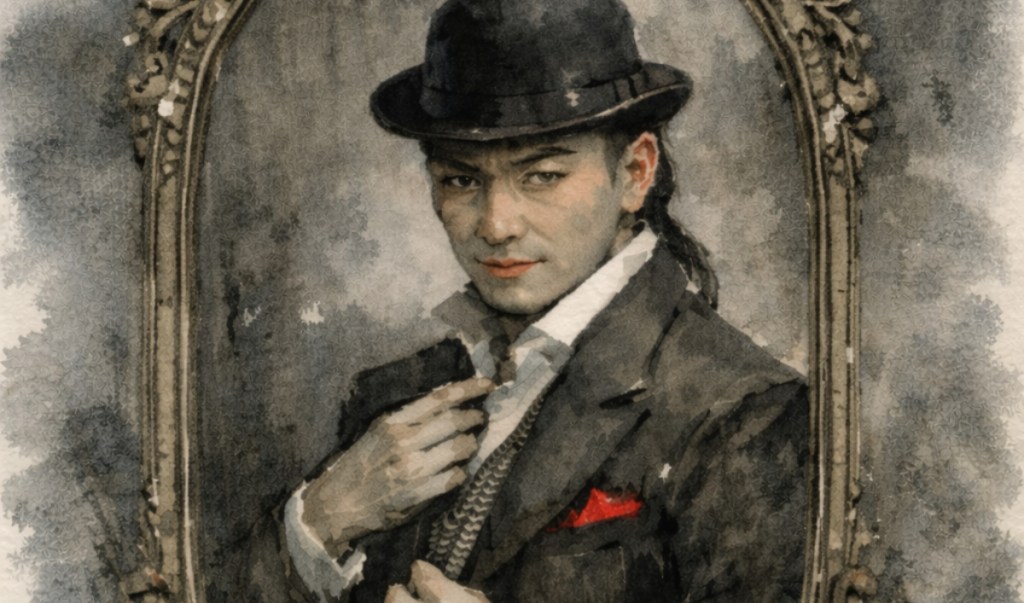
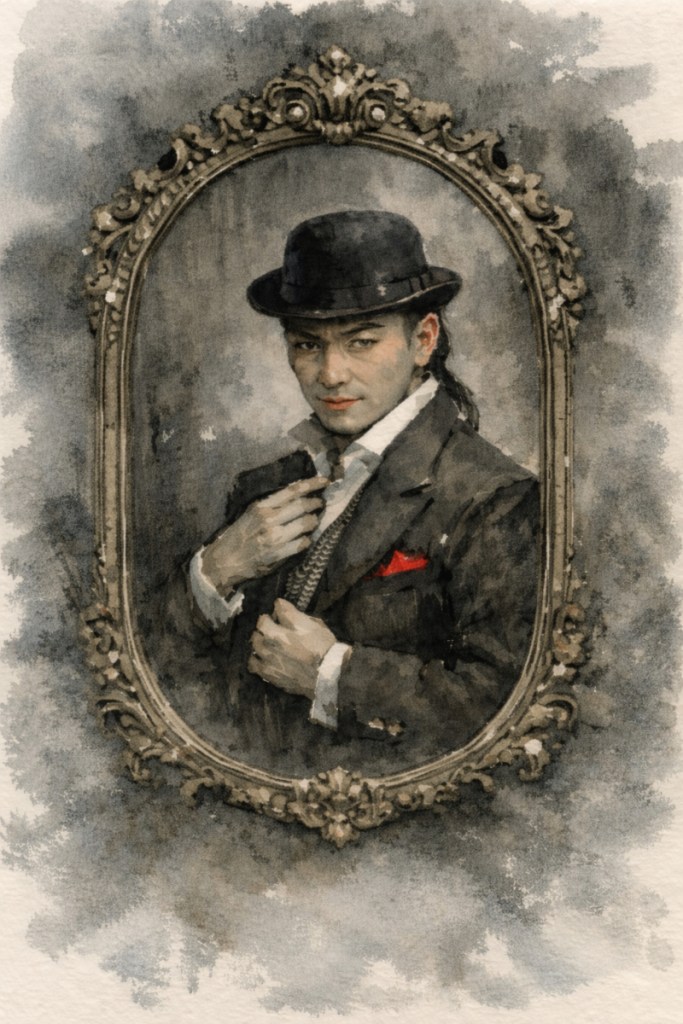
After Fang Jing Dock’s tong began putting some serious pressure on Ah Toy, unassailable though she had been for the past twenty years, she sold up and moved to an undisclosed destination. With no choice in the matter, Chan Lee Lung became his mistress, and he moved in with her. It had been clear for some time that despite his dandyish affectations he was an enforcer – a so-called highbinder or hatchetman – for the Hing San Fong Tong, passing publicly under the name Society of the Mind Abiding in Tranquility and Freedom. Whenever he went out to conduct business of a certain kind, he would don chain mail beneath his dress shirt, tightly bind his queue up underneath his derby, to keep it from being seized in any rough stuff, and conceal his butterfly swords beneath the back of his jacket, all the while preening himself before his ornate mirror.
One evening he and a henchman returned to the house with another Chinese man unknown to her. The three repaired to a room that Fang had commandeered as his music studio, where he also kept a small vault containing the most precious valuables of his tong: a handful of flawless diamonds of inestimable value. Before long the sound of Fang’s Viennese zither could be heard filtering out, a fantasia on Il Trovatore. She went to her bed and fell into a deep sleep, to be shaken awake by Fang.
“Go and see what you think of the new centrepiece in the studio and tidy up a bit in there. Fat Louis and I have some business to discuss, then we’ll get things back in order.”
The third man sat slumped sideways in a wicker chair, his sightless eyes bulging wide, his tongue lolling from the contorted blue face. Around the throat, biting deep into the flesh, was a garrote fashioned from a metal contrabass string, carving what looked like a raspberry-jam-filled rut. She sank silently onto a chair and took stock of her future, which was clearly what Fang had intended.
When she entered the sitting room, Fang and Fat Louis were sipping pink champagne, and nibbling on Roquefort.
“Nice tang,” Fat Louis said. “King of cheeses.”
“Butyric acid caused by the fungus Penicillium roqueforti,” Fang said. “Legend has it that the cheese was discovered when a youth herding his sheep on Combalou Mountain, partook of his lunch of bread and ewes’ milk curds. Seeing a beautiful girl in the distance, he ran off vainly in pursuit of her, leaving behind his flock and his lunch. When he revisited the spot a few months later, the mold had transformed his plain peasant repast into this delectable bonne bouche.”
Then looking up at Chan Lee, “That was quick. Did he have anything to say?”
“He thought the end was the best part,” she said in a measured tone.
“The critics be damned, I say!”
The two men fell about.
Chan Lee looked at Fang steadily.
“There is no medicine for vulgarity,” she said, taking up the champagne flute on the table for Fat Louis to fill. No way out of this but forward; she must watch for an opportunity out of the corner of her eye.
“I told you she would have what it takes,” Fang said. “You can tell a woman of breeding. And she knows as well,” lending a malevolent emphasis, “that the song of a dead bird is a sad one.”
One thing was certain: to run to the police, if the chance arose, would be a waste of time and might well invite a fatal reprisal from Fang’s cohorts, were he to be put away, which in fact was unlikely, since the law tended to stay out of Chinese matters when they did not directly affect anyone else. For the time being she played the dutiful concubine to Fang. As he wished, she took on the mantle of his wife, at least in the view of the public, though the union was not sanctioned by either a Chinese or American ceremony. As an enforced confidante of the highbinder, who often boasted to her of his crimes, she was ever more ensnared in the strands of his fate, becoming, in the parlance of the courts, an accessory after the fact, and thus acquiring the guilt of his felonies.
• • •
In the Deep Lead Joss House, Chan Lee sorted through fifty yarrow stalks as Huish-Huish had taught her, occasionally raising them to her nose to savour the herb’s unique aroma. Huish-Huish counted off the number of stalks remaining between Chan Lee’s fingers at each stage, and the procedure was repeated six times to determine the lines of the session’s hexagram: Biting Through – judgement, punishment, discernment. None of the lines signifies guilt, though a little harm may be done. On the whole, an optimistic sign: though there may be trouble at the beginning, one bite’s through. Justice is administered, punishments exacted. If you lose your teeth, you lose your grip.
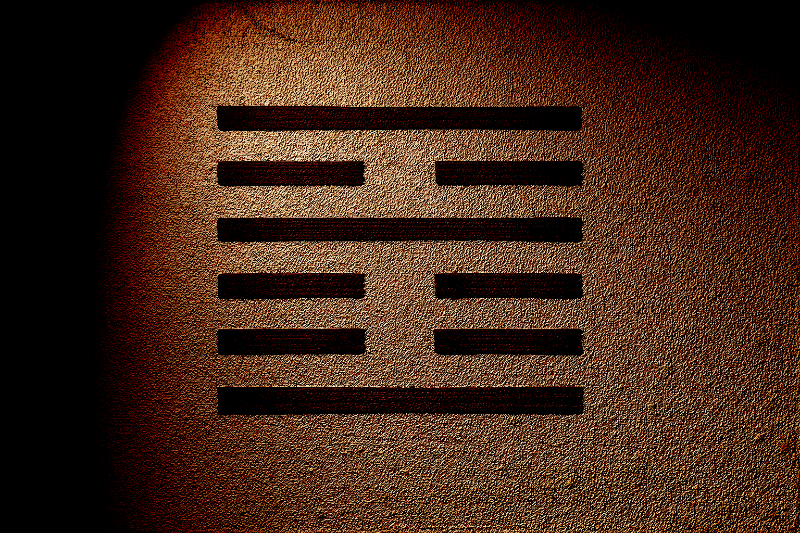
“Cutting … gnawing … chewing …” Huish-Huish said. “A picture of the mouth. You bite through, get your teeth into something.”
“Cutting.” Chan Lee intoned the word, the eye of flesh closing, the inward gaze of the eye of her contemplation floating back in time. “If you chew dried salt meat, you’ll find yourself poisoned.”
Knowing not whether for good or ill, she decided that her best move would be to gratify him by seeming to take pleasure in what he did – deeds she found appalling and sickening, lacking as she did the same innate relish for inflicting misery that she now knew to be his. She did not stop to ask whether repeated exposure would inure her to his evils; whether, by touching black paint, her fingers too might be blackened. One thing was sure: there was no iota of love in her heart for the man who had become her ostensible protector. Fang was a man in whose arid heart love for any other creature had never taken root. As time went by, familiarity became contempt, and instead of any initial ardour, the possession of one so desired by others only fed in him a seething sadistic scorn that grew stronger by the day. This scorn he expressed in a ritual of cruelty, a proxy for the conjugal act, with strangulation and cutting for caresses. Sometimes his fervent passions quite got the better of him, and it was on the cards that he would murder her before too much longer.
Deadened by morphia, a living ghost of herself, she faded from the view of her admirers, most of them so addled that, appeased by a surfeit of available substitutes, they forgot her before long – or rather, recalled only the myth of that bewitching peony of the Barbary Coast, and not the flesh-and-blood woman. Most. An up-and-coming stage magician, Chee Ling Qua, formerly of the ‘Court of Peking’ troupe, was presently engaged at the Bella Union – fire-breathing, sword-swallowing, linking rings, disappearing rabbits and chickens, the works. He could materialize a great big glass bowl full of goldfish out of thin air. A gentle soul, meek and mild, far from a hero come to save the day, but she credited his avowals of undying love and knew that he possessed, if not great means, at least some paste gems of amazing fire and brilliance for use in his performances.
He was also on close terms with the most highly skilled and secretive Celestial apothecary in the city, whom he commissioned to create incendiaries and other chemical substances necessary for his stage effects. Chan Lee contrived to steal some time alone with the magician in his dressing room one evening when Fang was occupied with business; though he despised her he was as possessive of her as ever. He was much preoccupied these days, his gang embroiled in a war with a rival tong over the exclusive right to operate fan tan games and lotteries in the Barbary Coast. As it happened, Ling Qua was on the verge of pulling up stakes and setting off abroad with his own small troupe. Chan Lee should come with them at any cost, he begged, as she rearranged his robes. She could work as his magician’s assistant, peppering up the act with an arabesque here and a shimmy there … she’d pack them in.
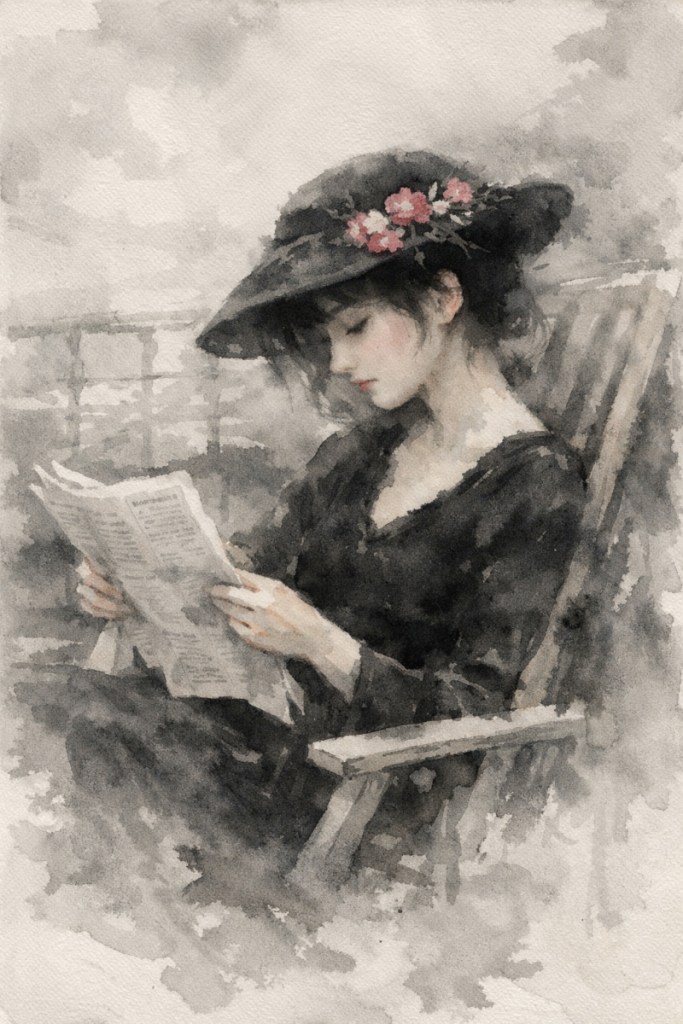
A month later, the Australasian and American Mail Steamship Company’s City of Melbourne headed towards the Golden Gate, its passenger list including a modest troupe of performers, a mixture of Chinese and Europeans, among them the sylphlike Suzon Chabrier formerly of the Folies Bergère, an inconspicuous brunette who, on closer inspection, as the customs official who processed her had remarked to his colleague, had a charming and subtle nuance of face that could almost pass as oriental. While her fellow passengers lined the decks for their last glimpses of Angel Island, Yerba Buena, and Alcatraz, Miss Chabrier reclined on a deckchair in a discreet black velvet dress, her chapeau decorated with simple field blossoms and pushed forward over her head, perusing the Daily Alta California. She was particularly attentive to an article on page two, which reported on the sudden death of a despised highbinder for the Hing San Fong Tong, one Fang Jing Dock. A photograph of the victim’s corpse had sunk into grainy shadow, which was perhaps for the best, the report ran, since readers would have found the contorted face and twisted limbs most distressing. Suzon applied her reading magnifier to the image, then read on. A note found on the corpse showed that he had expected death by rival hatchetmen.
The note read: ‘Soon I must go to my fathers. Whether by the broad bladed axe or by dust of the dragon’s tail, it matters not. This I know. I go. I commend my spirit to Buddha, the all-wise and merciful.’
“A searching examination of the body,” the reporter continued, “failed to reveal any marks of violence. It is believed that by ‘dust of the dragon’s tail,’ Fang referred to some potent oriental poison. From his expression of agony, it appeared he had been administered sufficient of the substance, whatever it was, to kill an hundred men. Police arrested another highbinder named Fat Louis, who is well-known to have been an associate of the dead man; but it has come out that he was employed surreptitiously by the rival tong in question, the See Yups. The dead man, who will not be missed, was under suspicion for a number of murders of fellow Chinese. A woman with whom he cohabited, once well-known around the gambling dens and houses of ill-repute, has not been seen for several months, and is now added to a long list of the presumed victims of the deceased ne’er-do-well.”
From the draft novel Stawell Bardo © Michael Guest 2026
 Furin Chime Press™
Leave a comment