A certain Brother Olivier Maillard’s sermon is recalled by a Capuchin monk, who describes it as “macaronic“. If macaroni is a pasta made without eggs, then what kind of text or speech could this be? One without a binding element such as proforms and antecedents? That could prove rather difficult to find any meaning in, so, luckily, this is not the case. The word actually means a speech or text in two languages, in this case probably vernacular mixed with Latin. But don’t worry, we are reading another monk’s recollection of it, so hardly any Latin at all, thank God.
The sermon is also described as “edifying“, but what moral or intellectual instruction would monks find edifying in a short tale about five ladies from Picardie, Poitou, Touraine, Lyons, and Paris? Perhaps it depends on which particular religious order these other monks had belonged to, but monks in France were Catholic, and Catholic monks were supposed to be “chaste“. No wonder many of them had to observe routines that began at almost ungodly hours and continued all day, leaving little time for any minds to wander… Little wonder also that sermons sometimes, if chastely indirectly, got into the realm of desires and what to do about them.
The Procuress (1622), Dirck van Baburen
Without giving away the ending of this tale, it mentions what Anatole France refers to as a “go-between” or a “procuress“. How difficult finding a partner, or partners, must have been in the dark ages before Tinder and Snapchat? Just imagine: a knight sees five attractive ladies in church (“Sacré bleu, zese are corquers!”) and wants to find out if any of them might be interested.
Think about it. No even halfway noble knight lusting after any members of the congregation could skulk around in front of the church, trying to chat them up (“Bon Jour, jolie femme, ow’z about…”), lest the priest should see or hear this. Nor could he hop onto his steed and try to follow any of them home for a bit of knightlystalking. So what could he do? Bribe the priest to slip saucy notes into their Bibles? Hardly.
Quite difficult, such knightly plight must have been. So what do you do? In this case, the knight engaged said “go-between” to find out if any of the alluring ladies might have been interested, employing a reward to attract their interest. I hope you enjoy reading the edifying result of the hopeful knight’s endeavour.
Five Fair Ladies of Picardy, of Poitou, of Touraine, of Lyons, and of Paris
NE day the Capuchin, Brother Jean Chavaray, meeting my good master the Abbé Coignard in the cloister of “The Innocents,” fell into talk with him of the Brother Olivier Maillard, whose sermons, edifying and macaronic, he had lately been reading.
“There are good bits to be found in these sermons,” said the Capuchin, “notably the tale of the five ladies and the go-between…” You will readily understand that Brother Olivier, who lived in the reign of Louis XI and whose language smacks of the coarseness of that age, uses a different word. But our century demands a certain politeness and decency in speech; wherefore I employ the term I have, to wit, go-between.
“You mean,” replied my good master, “to signify by the expression a woman who is so obliging as to play intermediary in matters of love and love-making. The Latin has several names for her,—as lena, conciliatrix, also internuntia libidinum, ambassadress of naughty desires. These prudish dames perform the best of services; but seeing they busy themselves therein for money, we distrust their disinterestedness. Call yours a procuress, good Father, and have done with it; ’t is a word in common use, and has a not unseemly sound.”
“So I will, Monsieur l’Abbé,” assented Brother Jean Chavaray. “Only don’t say mine, I pray, but the Brother Olivier’s. A procuress then, who lived on the Pont des Tournelles, was visited one day by a knight, who put a ring into her hands. ‘It is of fine gold,’ he told her, ‘and hath a balass ruby mounted in the bezel. An you know any dames of good estate, go say to the most comely of them that the ring is hers if she is willing to come to see me and do at my pleasure.’
“The procuress knew, by having seen them at Mass, five ladies of an excellent beauty,—natives the first of Picardy, the second of Poitou, the third of Touraine, another from the good city of Lyons, and the last a Parisian, all dwelling in the Cité or its near neighbourhood.
“She knocked first at the Picard lady’s door. A maid opened, but her mistress refused to have one word to say to her visitor. She was an honest woman.
“The procuress went next to see the lady of Poitiers and solicit her favours for the gallant knight. This dame answered her:
“‘Prithee, go tell him who sent you that he is come to the wrong house, and that I am not the woman he takes me for.’
“She too is an honest woman; yet less honest than the first, in that she tried to appear more so.
“The procuress then went to see the lady from Tours, made the same offer to her as to the other, and showed her the ring.
“‘I’ faith,’ said the lady, ‘but the ring is right lovely.’
“‘’T is yours, an you will have it.’
“‘I will not have it at the price you set on it. My husband might catch me, and I should be doing him a grief he doth not deserve.’
“This lady of Touraine is a harlot, I trow, at bottom of her heart.
“The procuress left her and went straight to the dame of Lyons, who cried:
“‘Alack! my good friend, my husband is a jealous wight, and he would cut the nose off my face to hinder me winning any more rings at this pretty tilting.’
“This dame of Lyons, I tell you, is a worthless good-for-naught.
“Last of all the procuress hurried to the Parisian’s. She was a hussy, and answered brazenly:
“‘My husband goes Wednesday to his vineyards; tell the good sir who sent you I will come that day and see him.’
“Such, according to Brother Olivier, from Picardy to Paris, are the degrees from good to evil amongst women. What think you of the matter, Monsieur Coignard?”
To which my good master made answer:
“’T is a shrewd matter to consider the acts and impulses of these petty creatures in their relations with Eternal Justice. I have no lights thereanent. But methinks the Lyons dame who feared having her nose cut off was a more good-for-nothing baggage than the Parisian who was afraid of nothing.”
“I am far, very far, from allowing it,” replied Brother Jean Chavaray. “A woman who fears her husband may come to fear hell fire. Her Confessor, it may be, will bring her to do penance and give alms. For, after all, that is the end we must come at. But what can a poor Capuchin hope to get of a woman whom nothing terrifies?”
Notes
thereanent: concerning that matter
Note on France’s text and the illustrations: Translation of The Merrie Tales of Jacques Tournebroche is by Alfred Allinson (London: John Lane, Bodley Head, 1909). Woodcuts by British artist Marcia Lane Foster (1897–1983) have been confirmed as Public Domain Mark 1.0 (free of known restrictions under copyright law). Acknowledgement to David Widger for his digital edition.
France is of course not the only nation to have fought wars, harboured grudges and perpetuated stereotypical slurs against those whom we in Australia call the “Poms”. I needn’t even mention the Scots. Despite connections with the Royal Family, Germans have of course also had a somewhat difficult relationship with their fish and chip eating cousins across the channel, despite a good many of them being Germanic Anglo-Saxons.
There’s a scornful saying in German that about sums the relationship up: “Schief ist English und English ist modern” (Crooked is English and English is modern). These days not as well known as it used to be, it supposedly stems from English soldiers having worn their berets the French way, “crooked”, as opposed to Germans, who had preferred to wear their piked helmets straight.
Clearly, two very different types of people, but have you ever tried to wear a piked helmet crooked? It was often said in Germany when somebody got something wrong or made something very crooked, implying that the English always do that but that it’s not actually so bad. You wouldn’t suspect that such an almost semi-benevolent backhanded compliment as a national slur could ever have heralded such disgusting animosity that it led to bombs and V1 and V2 rockets killing countless innocent civilians or the total destruction of Dresden and many other German cities. After the war, 1970s wannabe-cool left leaning “intellectual” Germans wore their French berets the same way for which their fathers had belittled the English. The old saying became less common as those who liked using it slowly died off.
Back to our friends, the French, however, closer to the days when English longbows or French heavy cavalry decided the outcome of wars.
Joan of Arc at the Coronation of Charles VII (1854), Jean-Auguste Dominique Ingres
While Normans from France had stomped, slashed and bossed their way all over Anglo-Saxon lands after 1066, Anatole France’s story reminds us how the French felt when it was the other way around in the 15th century, prompting the Maid of Orleans to understandably scorn everything made in England and hear messages “from God”. Much more recently, French fishermen blockaded Jersey, in protest against their traditional fishing rights being taken away post-Brexit. Such over the Channel animosity all seems rather fishy and chippy to me these days, I must admit. I still prefer the simple English traditional meal and couldn’t care less if smelly fishermen smoking Gauloise or Phillip Morris happen to pull in nets or traps with scallops or lobsters on any particular part of the Franco-British sea floor, most likely to be expensively devoured in China anyway.
Despite my strange and obvious inability to engage in nationalistic fervour for either side, I guess I was at least able to probably correctly perceive that the story is simply about people resenting invaders from other countries stomping around their lands and, back then, developing quite serious religious fervour as a result of it. People from my home town in Germany a few centuries later deeply resented Napoleon trying to steal the bronze sculpture of a lion from the cathedral square in Braunschweig, which had stood there since somewhere between 1164 and 1176, without bringing religion into it at all and no matter how “progressive” the introduction of Napoleon’s Code Civil might have been in some ways. I shouldn’t even mention Germans getting their own back and nicking whatever they could lay their hands on “for Fuehrer and Fatherland” not so long ago in our even less religious more recent past.
So Brother Joconde and Joan of Arc getting all worked up about the English, raping, plundering, pillaging and occupying large areas of France and her hearing voices about this was probably all totally understandable at the time, psychologically explainable and treatable with antipsychotic drugs though the latter might be these days. A bit less so perhaps the back then inevitable fate of people being publically executed and burnt at the stake for being at the wrong end of the stick after the current bout of who-gets-or-keeps-what temporarily ends again. Terrible times, this time from the point of view of France.
Be that as it may, as Iong as the chips aren’t fried too much, too thickly cut, too greasily dipped or get too soggy, I like them, whether they happen to be called chips, pommes frites or “Pom Fritz”, the phonetically German version. Ah, I might have just had a miraculous if somewhat belated vision warning for the English, French and Germans to unite against diabolical US burger joint chains laying siege to their national cousins with legions of cheap “fries”. The resulting fate of boring, bland and tasteless meals, too much sugar and high cholesterol still awaiting us all, never mind how many allegedly healthy wraps these fiendish killers hide their true ambitions behind, despatching millions more than longbows or cavalry ever could have after slowly turning them into morbidly obese jeans-splitting blobs. Far more devilish than anything imaginable back in Brother Jaconde’s day, but sadly, nobody listens to people having plain old visions these days, unless they are garnished with the most utterly ridiculous conspiracy theories. I hope you enjoy Anatole France’s take on future eaters of Pommes de Terre versus Poms, the description having to be “future” because the potato hadn’t quite been introduced to either country back then.
Brother Joconde
HE Parisians were far from loving the English and found it hard to put up with them. When, after the obsequies of the late King Charles VI, the Duke of Bedford had the sword of the King of France borne before him, the people murmured. But what cannot be cured must be endured. Besides, though the capital hated the English, it loved the Burgundians. What more natural for citizen folk, and especially for money-changers and traders, than to admire Duke Philip, a prince of seemly presence and the richest nobleman in Christendom. As for the “little King of Bourges,” a sorry-looking mortal and very poor, strongly suspected, moreover, of foul murder at the Bridge of Montereau, what had he about him to please folk withal? Scorn was the sentiment felt for him, and horror and loathing for his partisans. For ten years now had these been riding and raiding around the walls, pillaging and holding to ransom. No doubt the English and Burgundians did much the same; when, in the month of August, 1423, Duke Philip came to Paris, his men-at-arms had ravaged all the country about. And they were friends and allies of course; but after all they only came and went. The Armagnacs, on the contrary, were always in the field, stealing whatever they could lay their hands upon, firing farmsteads and churches, killing women and children, deflowering virgins and nuns, hanging men by the thumbs. In 1420 they threw themselves like devils let loose on the village of Champigny and burnt up altogether oats, wheat, lambs, cows, oxen, children, and women. They did the like and worse at Croissy. A very great clerk of the University declared they wrought all wickedness that can be wrought and conceived, and that more Christian folk had been martyred at their hands than ever Maximian or Diocletian did to death.
At the news that these accursed Armagnacs were at the gates of Compiègne and occupying the neighbouring castles and their lands, the folk of Paris were sore afraid. They believed that the Dauphin’s soldiers had sworn, if they entered Paris, to slay whomsoever they found there. They affirmed openly that Messire Charles de Valois had given up to his men’s mercy town and townsmen, great and small, of every rank and condition, men and women, and that he proposed to drive the plough over the site of the city. The inhabitants mostly believed the tale; so they set the St. Andrew’s cross on their coats, in token that they were of the party of the Burgundians. Their hatred was doubled, and their fears with it, when they learned that Brother Richard and the Maid Jeanne were at the head of King Charles’ army. They knew nothing of the Maid save from the rumour of the victories she was reported to have won at Orleans. But they deemed she had vanquished the English by the Devil’s aid, by means of spells and enchantments.
The Masters of the University all said: “A creature in shape of a woman is with the Armagnacs. What it is, God knows!”
For Brother Richard, they knew him well. He had come to Paris before, and they had hearkened reverently to his sermons. He had even persuaded them to renounce those games of chance for which they had been used to forget meat and drink and the services of the Church. Now, at the tidings that Brother Richard was on foray with the Armagnacs and winning over for them by his well-hung tongue good towns like Troyes in Champagne, they called down on him the curse of God and his Saints. They tore out of their hats the leaden medals inscribed with the holy name of Jesus, which the good Brother had given them, and to show in what detestation they held him, resumed dice, bowls, draughts, and all other games they had renounced at his exhortation.
The city was strongly fortified, for in the days when King Jean was a prisoner of the English, the citizens of Paris, seeing the enemy in the heart of the Kingdom, had feared a siege and had hastened to put the walls in a state of defence. They had surrounded the place with moats and counter-moats. The moats, on the left bank of the river, were dug at the foot of the walls forming the old circle of fortification. But on the right bank there were faubourgs, both extensive and well built, outside the walls and almost touching them. The new moats enclosed a part of these, and the Dauphin Charles, King Jean’s son, afterward had a wall built along the line of them. Nevertheless there was some feeling of insecurity, for the Cathedral Chapter took measures to put the relics and treasure out of reach of the enemy.
Meantime, on Sunday, August 21st, a Cordelier, by name Brother Joconde, entered the town. He had made pilgrimage to Jerusalem, and was said, like Brother Vincent Ferrier and Brother Bernardino of Sienna, to have enjoyed by the abounding grace of God many revelations anent the forthcoming end of the world. He gave out that he would preach his first sermon to the Parisians on Tuesday following, St. Bartholomew’s day, in the Cloister of “The Innocents.” On the eve of that day more than six thousand persons spent the night in the Cloister. At the foot of the platform wherefrom he was to preach, the women sat squatted on their heels, and amongst them Guillaumette Dyonis, who was blind from birth.
She was the child of an artisan who had been killed by the Burgundians in the woods of Boulogne-la-Grande. Her mother had been carried off by a Burgundian man-at-arms, and none knew what had become of her. Guillaumette was fifteen or sixteen years of age. She lived at “The Innocents” on what she made by spinning wool, at which trade there was not a better worker to be found in all the town. She went and came in the streets without the help of any and knew everything as well as those who can see. As she lived a good and holy life and fasted often, she was favoured with visions. In especial she had been accorded notable revelations by the Apostle St. John concerning the troubles that then beset the Kingdom of France. Now, as she was reciting her Hours at the foot of the platform, under the great Dance of Death, a woman called Simone la Bardine, who was seated on the ground beside her, asked her if the good Brother was not coming soon.
Guillaumette Dyonis could not see the tailed gown of green and the horned wimple which Simone la Bardine wore; yet she knew by instinct the woman was no honest dame. She felt a natural aversion for light women and the sort the soldiers called their sweethearts or “doxies,” but it had been revealed to her that we should hold such in great pity and deal compassionately with them. Wherefore she answered Simone la Bardine gently:
“The good Father will come soon, please God. And we shall have no reason to regret having waited, for he is eloquent in prayer and his sermons turn the folk to devotion more even than those of Brother Richard, who spake in these Cloisters in the springtime. He knows more than any man living of the times that shall come and shall show us strange portents. I trow we shall gain great profit of his words.”
“God grant it,” sighed Simone la Bardine. “But are you not very sorry to be blind?”
“No. I wait to see God.”
Simone la Bardine made her mantle into a cushion, and said:
“Life is all ups and downs. I live at the top of the Rue Saint-Antoine. ’T is the finest part of the city and the merriest, for the best hostelries are in the Place Baudet and thereabout. Before the Wars there was aye abundance there of hot cakes and fresh herrings and Auxerre wine by the tun. With the English famine entered the town. Now is there neither bread in the bin nor firewood on the hearth. One after other the Armagnacs and the Burgundians have drunk up all the wine, and there is naught left in the cellar but a little thin, sour cider and sloe-juice. Knights armed for the tourney, pilgrims with their cockleshells and staves, traders with their chests full of knives and little service-books, where are they gone? They never come now to seek a lodging and good living in the Rue Saint-Antoine. But the wolves quit covert in the forests and prowl of nights in the faubourgs and devour little children.”
“Put your trust in God,” Guillaumette Dyonis answered her.
“Amen!” returned Simone la Bardine. “But I have not told you the worst. On the Thursday before St, John’s day, at three after midnight, two Englishmen came knocking at my door. Not knowing but they had come to rob me or break up my chests and coffers out of mischief, or do some other devilment, I shouted to them from my window to go their ways, that I did not know them and I was not going to open the door. But they only hammered louder, swearing they were going to break in the door and come in and cut off my nose and ears. To stop their uproar I emptied a crockful of water on their heads; but the crock slipped out of my hands and broke on the back of one fellow’s neck so unchancily that it felled him. His comrade called up the watch. I was haled to the Châtelet and clapped in prison, where I was very hardly handled, and only escaped by paying a heavy sum of money. I found my house pillaged from cellar to attic. From that day my affairs have gone from bad to worse, and I have naught in the wide world but the clothes I stand up in. In very despair I have come hither to hear the good Father, who they say abounds in comforting words.”
“God, who loves you,” said Guillaumette Dyonis, “has moved you in all this.”
Then a great silence fell on the crowd as Brother Joconde appeared. His eyes flashed like lightning. When he opened his lips, his voice pealed out like thunder.
“I have come from Jerusalem,” he began; “and to prove it, see in this wallet are roses of Jericho, a branch of the olive under which Our Saviour sweated drops of blood, and a handful of the earth of Calvary.”
He gave a long narrative of his pilgrimage. And he added:
“In Syria I met Jews travelling in companies; I asked them whither they were bound, and they told me: ‘We are flocking in crowds to Babylon, because in very deed the Messiah is born among men, and will restore us our heritage, and stablish us again in the Land of Promise.’ So said these Jews of Syria. Now the Scriptures teach us that he they call the Messiah is, in truth, Antichrist, of whom it is said he must be born at Babylon, chief city of the kingdom of Persia, be reared at Bethsaida, and dwell in his youth at Chorazin. That is why Our Lord said: ‘Woe unto thee, Chorazin! Woe unto thee, Bethsaida!’
“The year that is at hand,” went on Brother Joconde, “will bring the greatest marvels that have ever been beheld.
“The times are at hand. He is born, the man of sin, the son of perdition, the wicked man, the beast from out the abyss, the abomination of desolation. He comes from the tribe of Dan, of which it is written: ‘Dan shall be a serpent in the way, an adder in the path.’
“Brethren, soon shall ye see returning to this earth the Prophets Elias and Enoch, Moses, Jeremias, and St. John Evangelist. And lo! the day of wrath is dawning, the day which ‘solvet sæclum in favilla, teste David et Sibylla.’ Wherefore now is the time to repent and do penance and renounce the false delights of this world.”
At the good Brother’s word bosoms heaved with remorse and deep-drawn sighs were heard. Not a few, both men and women, were near fainting when the preacher cried:
“I read in your souls that ye keep mandrakes at home, which will bring you to hell fire.”
It was true. Many Parisians paid heavily to the old witch-wives, who profess unholy knowledge, for to buy mandrakes, and were used to keep them treasured in a chest. These magic roots have the likeness of a little man, hideously ugly and misshapen in a weird and diabolic fashion. They would dress them out magnificently, in fine linen and silks, and the mannikins brought them riches, chief source of all the ills of this world.
Next Brother Joconde thundered against women’s extravagant attire.
“Leave off,” he bade them, “your horns and your tails! Are ye not shamed so to bedizen yourselves like she-devils? Light bonfires, I say, in the public streets, and cast therein and burn your damnable head-gear,—pads and rolls, erections of leather and whalebone, wherewith ye stiffen out the front of your hoods.”
He ended by exhorting them with so much zeal and loving-kindness not to lose their souls, but put themselves in the grace of God, that all who heard him wept hot tears. And Simone la Bardine wept more abundantly than any.
When, finally, coming down from his platform, Brother Joconde crossed the cloister and graveyard, the people fell on their knees as he went by. The women gave him their little ones to bless, or besought him to touch medals and rosaries for them. Some plucked threads from his gown, thinking to get healing by putting them, like relics of the Saints, on the places where they were afflicted. Guillaumette Dyonis followed the good Father as easily as if she saw him with her bodily eyes. Simone la Bardine trailed behind her, sobbing. She had pulled off her horned wimple and tied a kerchief round her head.
Thus they marched, the three of them, along the streets, where men and women, who had been at the preaching, were kindling fires before their doors to cast therein head-gear and mandrake roots. But on reaching the river bank, Brother Joconde sat down under an elm, and Guillaumette Dyonis came up to him and said:
“Father, it hath been revealed to me in vision that you are come to this Kingdom to restore the same to good peace and concord. I have had myself many revelations concerning the peace of the Kingdom.”
Next Simone la Bardine took up her parable and said:
“Brother Joconde, I lived once in a fine house in the Rue Saint-Antoine, near by the Place Baudet, which is the fairest quarter of Paris, and the wealthiest. I had a matted chamber, mantles of cloth of gold, and gowns trimmed with miniver, enough to fill three great chests; I had a feather-bed, a dresser loaded with pewter, and a little book wherein you saw in pictures the story of Our Lord. But since the wars and pillagings that devastate the Kingdom, I have lost everything. The gallants never come now to take their pleasure in the Place Baudet. But the wolves come there instead to devour little children. The Burgundians and the English are as bad as the Armagnacs. Would you have me go with you?”
The Monk gazed a while in silence at the two women; and deeming it was Jesus Christ himself had led them to him, he received them for his Penitents, and thereafter the twain followed him wherever he went. Every day he preached to the people, now at “The Innocents,” now at the Porte Saint-Honoré, or at the Halles. But he never went outside the Walls, by reason of the Armagnacs, who were raiding all the countryside round the city.
His words led many souls to a better life; and at the fourth sermon he preached in Paris, he received for Penitents Jeannette Chastenier, wife of a merchant-draper on the Pont-au-Change, and another woman, by name Opportune Jadoin, who nursed the sick at the Hôtel-Dieu and was no longer very young. He admitted likewise into his company a gardener of the Ville-l’Evêque, a lad of about sixteen, Robin by name, who bare on his feet and hands the stigmata of the crucifixion, and was shaken by a sore trembling of all his limbs. He often saw the Holy Virgin in corporeal presence, and heard her speech and savoured the divine odours of her glorified body. She had entrusted him with a message for the Regent of England and for the Duke of Burgundy. Meantime the army of Messire Charles of Valois entered the town of Saint-Denis. And no man durst from that day go out of Paris to harvest the fields or gather aught from the market-gardens which covered the plain to the northward of the city. Instantly famine prices ruled, and the inhabitants began to suffer cruelly. And they were further exasperated because they believed themselves betrayed. It was openly said that certain folk, and in especial certain men of Religion, suborned by Messire Charles of Valois, were watching for the best time to stir up trouble and bring in the enemy in an hour of panic and confusion. Haunted by this fear, which was not perhaps altogether baseless, the citizens who kept guard of the ramparts showed scant mercy to any men of evil looks whom they found loitering near the Gates and whom they might suspect, on the most trivial evidence, of making signals to the Armagnacs.
On Thursday, September 8th, the good people of Paris awoke without any fear of being attacked before the next day. This day, September 8th, was the Feast of the Nativity of the Virgin, and it was an established custom with the two factions that tore the Kingdom in twain to keep holy the feast-days of Our Lord and His Blessed Mother.
Yet at this holy season the Parisians, on coming forth from Mass, learnt that, notwithstanding the sacredness of the day, the Armagnacs had appeared before the Porte Saint-Honoré and had set fire to the outwork which defended its approach. It was further reported that Messire Charles of Valois was posted, for the time being, along with Brother Richard and the Maid Jeanne, in the Hog Market without the Walls. The same afternoon, through all the city, on either side the bridges, shouts of fear arose—“Save yourselves! fly, the enemy are come in, all is lost!” The cries were heard even inside the Churches, where pious folks were singing Vespers. These came flying out in terror and ran to their houses to take refuge behind barred doors.
Now the men who went about raising these cries were emissaries of Messire Charles of Valois. In fact, at that very time, the Company of the Maréchal de Rais was making assault on the Walls near by the Porte Saint-Honoré. The Armagnacs had brought up in carts great bundles of faggots and wattled hurdles to fill up the moats, and above six hundred scaling-ladders for storming the ramparts. The Maid Jeanne, who was nowise as the Burgundians believed, but lived a pious life and guarded her chastity, set foot to ground, and was the first down into a dry moat, which for that cause was easy to cross. But thereupon they found themselves exposed to the arrows and cross-bolts that rained down thick and fast from the Walls. Then they had in front of them a second moat. Wherefore were the Maid and her men-at-arms sore hampered. Jeanne sounded the great moat with her lance and shouted to throw in faggots.
Inside the town could be heard the roar of cannon, and all along the streets the citizens were running, half accoutred, to their posts on the ramparts, knocking over as they went the brats playing about in the gutters. The chains were drawn across the roadways, and barricades were begun. Tribulation and tumult filled all the place.
But neither the Brother Joconde nor his Penitents saw aught of it, forasmuch as they took heed only of eternal things, and deemed the vain agitation of men to be but a foolish game. They marched through the streets singing the “Veni creator spiritus,” and crying out: “Pray, for the times are at hand.”
Thus they made their way in good array down the Rue Saint-Antoine, which was densely crowded with men, women, and children. Coming presently to the Place Baudet, Brother Joconde pushed through the throng and mounted a great stone that stood at the door of the Hôtel de la Truie, which Messire Florimont Lecocq, the master of the house, used to help him mount his mule. This Messire Florimont Lecocq was Sergeant at the Châtelet Prison and a partisan of the English.
So, standing on the great stone, Brother Joconde preached to the people. “Sow ye,” he cried, “sow ye, good folk; sow abundantly of beans, for He which is to come will come quickly.”
By the beans they were to sow, the good Brother signified the charitable works it behoved them accomplish before Our Lord should come, in the clouds of heaven, to judge both the quick and the dead. And it was urgent to sow these works without tarrying, for that the harvest would be soon. Guillaumette Dyonis, Simone la Bardine, Jeanne Chastenier, Opportune Jadoin, and Robin the gardener, stood in a ring about the Preacher, and cried “Amen!”
But the citizens, who thronged behind in a great crowd, pricked up their ears and bent their brows, thinking the Monk was foretelling the entry of Charles of Valois into his good town of Paris, over which he was fain—at any rate, so they believed—to drive the ploughshare.
Meanwhile the good Brother went on with his soul-awakening discourse.
“Oh! ye men of Paris, ye are worse than the Pagans of old Rome.”
Just then the mangonels firing from the Porte Saint-Denis mingled their thunder with Brother Joconde’s voice and shook the bystanders’ hearts within them. Some one in the press cried out, “Death! death to traitors!”
All this time Messire Florimont Lecocq was within-doors doing on his armour. He now came forth at the noise, before he had buckled his leg-pieces. Seeing the Monk standing on his mounting-block, he asked:
“What is this good Father saying?” And a chorus of voices answered:
“Telling us that Messire Charles of Valois is going to enter the city,” while others cried:
“He is against the folk of Paris,” and others again:
“He would fain cozen and betray us, like the Brother Richard, who at this very time is riding with our enemies.”
But Brother Joconde made answer:
“There be neither Armagnacs, nor Burgundians, nor French, nor English, but only the sons of light and the sons of darkness. Ye are lewd fellows and your women wantons.”
“Go to, thou apostate! thou sorcerer! thou traitor!” yelled Messire Florimont Lecocq,—and lugging out his sword, he plunged it in the good Brother’s bosom.
With pale lips and faltering voice, the man of God still managed to say:
“Pray, fast, do penance, and ye shall be forgiven, my brethren…”
Then his voice choked, as the blood poured from his mouth, and he fell on the stones. Two knights, Sir John Stewart and Sir George Morris, threw themselves on the body and pierced it with more than a hundred dagger thrusts, vociferating:
“Long life to King Henry! Long life to my Lord the Duke of Bedford! Down with the Dauphin! Down with the mad Maid of the Armagnacs! Up, up! To the Gates, to the Gates!”
Therewith they ran to the Walls, drawing off with them Messire Florimont and the crowd of citizens.
Meanwhile the holy women and the gardener tarried about the bleeding corse. Simone la Bardine lay prostrate on the ground, kissing the good Brother’s feet and wiping away his blood with her unbound hair.
But Guillaumette Dyonis, standing up with her arms lifted to heaven, cried in a voice as clear as the sound of bells:
“My sisters, Jeanne, Opportune and Simone, and you, my brother, Robin the gardener, let us be going, for the times are at hand. The soul of this good Father holds me by the hand, and it will lead me aright. Wherefore ye must follow along with me. And we will say to those who are making cruel war upon each other: ‘Kiss and make peace. And if ye must needs use your arms, take up the cross and go forth all together to fight the Saracens.’ Come! my sisters and my brother.”
Jeanne Chastenier picked up the shaft of an arrow from the ground, brake it, and made a cross, which she laid on good Brother Joconde’s bosom. Then these holy women, and the gardener with them, followed after Guillaumette Dyonis, who led them by the streets and squares and alleys as if her eyes had seen the light of day. They reached the foot of the rampart, and by the stairway of a tower that was left unguarded, they mounted onto the curtain-wall. There had been no time to furnish it with its hoardings of wood; so they went along in the open. They proceeded toward the Porte Saint-Honoré, by this time enveloped in clouds of dust and smoke. It was there the Maréchal de Rais and his men were making assault. Their bolts flew thick and fast against the ramparts, and they were hurling faggots into the water of the great moat.
On the hog’s-back parting the great moat from the little, stood the Maid, crying: “Yield, yield you to the King of France.” The English had abandoned the top of the wall in terror, leaving their dead and wounded behind them. Guillaumette Dyonis walked first, her head high and her left arm extended before her, while with her right hand she kept signing herself reverently. Simone la Bardine followed close on her heels. Then came Jeanne Chastenier and Opportune Jadoin. Robin the gardener brought up the rear, his body all shaking with his infirmity, and showing the divine stigmata on his hands. They were singing canticles as they walked. And Guillaumette, turning now toward the city and now toward the open country, cried: “Brethren, embrace ye one another. Live in peace and harmony. Take the iron of your spearheads and forge it into ploughshares!”
Scarce had she spoken ere a shower of arrows, some from the parapet-way where a Company of Citizens was defiling, some from the hog’s-back where the Armagnac men-at-arms were massed, flew in her direction, and therewith a storm of insults:
“Wanton! traitress! witch!”
Meanwhile she went on exhorting the two sides to stablish the Kingdom of Jesus Christ upon earth and to live in innocency and brotherly love, till a cross-bow bolt struck her in the throat and she staggered and fell backward.
It was which could laugh the louder at this, Armagnacs or Burgundians. Drawing her gown over her feet, she lay still and made no other stir, but gave up her soul, sighing the name of Jesus. Her eyes, which remained open, glowed like two opals.
Short while after the death of Guillaumette Dyonis the men of Paris returned in great force to man their Wall, and defended their city right valorously. Jeanne the Maid was wounded by a cross-bow bolt in the leg, and Messire Charles of Valois’ men-at-arms fell back upon the Chapelle Saint-Denis. What became of Jeanne Chastenier and Opportune Jadoin no one knows. They were never heard of more. Simone la Bardine and Robin the gardener were taken the same day by the citizens on guard at the Walls and handed over to the Bishop’s officer, who duly brought them before the Courts. The Church adjudged Simone heretic, and condemned her for salutary penance to the bread of suffering and the water of affliction. Robin was convicted of sorcery, and, persevering in his error, was burned alive in the Place du Parvis.
Notes
• Armagnacs and Burgundians: “Cadet branches” of the French royal family (Houses of Orléans and Burgundy) who were at war from 1407 to 1435. This was during the period of the Hundred Years’ War against England (1337–1453), and conflict concerning the Papal Schism (1378 – 1417), with rival popes residing in Rome and Avignon. Joan of Arc fought on the side of the Armagnacs. They were allied with the Dauphin, whom she helped become King Charles VII. See joan-of-arc.org and Ryan Andrew Schaff, “Joan of Arc and the Franco-Burgundian Reconciliation” (MA thesis, Boise State U, 2014) [PDF].
• “under the great dance of death”: Reference is to the earliest known depiction of the Danse Macabre or Dance of the Dead, at the cemetery of the Holy Innocents in Paris, painted in 1424-5. The mural depicted a stately dance being performed by people spread across all the hierarchy of social rank, each living dancer being escorted to their grave by a corpse or skeleton. An authorial figure framed the proceedings and written verses glossed them. Arguably, calamitous events such as the one Anatole France narrates in this tale, served to inculcate a public taste for the macabre, such as manifested itself in many subsequent depictions of the Danse Macabre appearing in various parts of Europe. The author effectively compresses a bloody history into the timeless aesthetic action of the Danse Macabre.
Maja Dujakovic sets up a fascinating unintended resonance with Anatole France’s accomplishment in ‘Brother Joconde’, with her contention that
… very particular historical conditions […] produced the “Danse Macabre” in Paris. Specifically, the first two decades of the fifteenth century were characterized by a renewed war with England and a series of assassinations and counter-assassinations of pretenders for the French Crown. I argue that the mural, whose verse originated in the theological circles of the University of Paris, had a twofold didactic purpose: on the one hand the mural emphasized the transitory nature of earthly life and promoted the religious message of piety and repentance by evoking a horrid image of the decomposing cadaver, and on the other it functioned as a social critique. Employing the language of allegory, the University, itself profoundly invested in the political situation of the time, used the “Danse Macabre”, with its theme of death as the ultimate equalizer to contest the political machinations over kingship and establish its own position as society’s dominant rationalizing authority.
• “the Duke of Bedford had the sword of the King of France borne before him”: See Bak, János M., editor Coronations: Medieval and early monarchic ritual. Berkeley: University of California Press, c1990 1990. Title | References.
• Note on France’s text and the illustrations: Translation is by Alfred Allinson (London: John Lane, Bodley Head, 1909). Woodcuts by British artist Marcia Lane Foster (1897–1983) confirmed as Public Domain Mark 1.0 (free of known restrictions under copyright law). Acknowledging David Widger for his digital edition.
While the previous chapter was about boasting, this one, ‘The Miracle of the Magpie’, which plays in the town of Le Puy-en-Velay in the beautiful Auvergne district of France, seems to be all about mocking. Mocking the beliefs of people “elbowing their way” to the place where they seek a pardon for their sins. Oh, it’s easy to do so. Popular with many, perhaps. Anatole France describes, as satire or entertainment, a cynical, broken man doing this. I’m a typical mocker of all sorts of ridiculous things from way back. Deeply Catholic Puy-en-Velay is very close to the area in which there is now Cathar tourism. The Cathars were followers of what could be described as an early Protestant religion, who simply wanted a church free of corruption, pomp and debauchery. They were hunted down, murdered, tortured or burnt alive for daring to oppose Pope “Innocent“. He told the King of France, who in turn ordered knight Simon de Montfort to exterminate them, by any means. Women, men and children were slaughtered for daring to have a faith which the corrupt Pope, who sent in the murdering thugs, didn’t approve of.A church which certainly had nothing whatsoever to do with any real religion and which was eradicating a threat to it’s gangland turf. Perhaps it was right to mock the falsely pious back then?
Anatole France, or his anti-hero, the cynical preyer upon the religious, mention a statue of a Black Madonna, the pride of the cathedral, carved by the hand of Jeremias (the prophet Jeremiah). The statue rests on the main altar in the CathedralNotre Dame in Le Puy-en-Velay. And there I was, unaware that there was a Black Madonna there too, thinking it might have been the one I had heard more about, in Częstochowa, in Poland. There’s also one in Altiotting, in Bavaria. Actually, there are supposedly still more that 250 such statues and paintings in Catholic and Orthodox churches and chapels (once, there were more than five hundred), mainly in various parts of Europe. All Black Madonnas, although in some areas, local officials claim that theirs is not a Black Madonna, while the local name and appearance tell us that it obviously is.
Easy to get them mixed up I suppose. Some were already made as black, and it is commonly said that many of the other Madonnas became black from all the soot in countless thousands of candles over many centuries. Ah, the soot story. Any restorer of very old paintings will tell you that varnish blackens over time, especially in rooms full of sooty candles for many centuries. Just look at Rembrandts once the varnish is cleaned. More contemporary, somewhat elaborate theories however claim that this explanation is “wrong” and allegedly “easily disproven” and that they had been intended to be black, representing the “Earth Goddess” or “Mother Goddess” and that they are simply more modern representations of much earlier pagan goddesses, such as those of Isis in ancient Egypt.
Perhaps this is just a modern day interpretation or the sorts which people into alternate things of all kinds prefer? Who knows? They are called “Black Madonnas”, they always depict mother and child, the head of baby Jesus is also always black, yet nobody calls them “Black Jesus” or “Black Virgin Mother and Child”. I wonder why? The usual style is named “hodegetria“, after a very famous example that was once kept in the Monastery of the Panaghia Hodegetria in Constantinople.
Am I trying to make fun of this or that Black Madonna by saying such things, as Anatole France mocks? No, really. I’m just stating facts and trying to ask questions. Every one of these Black Madonnas is loved and revered, some by millions, that is also a fact. The one in Poland was even crowned “Queen of Poland“, I kid you not. Many of them have elaborate gowns and crowns full of gold and diamonds and have votives, little testaments of thanks, from countless people, thanking the Blessed Virgin. Many just saying thank you, some stating the reason.
One, dating from 1820, is from a servant named Leonhard in Altoetting, who was attacked by a pack of rabid dogs and survived. Another, along with a naïve painting of a young child taking something from a table, is from the father of little Hansi Suttner, who ingested eleven rheumatism tablets in 1981, causing his kidneys to fail, sending him into a coma. A hopeless case, the father was told, but the child survived. Another from 1987, in thanks for a child getting a Realschule Certificate. Easy to mock? The votive plaques for the Black Madonna Częstochowa are kept in a separate building. Perhaps not to distract from the mysterious old icon?
In Le Puy-en-Velay, there is now a gigantic red stone statue of Our Lady of France standing on top of the mountain overlooking the city. But the much smaller statue in the cathedral is the one that people pray to. Because standing in front of it seems a lot more intimate than yelling out a prayer to some whopping great two hundred foot red granite statue on a hill.
The present day Black Madonna at Cathedral Notre Dame in Le Puy-en-Velay (public domain)
The original Black Madonna was destroyed in the French revolution, a copy now takes its place: an ebony statue inside a heavy gown from which only the heads of the Madonna and baby Jesus poke out. It all looks to me, forgive me for saying so, as an Australian, a bit like a kangaroo with a joey in her pouch. Am I mocking it? No. Why would I, even if the ebony faces peering out of the heavy robe makes the statue look rather odd to me, as many of the rather rustic and even a bit spooky looking more primitive depictions do. I find prayers to religion icons or statues slightly less odd than people with hemorrhoids praying to St Fiacre, a seventh century Irish monk, who apparently specialises in that affliction, or people with carbuncles praying to St Cloud, the guy who cures those.
Many of the Black Madonnas have a style of sculpting, woodworking of painting that is identifiable as distinctly Byzantine. That is at odds with the somewhat dubious provenance of the Black Madonna of Jasna Gora in Częstochowa , which had reputedly been found in the Holy Land when it was already old and allegedly taken to Constantinople by none other than St Helena herself, mother of Emperor Constantine. However, that was many centuries before the original icon was apparently made.
The Jasna Gora icon was reputedly made by St Luke, the first religious icon painter, painted in tempera and wax on nothing less than the kitchen table of the Holy Family. St Luke must have been extremely busy, according to the sheer number of artworks attributed to him.
The odd looking statue in the cathedral of Puy-en-Velay is stylistically primitive. While Greek and Roman sculptors had already created very lifelike works, the style of the ebony Madonna is stodgy, artistically clumsy, possibly the reason for those sumptuous diamond studded robes, which hide all of that, except the heads.
Followers believe that the icon or statue itself has miraculous powers. Wouldn’t that be idolatry? Worthy of Anatole France’s apparent mocking? For Hansi Sutter’s father, the Black Madonna of Altoetting seemed to help him understand and have someone to be grateful for for the sudden and miraculous healing of his infant son. You can’t get more genuine and heartfelt than that. There is nothing to make fun of in this—it deserves only recognition of deep sincerity. If it were a gold embellished statue in Altoetting that helped him to cope or believe, the only way he could, then what would be so wrong with that?
In our story, at the end of all his scheming and mocking, cynical Florent Guillaume gets his reward. A meal of tripe. Maybe that’s all his mocking was really worth. While for many millions, the reverence for and mystery of the Black Madonnas endures. What about the magpie? Although mentioned in the title of the chapter, it plays only a small role in the tale. Unless you might consider Guillaume to be some sort of human magpie.
There’s an ancient Black Madonna in New York, in the Cathedral of St John the Divine. It was originally from the cathedral in Kursk, the site of enormous destruction in WWII, found in Munich in 1945 and taken to the US. But a new Black Madonna has appeared there as well. Our Lady of Ferguson, commissioned by an Episcopal priest of New York City. No question of candle soot here. It was created as a Black Madonna. The crosshairs above baby Jesus tell us it’s against gun violence. Earth Goddess? Depiction of the Virgin Mary? Anyone or anything who or that can perhaps give comfort and hope to mothers genuinely fearing for the lives of their children in a world of violence and hatred in which allegedly God-fearing “Christians” fight tooth and nail to keep automatic weapons like the AR-15 in the hands of everyone who wants them, including murderers, nutcases and extremists.
In such an evil, stupid or mad world, black mothers need all the help they can get. Would cynical and opportunistic Florent Guillaume mock them or try to take advantage of them? Tell us what you think of him, and of my impression of the tale being about mocking. Was Anatole France mocking false piety through him, or subtly and in reality only mocking Guillaume?
The Miracle of the Magpie
I
ENT, of the year 1429, presented a strange marvel of the Calendar, a conjunction that moved the admiration not only of the common crowd of the Faithful, but eke of Clerks, well learned in Arithmetic. For Astronomy, mother of the Calendar, was Christian in those days. In 1429 Good Friday fell on the Feast of the Annunciation, so that one and the same day combined the commemoration of the two several mysteries which did commence and consummate the redemption of mankind, and in wondrous wise superimposed one on top of the other, Jesus conceived in the Virgin’s womb and Jesus dying on the Cross. This Friday, whereon the mystery of joy came so to coincide exactly with the mystery of sorrow, was named the “Grand Friday,” and was kept holy with solemn Feasts on Mount Anis, in the Church of the Annunciation. For many years, by gift of the Popes of Rome, the sanctuary of Mount Anis had possessed the privilege of the plenary indulgences of a great jubilee, and the late-deceased Bishop of Le Puy, Élie de Lestrange, had gotten Pope Martin to restore this pardon. It was a favour of the sort the Popes scarce ever refused, when asked in due and proper form.
The pardon of the Grand Friday drew a great crowd of pilgrims and traders to Le Puy-en-Velay. As early as mid February folk from distant lands set out thither in cold and wind and rain. For the most part they fared on foot, staff in hand. Whenever they could, these pilgrims travelled in companies, to the end they might not be robbed and held to ransom by the armed bands that infested the country parts, and by the barons who exacted toll on the confines of their lands. Inasmuch as the mountain districts were especially dangerous, they tarried in the neighbouring towns, Clermont, Issoire, Brioude, Lyons, Issingeaux, Alais, till they were gathered in a great host, and then went forth on their road in the snow. During Holy Week a strange multitude thronged the hilly streets of Le Puy,—pedlars from Languedoc and Provence and Catalonia, leading their mules laded with leather goods, oil, wool, webs of cloth, or wines of Spain in goat-skins; lords a-horseback and ladies in wains, artisans and traders pacing on their mules, with wife or daughter perched behind, Then came the poor pilgrim folk, limping along, halting and hobbling, stick in hand and bag on back, panting up the stiff climb. Last were the flocks of oxen and sheep being driven to the slaughterhouses.
Now, leant against the wall of the Bishop’s palace, stood Florent Guillaume, looking as long and dry and black as an espalier vine in winter, and devoured pilgrims and cattle with his eyes.
“Look,” he called to Marguerite the lace-maker, “look at yonder fine heads of bestial.”
And Marguerite, squatted beside her bobbins, called back:
“Yea, fine beasts, and fat withal!”
Both the twain were very bare and scant of the goods of this world, and even then were feeling bitterly the pinch of hunger. And folk said it came of their own fault. At that very moment Pierre Grandmange the tripe-seller was saying as much, where he stood in his tripe-shop, pointing a finger at them. “’T would be sinful,” he was crying, “to give an alms to such good-for-nothing varlets.” The tripe-seller would fain have been very charitable, but he feared to lose his soul by giving to evil-livers, and all the fat citizens of Le Puy had the selfsame scruples.
To say truth, we must needs allow that, in the heyday of her hot youth, Marguerite the lace-maker had not matched St. Lucy in purity, St. Agatha in constancy, and St. Catherine in staidness. As for Florent Guillaume, he had been the best scrivener in the city. For years he had not had his equal for engrossing the Hours of Our Lady of Le Puy. But he had been over fond of merrymakings and junketings. Now his hand had lost its cunning, and his eye its clearness; he could no more trace the letters on the parchment with the needful steadiness of touch. Even so, he might have won his livelihood by teaching apprentices in his shop at the sign of the Image of Our Lady, under the choir buttresses of The Annunciation, for he was a fellow of good counsel and experience. But having had the ill fortune to borrow of Maître Jacquet Coquedouille the sum of six livres ten sous, and having paid him back at divers terms eighty livres two sous, he had found himself at the last to owe yet six livres two sous to the account of his creditor, which account was approved correct by the judges, for Jacquet Coquedouille was a sound arithmetician. This was the reason why the scrivenry of Florent Guillaume, under the choir buttresses of The Annunciation, was sold, on Saturday the fifth day of March, being the Feast of St. Theophilus, to the profit of Maître Jacquet Coquedouille. Since that time the poor penman had never a place to call his own. But by the good help of Jean Magne the bell-ringer and with the protection of Our Lady, whose Hours he had aforetime written, Florent Guillaume found a perch o’ nights in the steeple of the Cathedral.
The scrivener and the lace-maker had much ado to live. Marguerite only kept body and soul together by chance and charity, for she had long lost her good looks and she hated the lace-making. They helped each other. Folks said so by way of reproach; they had been better advised to account it to them for righteousness. Florent Guillaume was a learned clerk. Well knowing every word of the history of the beautiful Black Virgin of Le Puy and the ordering of the ceremonies of the great pardon, he had conceived the notion he might serve as guide to the pilgrims, deeming he would surely light on someone compassionate enough to pay him a supper in guerdon of his fine stories. But the first folk he had offered his services to had bidden him begone because his ragged coat bespoke neither good guidance nor clerkly wit; so he had come back, downhearted and crestfallen, to the Bishop’s wall, where he had his bit of sunshine and his kind gossip Marguerite. “They reckon,” he said bitterly, “I am not learned enough to number them the relics and recount the miracles of Our Lady. Do they think my wits have escaped away through the holes in my gaberdine?”
“’Tis not the wits,” replied Marguerite, “escape by the holes in a body’s clothes, but the good natural heat. I am sore a-cold. And it is but too true that, man and woman, they judge us by our dress. The gallants would find me comely enough yet if I was accoutred like my Lady the Comtesse de Clermont.”
Meanwhile, all the length of the street in front of them the pilgrims were elbowing and fighting their way to the Sanctuary, where they were to win pardon for their sins.
“They will surely suffocate anon,” said Marguerite. “Twenty-two years agone, on the Grand Friday, two hundred persons died stifled under the porch ofThe Annunciation. God have their souls in keeping! Ay, those were the good times, when I was young!”
“’Tis very true indeed, that year you tell of, two hundred pilgrims crushed each other to death and departed from this world to the other. And next day was never a sign to be seen of aught untoward.”
As he so spake, Florent Guillaume noted a pilgrim, a very fat man, who was not hurrying to get him assoiled with the same hot haste as the rest, but kept rolling his wide eyes to right and left with a look of distress and fear. Florent Guillaume stepped up to him and louted low.
“Messire,” he accosted him, “one may see at a glance you are a sensible man and an experienced; you do not rush blindly to the pardon like a sheep to the slaughter. The rest of the folk go helter-skelter thither, the nose of one under the tail of the other; but you follow a wiser fashion. Grant me the boon to be your guide, and you will not repent your bargain.”
The pilgrim, who proved to be a gentleman of Limoges, answered in the patois of his countryside, that he had no use for a scurvy beggarman and could very well find his own way toThe Annunciation for to receive pardon for his faults. And therewith he set his face resolutely to the hill. But Florent Guillaume cast himself at his feet, and tearing at his hair:
“Stop! stop! messire,” he cried; “i’ God’s name and by all the Saints, I warn you go no farther! ’T will be your death, and you are not the man we could see perish without grief and dolour. A few steps more and you are a dead man! They are suffocating up yonder. Already full six hundred pilgrims have given up the ghost. And this is but a small beginning! Do you not know, messire, that twenty-two years agone, in the year of grace one thousand four hundred and seven, on the selfsame day and at the selfsame hour, under yonder porch, nine thousand six hundred and thirty-eight persons, without reckoning women and children, trampled each other underfoot and perished miserably? An you met the same fate, I should never smile again. To see you is to love you, messire; to know you is to conceive a sudden and overmastering desire to serve you.”
The Limousin gentleman had halted in no small surprise and turned pale to hear such discourse and see the fellow tearing out his hair in fistfuls. In his terror he was for turning back the way he had come. But Florent Guillaume, on his knees in the mud, held him back by the skirt of his jacket.
“Never go that way, messire! not that way. You might meet Jacquet Coquedouille, and you would be all in an instant turned into stone. Better encounter the basilisk than Jacquet Coquedouille. I will tell you what you must do if, like the wise and prudent man your face proclaims you to be, you would live long and make your peace with God. Hearken to me; I am a scholar, a Bachelor. To-day the holy relics will be borne through the streets and crossways of the city. You will find great solace in touching the carven shrines which enclose the cornelian cup wherefrom the child Jesus drank, one of the wine-jars of the Marriage at Cana, the cloth of the Last Supper, and the holy foreskin. If you take my advice, we will go wait for them, under cover, at a cookshop I wot of, before which they will pass without fail.”
Then, in a wheedling voice, without loosing his hold of the pilgrim’s jacket, he pointed to the lace-maker and said:
“Messire, you must give six sous to yonder worthy woman, that she may go buy us wine, for she knows where good liquor is to be gotten.”
The Limousin gentleman, who was a simple soul after all, went where he was led, and Florent Guillaume supped on the leg and wing of a goose, the bones whereof he put in his pocket as a present for Madame Ysabeau, his fellow lodger in the timbers of the steeple,—to wit, Jean Magne the bell-ringer’s magpie.
He found her that night perched on the beam where she was used to roost, beside the hole in the wall which was her storeroom wherein she hoarded walnuts and hazel-nuts, almonds and beech-nuts. She had awoke at the noise of his coming and flapped her wings; so he greeted her very courteously, addressing her in these obliging terms:
“Magpie most pious, lady recluse, bird of the cloister, Margot of the Nunnery, sable-frocked Abbess, Church fowl of the lustrous coat, all hail!”
Then offering her the goose bones nicely folded in a cabbage leaf:
“Lady,” he said, “I bring you here the scraps remaining of a good dinner a gentleman from Limoges gave me. His countrymen are radish eaters; but I have taught this one to prefer an Anis goose to all the radishes in the Limousin.”
Next day and the rest of the week Florent Guillaume,—for he could never light on his fat friend again nor yet any other good pilgrim with a well-lined travelling wallet,—fasteda solis ortu usque ad occasum, from rising sun to dewy eve. Marguerite the lace-maker did likewise. This was very meet and right, seeing the time was Holy Week.
II
OW on Holy Easter Day, Maître Jacquet Coquedouille, a notable citizen of the place, was peeping through a hole in a shutter of his house and watching the countless throng of pilgrims passing down the steep street. They were wending homewards, happy to have won their pardon; and the sight of them greatly magnified his veneration for the Black Virgin. For he deemed a lady so much sought after must needs be a puissant dame. He was old, and his only hope lay in God’s mercy. Yet was he but ill-assured of his eternal salvation, for he remembered how many a time he had ruthlessly fleeced the widow and the orphan. Moreover, he had robbed Florent Guillaume of his scrivenry at the sign of Our Lady. He was used to lend at high interest on sound security. Yet could no man infer he was a usurer, forasmuch as he was a Christian, and it was only the Jews practised usury,—the Jews, and, if you will, the Lombards and the men of Cahors.
Now Jacquet Coquedouille went about the matter quite otherwise than the Jews. He never said, like Jacob, Ephraim, and Manasses, “I am lending you money.” What he did say was, “I am putting money into your business to help your trafficking,” a different thing altogether. For usury and lending upon interest were forbidden by the Church, but trafficking was lawful and permitted.
And yet at the thought how he had brought many Christian folk to poverty and despair, Jacquet Coquedouille felt the pangs of remorse, as he pictured the sword of Divine Justice hanging over his head. So on this holy Easter Day he was fain to secure him against the Last Judgment by winning the protection of Our Lady. He thought to himself she would plead for him at the judgment seat of her divine Son, if only he gave her a handsome fee. So he went to the great chest where he kept his gold, and, after making sure the chamber door was shut fast, he opened the chest, which was full of angels, florins, esterlings, nobles, gold crowns, gold ducats, and golden sous, and all the coins ever struck by Christian or Saracen. He extracted with a sigh of regret twelve deniers of fine gold and laid them on the table, which was crowded with balances, files, scissors, gold-scales, and account books. After shutting his chest again and triple-locking it, he numbered the deniers, renumbered them, gazed long at them with looks of affection, and addressed them in words so soft and sweet, so affable and ingratiating, so gentle and courteous, it seemed rather the music of the spheres than human speech.
“Oh, little angels!” sighed the good old man. “Oh, my dear little angels! Oh, my pretty gold sheep, with the fine, precious fleece!”
And taking the pieces between his fingers with as much reverence as it had been the body of Our Lord, he put them in the balance and made sure they were of the full weight,—or very near, albeit a trifle clipped already by the Lombards and the Jews, through whose hands they had passed. After which he spoke to them yet more graciously than before:
“Oh, my pretty sheep, my sweet, pretty lambs, there, let me shear you! ’T will do you no hurt at all.”
Then, seizing his great scissors, he clipped off shreds of gold here and there, as he was used to clip every piece of money before parting with it. And he gathered the clippings carefully in a wooden bowl that was already half full of bits of gold. He was ready to give twelve angels to the Holy Virgin; but he felt no way bound to depart from his use and wont. This done, he went to the aumry where his pledges lay, and drew out a little blue purse, broidered with silver, which a dame of the petty trading sort had left with him in her distress. He remembered that blue and white are Our Lady’s colours.
That day and the next he did nothing further. But in the night, betwixt Monday and Tuesday, he had cramps, and dreamt the devils were pulling him by the feet. This he took for a warning of God and our Blessed Lady, tarried within doors pondering the matter all the day, and then toward evening went to lay his offering at the feet of the Black Virgin.
III
HAT same day, as night was closing in, Florent Guillaume thought ruefully of returning to his airy bedchamber. He had fasted the livelong day, sore against the grain, holding that a good Christian ought not to fast in the glorious Resurrection week. Before mounting to his bed in the steeple, he went to offer a pious prayer to the Lady of Le Puy. She was still there in the midst of the Church at the spot where she had offered herself on the Grand Friday to the veneration of the Faithful. Small and black, crowned with jewels, in a mantle blazing with gold and precious stones and pearls, she held on her knees the Child Jesus, who was as black as his mother and passed his head through a slit in her cloak. It was the miraculous image which St. Louis had received as a gift from the Soldan of Egypt and had carried with his own hands to the Church of Anis.
All the pilgrims were gone now, and the Church was dark and empty. The last offerings of the Faithful were spread at the feet of the beautiful Black Virgin, displayed on a table lit with wax tapers. You could see amongst the rest a head, hearts, hands, feet, a woman’s breasts of silver, a little boat of gold, eggs, loaves, Aurillac cheeses, and in a bowl full of deniers, sous, and groats, a little blue purse broidered with silver. Over against the table, in a huge chair, dozed the priest who guarded the offerings.
Florent Guillaume dropped on his knees before the holy image, and said over to himself this pious prayer:
“Lady, an it be true that the holy prophet Jeremias, having beheld thee with the eyes of faith ere ever thou wast conceived, carved with his hands out of cedar-wood in thy likeness the holy image before which I am at this present kneeling; an it be true that afterward King Ptolemy, instructed of the miracles wrought by this same holy image, took it from the Jewish priests, bare it to Egypt and set it up, covered with precious stones, in the temple of the idols; an it be true that Nebuchadnezzar, conqueror of the Egyptians, seized it in his turn and had it laid amongst his treasure, where the Saracens found it when they captured Babylon; an it be true that the Soldan loved it in his heart above all things, and was used to adore it at the least once every day; an it be true that the said Soldan had never given it to our saintly King Louis, but that his wife, who was a Saracen dame, yet prized chivalry and knightly prowess, resolved to make it a gift to the best knight and worthiest champion of all Christendom; in a word, an this image be miraculous, as I do firmly credit, have it do a miracle, Lady, in favour of the poor clerk who hath many a time writ thy praises on the vellum of the service books. He hath sanctified his sinful hands by engrossing in a fair writing, with great red capitals at the beginning of each clause, ‘the fifteen joys of Our Lady,’ in the vulgar tongue and in rhyme, for the comforting of the afflicted. ’Tis pious work this. Think of it, Lady, and heed not his sins. Give him somewhat to eat. ’Twill both do me much profit, and bring thee great honour, for the miracle will appear no mean one to all them that know the world. Thou hast this day gotten gold, eggs, cheeses, and a little blue purse broidered with silver. Lady, I grudge thee none of the gifts that have been made thee. Thou dost well deserve them, yea, and more than they. I do not so much as ask thee to make them give me back what a thief hath robbed me of, a thief by name Jacquet Coquedouille, one of the most honoured citizens of this thy town of Le Puy. No, all I ask of thee is not to let me die of hunger. And if thou grant me this boon, I will indite a full and fair history of thine holy image here present.”
So prayed Florent Guillaume. The soft murmur of his petition was answered only by the deep-chested, placid snore of the sleeping priest. The poor scrivener rose from his knees, stepped noiselessly adown the nave, for he was grown so light his footfall could scarce be heard, and, fasting as he was, climbed the tower stairs that had as many steps as there are days in the year.
Meanwhile Madame Ysabeau, slipping under the cloister gate, entered her Church. The pilgrims had driven her away, for she loved peace and solitude. The bird came forward cautiously, putting one foot slowly in front of the other, then stopped and craned her neck, casting a suspicious look to right and left. Then giving a graceful little jump and shaking out her tail feathers, she hopped up to the Black Madonna. Then she stood stock still a few moments, scrutinising the sleeping watchman and questioning the darkness and silence with eyes and ears alert. At last with a mighty flutter of wings she alighted on the table of offerings.
IV
EANWHILE Florent Guillaume had settled himself for the night in the steeple. It was bitter cold. The wind came blowing in through the luffer-boards and fluted and organed among the bells to rejoice the heart of the cats and owls. And this was not the only objection to the lodging. Since the earthquake of 1427, which had shaken the whole church, the spire was dropping to pieces stone by stone and threatened to collapse altogether in the first storm. Our Lady suffered this dilapidation because of the people’s sins.
Presently Florent Guillaume fell asleep, which is a token of his innocency of heart. What dreams he dreamt is clean forgot, except that he had a vision in his sleep of a lady of consummate beauty who came and kissed him on the mouth. But when his lips opened to return her salute, he swallowed two or three woodlice that were walking over his face and by their tickling had deluded his sleeping senses into the agreeable fancy. He awoke, and hearing a noise of wings beating above his head, he thought it was a devil, as was very natural for him to opine, seeing how the evil spirits flock in countless swarms to torment mankind, and above all at night time. But the moon just then breaking through the clouds, he recognised Madame Ysabeau and saw she was busy with her beak pushing into a crack in the wall that served her for storehouse a blue purse broidered with silver. He let her do as she list; but when she had left her hoard, he clambered onto a beam, took the purse, opened it, and saw it contained twelve good gold deniers, which he clapped in his belt, giving thanks to the incomparable Black Virgin of Le Puy. For he was a clerk and versed in the Scriptures, and he remembered how the Lord fed his prophet Elias by a raven; whence he inferred that the Holy Mother of God had sent by a magpie twelve deniers to her poor penman, Florent Guillaume.
On the morrow Florent and Marguerite the lace-maker ate a dish of tripe,—a treat they had craved for many a long year.
So ends the Miracle of the Magpie. May he who tells the tale live, as he would fain live, in good and gentle peace, and all good hap befall such folk as shall read the same.
Notes and References
Note on France’s text and the illustrations: Translation of The Merrie Tales of Jacques Tournebroche is by Alfred Allinson (London: John Lane, Bodley Head, 1909). Woodcuts by British artist Marcia Lane Foster (1897–1983) have been confirmed as Public Domain Mark 1.0 (free of known restrictions under copyright law). Acknowledgement to David Widger for his digital edition.
Eliza A. Foster, “Out of Egypt: Inventing the Black Madonna of Le Puy in Image and Text”, Studies in Iconography 37 (2016) 1-30.
Perhaps a word of warning about this story by Anatole France from the year 1909. The ending in particular might offend, so be prepared to make an allowance for attitudes in it being 112 years old—the original French chanson de geste eight centuries earlier than that. The story, a satire, is mainly about boasting. The scene takes us to a fictional visit by Emperor Charlemagne to Constantinople.
In Germany, Charlemagne is referred to as Karl der Grosse, which sounds very German, his empire preceding the Heiliges Roemisches Reich Deutscher Nation (Holy Roman Empire of the German Nation), which, I believe, is hardly referred to as such in English. He is still revered in Germany, almost believed to be German, even though he was a Frank. The last emperor of the empire he had laid the foundations for, Joseph II, was an Austrian. But then again, so was Hitler. Buried in Aachen, which is known as Aix-la-Chapelle in French, one could wonder why German history treats him (Charlemagne, not Hitler) as a Germanic hero. After all, he led campaigns against and slaughtered the Saxons for decades. Who were, of course, Germans.
Karel de Grote, anonymous, 1870 – 1899. Courtesy Rijksmuseum
There is a small town called Verden an der Aller, where he was responsible for a particularly nasty massacre of the villagers. Four thousand five hundred, it is said. Not to mention destroying the Irminsul, a huge old tree trunk, sacred to the pagans, who had held rituals around it. Anything for good old “religion”. Understandably, for a long time, his reputation was rather tarnished due to this in Germany. In the 1930s, the Saxon Grove was built to commemorate the atrocity. 4500 stones were used to create a forest monument one for each victim The SS held gatherings there. Then along came Goebbels and Hitler and decided to make him a Germanic hero again, strangely assimilating him and the Franks into the Germanic nations. Another good old “Arian”?
To the boasty bits of the story, which is practically all of it, as weird as they are, and as satirically intended: I wonder if they manage to convey any sense of the apparent all pervading stupidity of the time (well, perhaps not all that much has changed since then?). One could almost imagine a Monty Python version of the story. These days even silly Tiktok dances? Perhaps some new “massacring the villagers” moves? I wondered which tune anyone would add to it, and guess what, there really is one, by a band called called Blossoms. Not too far fetched even for a guy who massacred thousands of villagers to take down a sacred tree trunk?
The real Charlemagne, as history tells us, was succeeded by his only surviving legitimate son, Louis the Pious, not quite a “chip off the ol’ block” apparently. Dear old Saxon-slaughtering daddy was sorely missed, despite “Pious” Louis attacking and taking Barcelona and the lands of the Basques. He was criticised for having had his nephew, Bernard, the king of the Lombards in Italy, killed. Bernard, who had apparently plotted against Louis, was to be blinded, but the procedure went wrong and he died. A red-hot poker through the eyes maybe? An all round nice guy, I’m sure, dear Pious Louis.
Charlemagne did have at least eighteen children that we know of, born by eight of ten concubines, so, apart from the four legitimate sons we know of, the names of many of the fourteen illegitimate ones have been forgotten. Perhaps the son named “Olivier” could have been one of these? A King Hugo of Constantinople also never actually existed however, so perhaps the terrible boasting of Olivier and the knights is pure fiction as entertainment? But what really is historical reality anyway, if Hitler and Goebbels could conspire to make Charlemagne look like a German hero?
OLIVIER’S BRAG
HE Emperor Charlemagne and his twelve peers, having taken the palmer’s staff at Saint-Denis, made a pilgrimage to Jerusalem. They prostrated themselves before the tomb of Our Lord, and sat in the thirteen chairs of the great hall wherein Jesus Christ and his Apostles met together to celebrate the blessed sacrifice of the Mass. Then they fared to Constantinople, being fain to see King Hugo, who was renowned for his magnificence.
The King welcomed them in his Palace, where, beneath a golden dome, birds of ruby, wrought with a wondrous art, sat and sang in bushes of emerald.
He seated the Emperor of France and the twelve Counts about a table loaded with stags, boars, cranes, wild geese, and peacocks, served in pepper. And he offered his guests, in ox-horns, the wines of Greece and Asia to drink. Charlemagne and his companions quaffed all these wines in honour of the King and his daughter, the Princess Helen. After supper Hugo led them to the chamber where they were to sleep. Now this chamber was circular, and a column, springing in the midst thereof, carried the vaulted roof. Nothing could be finer to look upon. Against the walls, which were hung with gold and purple, twelve beds were ranged, while another greater than the rest stood beside the pillar.
Charlemagne lay in this, and the Counts stretched themselves round about him on the others. The wine they had drunk ran hot in their veins, and their brains were afire. They could not sleep, and fell to making brags instead, and laying of wagers, as is the way of the knights of France, each striving to outdo the other in warranting himself to do some doughty deed for to manifest his prowess. The Emperor opened the game. He said:
“Let them fetch me, a-horseback and fully armed, the best knight King Hugo hath. I will lift my sword and bring it down upon him in such wise it shall cleave helm and hauberk, saddle and steed, and the blade shall delve a foot deep underground.”
Guillaume d’Orange spake up after the Emperor and made the second brag.
“I will take,” said he, “a ball of iron sixty men can scarce lift, and hurl it so mightily against the Palace wall that it shall beat down sixty fathoms’ length thereof.”
Ogier, the Dane, spake next.
“Ye see yon proud pillar which bears up the vault. To-morrow will I tear it down and break it like a straw.”
After which Renaud de Montauban cried with an oath:
“’Od’s life! Count Ogier, whiles you overset the pillar, I will clap the dome on my shoulders and hale it down to the seashore.”
Gérard de Rousillon it was made the fifth brag.
He boasted he would uproot single-handed, in one hour, all the trees in the Royal pleasaunce.
Aimer took up his parable when Gérard was done.
“I have a magic hat,” said he, “made of a sea-calf’s skin, which renders me invisible. I will set it on my head, and to-morrow, whenas King Hugo is seated at meat, I will eat up his fish and drink down his wine, I will tweak his nose and buffet his ears. Not knowing whom or what to blame, he will clap all his serving-men in gaol and scourge them sore,—and we shall laugh.”
“For me,” declared Huon de Bordeaux, whose turn it was, “for me, I am so nimble I will trip up to the King and cut off his beard and eyebrows without his knowing aught about the matter. ’T is a piece of sport I will show you to-morrow. And I shall have no need of a sea-calf hat either!”
Doolin de Mayence made his brag too. He promised to eat up in one hour all the figs and all the oranges and all the lemons in the King’s orchards.
Next the Due Naisme said in this wise:
“By my faith! I will go into the banquet hall, I will catch up flagons and cups of gold and fling them so high they will never light down again save to tumble into the moon.”
Bernard de Brabant then lifted his great voice:
“I will do better yet,” he roared. “Ye know the river that flows by Constantinople is broad and deep, for it is come nigh its mouth by then, after traversing Egypt, Babylon, and the Earthly Paradise. Well, I will turn it from its bed and make it flood the Great Square of the City.”
Gérard de Viane said:
“Put a dozen knights in line of array. And I will tumble all the twelve on their noses, only by the wind of my sword.”
It was the Count Roland laid the twelfth wager, in the fashion following:
“I will take my horn, I will go forth of the city and I will blow such a blast all the gates of the town will drop from their hinges.”
Olivier alone had said no word yet. He was young and courteous, and the Emperor loved him dearly.
“Olivier, my son,” he asked, “will you not make your brag like the rest of us?”
“Right willingly, sire,” Olivier replied.
“Do you know the name of Hercules of Greece?”
“Yea, I have heard some discourse of him,” said Charlemagne. “He was an idol of the misbelievers, like the false god Mahound.”
“Not so, sire,” said Olivier. “Hercules of Greece was a knight among the Pagans and King of a Pagan kingdom. He was a gallant champion and stoutly framed in all his limbs. Visiting the Court of a certain Emperor who had fifty daughters, virgins, he wedded them all on one and the same night, and that so well and throughly that next morning they all avowed themselves well-contented women and with naught left to learn. He had not slighted ever a one of them. Well, sire, an you will, I will lay my wager to do after the fashion of Hercules of Greece.”
“Nay, beware, Olivier, my son,” cried the Emperor, “beware what you do; the thing would be a sin. I felt sure this King Hercules was a Saracen!”
“Sire,” returned Olivier, “know this—I warrant me to show in the same space of time the selfsame prowess with one virgin that Herailes of Greece did with fifty. And the maid shall be none other but the Princess Helen, King Hugo’s daughter.”
“Good and well,” agreed Charlemagne; “that will be to deal honestly and as a good Christian should. But you were in the wrong, my son, to drag the fifty virgins of King Hercules into your business, wherein, the Devil fly away with me else, I can see but one to be concerned.”
“Sire,” answered Olivier mildly, “there is but one of a truth. But she shall win such satisfaction of me that, an I number the tokens of my love, you will to-morrow see fifty crosses scored on the wall, and that is my brag.”
The Count Olivier was yet speaking when lo! the column which bare the vault opened. The pillar was hollow and contrived in such sort that a man could lie hid therein at his ease to see and hear everything. Charlemagne and the twelve Counts had never a notion of this; so they were sore surprised to behold the King of Constantinople step forth. He was white with anger and his eyes flashed fire.
He said in a terrible voice: “So this is how ye show your gratitude for the hospitality I offer you. Ye are ill-mannered guests. For a whole hour have ye been insulting me with your bragging wagers. Well, know this,—you, Sir Emperor, and ye, his knights; if to-morrow ye do not all of you make good your boasts, I will have your heads cut off.”
Having said his say, he stepped back within the pillar, which shut to again closely behind him. For a while the twelve paladins were dumb with wonder and consternation. The Emperor was the first to break the silence.
“Comrades,” he said, “‘tis true we have bragged too freely. Mayhap we have spoken things better unsaid. We have drunk overmuch wine, and have shown unwisdom. The chiefest fault is mine; I am your Emperor, and I gave you the bad example. I will devise with you to-morrow of the means whereby we may save us from this perilous pass; meantime, it behoves us to get to sleep. I wish you a good night. God have you in his keeping!”
A moment later the Emperor and the twelve peers were snoring under their coverlets of silk and cloth of gold.
They awoke on the morrow, their minds still distraught and deeming the thing was but a nightmare. But anon soldiers came to lead them to the Palace, that they might make good their brags before the King’s face.
“Come,” cried the Emperor, “come; and let us pray God and His Holy Mother. By Our Lady’s help shall we easily make good our brags.”
He marched in front with a more than human majesty of port. Arriving anon at the King’s Palace, Charlemagne, Naisme, Aimer, Huon, Doolin, Guillaume, Ogier, Bernard, Renaud, the two Gérards, and Roland fell on their knees and, joining their hands in prayer, made this supplication to the Holy Virgin:
“Lady, which art in Paradise, look on us now in our extremity; for love of the Realm of the Lilies, which is thine own, protect the Emperor of France and his twelve peers, and give them the puissance to make good their brags.”
Thereafter they rose up comforted and fulfilled of bright courage and gallant confidence, for they knew that Our Lady would answer their prayer.
King Hugo, seated on a golden throne, accosted them, saying:
“The hour is come to make good your brags. But an if ye fail so to do, I will have your heads cut off. Begone therefore, straightway, escorted by my men-at-arms, each one of you to the place meet for the doing of the fine things ye have insolently boasted ye will accomplish.”
At this order they separated and went divers ways, each followed by a little troop of armed men. Whiles some returned to the hall where they had passed the night, others betook them to the gardens and orchards. Bernard de Brabant made for the river, Roland hied him to the ramparts, and all marched valiantly. Only Olivier and Charlemagne tarried in the Palace, waiting, the one for the knight that he had sworn to cleave in twain, the other for the maiden he was to wed.
But in very brief while a fearful sound arose, awful as the last trump that shall proclaim to mankind the end of the world. It reached the Great Hall of the Palace, set the birds of ruby trembling on their emerald perches and shook King Hugo on his throne of gold.
’Twas a noise of walls crumbling into ruin and floods roaring, and high above the din blared out an ear-splitting trumpet blast. Meanwhile messengers had come hurrying in from all quarters of the city, and thrown themselves trembling at the King’s feet, bearing strange and terrible tidings.
“Sire,” said one, “sixty fathoms’ length of the city walls is fallen in at one crash.”
“Sire,” cried another, “the pillar which bare up your vaulted hall is broken down, and the dome thereof we have seen walking like a tortoise toward the sea.”
“Sire,” faltered a third, “the river, with its ships and its fishes, is pouring through the streets, and will soon be beating against your Palace walls.”
King Hugo, white with terror, muttered:
“By my faith! these men are wizards.”
“Well, Sir King,” Charlemagne addressed him with a smile on his lips, “the Knight I wait for is long of coming.”
The King sent for him, and he came. He was a knight of stately stature and well armed. The good Emperor clave him in twain, as he had said.
Now while these things were a-doing, Olivier thought to himself:
“The intervention of Our Most Blessed Lady is plain to see in these marvels; and I am rejoiced to behold the manifest tokens she vouchsafes of her love for the Realm of France. Not in vain have the Emperor and his companions implored the succour of the Holy Virgin, Mother of God. Alas! I shall pay for all the rest, and have my head cut off. For I cannot well ask the Virgin Mary to help me make good my brag. ’Tis an enterprise of a sort wherein ’twould be indiscreet to crave the interference of Her who is the Lily of Purity, the Tower of Ivory, the Guarded Door and the Fenced Orchard-Close. And, lacking aid from on high, I am sore afraid I may not do so much as I have said.”
Thus ran Olivier’s thoughts, when King Hugo roughly accosted him with the words:
“’T is now your turn, Count, to fulfil your promise.”
“Sire,” replied Olivier, “I am waiting with great impatience for the Princess your daughter. For you must needs do me the priceless grace of giving me her hand.”
“That is but fair,” said King Hugo. “I will therefore bid her come to you and a chaplain with her for to celebrate the marriage.”
At church, during the ceremony, Olivier reflected:
“The maid is sweet and comely as ever a man could desire, and too fain am I to clip her in my arms to regret the brag I have made.”
That evening, after supper, the Princess Helen and the Count Olivier were escorted by twelve ladies and twelve knights to a chamber, wherein the twain were left alone together.
There they passed the night, and on the morrow guards came and led them both before King Hugo. He was on his throne, surrounded by his knights. Near by stood Charlemagne and the peers.
“Well, Count Olivier,” demanded the King, “is your brag made good?”
Olivier held his peace, and already was King Hugo rejoiced at heart to think his new son-in-law’s head must fall. For of all the brags and boasts, it was Olivier’s had angered him worst.
“Answer,” he stormed. “Do you dare to tell me your brag is accomplished?”
Thereupon the Princess Helen, blushing and smiling, spake with eyes downcast and in a faint voice, yet clear withal, and said,—“Yea!”
Right glad were Charlemagne and the peers to hear the Princess say this word.
“Well, well,” said Hugo, “these Frenchmen have God and the Devil o’ their side. It was fated I should cut off none of these knights’ heads…. Come hither, son-in-law,”—and he stretched forth his hand to Olivier, who kissed it.
The Emperor Charlemagne embraced the Princess and said to her:
“Helen, I hold you for my daughter and my son’s wife. You will go along with us to France, and you will live at our Court.”
Then, as his lips lay on the Princess’s cheek, he rounded softly in her ear:
“You spake as a loving-hearted woman should. But tell me this in closest confidence,—Did you speak the truth?”
She answered:
“Sire, Olivier is a gallant man and a courteous. He was so full of pretty ways and dainty devices for to distract my mind, I never thought of counting. Nor yet did he keep score. Needs therefore must I hold him quit of his promise.” King Hugo made great rejoicings for his daughter’s nuptials. Thereafter Charlemagne and his twelve peers returned back to France, taking with them the Princess Helen.
Notes and references
Note on France’s text and the illustrations: Translation of The Merrie Tales of Jacques Tournebroche is by Alfred Allinson (London: John Lane, Bodley Head, 1909). Woodcuts by British artist Marcia Lane Foster (1897–1983) have been confirmed as Public Domain Mark 1.0 (free of known restrictions under copyright law). Acknowledgement to David Widger for his digital edition.
… made a pilgrimage to Jerusalem: The Pilgrimage of Charlemagne to Jerusalem and Constantinople (aka Voyage de Charlemagne à Jérusalem et à Constantinople or Le Pèlerinage de Charlemagne, etc., is a chanson de geste, These are epic tales in verse from Old French, dating from the eleventh century, originally sung by minstrels (jongleurs). The most famous is the Song of Roland, which is the earliest extant major work of French literature PDF. The manuscript of Le Pèlerinage… is lost:
The text is an Anglo-Norman poem composed during the third quarter of the twelfth century (de Riquer, 1984). Its peculiarity lies in its humorous aspect, which borders on parody of the genre. Charlemagne, after being told by his wife that the mightiest king was Hugo [aka Hugon], emperor of Constantinople, departs to the East accompanied by the Twelve Peers. Having arrived in Constantinople and after being welcomed by the emperor, they entertain each other during a feast by claiming “gabs“, extravagant and hyperbolic auto-challenges [hence “brags”] that, if fulfilled, would be insulting towards the emperor. Olivier’s gab clearly illustrates this point: he proclaims to be able to sleep with Hugo’s daughter and satisfy her a hundred times.
Cordo
French summaries of the narrative appear in Wolf et al. and Paris.
Cordo, L. The reception of medieval French narrative in medieval Wales: the case of Chwedyl Iarlles y Ffynnawn and Cân Rolant. Doctoral thesis, U Buenos Aries. 2015. (51-2.) PDF
[De Riquer, Isabel, ed. and trans. 1984. Le Pélérinage de Charlemagne, La peregrinación de Carlomagno. Barcelona: Quaderns Crema.]
Lambert, P. “The immediacy of a remote past: The afterlife of Widukind in the Third Reich”, British Academy (n.d.). PDF.
Commencing soon and continuing week-about with Archibald Clavering Gunter’s Baron Montez of Panama and Paris, we present an introduction to the work of the great Nobel Prize winning poet and novelist, Anatole France (1844-1924). For The Merrie Tales of Jacques Tournebroche (1908), France cast back into historical mists at once factual and imagined, for a collection of what might loosely be called ‘moral tales’.
‘The Greatest Living Frenchman’ (1909). Jean Baptiste Guth for Vanity Fair
But that would be in little more than appearance. Gems of wisdom, the tales are steeped in a skepticism that, powered with acute insight, subtle wit, and wicked humour, gnaws at the root of the human self-conception. “Man,” wrote Giambattista Vico, “makes himself the measure of all things.” We gain a similar sense from The Merrie Tales, that the lights to which we human beings turn for guidance are already richly tinted with our own sins and foibles. Naturally, for we have created them ourselves.
France’s laughter is tempered with compassion and affection for human beings in their somehow noble frailty. Moreover, his stories seem to be aware of a certain mysterious power inherent in the story itself, in re-enacting this perpetual human comedy.
Exhilarating writer Oliver Raven will introduce each of Jacques Tournebroche’s tales with his own inimitable take.


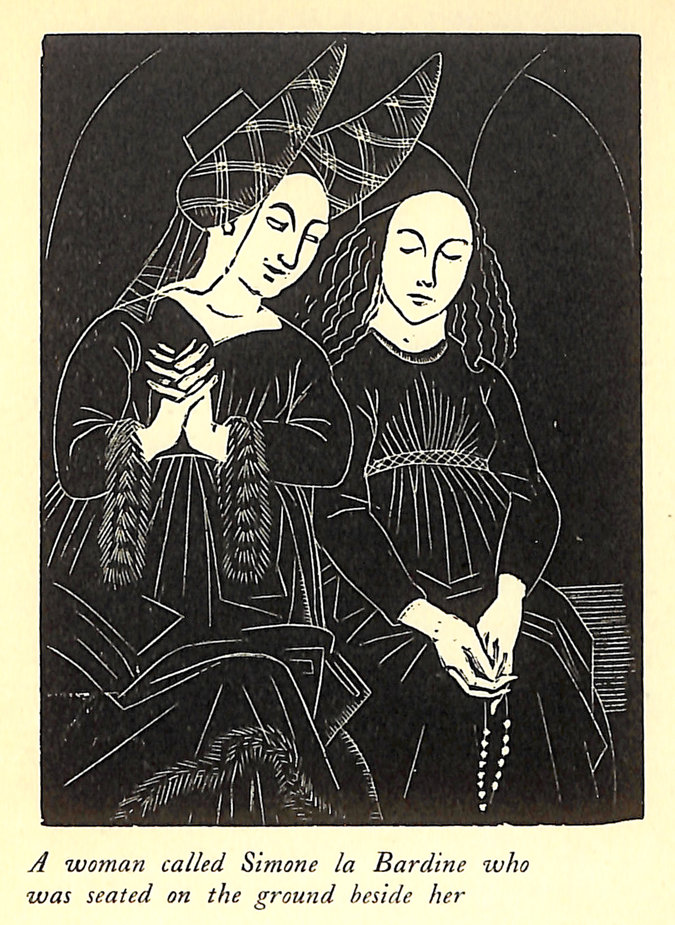
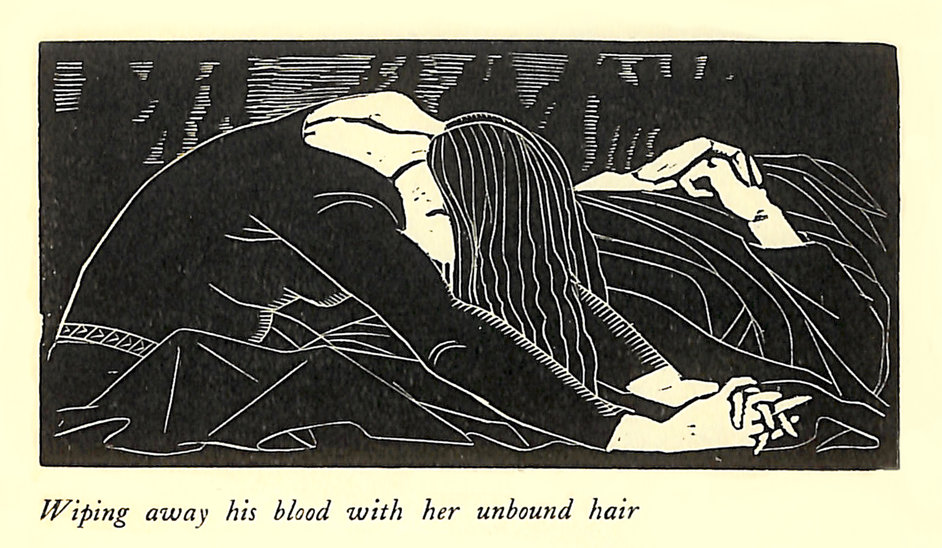

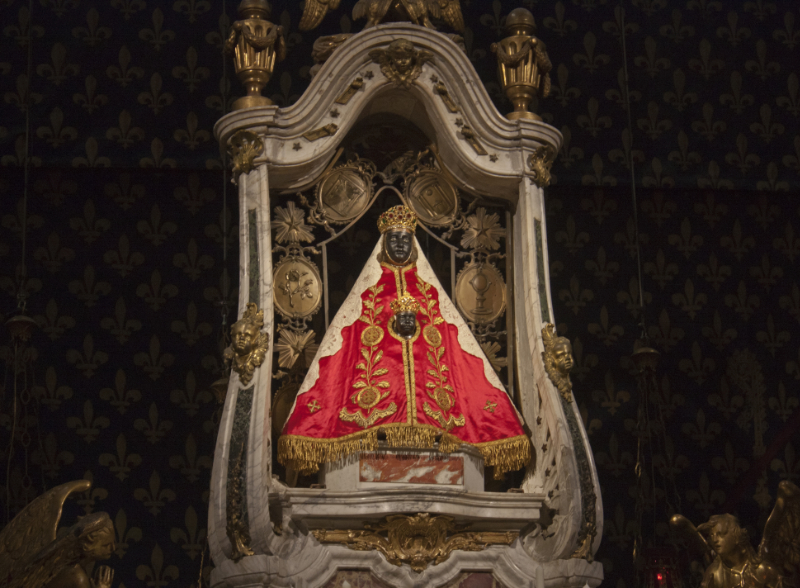



![image852SPECKLE[FINAL]](https://furinchime.com/wp-content/uploads/2021/04/image852specklefinal.jpg)


 Furin Chime Press™