In 1841 Sylvanus Cobb, Jr. left his job running the printing office for his father’s denominational newspaper, the Christian Freeman, to sign up with the US Navy. Seventeen years of age, he passed himself off as twenty-one, to join the crew of the USS Brandywine on May 31 as a “ship’s guard.” Cobb senior was clearly acquiescent, meeting his son on board two weeks later, with a warm greeting and “all the affection of a fond parent” (Cobb’s diary, qtd. in A Memoir of Sylvanus Cobb, Jr.)
Brandywine, a 44-gun, three-masted, wooden-hulled frigate, previously named Susquehanna, had the honour in 1825 of returning the Marquis de Lafayette, fighter for the American revolution, to France. She was renamed to commemorate the September 1777 Battle of Brandywine, in which Lafayette sustained a gunshot wound to the leg.
In June the Brandywine sailed for the Mediterranean, arriving a month later:
On the morning of the 24th of July we saw the coast of Portugal, and about noon entered the river Tagus, and after passing numerous beautiful villas and vineyards, and ‘Old Bellum Castle’ which is a specimen of the old fortifications of the Spanish and Portugese […] we came to anchor off the city of Lisbon…
Upon our left lies the city of New Lisbon. On our right rises a high, perpendicular precipice, capped by a few old ruins, the only vestige which remains of the ill-fated city of Old Lisbon; and right beneath us, at the depth of about thirty fathoms, lie the ruins of the city, which was destroyed in 1755, by a tremendous earthquake … (qtd. A Memoir…)
After his transfer to the sloop-of-war USS Fairfield in 1842, the young Cobb’s diary entries continue to express his enchantment with Europe.
Ha! ha! What a glorious cruise have we before us! Now in Mahon, from here to Marseilles, Leghorn, Naples, Toulon, Trieste, Venice, Athens, Tunis, Tripoli, Algiers, touching at all the intermediate places. Ah! I forgot Corfu and Palermo. Ah! And also Civita Vecchia and Messina.
There are evocative moments, redolent with the imagination and literary facility of the great popular writer he is to become. In the burial catacombs of Palermo’s Capuchin Monastery, with its thousands of corpses and mummies:
The bodies undergo some chemical process which destroys the flesh and makes the skin resemble thin burnt leather. They are ranged along the walls in rows three or four tiers high, and stand upon a narrow board, upright, with nothing to keep them in their place but a cord which runs around their waists and is fastened to the wall.
They are thus thrown into the most grotesque and ludicrous postures imaginable. Their waists being confined to the wall, throws the upper part of the body forward, and their heads incline downward, which, as you are below them, makes them appear as though they were all gazing directly upon you.
Monks’ Corridor, Catacombe dei Cappuccini, Palermo (2008). Public Domain, Link
They are placed without any distinction of age, for you will behold an old man with his white locks still remaining, placed beside a boy whose bright flaxen ringlets retain their lustre, and flow over that neck and forehead which once, perhaps, were so beautiful, but which now are horrible to look upon. The old man will be looking down upon the child with a most horrid grin, and so it is all along; the under jaws being in all sorts of positions; and the feelings which are generally excited upon the sight of death are wholly destroyed; and were it not for the knowledge that you are in the chamber of death, it would be almost impossible to restrain laughter…
One day the Fairfield was sailing along the Atlantic coast of Africa, when her captain observed Cobb idling on deck, toying with a steel printer’s composing-rule, which he had brought with him from home. Establishing that the young man had worked as a printer before joining up, he made him his personal secretary, preparing and revising clerical materials for printing, such as travel memoranda.
The position afforded Cobb greater liberties and shore-leave, and he spent more time with his diary. He studied “the beauties and characteristics of the countries, and the manners and customs of their various peoples” (A Memoir…).
Cobb continued similar duties under the subsequent chief, including revising the new captain’s own naval memoir. After three years, despite the adventure of a nautical life, he became restless and homesick:
[T]he life that I lead is one of constant excitement; every day brings something new. Today, perhaps calm and pleasant; tomorrow, tossed about in a gale of wind, and wet to the skin; Continually running from one port to the other. One night I behold the golden tints of an Italian sunset among a beautiful and Christian people, and in two or three days, under the hot sun of Africa, and amid a set of Moors and Turks and wild Arabs. I hope I shall soon change such scenes as these for those of ‘Sweet Home’.
In 1842 Cobb’s father petitioned the Secretary of the Navy for a discharge for his son. He was successful a year later, and Cobb returned to his home in Waltham, Massachusetts. He married Mary Jane Mead there in 1845; their union would last until his death in 1887.
Notes and References
See entry on Cobb’s father “Cobb, Sylvanus: (1798 – 1866)” at Harvard Square Library. Jump to page.
“Old Bellum Castle”: The Belém Tower (Torre de Belém), a famous Lisbon landmark.
Civita Vecchia: Civitavecchia in Lazio, Italy.
Palermo’s Capuchin monastery: Incidentally, the top of a “Capuccino” coffee resembles the colour of the Capuchin friars’ robes, whence the name.
Cobb, Ella Waite. (1891) A Memoir of Sylvanus Cobb, Jr. Boston. Available at Internet Archive. Jump to file.
Give me them good ol’ days of guns, of snakes, an’ gapin’ jaws Of wolves an’ ragin’ catamounts, with blood upon their paws; W’en six-foot heroes courted girls that they had snatched away From out a bloody bandit’s clasp, an’ tramped him into clay.
I wish we had some writers now who understand the job, Some writers who can sling themselves like ol’ Sylvanus Cobb!
Sam Walter Foss, “Uncle Seth on the Modern Novel”
Outstanding popular novelist of nineteenth century America, Sylvanus Cobb Jr (1823-87) was famous for contributions to the New York Ledger. From 1856 until his death in 1887 the Ledger published his short stories and serialised novels, adding up to 89,544 pages of manuscript. During his whole career he produced 120 novels, over 800 short stories, and over 90,000manuscript pages of short pieces for weeklies.
Sylvanus Cobb Jr.
Cobb was a scrupulous researcher, and three years’ experience as a seafarer in the United States Navy provided him with plenty of material. But in addition to his own name, he found it advantageous to employ several pseudonyms. Under “Colonel Walter B. Dunlap,” he cultivated notoriety as an adventurer and expert on the East.
“Colonel Dunlap,” wrote his publisher:
has travelled through Asia and Africa, and has had considerable experience in fighting elephants, lions, tigers, boa constrictors, cannibals and other tough customers …
At the same time that Cobb’s own novels were appearing in the Ledger, so did seventy-two of the Colonel’s “Forest Adventures” and several “Sketches of Adventure.” His publisher spruiked one of the Colonel’s serialised novels, Lorinda the Princess; or, The Sultana’s Diadem as
a new story of Eastern life, with which Colonel Dunlap is so familiar. He has travelled a great deal, and, judging from his thrilling sketches in the Ledger, he has had more adventures than almost any other living man.
The Colonel grew into such a vivid figure that the Ledger received countless inquiries about him, and one man claimed to have met him out West.
Cobb’s brilliant writing reached Australian shores in the 1880s. The False Knight appeared serialized far and wide, creating a sensation from the Nepean, through Horsham, to out beyond the black stump. It is to this medieval story of love, mystery, and adventure set in the Black Forest of Germany that we now turn in our quest for gems of penny and dime novels that would otherwise remain buried. The serial begins next week.
Context and commentary by Oliver Raven will accompany each instalment. An acute observer and entertaining writer, Oliver is expert in German history, culture and language, and has trodden among some of the very scenes and castles where the adventure takes place.
Perhaps he will be able to keep Cobb honest. I doubt it.
We arrive at last at the denouement. The term is borrowed from the French dénouement, Aristotle’s Poetics first having made its way into English via André Dacier’s 1692 French translation, Poëtique d’Aristote Traduite en François avec des Remarques. In Aristotle’s Art of Poetry (1705) Theodore Goulston translates dénouement as “unravelling“:
From Goulston (1705), remarks on Aristotle’s Eighth Chapter
Over the next few decades, the English word “unravelling” — plainly descriptive as it is — was supplanted by the alluring, intellectual-sounding French term. “Denouement” does assume a sense of specificity as a technical term, which would have been clouded in the humble “unravelling.”
Moreover, the root of the French word, nouer, “to tie” or “to knot”, from the Latin nodus, “a knot” (Merriam-Webster) implies the untying of a knot that was in the first place deliberately tied. Thus it is apropos to narrative form, in which plots become increasingly complicated in their movement, until something disturbs the “upward” momentum, and there is a turning point and descent.
As a technical term in drama, denouement is considered a synonym for the Aristotelian “catastrophe,” which is derived fromkatá, “down, against” + stréphō, “I turn” (Wiktionary) — that is, a down-turning or unwinding of the story (once it has been wound up, so to speak). This aesthetic usage is distinguished from the everyday sense of a “terrible happening”; though it’s easy to deduce its derivation from classical tragedy.
Turning now to Smith’s denouement, we can only marvel at the masterly hand with which he effects the final unravelling of Mystery of the Marsh. His engaging light touch, his wit and refinement are in evidence throughout.
As ever, social currents bubble beneath, with all the qualities of splendour, subtlety, and crassness that characterize not only Regency society, perhaps, but all the human race. Legal strategies and points of moral principle are teased out and resolved. Character nuances are polished to a tasteful finish (note Bury’s absolute redemption from his conditioned class prejudice). The i’s are dotted and t’s elegantly crossed.
On the entrance of the villains, we feel we have to stop ourselves from hissing out loud. Just deserts are meted out in fine measure. Loose threads are tied, the abject truth and consequence of corrupt relationships revealed.
Vaguely remembered sub-plots are recalled. “Bet you’d forgotten about that one …” Smith seems to say with a chuckle at your expense — “Well, I hadn’t!” And his fine touch with the technique of reader-address, with which the reader has become quite familiar, seems now at once quaint and profound, evidencing an awareness of an intimate fellowship. He won’t tell a secret straight out, but “we suspect our readers have a shrewd guess at it.”
CHAPTER THIRTY-TWO
An Unexpected Surprise, Followed by a Monster Law Suit — Conclusion — The Running Down of the Clock — Its Last Tick
The next morning the fashionable portion of London was greatly agitated by the various reports which appeared in the morning papers. Scarcely one gave a correct version of the affair. The names of the fair cousins were no longer masked by initials — transparent to all who recollected the previous reports — but were printed at full length.
Lady Montague had a fit of the horrors. Lord Bury looked serious, and Sir George Meredith felt so indignant at the outrage offered to his child that he threatened to go over at once to the Liberals unless the Home Office did prompt justice to his demands. Having fully made up his mind, and satisfied as to the conclusion, he did as many hasty, well-meaning persons do on similar occasions: he sent for his lawyer to draw up his memorial.
Mr. Whiston expected the summons, and was speedily in attendance. He listened to his statements with exemplary patience, as he did to all his clients when they were angry, and then pronounced emphatically against the step.
‘You must apply to the chancellor,’ he said.
‘For once you are wrong,’ exclaimed the baronet. ‘Clara is not a ward in chancery.’
‘But Lady Kate is,’ observed the man of law. ‘The cases are the same; both lie in a nutshell; you cannot separate them.’
‘Still I do not see how his lordship’s power hears upon the point.’
The lawyer gave him a pitying smile.
‘His power bears upon every point that comes before his court,’ he said; ‘practically it is illimitable — has never been defined. What he cannot do I have not the slightest idea; but I will tell you what he will do — issue an order to the Home Office to dispatch a body of well-armed officers to the Bittern’s Marsh, with powers to arrest every living actor in the outrage they may discover, and bring back the bodies of the dead ones.’
‘Why, then there will be an inquest!’
‘I trust so.’
‘Trust so?’ repeated Sir George. ‘Would you kill my child?’
Mr. Whiston appeared slightly moved.
‘I am not a father,’ he observed; ‘but I can feel for your embarrassment. Would you have the reputation of two pure, innocent girls exposed to the sneers of slander — the covert doubts, the half-veiled suspicion, whose stings are worse than death? No; their purity must be established by the light of judicial inquiry; by legal evidence, without a flaw for malice to hang a rumor on. It will be a hard trial for them; but it must be endured. I see no other way.’
Sir George Meredith paced the room for some time in silence. Much as he disliked publicity, his better judgment at last prevailed.
‘You are right,’ he said; ‘a hundred times right. I must prepare my daughter for the ordeal; but who shall prepare my niece?’
The lawyer smiled.
‘Girls,’ he observed, ‘are stronger than we deem. Their own virtue and the dawning prospect of future happiness will sustain them. Leave the rest to me. I will instantly prepare a memorial to his lordship, and feel no doubt as to the result.’
On his return home, whilst still relating the conversation to his nephew, Lord Bury was announced. Without noticing the lawyer, the young nobleman walked directly up to our hero and extended his hand. It was the first time he had ever done so.
‘Mr. William Whiston,’ he said, ‘I have heard of the noble sacrifice you have made to affection and true manhood. I, for one, am prepared to welcome most cordially your alliance with my cousin. At the request of my aunt, I add that she will be most happy to receive you at Montague House as the acknowledged suitor of her niece.’
Our hero grasped the hand extended to him most cordially.
‘My dear lord —’ he said.
‘Had we not better call each other by our Christian names now, since we are likely to become so nearly related? Let it be henceforth William and Egbert between us.’
‘If you really wish it.’
‘I do wish it,’ replied the visitor, energetically. ‘The last few weeks have taught me more than one lesson — that man’s true nobility is in himself, not in the accident of birth. My greatest desire is to prove worthy of your esteem.’
On that day the speaker made two fast friends — the nephew and his uncle. The latter proved a most important one. He divined, if he did not exactly know, the exact position his father’s conduct had placed him in, and mentally resolved to exert all his skill and experience to extricate him.
The legal step turned out exactly as Lawyer Whiston predicted. The chancellor issued his rescript to the Home Office, and in three days the officers returned, not with any living prisoners, but the bodies of Clarence Marsham and Burcham.
On the morning of the inquest the coroner’s court appeared unusually crowded. Fabulous sums were offered for seats long after there ceased to be standing room. Public curiosity was on the alert, and peeresses and ladies of fashion hastened to the scene as to the opera or some other exciting spectacle.
Expectation was at its height, when Lady Montague, looking wonderfully calm and collected, entered the courtroom, with Clara and Kate, and all three took their seats upon the bench reserved for them. The jury, having already been empaneled, had viewed the bodies in a room apart.
An array of men eminent at the bar appeared on both sides. The arch-plotter had taken care of her own interests; not even the death of her son could blind her to them.
We have neither time nor space to give the examinations of the witnesses. Lawyer Whiston had prepared the evidence on his side — the letters of Lady Allworth were read, which covered her with infamy, and every point in the part of the dark transaction she had planned was most clearly proved. The narrative of the two cousins, which was clearly although faintly given, began to excite a deep sympathy; but when Susan, in her artless, simple way, related the death of the old domestic, the frantic entreaties of Kate to her cousin to kill her rather than suffer her to be forced into a marriage she abhorred, the feeling became positive enthusiasm. The jury declared they were ready to give their verdict. This, however, the counsel Lawyer Whiston had employed, acting under his instructions, by no means would permit; they insisted that every witness should be heard. Bunce, Willie, and Goliah gave their testimony, described the siege, the ruse by which the conspirators had been defeated, down to the arrival of Sir George Meredith and Lord Bury. Lastly the correspondence of Viscountess Allworth with the schoolmaster was read. The opposing barristers threw up their briefs in disgust, and the last fangs of the serpent, slander, on which her ladyship relied, were effectually drawn. Then, and then only, was the verdict of justifiable homicide received. Hosts of friends thronged around the cruelly persecuted girls to congratulate them on their escape.
Then, and then only, was the wisdom of the old lawyer’s advice fully understood.
When fashionable society in England does take a fit of virtuous indignation it generally proves an exceedingly strong one. The following day the elite of London called to inscribe their names in the visiting book at Montague House, whilst not one single note of condolence was left at that of the woman who had lost her son, whose name was already stamped with the indelible brand of infamy. Still, the arch plotter bore a bold front. When her husband, disgusted at the exposure — not on account of its immorality, but failure — hinted at the propriety of retiring to the country, she haughtily refused.
Title and fortune still remained to her. She could still defy the world.
In the midst of the dispute, a letter from her lawyer, Brit, was brought to her. As she read it her cheek became pale for an instant, not longer, and then her courage returned.
‘You must accompany me,’ she said. Our agent, Blackmore, has been arrested in London, and will be examined before noon at the police office.’
‘Our agent?’ repeated his lordship.
‘Well, my agent, and your tenant, if you prefer the distinction. The old idiot has been caught, wandering amongst the old book-stalls near Drury Lane. I thought he had escaped.’
The viscount began to feel exceedingly uncomfortable. He remembered the lease of the Bittern’s Marsh.
‘You must bail him,’ added his wife.
This proved a little too much even for his lordship’s philosophy to bear.
‘Absurd!’ he ejaculated.
‘I tell you that you must,’ continued the lady. ‘My reputation is at stake.’
‘Bah! It is lost already.’
‘And your life!’ This rather startled her hearer.
‘Think you I am such a weak fool as to have trusted you without precaution?’ continued the speaker. ‘Your forgeries upon your son are in my hands. I deposited them in the Bank of England. Bury was quite willing enough to pay them, but I refused to accept the money. He will never lay perjury upon his soul to save a father he must despise.’
‘The monster!’ ejaculated the now thoroughly terrified man.
Whether he meant his wife or his son we cannot undertake to decide.
‘You know me at last,’ said her ladyship, coolly. ‘Take your choice.’
‘Certainly, my love,’ was the submissive reply. ‘I am quite willing to go with you.’
‘The degradation proved unavailing. On their arrival at the police office the formal gentleman in black was there before them. When bail was offered he objected to bail, produced the chancellor’s warrant committing the prisoner for contempt of court, and bore him triumphantly off to the King’s Bench Prison, There we must leave him for a while.
During the day Bury received a most piteous appeal from his parent, and rushed with it to the office of Mr. Whiston, who read it carefully, smiling as he did so.
‘Is it possible that you can find a source of mirth in my distress?’
‘Not so, my dear lord,’ answered the lawyer, kindly. ‘If I smiled, it was because I begin to see my way out of this sad difficulty.’
‘Is it possible? How?’
‘That is my secret. Lady Allworth is playing a very close game, but I think I hold the winning card in my hand. In five days the forgeries shall be in your hands.’
‘May I believe this happiness?’
‘If I live, yes. Nothing but death can cancel my promise. Now leave me. I have the work of twenty younger men to do.’
The old man did not miscalculate his task.
As a matter of observation, one enormous scandal is generally succeeded by another equally notorious. Society was again startled by the report that a suit had been commenced by a certain person styling himself Charles Marsham, against Lady Allworth, for the recovery of the estates bequeathed to her by her first husband, and that the chancellor had placed a distringas upon all the property. The rumour proved to be correct; but what struck those watching the affair was the singular fact that, although the most eminent council had been employed by the plaintiff, his solicitor was an obscure but rising young man, who had never been previously engaged on any important case. Curiosity, especially among the legal profession, was greatly excited. More than once Mr. Whiston was questioned by his friends and acquaintances in the law, but he professed the most profound ignorance of the affair — professional ignorance of course. Outsiders, as well as lawyers, understand what that means.
Trembling at the possibility of losing her ill-acquired wealth, of which she had made so vile a use, her ladyship rushed to consult her advisers, Brit and Son, who received her rather coolly. They could do nothing, they declared, without money, the account against their client being already so much larger than they could afford to lose.
‘Why, you do not believe in this absurd claim?’
The elder Brit replied that the absurdity had very little to do with it, and the law was painfully uncertain. The firm had met with losses lately.
His son re-echoed the opinion.
‘After all the money you have made of me?’
The gentlemen smiled. Hitherto they had looked upon their client as a shrewd woman. The simplicity of the remark surprised them.
Still they adhered to their resolution. The junior partner suggested an appeal to her husband.
Her ladyship shook her head. He was almost as much pushed for money as herself.
‘Your ladyship still holds the securities lodged in the bank,’ observed the senior partner, ‘and the money is there to redeem them. With twenty thousand pounds it would be easy to defeat this conspiracy.’
‘You believe it one, then ?’
‘No doubt of it,’ replied the firm.
‘And you could see the treacherous old hypocrite, Blackmore?’
‘Money will do anything.’
The love of greed prevailed over the thirst for revenge, and the guilty woman finally consented to follow their advice. The money was recovered, the notes stamped as paid, and, an hour afterwards delivered to Lawyer Whiston, who claimed them as Lord Bury’s agent, to whose irrepressible satisfaction that same day they were destroyed.
Sundown, Laura Knight
As soon as the cousins were sufficiently recovered to bear the journey the united family left London for Sir George Meredith’s seat in the eastern counties, near Chellston, soon to become the property, we suspect, of Lord Bury, who, with our hero, accompanied them. The party would have still been larger, but Lawyer Whiston declared it impossible for himself, Bunce, and Old Nance to quit town. They did not ask his reasons. Already they had divined a part of his secret, and we suspect our readers have a shrewd guess at it.
As for the Sawter boys and their mother, they were already provided for.
‘Fear not,’ added the old, man; ‘we shall be in time.’
‘In time for what?’ innocently demanded Kate.
An arch look from the uncle of Willie brought a blush into her cheek. She asked no further questions.
We are not going to inflict upon our readers a technical account of the great trial, which soon afterwards took place, but merely relate a few of the incidents.
Lady Allworth, a former pupil of Theophilus Blackmore, had created interest with her instructor by her intelligence and aptitude. By his influence she obtained a situation in the family of Mr. Marsham, whose wife dying shortly afterwards, first awakened her ambition. Her plans were artfully laid.
By the connivance of the Bath woman it was given out that his infant son was drowned, and universally believed. Such, however, was not the case. It was secretly conveyed to the martello tower, where the schoolmaster, reduced to poverty, had taken up his abode. His servant, Nance, nursed the boy. The mysterious way in which he had been brought there first excited her suspicions, and induced her to gather up the fragments of half-burnt letters which first excited the curiosity of the astute lawyer. The cynical confession of Theophilus Blackmore, that of the Bath woman and French maid, who were all in the plot, not only proved the identity of the boy, but established the facts which the correspondence of the viscountess, discovered in the old tower, still further confirmed.
After days of wrangling arguing by council on either side a decree was at last pronounced by which Charles Marsham — so long known as Bunce the tramp — was declared heir to his late lather’s landed estate.
Poor fellow! the change in fortune appeared to afford him but slight pleasure As he feelingly observed, when his benefactor congratulated him, he was alone in the world.
‘Not so,’ replied his friend. You have an uncle and an aunt — Walter Marsham and his sister Pen — who are anxious to claim you. It was their money that enabled me to search out the evidence and carry on the suit successfully.’
The speaker did not say how much of his own he had expended.
On learning the result of the trial Lady Allworth retired to her own room. Everything had failed — scheming, lying, and even perjury proved useless. They had left her a pauper as far as wealth was concerned. An empty title alone remained, and even that now appeared valueless.
‘The way of transgressors is hard.’
The next morning she was found dead in her bed.
Thanks to obliging doctors and a complaisant jury, a verdict of apoplexy was given, and the body buried by her husband in an obscure churchyard in the city — no one to mourn her, no herald’s pomp, no stone to mark the spot, which was soon forgotten.
The brief space that remains to us must be devoted to happier themes — to self-sacrifice rewarded by faithful love, to prejudice rooted from a nature naturally good.
But ere the final act which was to crown the day-dreams of the lovers was fixed by the fair cousins the reconciliation of Tom Randal with his father was brought about. The rough old farmer, who had known but little peace since the quarrel, sought the cottage of the pretty Phœbe, made the amende honorable, and ask her to become the wife of his soldier boy. The happy girl consented, and proved no dowerless bride; the gift of the Home Farm from Clara accompanied her to the altar.
Goliah and Susan were married at the same time, and started for Deerhurst.
Here we are but slightly anticipating. A respectable peace, or rather an armed neutrality, was patched up between the widows. Mrs. Hurst, according to her husband’s will, retired to her own cottage, whilst Goliah’s mother remained in her own homestead.
Poor Goliah felt so boisterously happy that there exists a tradition even to the present day that on one occasion he was known to have kissed his mother-in-law.
When Lawyer Whiston, accompanied by Bunce — we must call him so, if only for the last time — visited Chellston, both were warmly welcomed. If Lady Kate and Clara looked a little shy, it was, as Lady Montague observed, exceedingly proper. They knew what the visit portended.
The great day dawned at last. Our hero and Lord Bury became the happy husbands of the girls they had so honestly won — the best reward mankind can claim or love bestow.
In less than a year’s time the same party were assembled at the same place. Health, sweet peace of mind, and calm content beamed on the features of all. And as they sat beneath the trees in the park many an innocent jest went round and tale of the past was related.
Bunce caught the infection of the hour, and was soon seen walking at evening shade by the side of Martha.
It proved afterwards a match.
Our task is over. The weights of the clock are run down and the final tick is heard.
THE END.
Notes and References
draw up his memorial: memorial = “A petition or representation made by one or more individuals to a legislative or other body. When such instrument is addressed to a court, it is called a petition.” thefreedictionary.com (legal section).
rescript: official edict, decree or announcement.
distringas: a writ commanding the sheriff to distrain a person by that person’s goods or chattels (Merriam-Webster).
Laura Knight,Sundown (1947): Entirely out of period, but looking towards the future.
Goulston, Theodore. (1705). Aristotle’s Art of Poetry (London: Browne and Turner). Available at Internet Archive. Jump to document.
It’s giving nothing away to say, here facing the penultimate chapter, that we’re fast approaching the end. The perfect place to spend a few minutes pondering not only ends — before it is too late, for one thing — but beginnings and middles as well. One of those perforated works of Aristotle’s, hisPoetics, is the earliest we have to expand on the importanceof these concepts to the shape or structure of a story — in the Aristotelian instance, a story expressed in the dramatic form of tragedy.
Nevertheless, the idea of narrative structure expounded by Aristotle is able to be — and is, often — generalized to include other story-forms, particularly popular ones such as films and novels. Many, many books and web-pages use the idea in useful frameworks and formulae for constructing and construing novels and screenplays; the emphasis being upon engaging, entertaining and gripping a reader or spectator. Readers disdaining the formulaic implication of such a practice might turn a blind eye, or temporarily suspend disbelief.
For Aristotle, the most important thing in tragedy (for our purposes, “story”) is the plot, the “arrangement of incidents.” The plot is the imitation of a complete, whole action. Thus it has a beginning, a middle and an end:
A beginning is that which does not itself follow anything by causal necessity, but after which something naturally is or comes to be. An end, on the contrary, is that which itself naturally follows some other thing, either by necessity, or as a rule, but has nothing following it. A middle is that which follows something as some other thing follows it. A well constructed plot, therefore, must neither begin nor end at haphazard, but conform to these principles.
Poetics
From this formulation, elegant in its simplicity, a framework may be extracted, and hung with the content and dynamics of an infinite number of different stories. In passing, Aristotle mentions that a beautiful object must have “an orderly arrangement of parts.” Followers of his minimalistic construct, and in particular its later permutations, emphasize its value as a key to holding a spectator’s attention, to engaging and impelling a reader. It is a staple of books on “how to write a novel” — read “page-turner” — so tends to be adaptable or malleable to diverse views and interpretations.
Gustav Freytag (1816-95) represented the basic idea of narrative structure as a pyramid, now known as “Freytag’s pyramid” or “Freytag’s triangle,” which can be used as the basis for three or five act plays or narrative structures:
Fretyag’s Pyramid
His point (a) is the introduction — what is presupposed for the action to occur. Soon after (a), an “exciting force” occurs (now known commonly as the inciting incident), which is a force that “sets the hero in motion.” Point (b) is the subsequent “rising action,” and (c) the “climax“
Freytag’s next point (d) refers to the “return or fall” (falling action), leading to (e) the catastrophe — that is, the closing action or, in archaic terminology, the exodus. Once again, terms and concepts are heavily determined by the specifics of the refined form of tragedy; though they are capable of being adapted to diverse stories in novels and screenplays.
Based on this format, later iterations of Freytag’s model lessen the technical emphasis upon the rise and fall of a tragic protagonist specifically, but are applicable to a huge variety of genres. Usually the pyramid is skewed to the right, to give a better idea of the placement of the climax. Among the best known are those in Syd Fields’ Screenplay: the Foundations of Screenwriting (1984; 2005) and Robert McKee’s Story: Structure, Substance, Style, and the Principles of Screenwriting (1997). There are many imitators and variants, all of whom stress the importance of the inciting incident to inspire the story and impel its reading. Such an approach to structuring may be useful in considering the massive popular appeal held by Smith’s writing.
Where to locate the inciting incident in Smith’s novel? The first few chapters are, quite naturally, introductory and expository; though Chapter 1 brings William and Kate together for the first time, when he helps the two “boys” by directing them to the red barn for refuge. William’s character arc isclearly inextricable from Kate’s. Everything is tied up in their love relationship, to the extent that the novel could be called a romantic suspense or romantic thriller, with a tincture of coming-of-age (not a “mystery” as such, as that genre has come to be known).
An inciting incident, however, needs to do more than merely set the stage. Not until Chapter 3, after the melee in the barn (a mini-climax of strands from the opening chapters with their own beginning, middle and end, but a sequence that William absents), do he and Goliah drive the girls to London in the wagon. Smith describes the moment when William is entranced by Kate’s eyes — “dark sapphire blue, gemmed in the tears which, like pearls, encircled them” — and he thrills for the first time in his life “with strange emotion.”
As inciting as it is enticing, is the moment a sufficient mobilizer of the story? Immediately after, a swag of business occurs that is unrelated directly to their romance. Kate moves into the background as a lingering memory. During this phase, Mrs. Hearst can be said to represent a force opposing his transition to manhood and self-realization — which is resolved to some extent in the courtroom drama of Chapters 6 and 7 (a second mini-climax). So let’s stick with that for the Inciting Incident: Willie’s rapture in the spectacle of Kate’s eyes.
Although lacking in drama, William’s relocation to London is a very significant incident, as it places him once again in Kate’s vicinity — and importantly, sets in play his academic career. Of course, we know now that he will be readily prepared to sacrifice this asset when the moment of truth arrives.
Therefore it is reasonable to consider the move to London, in Chapter 7, as a “key incident” (Fields). It may be perceived as impelling a second of three acts, which is dedicated in part to counter-posing the villains’ plotting against Kate. Simultaneously this villainous plotting creates an opposing force against William and Kate’s romance. At the same time, the issue of class provides substantial opposition, as we have established previously.
K.M. Weiland, an acclaimed latter-day proponent of a three-act formula, has developed Freytag’s and later models into a comprehensive paradigm for the novel. Her convincing array of structural devices may be useful in helping delve into the multi-layered, multi-faceted world of Smith’s sprawling serial.
In her Structuring Your Novel Weiland determines that critical incidents or Plot Points should occur at a quarter, half, and three-quarters the way through a successful story. Actually, the move to London falls close to 25% of the way in. In Mystery of the Marsh, the inciting incident identified may be considered to work in combination with this key incident / first plot point, Willie’s move to London, by serving to lock his fate in with Kate’s. The story now moves into a second act with mise-en-scenes (Paris; London society; the liminal sphere of Bitterns’ Marsh) disconnected from parochial Deerhurst.
In accord with Freytag, the story is now in engaged in (b) the “rising movement” (or rising action), a series of complicating scenes that progress to a moment of climax or crisis at point (c). Here the consequences of the rising action are expressed “strongly and decisively” (Freytag) — which is, not in the least unexpectedly, the moment about to occur in Chapter 31 of Mystery of the Marsh.
Weiland predicts that a significant Midpoint or Turning Point should occur somewhere in Chapters 15-16. As it happens, both these chapters are devoted to the duel in Paris, between Lord Bury (aka Egbert, Viscount Allworth’s son) and Clarence Marsham, upon whom pivots his mother Lady Allworth’s malevolent plotting. Such an incident of high drama as the duel itself between good versus evil brother would be an obvious contender for the Midpoint / Turning Point. Two subplots collide here: i) Egbert’s blossoming romance with Clara Meredith, which is linked with the Ned Burcham and May Queen Phoebe Burr affair; and (ii) Marsham’s heinous behaviour and designs on Kate, which his mother goes to lengths to facilitate. So that choice of Midpoint seems fair.
How about the “turning” explicit in the term Turning Point? Well, immediately the story returns to the Allworths’ plotting. Concurrently, Willie is studying so hard at Cambridge he is almost burnt out. The doctor prescribes a rest, and consequently, while unwinding in a carriage in Hyde Park with Goliah, whom should he run into but Kate? The courtship is on, and running in counter, the build-up of Lady Allworth’s plot involving Brit and Moses, etc.; and the relocation of Burcham and Marsham to the Bitterns’ Marsh.
The Third Plot Point needs to be distinguished from the climax, since it must impel the third act, in which the climax is to occur. That function would have to be the dramatic kidnapping after the opera in Chapter 26, which leads inevitably to the climactic encounter by which we are about to be gripped.
This corresponds to the climax in Freytag’s Triangle: the imminent crisis in the current instalment, with the forces of good and evil poised in direct opposition. The stakes are at the highest: the very lives of the three heroines and three young heroes.
At any rate, that’s a beginning. It might be possible, next instalment, to apply some more of Weiland’s paradigm, towards a further tentative sketching out of narrative structure in J.F. Smith’s Mystery of the Marsh.
CHAPTER THIRTY-ONE
The Last Struggle — A Siege Not Carried On According to the Strict Articles of Warfare, but Gallantly Fought Despite of Them — Goliah’s Ammunition
‘They are preparing for the attack,’ observed our hero.
‘Let them,’ said Bunce; ‘we are ready for them.’
‘I should say we were,’ added Goliah, patting the breach of the culverin affectionately. ‘If they stand old schoolmaster’s larnin’ it’s more nor I could; it be all packed in here. Won’t he be arnest, right down savage when he finds out wha’ it’s charged wi’!’
‘We must reserve our fire to the last moment,’ continued the second speaker, impressively; recollect it is our last chance; so no precipitation. Our great object should be to keep our enemies at bay till succour arrives.’
‘Succour!’ repeated Willie, scornfully. ‘I tell you, no! We must depend upon ourselves, strain every nerve. Action! Action! Where, in this desolate region, where the features of man rival those of nature in hardness and cruelty, can we look for aid?’
‘Still I am not without hope,’ replied Bunce, in a more cheerful tone. ‘When Clarence and his associate employed me to assist in their dark enterprise, with that devilish cunning which accompanies crime like its own shadow, clearing the pathway to destruction, they concealed from me the place to which they intended to convey their victims. True, I had my suspicion, but no certainty. An error would have been fatal. Just as we were about to start I ascertained it, and wrote a few hasty words to your uncle.’
William gratefully pressed the hand of the speaker.
‘What!’ exclaimed Goliah, ‘be the old lawyer in the game? Then we shall win. He be like mother’s old goat at the farm, he can’t fight much, good for naught at a run, but he do butt awful hard wi’ his head, I can tell ʼee.’
Even in the painful position in which they stood his hearers could not restrain a smile at this quaint conceit.
As a further precaution, Burk and Ben, the Sawter boys, were placed, each armed with a pistol, at the loopholes flanking the culverin. Nature had made them quick of eye, practice ready of hand, and Bunce had given them instructions.
Clara Meredith, Lady Kate, Susan, and Nance were barricaded in their room above. They could render no assistance unless by prayer.
As the heavy mist rolled sullenly from the scene, loth to quit the stagnant pools and swamps of the Bitterns’ Marsh, more figures might have been discerned. Some came creeping through the brushwood, others were advancing more openly; all were armed. An hour had not elapsed before thirty men were gathered in front of the boulder.
Still the little garrison gave no sign of resistance. Prudence told them to wait till the leaders of the band, Clarence and Burcham, made their appearance. Eager eyes were strained, but failed to discover their presence in the motley herd. Cowardly as cruel, they sheltered themselves behind the Druid’s Stone, where Benoni and his father also prudently were concealed.
A consultation was being held.
Burcham proposed that they should fire the tower.
‘Absurd!’ said Clarence Marsham, who, having, as our readers may recollect, been in the Guards, possessed at least some elementary ideas of military tactics. ‘You forget that the building is fire-proof.’
‘All but the door,’ urged his confederate.
‘The girls might perish in the flames!’
‘And my books,’ added the schoolmaster; ‘my EIzevirs and Aldines, to say nothing of the precious labours of my own life.’
Had the speaker known the havoc already committed amongst his literary treasures by that Goth, as he used to name his former pupil, Goliah, the objection, probably, would not have been made.
‘No, no,’ he added, ‘I can show you a better way.’
What that way was will very soon be seen.
Calling to him such men as had armed themselves with axes, the schoolmaster led them to a spot, only a few feet distant, where several trees, already stripped of their branches for firewood, lay scattered upon the ground. Selecting the toughest looking of these, he directed them to shape it so as to form a species of battering-ram, leaving a blunt point at either end.
The work was instantly commenced.
The defenders, who had anxiously watched every movement, saw that the number of their enemies had decreased and felt puzzled to divine the cause. Alas, it was soon explained. In less than an hour they returned, bearing in their strong arms the trunk of a tree, fashioned into the shape of a battering-ram.
Bunce, whose quick eye at once detected the danger, called to Ben, the youngest of the Sawter boys, to shoot the foremost man. Receiving no reply, he rushed to the loophole where he had stationed him, and found the lad pale and trembling.
‘Why did you not fire?’ he demanded, angrily.
‘I dare not,’ was the reply.
‘Dare not! Are you cowardly or treacherous?’
‘Neither,’ said Ben, ‘but the man you called on me to shoot is my own father.’
This was true. Tim Sawter had regained his liberty, and, half mad with liquor and rage, was leading the attack.
The anger and suspicion of Bunce vanished in an instant. Although he had never known his own father, he comprehended the feelings of the youth and respected them.
‘Forgive me,’ he said, ‘if in my heart I wronged you. Give me the weapon.’
Ben hesitated.
‘Not against your father, I promise you that.’
It was yielded to his hand.
As the speaker reached the loophole where the culverin was planted, the attack had commenced.
William Whiston had fired the first shot, stretching one of the bearers of the battering-ram dead.
This caused a momentary check. Several retreated behind the boulder, but the rest, somewhat more resolute, gathering fresh courage, again advanced, when Goliah discharged his weapon with similar effect.
‘Two o’ the Marsh birds potted, anyhow,’ he observed, coolly; ‘first one I ever brought down. Don’t feel half so bad as I thought I might ha’ done; but, then, I ha’ my doubts if they be really fellow creatures; thar aint no real manhood in ’em.’
The honest fellow was right in his rude logic. It is manhood that constitutes the man; without it he is merely an animal, over which reason has lost control.
‘That pesky varsity, Willie, hasn’t sp’ilt your aim,’ he added.
‘It was my first and last shot,’ replied our hero; we have no more bullets left — nothing but powder.’
Goliah reflected for a few instants; a fit of inspiration — it could scarcely be termed anything else — seized him. Tearing the buttons off his coat, he commenced stripping them of their cloth covering, and never paused till he held twelve shining brass ones in his hand.
‘It bean’t sportsman-like I know,’ he observed, dryly, as he placed half of them on the sill of the loophole for his friend. ‘We can ax pardon afterwards,’ he added, with the old merry twinkle in his eye, ‘if they stand on pertickilar ceremony.’
Hastily reloading their pistols, the speakers discharged them a second time. With each shot, or as we should have said, button, one of the enemy fell. The rest retreated behind, the boulder — that was their citadel — where a fresh consultation was held.
‘Your fine plan has failed,’ observed Clarence to the schoolmaster; ‘we must advance with all our men, break down the door by weight of numbers, or they will defeat us in detail. You have your instructions,’ he added.
Not a ruffian moved.
‘Why am I not obeyed?’ shouted their employer.
‘We are waiting,’ said one of the more prudent ones, for the gentleman to lead us. I’ve always heard, the general should show the way.’
At this there was a half-smothered laugh.
The conspirators felt that if once they permitted themselves to become ridiculous in the eyes of those they had employed, their cause would be well-nigh hopeless. Neither of them much relished the idea of exposing themselves to the aim of the boys, as they termed them, who had proved such excellent marksmen. Once master of the tower, they knew that the band would return to their former subservient habit.
Money was the best disciplinarian in the present instance.
‘Lead you!’ repeated Clarence. ‘Who else should lead you? Myself and friend will be your generals. And paymasters,’ he added, ‘when the contest is over.’
The last remark produced a faint cheer, which was renewed when Burcham added:
‘And reward you liberally when the work is done.’
At last the final moment was at hand. The brave defenders, so few in number, but resolute of heart, saw, with straining eyes, their enemies advancing in a compact body against them. Our hero began quietly to blow the fusee in his hand.
‘Not yet,’ said Bunce.
‘Do not fear,’ was the reply. ‘My heart may be gnawing itself with impatience, maddened by doubts of the result, but my brain is cool and my hand steady. I shall not fire till they are all in range.’
‘At last!’ he said, as he fired the culverin.
The effect was terrible. Nearly a dozen of the assailants fell, some fearfully mangled, some fatally wounded. The rest paused, panic-stricken, paralyzed at the sight. Burcham lay dead. His partner in crime, severely wounded, was dragged out of the mangled mass to a distance by the school-master and his son.
The former, who possessed some skill in, surgery, began to examine his injuries.
When the fact became clear that the culverin had been charged with the clasps of his cherished books, and the wadding supplied by his own precious commentaries upon his favorite authors, where it probably made more noise than if it had been published, the old man uttered a yell of despair and fled from the spot.
Benoni waited for an instant only, to secure the pocket-book which he saw concealed in their employer’s bosom. Then he, too, disappeared, and was never more seen in England.
The four females during the scene we have described, had remained in their barricaded room, a prey to the most terrible feeling — suspense. A faint shout fell upon their ears, and Clara, rushing to the loophole which commanded the road to the beach, saw a considerable body of men advancing from that direction. For several minutes the doubt, the hope, were more than she could express.
‘Embrace me, Kate!’ she exclaimed. ‘We are saved. They are friends. Bury and my gallant old father are leading them. I knew they never would abandon us. No error. Saved!’ she repeated. ‘Saved! God has heard our prayers.’
It was true. The Leander had arrived, and landed its crew upon the Essex coast. Guided by the discharge of firearms, they were advancing rapidly to the rescue.
In less than an hour the martello tower was taken possession of by its new defenders, and the worn-out garrison relieved from its perilous situation. There was no more fighting. Not a Marsh bird was to be seen. Only the dead remained.
Liebespaar (c. 1900), Richard Borrmeister
We must pass over the transport of the meeting — Clara sobbing on her father’s breast; Kate in the arms of her lover; Susan clinging in undisguised happiness to the strong arm of her defender.
Some one at last suggested that the ruffians might return.
‘Pooh,’ said the baronet. ‘Ready for an army of them. Bury brought a party of his regiment with him. Tom Randal could thrash a dozen such fellows. Lawyer Whiston is with us; and that taciturn man in black, though I cannot say that he has been of any particular use to us.’
The turn of the gentleman in black to interfere had not arrived yet.
The last-mentioned personage now put in an appearance. After congratulating his nephew the lawyer next proceeded to reduce the chaos, moral as well as physical, to something like order. As if by tacit consent he took command of everything.
His greatest difficulty was to prevail upon Clara and Kate to take some refreshment, and we question if even his arguments would have prevailed if their lovers had not seated themselves beside them and pretended to join in the repast.
Accompanied by Tom Randal he and the gentleman in black next proceeded to search every part of the building as a fresh precaution. Several soldiers accompanied them. The first place was the chamber of the old schoolmaster, whose books they found in most admired disorder. The expression is Shakespeare’s — not the author’s.
Amongst other things they came upon a box of letters and papers marked private. Rather an unwise precaution, since they are sure to be the first examined by curiosity or cupidity.
A brief perusal satisfied the lawyer of their value. They were carefully sealed, and the gentleman in black took possession of them.
The rest of their discoveries we shall pass over as not being of particular interest to our readers. It was past midday before the now happy party reached the Leander, to which the ladies were conveyed in litters. No one was forgotten who had befriended them. Nance, the Sawter boys and their mother were conveyed on board.
The two prisoners, Bilk and Pike, had preceded them.
With a fair breeze the vessel turned its prows towards London. As it started the motley crew gave three hearty cheers. It was their farewell to the Bitterns’ Marsh.
On reaching London the murderers of the poor old domestic were committed to stand their trial, which was certain to end in their conviction; and Susan, who had remained behind to give her evidence before the magistrate at Guild Hall, was driven to rejoin the rescued cousins at Montague House, whilst our hero and Goliah accompanied Lawyer Whiston to his home in Soho Square.
It was a hard blow to the last-named personage when he discovered that his nephew had thrown up the all but certainty of being senior wrangler and fellow of Trinity; but he bore it bravely.
‘Never mind, my boy,’ he said, ‘there are still better prizes in the lottery of life than those you have missed — the sense of duty performed and the approval of your own heart. You will win your reward yet.’
Willie shook his head doubtfully.
‘I tell you that you will!’ said Lawyer Whiston, eagerly. ‘Take it as my legal opinion; pay me a fee for it, if you like. You know I rarely err on such points.’
‘And I’ll back thee, Lawyer!’ said Goliah. ‘What be it all about?’
haphazard: “First entered English as a noun (meaning ‘chance’) in the 16th century, and soon afterward was being used as an adjective to describe things with no apparent logic or order” (Merriam-Webster).
loopholes: Martello towers are known also as “loophole towers”; the loopholes being window-openings in the wall, for the firing of weapons.
most admired disorder:Macbeth 3.4.
fusee: flintlock; firearm
Aristotle. Poetics. (350 BCE). Trans. S.H. Butcher (1902). Available free at gutenberg.org. Jump to file.
Chatman, Seymour. (1978) Story and Discourse: Narrative Structure in Fiction and Film (Ithaca: Cornell).
Fields, Syd (1984; 2005). Screenplay: the Foundations of Screenwriting (London: Methuen).
Freytag, Gustav (1894; 1900). Technique of the Drama: an Exposition of Dramatic Composition and Art. Trans. Elias J. MacEwan (Chicago: Scott, Foresman). Available free Internet Archive. Jump to page (Freytag’s Triangle).
McKee, Robert (1997). Story: Structure, Substance, Style, and the Principles of Screenwriting (NY: Harper-Collins).
Weiland, K.M. (2013) Structuring Your Novel: Essential Keys for Writing an Outstanding Story. (PenForASword Publishing). Jump to plot structure summary diagram (PDF).
Did anyone notice, ages ago, the noble Bunce occasionally nip over to Hearst’s farm at Deerhurst to court the farmer’s pretty daughter Susan — even trying to steal a kiss one time — before coming onside and making himself useful as an occasional lookout for her and Goliah while they canoodled in Mrs Hearst’s garden? This was the kiss Susan rewarded him with when he revealed his true identity in the martello tower last instalment (Ch. 29.1).
Bunce disappears from the reader’s view after rescuing the two girls in the red barn (Chs 2 and 3), and Susan doesn’t mention him until the scene in which Willie and Goliah have to appear in court, accused of stealing the mare (Chs 6 and 7). Bunce’s must certainly have been that “sure hand” to which Susan entrusted a letter to Lawyer Whiston, who consequently arrived in time to save the day for the two young men.
This is the letter to which Lawyer Whiston refers in Chapter 7, complimenting the presence of mind and courage Susan displayed sending it to him via a certain “ragged messenger” — Bunce. Thanks to his meeting with Bunce, the lawyer recognizes his quality, takes him under his wing, and sends him on his surveillance mission to Dinant and Bitterns’ Marsh. (Muddying the waters, Susan writes a further letter to William in London, warning him that Benoni has gone there as well, intending, she believes, some treachery or other. This one she hands to Goliah to deliver, during the wedding at Deerhurst in Chapter 12.)
My point is that none of Bunce’s acts in the interest of Susan’s affairs — and indeed out of an interest in Susan herself — are unfolded ‘onstage’, but rather, in a narrative shadow or blind-spot, only to be explained at the crucial instant in Chapter 29. I wonder whether the reader may have a right to feel to some extent gypped by such tricks of authorial deception? Others may, to the contrary, find themselves quite enjoying Smith’s chicanery and unconventional plotting. The counterfeit Smith/Bunce’s declared attraction to Susan, via faintly lascivious double entendres, makes complete sense as a form of “reverse foreshadowing” that points us back to those shady events — to an entire rivalry between Bunce and Goliah for Susan’s affections that never actually happened in the text!
A further theme, bubbling beneath the surface, becomes explicit in this chapter and warrants some context in our digital age. Who would have picked Smith as a condoner of biblioclasm? — yet we witness a flagrant, cathartic demonstration to this effect here in Chapter 30. Twice Smith’s narrator has referred to the schoolmaster, Theophilus Blackmore, this “one loved by God” (see commentary at the beginning of Chapter 21), as “the old bookworm” (Ch. 12) and “the aged bookworm” (Ch. 21). He is characterized as a bibliomaniac, an obsessive lover of precious books, but of nothing or nobody else. Life for him is “a mathematical problem, which, once solved, could have no further interest for him” (Ch. 12). Of course, he becomes an instrument in Lady Allworth’s dastardly plot to ensnare Lady Kate.
Smith’s scheme of compound binary oppositions would seem to counterpose “old Theo” (Ch. 12) against young William in the question of the moral worth of books. William’s pursuits at university are depicted as healthy and upright; indeed, as a means to reform a decadent society, the way to a better national future. On the other hand, Theo’s love for books is a love for the things-in-themselves, his opusculum on his “beloved Horace” (Ch. 19) a mere manic derivative.
Bookworms are generally considered unhealthy types: immersing themselves in books at the expense of the reality, the fresh air and roses under their very noses (in this they have been replaced by mobile phone users, perhaps). Libraries, unhealthy dark, dank and musty places, give rise to parasitic lifeforms. Not lightly did Gustave Flaubert (1821-80) define literature as the “occupation of idlers” (well, actually, it was lightly). However, the biblioclasts par excellence are surely the bookworms themselves; that is, the vehicle of the metaphorical bookworm: the bugs-in-themselves.
What of the actual creature, the bookworm; have any among us ever seen one? For centuries the organism has lurked in the dark, snugly insulated in the pages of a closed book, invisible to prying eyes. Many people have given little credit to the possibility of their real existence.
If we turn to our Aristotle, however, we will find reference to what he considered must be one of the tiniest creatures in existence, called the acarus, which is small and white. “In books,” the philosopher writes, “there are others … and they are like scorpions without a tail.” Subsequently, many books of Aristotle have been found perforated.
Acarus cheyletus, order acaridae
A hundred years earlier, in the 5th-century BC, Evenus composed an epigram:
Pest of the Muses, devourer of pages, in crannies that lurkest,
Fruits of the muses to taint, labor of learnings to spoil;
Wherefore, oh, black-fleshed worm!
Wert thou born for the evil thou workest?
Wherefore thine own foul form shapest thou, with envious toil?
(Qtd. in O’Conor)
Notice that, unlike Aristotle’s, Evenus’ mite is black. Research reveals several forms and varieties, classified and unclassified.
One day hard at work, the German doctor, botanist and sinologist Christianus Mentzelius (1622-1701) heard a loud screeching, crowing noise. Looking around, bewildered, thinking that it was a neighbour’s rooster, he noticed on his writing paper:
a little insect that ceased not to carol like very chanticleer until, taking a magnifying glass, I assiduously observed him. He is about the bigness of a mite and carries a gray crest, and the head low-bowed over the bosom; as to his crowing noise it comes of his clashing his wings against each other with an incessant din.
(Qtd. in O’Conor)
The insect is much less tedious than its human counterpart is popularly considered, and no wonder it is thought by some to be a myth. Among seven terrifying varieties researched in his Facts about Bookworms: Their History in Literature and Work in Libraries, O’Conor describes the Attagenus Pellio larva as “Long, slender, salmon-colored” and the shape of a graceful miniature whale. The Lepisma saccharina is small, brown, and cone-shaped, with “three thick tails,” and as rapid as “a flash of light.” The Dermestes lardarius is similar to a “microscopic hedgehog, bristling all over with rough black hairs.”
Lepisma saccharina
In 1665 Robert Hook, inventor of the microscope, described the first bookworm observed scientifically as “a small, white, silver shining worm or moth […] found much conversant among books and papers […] which corrodes and eats holes thro’ the leaves and covers. Its head appears big and blunt and its body tapers from it toward the tail smaller and smaller, being shaped almost like a carrot,” with three tails and two horns growing from its head; and it makes small round holes in books and covers.
In his Enemies of Books (1888), Blades discusses the Bestia audax, which was like a chamelion, in seeming to offer a different size and shape to however many observers beheld it. It was microscopic and “wriggling on the learned page,” but when discovered it instantaneously “stiffened out into the resemblance of a streak of dirt.”
As O’Conor writes:
A strange truth it is, that the same material that supplies food for the spiritual intellect of man should also supply food for one of the tiniest creatures in God’s creation.
They may be found, he asserts, in any quality or era of book, generally without respect to genre, from black-letter legal texts, through the classics, leather-bound folios of Plutarch and Dante, to Hauy’s ponderous Treatise on Mineralogy. Novels, however, are safest, being opened more frequently than scholarly tomes.
Their damage is manifold as the form of the creatures themselves:
I have five volumes of Hauy’s Mineralogy, Paris, 1801, before me now, and scarcely a page of the five volumes is intact. Very often there are deep channels cut into the book, irregular in outline, and these channels will be longer or shorter, and across the width or length of the book. Some pages will be slightly perforated; on others there will be several furrows separated by spaces untouched.
Bookworm found crushed in the Mineralogy of Hauy
Blades relates Peignot’s well-known account of a bookworm that pierced a continuous straight line through twenty-seven standing volumes. Such a prodigy, we might imagine, would be entirely at home alongside Blades’s worm of infinite chameleonic form, and the one that moves at the speed of light, in a library replete with Borges, Calvino, or even Castaneda.
CHAPTER THIRTY
Suspense — Things Not Quite so Dark as They Were, but Still Very Gloomy — Friends — A Brave Girl’s Resolution
There are few things more trying to the human nerve than the pause which precedes action — the torturing suspense which sometimes appals more than actual danger. The first feeling of the prisoners, on discovering that a friend was near them, undoubtedly was that of hope. On his departure the cold fear, the sickening despondency, returned with redoubled force, gradually creeping over them, till the interview with Bunce seemed almost a dream. Yet there were the pistols in the hands of Clara Meredith, the food he assured them they might partake of, and old Nance ready to wait upon them.
Clara was the first to recover something like self-command. She carefully examined the weapons, placed, as it were, by Providence in her grasp, and once satisfied they were charged, pressed them gratefully to her lips.
She knew that her fate was in her own hands.
‘Aye,’ said Nance, who was still in the chamber and stood watching her movements closely, ‘you may well kiss them, lady; they were the gift of as true a friend as ever a woman in her hour of peril might wish; for in parting with them my poor boy left himself defenceless.’
‘I recollect. He told us you were his nurse — his second mother — that we might trust you,’ answered Miss Meredith. ‘We can only pray for him. I will not despair,’ she added, with a flash of returning spirit. ‘God is too just, too merciful, to permit a noble heart to perish in protecting two helpless girls from misery and shame.’
‘I have no time to pray,’ observed Nance, ‘and if I had, I have almost forgotten how. My prayer must be in action. Hark! they are calling for me. You may partake of the food in perfect confidence,’ she said, lowering her voice to a whisper. ‘I prepared it with my own hands. Again; they are getting impatient. I must descend. Heaven watch over and assist us.’
With these words she quitted the room.
Clara walked with an air of self-deliberation to the rude bench on which sat her cousin, whom terror rendered little more than a passive spectator of what had taken place, and seated herself beside her. Throwing her arms around her, she kissed her fondly, and uttered many endearing, soothing expressions.
‘Kate, darling,’ she whispered, ‘we must be firm — the crisis is at hand. I have a hope, almost a conviction, that we shall be saved. Hush, dearest—no cry of joy; the hope may fail us — the conviction prove a delusion; but, at the worst, we are armed against dishonour.’
The speaker showed the weapons so unexpectedly obtained.
‘And yet,’ she added, ‘it is hard to die so young and so beloved.’
‘No,’ exclaimed Kate, who caught the meaning of her words, ‘a thousand times No! Better death than —’
The shudder that shook her delicate frame — the look of agony in her soft blue eyes — explained what words were wanting to express.
Again her cousin kissed her.
‘You would forgive me, then?’ she whispered.
‘Forgive, and bless you,’ answered the excited girl. ‘Dear, good noble Clara! you promise me, by the sisterly love between us, our sweet companionship — the ties of blood which bind us — you will kill me? Promise me? Let not that wretch triumph over my girlish weakness. Promise me — promise me ‘ she added, imploringly, ‘or give me the weapon!’
‘I dare not trust you with it,’ answered her cousin. ‘You are too impressionable, too easily excited. At the last moment only, should I feel justified in using it. Should it arrive — which I trust and pray it never may — rest assured of this, that villain, Clarence, shall clasp no living victim.’
Kate repaid her for the promise by a fond embrace.
‘O, that Goliah were here!’ sobbed Susan. It was about the twentieth time she had, since their imprisonment, uttered the wish. ‘But it is like the men,’ she added, ‘out of the way when they are really wanted, and never in the way when they might be useful.’
Under ordinary circumstances the observation might, perhaps, have had some truth in it, but our readers are already aware, in the present instance, how little it was merited. Her faithful lover was nearer to her than she suspected.
For a considerable time the speakers remained listening, with strained attention, for any sound that indicated the approach of their oppressors. They presented a sad picture— three pale, frightened girls, upon whose haggard features the light of the lamp suspended from the ceiling streamed with a weird glare. Suddenly Susan quitted the side of her companions, and walking to the table, on which the still untasted food remained, secured a sharp-pointed knife, which she concealed beneath the folds of her dress.
‘I, too, am armed,’ she whispered to Clara Meredith, as she rejoined them.
A voice was heard below, followed by a laugh, words of congratulation, and the closing of a door. The hearts of the listeners beat violently. Bunce had returned with the clergyman and his clerk. The former proved to be a tall, thin man, swarthy almost as a Moor, dressed in a suit of professional black, wearing a wig known as a Brown George at the time, and a huge, white cravat, tied in an ostentatious bow; the latter, a powerful, broad-shouldered man in horn-rimmed spectacles. He, too, wore a wig, like his superior.
‘The Reverend Joseph Sly, and Mr. Fustian, his clerk,’ said their guide, who introduced them formally to his employers.’
Clarence and the squire shook them warmly by the hand.
‘And who are these?’ demanded the former, pointing to two young men who had followed the anxiously looked-for visitors to the tower.
‘The sons of the woman at whose house I discovered the reverend gentleman, who fancies he has been tracked through the Marsh,’ answered Bunce. ‘He insisted on their coming. I scarcely knew what to do; at last I concluded to bring them with me — not that I believe in any danger.’
‘I can answer for them,’ said Theophilus Blackmore. ‘Their father is the most staunch man engaged m the enterprise. I can always rely upon Tim Sawter.’
This, of course, proved so highly satisfactory that not only were the boys welcomed, but Bunce was commended for his prudence and forethought.
‘And where is Benoni?’ inquired the schoolmaster.
‘I left him at Sawter’s hut,’ answered the messenger, ‘ready to bring us warning if at any time strangers should be seen endeavouring to penetrate the mazes of the Bitterns’ Marsh.’
‘Got over your jealousy?’ observed the squire.
‘It was never very strong.’ said the pretended lover of the pretty Susan, laughingly. ‘I flatter myself, however, she will be glad to see me. As you observed, he is but a boy.’
The rest of the band were now called in. They numbered eleven in all, including their employers. The table had been previously spread with food and spirits in abundance; the last was rarely wanting at the repast of the smugglers.
Clarence Marsham looked at his watch.
‘Now, boys,’ he said, ‘enjoy yourselves; but mind, no excess. We have just one hour before proceeding to business. As soon as our reverend friend here has tied the knot — made myself and friend here happy husbands — all you will have to do is to escort us to the vessel in the creek. Once on board, you shall all of you receive additional proofs of my liberality.’
At this there was a general cheer.
‘Aye, aye,’ averred Bilk, ‘we can always tell a true gentleman cove.’
‘When he behaves as sich,’ added Pike. ‘I thinks we ought to drink the health of the ʼappy bridegrooms.’
‘Not bridegrooms yet,’ suggested Burcham.
‘But very soon will be,’ replied the proposer of the toast, with a knowing wink.
The health was drunk amid the clattering of glasses and cheers of the men, who called for more liquor to do honour to it a second time.
Clarence Marsham began to feel a little uneasy.
‘These fellows will soon be drunk,’ he whispered in the ear of Bunce, ‘at the rate they are going on. What is to be done?’
The former reflected for a few instants, then answered, in the same undertone:
‘Give them coffee.’
‘Will they drink it?’
‘With brandy in it,’ replied the trusted counsellor. ‘Yes, I can answer for that. The Frenchmen, who bring their goods to the north, have taught them how to brew a gloria, as they call it. They like it.’
‘Go and order it, then.’
Bunce quitted the room. Returning in a few minutes, he nodded to Clarence, to intimate that all was right, and resumed his seat beside him.
Once more the brutal revelry ran high, jests were passed, which we will not sully our pages by repeating. In this saturnalia another half hour passed. The gentlemen rascals began to feel impatient of the degrading associations. Not that their morals were offended. It was their taste.
They both rose at the same instant.
‘Keep your seats, boys,’ said Burcham; ‘the ceremony above will not detain us long. We shall soon be back.’
‘Cut it short!’ shouted one half-muddled wretch.
‘Bring the gals with you!’ suggested a second. ‘We want to get a peep at ʼem!’
As the conspirators quitted the room they encountered Nance with the coffee.
When Marsham and the squire entered the chamber of the prisoners, followed by Bunce, the clergyman and his clerk, they found Clara and Lady Kate far more composed than they expected. They saw that their protector was with them. The last few hours had given them hope, and hope is the nurse of courage as well as of life.
‘I have kept my word,’ observed Clarence, addressing his victim. ‘All that the most scrupulous delicacy can ask has been complied with. I bring an ordained clergyman of the Church of England with me to celebrate our union. Consent, I implore you. A life of devotion and tenderness shall prove the depth of my love. Your slightest wish shall be a law to me. Offer no useless resistance,’ he added; ‘our fates are irrevocably doomed to be one.
‘In the grave, perhaps,’ replied Kate, with more firmness than might have been anticipated after the agitation she had undergone; ‘but even there my corpse would shrink in horror from your side. Villain! assassin! man without manhood! never shall my lips pronounce the words that would unite us!’
The ruffian was about to advance, when the Reverend Mr. Joseph Sly placed his hand upon his arm.
‘Allow me,’ he whispered, hoarsely, ‘to reason with the lady.’
‘Be brief. I know it will be useless.’
‘As to your threats.’ exclaimed the pretended clergyman, tearing off the hideous brown wig and huge cravat that disfigured him, ‘advance one step, touch her but with a look, and I will rend your false heart from its foul hiding-place! Wretch!’ he continued, ‘your plans have been deeply laid — wealth freely spent to compass the destruction of this pure and innocent victim, not of your passion — unless interest may be termed one — but of your avarice. Fool as well as wretch! God never sleeps. The humble instruments of His justice have found you!’
Kate looked bewildered. The swarthy features of the speaker brought no recollection; but the voice did. ‘With, a cry resembling that of the scared bird torn by the fierce vulture from its nest, she threw herself upon his manly breast, and clung there as to her home — to safety.
The dastardly conspirators saw that, for the moment, their scheme was defeated. With an expression of rage they rushed to the door of the chamber, dashed madly down the stairs, calling on their accomplices below to assist them.
No sooner had they disappeared than Bunce commenced barricading the door, dragging the heavy furniture against it, the clerk — who proved to be no other than our readers old acquaintance, Goliah — the three girls, and the two Sawter lads, lending their assistance.
It was but a frail barrier. Still it afforded time.
The brave fellow who had so skilfully conducted the enterprise had still another hope. When all that human forethought could accomplish had been done, he pressed his ear to the door to listen.
‘Alas! I am unarmed,’ observed our hero, sadly.
Clara Meredith placed the pistols silently in his hands. He offered one to his companion.
‘Keep one, Willie,’ said the honest fellow. ‘I beant much used to such things, but I can hit unmarcifully hard.’
Susan, who, since the recognition of her lover, had been laughing and crying hysterically, showed him her knife.
‘Keep it,’ he repeated; ‘keep it. A kiss would do I more good nor a dozen knives.’
The favour thus modestly hinted at was complied with.
The expression of doubt, hope, fear, in the face of Bunce became intense. One moment oaths, execrations, bitter threats, fell upon his ear. Gradually a faint smile stole over his features. Addressing his companions, he said:
‘I think we are saved — for the present.’
Again he applied his ear to the door.
‘Yes, I feel certain of it. She never failed me yet. It has been a terrible risk, though.’
The voice of Nance was heard demanding admittance.
‘Has it succeeded?’ asked her foster son.
‘Perfectly,’ was the reply. And instantly he commenced to unbar the door.
‘All but the master and his employers are helpless as the infant at its mother’s breast,’ said the woman. ‘I drugged the coffee as I promised. Heaven grant I did not place too much in it. Bad as they are, I would not have their deaths upon my soul.’
‘I would,’ observed Goliah; ‘and think no more on it than killing so many rats or any other varmint.’
Cautiously the speakers made their way to the room below, ready to retreat in case of an attack, but no attack was made. The wretched hirelings lay perfectly senseless, motionless, as if the final sleep had fallen upon them. Clarence, the squire and schoolmaster had quitted the tower.
‘Their hearts still beat,’ observed Bunce, after placing his hand upon the breast of each.
‘Thank Heaven!’ murmured Nance.
Goliah did not seem to feel quite so well satisfied.
‘They must be removed,’ observed the speaker; ‘in a few hours, like torpid vipers, they will recover both their venom and their strength, and we are too few to master them. The danger, alas, is not over yet. The master will cause the desperate inhabitants of the Marsh to attack the place. They will obey him. You do not know how much energy he is capable of.’
This suggestion was too prudent not to be complied with. With the exception of Pike and Bilk, the sleepers were carried out of the tower and placed close to the Druid’s Stone. The former were reserved for a different fate.
In searching the vaults for a secure place to confine them in, Bunce and Goliah discovered an old iron culverin which the government of the day had not thought it worthwhile to remove. With no inconsiderable: amount of labor they dragged it from its hiding-place, and, finally got it in position so as to command the approach from the Marsh.
The first difficulty vanquished, a second, presented itself. They had plenty of ammunition to charge it with, but not a single ball.
‘Everything seems against us,’ murmured the former.
The Bookworm (c.1850), Carl Spitzweg (1808–1885). Source: Wiki Commons
‘I don’t know that,’ said Goliah, who, since he had found the pretty Susan, appeared to be endowed with an increase of intelligence. ‘Wait you just here. I’ll find summat.’
He proved as good as his word. In a very short time the honest fellow returned laden with the heavy brass clasps which he had ruthlessly torn from the antique bindings of Theophilus Blackmore’s fondly cherished volumes — Elzevirs, Aldines, and tomes that might have been the pride of any biblomaniac. Worse than all, he had discovered the old man’s manuscript notes on Horace, the labor of a life, cherished as the apple of his eye — the opusculum which was to hand down his name to admiring posterity.
‘If these aint enough,’ he observed, as he poured out the contents of his pockets before his companion, ‘ I can get plenty more. The old fellow left a mort o’ books behind him.’
Bunce smiled. He saw that the vandalism of Goliah had been made a work of retribution.
‘There,’ said the latter, ramming the precious commentaries on Horace into the culverin, by way of wadding, ‘ I don’t think they will swallow that easy, and if they does it won’t agree with ʼem. My eyes ached to look on it.’
‘I believe,’ replied his friend, ‘they may find it difficult of digestion.’
As the last arrangement was completed our hero joined the speakers. The Sawter boys were with him.
‘Can I not assist you?’ he asked. ‘I have some strength left — would that it were equal to my will!’
‘I wish it were,’ observed Bunce; ‘But as it is not, you must be content to remain with the ladies. Leave the rougher work to us. I should feel much more confident,’ he added, ‘if I were certain the piece was in correct position.’
‘And I have not the strength to raise it,’ observed Willie, ‘or I might aid you.’
‘It be all that cussed varsity,’ muttered Gohiah. ‘What is the use of sich places?’
The culverin was drawn back to enable the pale strident to run his eye along the sight. He at once discovered that the charge must pass over the heads of their enemies if they ventured to approach. The position was soon rectified.
‘I am satisfied,’ he said, ‘it will sweep their lines like a hailstorm.’
‘And wi’ mighty hard drops, too,’ observed Goliah. ‘There be all the fixin’s of old master’s books in the gun.’
The Sawter boys, Burk and Beni, now joined them, and the five men formed the only garrison of the lone tower. Not an eye was closed. All watched. Not only their own lives, but, what was far more precious, the honour of the beings they loved was at stake.
Everything passed quietly till the first faint rays of light began to gild the horizon. Slowly and with difficulty they appeared to disperse the mist which, like a dense fog, hung over the Bittern’s Marsh.
William Whiston was the first to perceive a dark figure creeping in front of the Druid’s Stone. For an instant he thought his vision had deceived him, but soon a second one appeared, and together they stood reconnoitering the martello tower.
Noiselessly he imparted the warning to his companions.
‘They think we are sleeping,’ whispered Bunce.
‘Clarence knows better than that,’ replied our hero, in the same undertone. ‘Hate never sleeps. I read it in his eyes, and he in mine. Mark my words,’ he added, ‘the meeting will be fatal to one or both of us.’
‘Will it?’ thought Goliah. ‘Not if I can help it.’
Flaubert: In his Dictionary of Received Ideas (1911-13); compiled from notes he made in the 1870s.
chanticleer: domestic rooster.
culverin: ‘[…] a medieval cannon, adapted for use by the French as the “couleuvrine” (from couleuvre “grass snake”) in the 15th century, and later adapted for naval use by the English in the late 16th century.’ Wikipedia.
biblomaniac [sic]: bibliomaniac.
opusculum: opuscule; a minor literary or musical work.
mort: A great quantity or number. Webster.
Blades, W. (1888). The Enemies of Books, 2nd ed (London: Eliot Stock). Available free at Gutenberg.org. Jump to file.
*O’Conor, J.F.X (John Francis Xavier, 1852-1920) (1898). Facts about Bookworms: Their History in Literature and Work in Libraries (NY: Harper). Available free at Internet Archive. Jump to file.
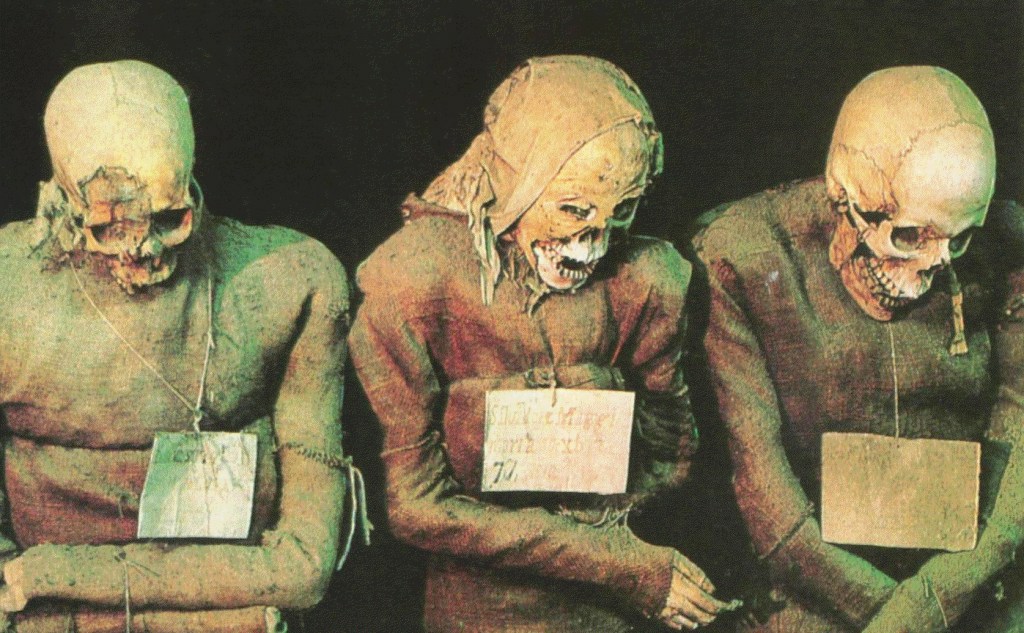


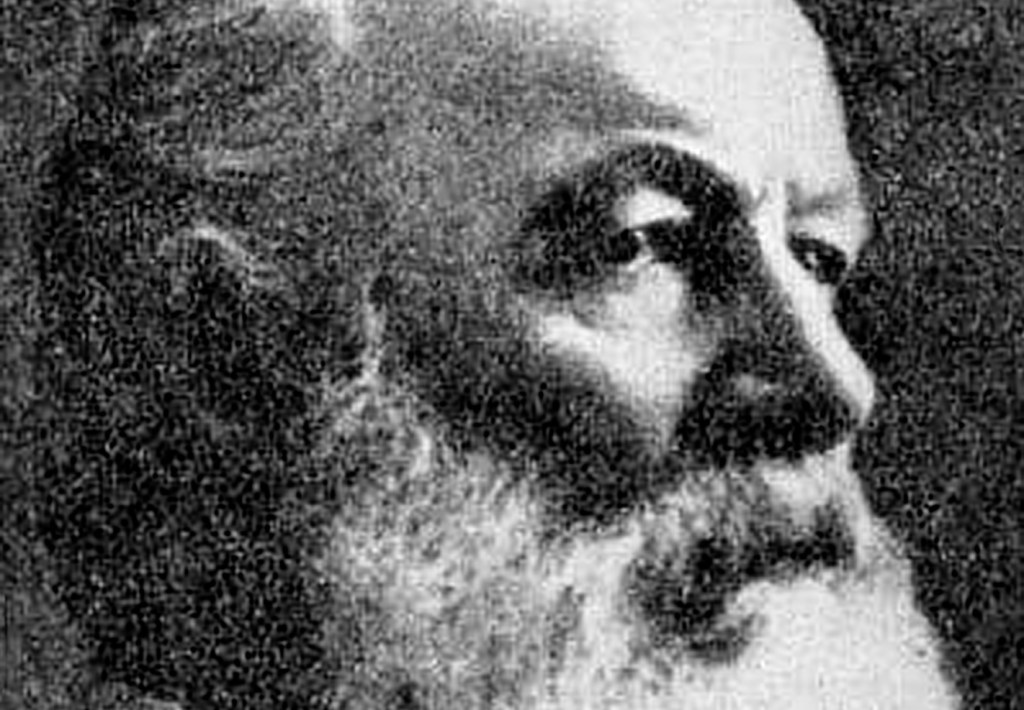


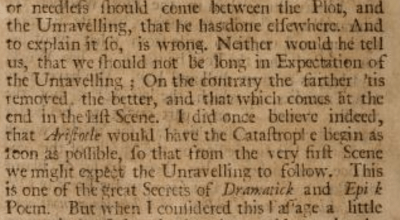


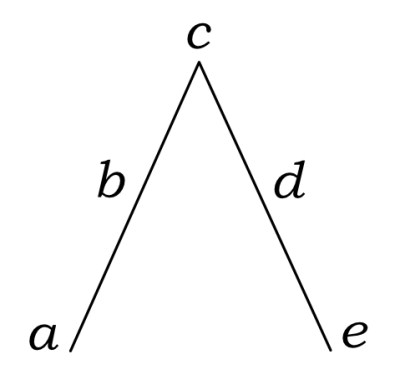
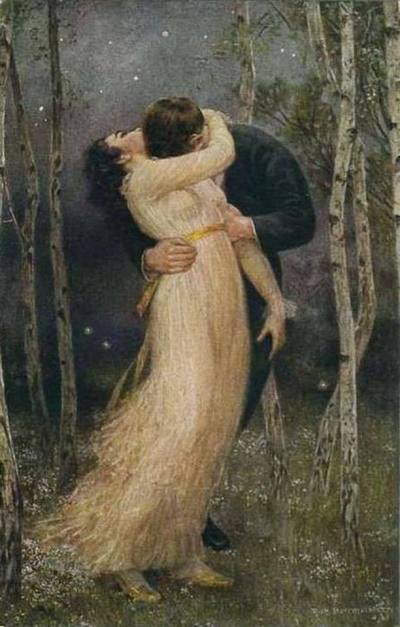


 Furin Chime Press™