Tag: Samuel Beckett

  • Do you what now

    Do you what now

    This piece of writing of mine first appeared in Hermes: Literary magazine of the University of Sydney in 1987. I structured it upon principles I observed in iconoclastic giants such as James Joyce, Samuel Beckett, and Tristan Tsara, who are gestured to throughout, along with all sorts of other allusions. I was completing my PhD thesis on Beckett, Joyce, and literary theory at the time. I think of the piece as a historical microcosm / moment rolled into one, recalling the hen in Joyce’s Finnegans Wake, who scratches up scraps and old letters from a midden heap, an act that generates the cosmic history embodied in the Wake itself. My historical agents aren’t hens, as you’ll see, but other creatures, who evoke a further giant in turn.

    Of course, mine is an infinitely impoverished effort alongside such greats. It was first titled “Carapace time song,” which seemed to give too much away. But I think of it as something like a humble song or ditty. A rather arcane rap? I found the creative exercise quite beneficial, and the piece found further utility in some presentations of performance art, accompanied by free jazz and rock improvisations. Somewhere I think have a tape of a free jazz version I performed in an “arts in the bar” university student venue. There was a foreseeable amount of laughter but nothing was thrown after all.

    Accompanying artworks are by the Spanish artist and photographer JR Korpa. The art works are cited at the end.


    no no time for stories you will show me that much no stories nor any other old lies to contradict what I say what I hear an instant is too long too short for that only the song I hear would be correct

    this music in my head not yours is it yours size of my room for a minute my room for an instant not yours is it yours that heap in the corner yours letters old notes yours pictures withering yours at the edges now this is old time music yours

    they have no idea of structure or dimension but they enter into it sometimes tiny legs moving flailing about they slip get nowhere sometimes look about for an instant curl over and die or are frightened by the light what little there is what little span of life they would if they could turn and flit away into the night but no going back that way

    put that on Lili Marlene

    there was a beginning once and for all and no changing that there was a beginning again you and a middle me ending together you follow me and I will show you my tiny space you me yours then back out into the night you will go what happens then I will not say I cannot only keep singing the way we sang together
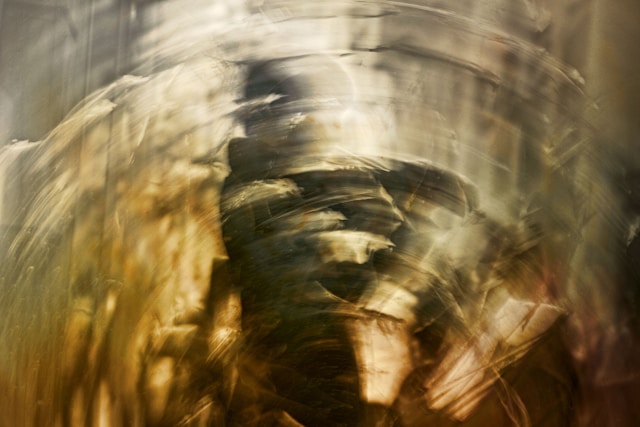
    Abstracted figure, as though seen through a circularly distorting lens

    the little bugs see us they say if they can say he is singing to her and she sipping red wine and it is one if they can tell time and they may say now they are falling about are they fighting to the death and one slips is subdued and dies and one scampers out into the night again and one is still singing again

    is it one fifty others will never know only us what that time meant to us how we suffered fought died together stood as one I glimmered in your eye a spot no body need see need know no care have no care no no

    yes again again

    he tells his life if you listen closely he speaks of a past time a good time when he had more and more pretty much of the same thing the future will be as bad or maybe worse and where am I now all I do is go on and you follow well then you go I follow yes yes again again yes again yes

    that one is of me yes i will never know what he saw in me but he painted me I sat for him through the whole night nothing else happened no one else came

    in that heap is the picture something to eat first maybe champignons white wine sauce down the gullet there is the picture you do not spill any on it the words you read Hope the speluncar principle of tropical architecture you have not heard the word he has been to Oxford they have big heads short storks truffles are a different matter entirely pigs dig them out from under oak trees

    when I picked one up it was a rock still when he picked one up it was a Picasso

    my song when I sing the music in my head soft but not soft enough deafening sometimes the cymbals crashing in my skull the pain too great when you move we move together for a time your heart quickens but then again the beating in my brain tells me song tells me you tell me pain the pain is too much go away that he will not come before his time again
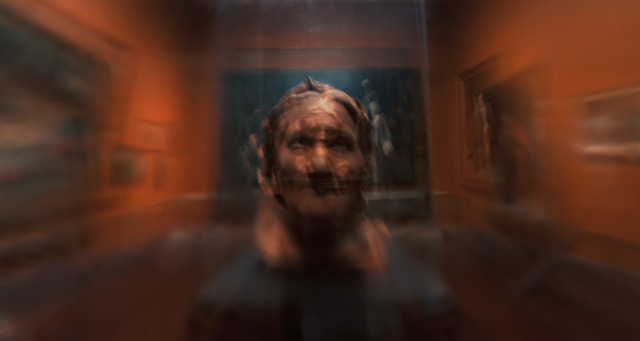
    they eat up the crumbs after them away

    underneath the covers my eyes moistened the mucus secretions of bodily fluid what else to lubricate them ease the burden of love for a time

    two fifty the time on the wall again if they could only hear you mark my words the end is nigh the beginning possible the middle necessary the end inevitable

    you bugger off then and never come back

    talk of the picture now for a time it is of both of us in the sand and of a little boat in your hands you would never recognise yourself how small you are but you are all the navies in the world a wish for man to explore plunder ravish burn pillage bring you home his treasure a pox on it

    you are still young that is all there is to it a triangular sail circles for your heads a shapeless mass for bodies I think we will survive you

    my space now describe my space not too much detail there is not much in reality it is clean the filth hard baked and polished to resemble bright enamel white paint dim at night you cannot see the corners or vertices yes there that was relatively painless was it not there is nowhere else for you to go now

    you do not exist then God needs invent you eat your crumbs the convenience is out the back

    who am I then if not me my house my space my country yours I am not he or she or they watching from the shadow I am a glimmer in her eye a mote perhaps she will run out into the shadow had but eventually my time will come is come

    that music in my space moving together three thirty on the wall crumbs taken a little life stirs somewhere in the shadow or it stirs and ends in the one instance watching

    there relatively painless was it not a diminutive parcel of flesh slipping out plop on the covers a life song begins life music to your ears you will compose yourself in no time that will be your art your space begun endured

    ended the cymbals searing into your brain no longer no longer your eyes burning from the light

    instance one eating acorns amidst the putrefaction of your dead two the next holding a toy boat three the next singing a hymn to your deity four the next renouncing your illusion slipping away not in pain again into your shadow your song in your head Lili of the lamplight a final snatch of verse Abou Ben Adhem may your tribe increase

    as a child you drew and painted composed yourself once upon a time that was a beginning then no thought of slipping silently between the sheets erect on your back in the dark again

    we must go on together you and I and we may not be separated you may never hear my song if it is whispered too soft for your ears or it is soft enough only for you to say
    Bright red and yellow abstract image

    that other one of me is a Karl Spitzweg poor poet his room his space his heap his cockroaches presumably no other you will notice he is dreaming of her as well and suffering the anxiety of influence then she is coming then she is gone

    you say it is my song my song yes again then back again to your anxiety do you remember when a knock came at the door

    you were recording his words a knock came at the door come in and he put that in as well a concrete instance you were bethicketted hear that now put that on

    bigger than the two of us we watched from the shadow our little legs this is my our space my space they appeared to struggle on the couch the glass shattered she appeared to die but then back up and out into the shadow quick back into the shadow again

    it is soft enough you will say it is your voice if you hear it but older than you and newer of course you will agree but back again to the things in my heap it is nearly five and soon time for you to go off

    out out get out scamper of little feet

    my candle too brief he will guide me here one whose little legs slip he goes nowhere on the bed they appear to read then struggle they are in their death throes why not say it Galeotto was the book and the one who wrote it now they read no more in it but go nowhere

    take the letters strew them about the room a space as though gone quite mad when she goes collect yourself then the letters put them back in order you will not achieve the same order but never mind it is all the same to me

    begin again into the bin again

    I cannot say where she goes my time too little to follow her the rumour has it her space a ring of light on the pavement there we watch from shadows from between cracks crimson on fag ends she looks for the time nearly one again is it time or is she gone already off into the shadow again quick off

    stop end enough

    we ring round their space in the shadow keep vigil they do not see us for the most part only occasionally a brisk spring clean or when one or the other expects the other such times we are incinerated to be sure nothing to say anyway but c’est la vie c’est la guerre perhaps stupidissimus omnium philosophorum

    music to your ears boom boom sounds of King Billy

    once upon a time again she comes begins looks through his pictures his letters his notes play they are replete stuffed again he is not visible back inside at his convenience she discovers you shrieks like a God in pain he enters from the passage spring cleaning is imperative off into the shadows can you come again do come again

    a little more time a little less a little

    we love you under the earth where you sleep until you come again we wait in our graves of fire and water that will be paradise adieu until then we live off your crumbs

    half after one again and is that a new addition potential for all those dirty little things to do in one end out the other shriek I come I am here now off to the wars
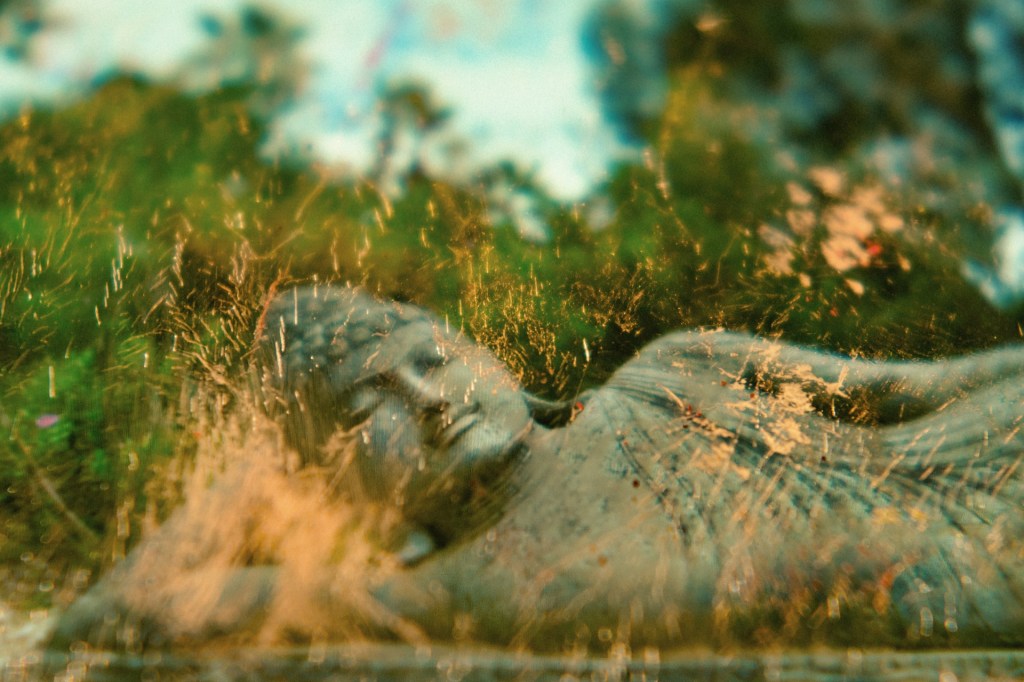
    Distorted reclining Buddha

    goodnight goodnight goodnight Lili

    silent night scratching of legs in the dark Christ that I were in my bed and you in my arms

    cockroach time song love me love my galoshes

    that one is Buddha you can distinguish the others fawning about him he is left by an absent one they seem to attend his song the key is of some significance I forget what

    suddenly hand on breast from behind shriek on the back in one deft move smother the cry with kisses while your comrades in arms leer on

    you would have liked me had you known me had me when I was a little littler than now my child music innocent soul stirs still beneath this grizzled exterior a bit rough at the edges admittedly heart of gold read this between my lines my leg

    here we are again again yes again were you the ocean I would sail you conquer you entire regiments of cavalry have ridden over you my space my country

    will you wear that for me alone for me

    do you follow me now I follow you we are inseparable and that other we three together now we are my space now yours now that other all at once one now without beginning end my space no space for structure my space all middle no circumference all circumference no middle my space you follow me I must go on too

    filth hard baked white enamel black spots if you look close two on the wall scuttle into the shadow

    in the bin their space they stir shred old notes old pictures bring home their treasure their trophies their nest their space put things back in order lock the door John they will never achieve the proper order but no matter to them one day we will leer on from the shadow

    in your hand your music now your space of life your words now when you awaken what insect space will you find becomes you look at the bristles on your legs off in to the shadow

    enough no more no enough stop end tell them I am sick I am dead

    shredded your pictures your literature incinerated too at Alexandria that little nest little by little by little again you stir gather your things in order the order that is of little consequence

    I dirty your words when I come like a robber at night sing my song stridulent in the shadow dirty your pictures shred them for my nest my space you are displeased to put it mildly and will incinerate me if it is within your power yes again yes it is no stop shriek I die off into

    crimson fag ends again in the bin it all ended when he grew tired of showering in the afternoon you know
    Distorted image, architecture

    bricolage my decor since you ask my dear girl a bit of this and that I collect things yes again yes I like it small comforts do you smoke yes peckish yes music in my humble space too soft too loud my pictures I have prepared a few crumbs self-deprecating chuckle eat first then down to business

    with white wine what smack of bristle lips

    sounds at the door you must not be anxious they cannot come into my space or I hope they are invisible heart beating in your head for an instant then quiet what is on this note look close in the subdued light oh shit shriek scamper off into shadow

    do you see the leg bristles Lili my Lili

    lamplight she is and a bag of crisps dropped where others watching will pick up the crumbs

    then she is gone it is three she is gone to him

    there is a beginning once and for all and now there is no changing that

    blink an Escher the inside is out she follows him not he her they are not looking at them rather they them not the little watch the big the big the little now enough of that let us down to business

    the war music at night keeps me from my thoughts heart in my head my thoughts fly to him nearer my soul a little after three

    bristle leg across Helen of Troy bristle legs

    seek new life new away from the stridulous hum of men into the shadow once again night then my space describe off flit my your space

    nests in shreds of letter pictures recorded shreds of bigger lives bigger times my music a few crumbs while you out there knock at my door shuffle about never mind on your back bristle ignore cry die fly flit off describe space my then night again one

    you will not weep a letter from the war dear father who art in your warm space hello father come if you can to do you repress fatherly tears hand on knee on thigh for comfort here are your crumbs he will never come into your space never again never tell mother I am still a virgin too boyish chuckle goodbye for now goodbye amen

    my time too little to follow only rumours are carried to me my nest

    little Jimmy I remember lillies to the pond for joy not dead alive not dead then alive again but no telling shreds of rumour time he scratches that flits into the night again it is carried to me in time I hear it on the wireless

    the more he will want she will never come she will come he will never want no more never

    Dresden us in the cracks our your space your hair to climb upon upon your bristles anyone of these Iittle times will do as well

    I will be cross with you I will not touch you in your private space but nearly close soft enough to touch you go I follow you your space your music

    germane to the issue voids my your space tiny insect voice tick tick she lies sleeping on heat eyes all about shreds of bigger lives the same tiny time there is a nice distinction shreds of blind eyes point to the light tick tick two ticks two black points on the wall too
    I am cross with you yes you yes again same again again he waits alone again sings listens she comes again crumbs pictures notes they you watch again sing eat dance excrete fight to the death again again knock at the door shriek off into the dark alone again sing again again

    proof tick tick tick tick tick tick tick tick tick again tick

    white enamel hard baked filth cube my space this instant look up and around

    curved it is straight more sphere than sphere but no a shred of theory has a price tag on it you must see that do that

    ah she comes bearing gifts this time progress hang the expense not a shred of rumour no not yes again yes not a shred of picture no nor note no nor tobacco no but a garment from the antipodes a little rubber hat to keep the moisture out what crumbs in the bin this time take care for me though I beat you and flay you by God we stir twitch

    upon my word what is this brought back from the wars a shred of Her Majesty’s spoil purchased with blood on the Spanish Main bless my soul shall I treasure you pass you down through my generation an item on the wall regard with all due veneration an item on your person

    do you scratch no that shred my son died in the night for that an assault from the rear he stood bravely so the rumour has it crossed alone he sent that back a time before take comfort in it the crumbs are dried by now will you dance will you die will you bring me home a flower no

    into the bin again scuttle through the leaves for a tiny treasure it is some gimcracks in it the Queen is wise above her years flit drag flit drag flit off into the shadow again off

    there was a middle once and for all time without end quick back to from our coign

    open there do you follow me now there again farther on an instant push push again it appears to come no no shriek yes again yes there give it a slap stop end shriek slap out plop on cover have a smoke back to work again

    tum the wireless on first first my notes there is a beginning your voice hums hymns bristies

    no sound in the blood goodnight

    day night Christ in your bed again back to Buddha back to back Lili Lili how sweet it tasted you me voices sing together that instant soundless quieten now no fraction here again it all slows down out there she is gone in here you

    so I sing on soft soft there will come a better time quiet time inside the shriek is come and gone there will come a better time again we will go down to the sea you and I as we used cast ourselves out the two of us looking on from the shadow

    Michael Guest © 1987


    A thanks to JR Korpa for his beautiful, provocative images, sourced from Unsplash. What an enhancing complement to the text. They are, in order of appearance:

    • Geigerbrandt (2019)
    • Korpaism museum I (2019)
    • Untitled (2024)
    • Poem without words (2019)
    • The architect of love III (2019)
    • Lonely silhouette in the streets (2019)

    JR Korpa, https://unsplash.com/@jrkorpa
  • Maeterlinck’s play The Blind (Part Two)

    Maeterlinck’s play The Blind (Part Two)

    Reading Maeterlinck’s The Blind, we become aware of a continuous, brilliant process of transposition and streamlining into Waiting for Godot. Here’s an instance from Part One of the previous post:

    In Waiting for Godot, Pozzo is of course the archetypal blind man, with his definitive fatalistic proclamation on time, and its reduction to a metaphysical eternal instant:

    And testily, when pressed about when it was he had become blind: “Don’t question me! The blind have no notion of time.”

    Beckett’s self-parodic humour, we detect, lies partly in the knowledge of the appropriative act. It is like a sly confessional acknowledgement. Notice what becomes of Maeterlinck’s gothic setting:

    Of course: “A country road. A tree. Evening.” From which Beckett draws comic business in a sly acknowledgement:

    Hence there is, for us readers of 2025, endless existential marvel to be derived from Maeterlinck’sThe Dead. The play could be given spectacular minimalistic realization in the post-Beckett era, using sound and lighting effects. It absolutely warrants production. Without further ado, let’s turn to the second part.

    • In the text below , *** indicates some select “Beckettian” touches, among copious others.

    The Blind (continued)

    [*86]

    THE YOUNG BLIND GIRL.
    My lids are shut, but I feel that my eyes are alive.…

    FIRST BLIND MAN.
    Mine are open.

    SECOND BLIND MAN.
    I sleep with my eyes open.

    THIRD BLIND MAN.
    Let us not talk of our eyes!

    SECOND BLIND MAN.
    It is not long since you came, is it?

    THE VERY OLD BLIND MAN.
    One evening at prayers I heard a voice on the women’s side that I did not recognize; and I knew by your voice that you were very young…. I would have liked to see you, to hear you.…

    FIRST BLIND MAN.
    I didn’t perceive anything.

    SECOND BLIND MAN.
    He gave us no warning.

    SIXTH BLIND MAN.
    They say you are beautiful as a woman who comes from very far.

    [*87]

    THE YOUNG BLIND GIRL
    I have never seen myself.

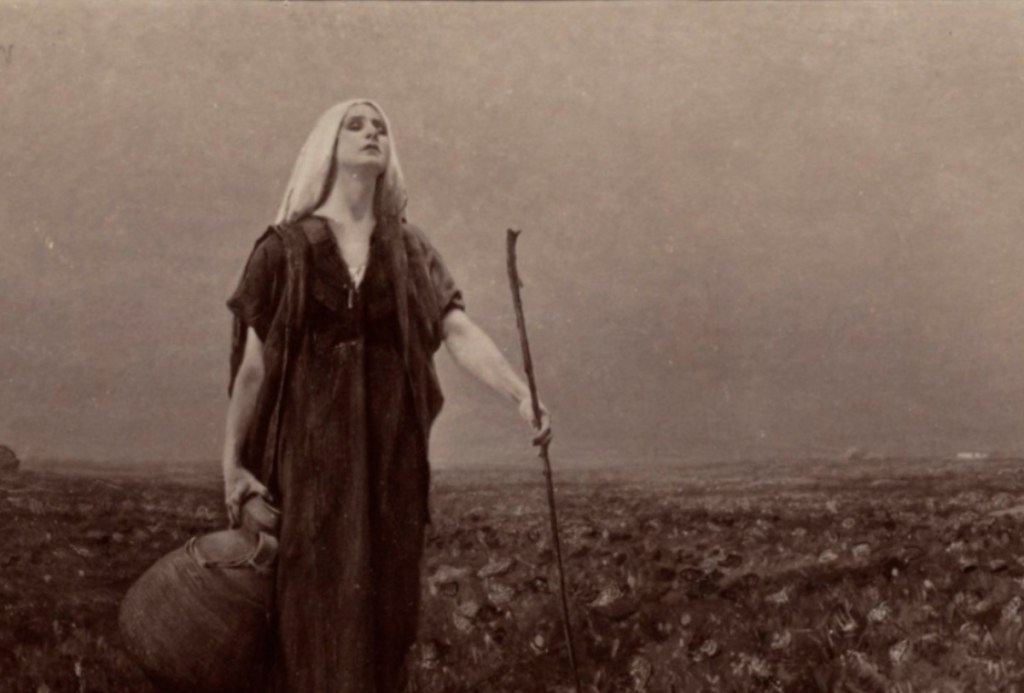
    Blind Woman in Vast Landscape with Jug and Walking Stick. 1892. Web. 08 Jan 2025 (digitalcommonwalth.org)

    THE VERY OLD BLIND MAN.
    We have never seen each other. We ask and we reply; we live together, we are always together, but we know not what we are! … In vain we touch each other with both hands; the eyes learn more than the hands.…

    SIXTH BLIND MAN.
    I see your shadows sometimes, when you are in the sun.

    THE VERY OLD BLIND MAN.
    We have never seen the house in which we live; in vain we feel the walls and the windows; we do not know where we live!…

    THE VERY OLD BLIND WOMAN.
    They say it is an old château, very gloomy and very wretched, where no light is ever seen except in the tower where the priest has his room.

    FIRST BLIND MAN.
    There is no need of light for those who do not see.

    SIXTH BLIND MAN.
    When I tend the flock, in the neighborhood of the Asylum, the sheep return of themselves when they see at nightfall that light in the tower.… They have never misled me.

    [*88]

    THE VERY OLD BLIND MAN.
    Years and years we have been together, and we have never seen each other! You would say we were forever alone! … To love, one must see.

    THE VERY OLD BLIND WOMAN.
    I dream sometimes that I see …

    THE VERY OLD BLIND MAN.
    I see only in my dreams…

    FIRST BLIND MAN.
    I do not dream, usually, except at midnight.

    SECOND BLIND MAN.
    Of what can one dream where the hands are motionless?

    [A flurry of wind shakes the forest, and the leaves fall, thick and gloomily.]

    FIFTH BLIND MAN.
    Who touched my hands?

    FIRST BLIND MAN.
    Something is falling about us!

    THE VERY OLD BLIND MAN.
    That comes from above; I don’t know what it is…

    [*89]

    FIFTH BLIND MAN.
    Who touched my hands? — I was asleep; let me sleep!

    THE VERY OLD BLIND MAN.
    Nobody touched your hands.

    FIFTH BLIND MAN.
    Who took my hands? Answer loudly; l am a little hard of hearing …

    THE VERY OLD BLIND MAN.
    We do not know ourselves.

    FIFTH BLIND MAN.
    Has someone come to give us warning?

    FIRST BLIND MAN.
    It is useless to reply; he hears nothing.

    THIRD BLIND MAN.
    It must be admitted, the deaf are very unfortunate.

    THE VERY OLD BLIND MAN.
    I am weary of staying seated.

    SIXTH BLIND MAN.
    I am weary of staying here.

    [*90]

    SECOND BLIND MAN.
    It seems to me we are so far from one another.… Let us try to get a little nearer together, — it is beginning to get cold.…

    THIRD BLIND MAN.
    I dare not rise! We had better stay where we are.

    THE VERY OLD BLIND MAN.
    We do not know what there may be among us.

    SIXTH BLIND MAN.
    I think both my hands are in blood; I would like to stand up.

    THIRD BLIND MAN.
    You are leaning toward me, — I hear you.

    [The blind madwoman rubs her eyes violently, groaning and turning obstinately toward the motionless priest.]

    FIRST BLIND MAN.
    I hear still another noise.…

    THE VERY OLD BLIND WOMAN.
    I think it is our unfortunate sister rubbing her eyes.

    SECOND BLIND MAN.
    She is never doing anything else; I hear her every night.

    [*91]

    THIRD BLIND MAN.
    She is mad; she never speaks.

    THE VERY OLD BLIND WOMAN.
    She has never spoken since she had her child.… She seems always to be afraid.…

    THE VERY OLD BLIND MAN
    You are not afraid here then?

    FIRST BLIND MAN.
    Who?

    THE VERY OLD BLIND MAN.
    All the rest of us.

    THE VERY OLD BLIND WOMAN.
    Yes, yes; we are afraid.

    THE YOUNG BLIND GIRL.
    We have been afraid for a long time.

    FIRST BLIND MAN.
    Why did you ask that?

    THE VERY OLD BLIND MAN.
    I do not know why I asked it.… There is something here I do not understand…. It seems to me I hear weeping all at once among us.…

    FIRST BLIND MAN.
    There is no need to fear; I think it is the madwoman.

    [*92]

    THE VERY OLD BLIND MAN.
    There is something else beside … I am sure there is something else beside…. It is not that alone that makes me afraid.

    THE VERY OLD BLIND WOMAN.
    She always weeps when she is going to give suck to her child. ***

    FIRST BLIND MAN.
    She is the only one that weeps so.

    THE VERY OLD BLIND WOMAN.
    They say she sees still at times.

    FIRST BLIND MAN.
    You do not hear the others weep.

    THE VERY OLD BLIND MAN.
    To weep, one must see. ***

    THE YOUNG BLIND GIRL.
    I smell an odor of flowers about us.

    FIRST BLIND MAN.
    I smell only the smell of the earth.

    THE YOUNG BLIND GIRL.
    There are flowers, — there are flowers about us.

    [*93]

    SECOND BLIND MAN.
    I smell only the smell of the earth.

    THE VERY OLD BLIND WOMAN
    I caught the perfume of flowers in the wind….

    THIRD BLIND MAN.
    I smell only the smell of the earth.

    THE VERY OLD BLIND MAN.
    I believe the women are right.

    SIXTH BLIND MAN.
    Where are they?’ — I will go pluck them.

    THE YOUNG BLIND GIRL.
    At your right. Rise!

    [The sixth blind man rises slowly and advances groping, and stumbling against the bushes and trees, toward the asphodels, which he breaks and crushes on his way.]

    THE YOUNG BLIND GIRL.
    I hear you breaking the green stalks. Stop! stop!

    FIRST BLIND MAN.
    Don’t worry yourselves about flowers, but think of getting home.

    SIXTH BLIND MAN.
    I no longer dare return on my steps.

    [*94]

    THE YOUNG BLIND GIRL.
    You need not return. — Wait. — [She rises.] Oh, how cold the earth is! It is going to freeze. — [She advances without hesitation toward the strange pale asphodels; but she is stopped in the neighborhood of the flowers by the uprooted tree and the fragments of rock] They are here. — I cannot reach them; they are on your side.

    SIXTH BLIND MAN.
    I believe I am plucking them.

    [He plucks the scattered flowers, gropingly, and offers them to her; the night birds fly away.]

    THE YOUNG BLIND GIRL.
    It seems to me I saw these flowers in the old days…. I no longer know their name.… Alas, how sickly they are, and how soft the stems are! I hardly recognize them. … I think it is the flower of the dead. [She twines the asphodels in her hair.]

    THE VERY OLD BLIND MAN.
    I hear the noise of your hair.

    THE YOUNG BLIND GIRL.
    It is the flowers.…

    THE VERY OLD BLIND MAN.
    We shall not see you.…

    [*95]

    THE YOUNG BLIND GIRL.
    I shall not see myself, anymore.… I am cold.

    [At this moment the wind rises in the forest, and the sea roars suddenly and with violence against cliffs very near.]

    FIRST BLIND MAN.
    It thunders!

    SECOND BLIND MAN.
    I think there is a storm rising.

    THE VERY OLD BLIND WOMAN.
    I think it is the sea.

    THIRD BLIND MAN.
    The sea? — Is it the sea? — But it is hardly two steps from us! — It is at our feet! I hear it all about me! — It must be something else!

    THE YOUNG BLIND GIRL.
    I hear the noise of breakers at my feet.

    FIRST BLIND MAN.
    I think it is the wind in the dead leaves. ***

    THE VERY OLD BLIND MAN.
    I think the women are right.

    THIRD BLIND MAN.
    It will come here!

    [*96]

    FIRST BLIND MAN.
    What direction does the wind come from?

    SECOND BLIND MAN.
    It comes from the sea.

    THE VERY OLD BLIND MAN.
    It always comes from the sea. The sea surrounds us on all sides. It cannot come from anywhere else.…

    FIRST BLIND MAN.
    Let us not keep on thinking of the sea!

    SECOND BLIND MAN.
    We must think of it. It will reach us soon.

    FIRST BLIND MAN.
    You do not know if it be the sea.

    SECOND BLIND MAN.
    I hear its surges as if I could dip both hands in them. We cannot stay here! It is perhaps all about us.

    THE VERY OLD BLIND MAN.
    Where would you go?

    SECOND BLIND MAN.
    No matter where! no matter where! I will not hear this noise of waters any longer! Let us go! Let us go!

    [*97]

    THIRD BLIND MAN.
    I think I hear something else. — Listen!

    [A sound of footfalls is heard, hurried and far away, in the dead leaves.]

    FIRST BLIND MAN.
    There is something coming this way.

    SECOND BLIND MAN.
    He is coming! He is coming! He is coming back!

    THIRD BLIND MAN.
    He is coming with little quick steps, like a little child.

    SECOND BLIND MAN.
    Let us make no complaints to him today.

    THE VERY OLD BLIND WOMAN.
    I believe that is not the step of a man!

    [A great dog enters in the forest, and passes in front of the blind folk. — Silence.]

    FIRST BLIND MAN.
    Who’s there? — Who are you? — Have pity on us, we have been waiting so long! …[The dog stops and coming to the blind man, puts his fore paws on his knees] Oh, oh, what have you put on my knees? What is it? … Is it an animal? — I believe it is a dog.… Oh, oh, it is the dog, it is the Asylum dog! Come here, sir, come here! He comes to save us! Come here! come here, sir!

    Jumping dog, probably by Jan Baptist Weenix (1636 – 1661) (RKD Research)

    [*98]

    THE OTHERS. Come here, sir! come here!

    FIRST BLIND MAN.
    He has come to save us! He has followed our tracks all the way! He is licking my hands as if he had just found me after centuries! He howls for joy! He is going to die for joy! Listen, listen!

    THE OTHERS
    Come here! Come here!

    THE VERY OLD BLIND MAN.
    Perhaps he is running ahead of somebody…

    FIRST BLIND MAN.
    No, no, he is alone. — I hear nothing coming. — We need no other guide; there is none better. He will lead us wherever we want to go; he will obey us …

    THE VERY OLD BLIND WOMAN.
    I dare not follow him…

    THE YOUNG BLIND GIRL.
    Nor I.
    FIRST BLIND MAN.

    Why not? His sight is better than ours.

    [*99]

    SECOND BLIND MAN.
    Don’t listen to the women!

    THIRD BLIND MAN.
    I believe there is a change in the sky. I breathe freely. The air is pure now …

    THE VERY OLD BLIND WOMAN.
    It is the sea wind passing about us.

    SIXTH BLIND MAN.
    It seems to me it is getting lighter; I believe the sun is rising …

    THE VERY OLD BLIND WOMAN.
    I believe it is getting colder

    FIRST BLIND MAN.
    We are going to find our way again. He is dragging me! … he is dragging me. He is drunk with joy! — I can no longer hold him back! .… Follow me, follow me. We are going back to the house! …

    [He rises, dragged by the dog, who leads him to the motionless priest, and stops.]

    THE OTHERS.
    Where are you? Where are you? — Where are you going? — Take care!

    [*100]

    FIRST BLIND MAN.
    Wait, wait! Do not follow me yet; I will come back … He is stopping. — What is the matter with him? — Oh, oh, I touched something very cold!

    SECOND BLIND MAN.
    What are you saying? — We can hardly hear your voice any longer.

    FIRST BLIND MAN.
    I have touched — I believe I am touching a face!

    THIRD BLIND MAN.
    What are you saying? — We hardly understand you any longer. What is the matter with you? — Where are you? — Are you already so far away?

    FIRST BLIND MAN.
    Oh, oh, oh! — I do not know yet what it is. — There is a dead man in the midst of us.

    THE OTHERS.
    A dead man in the midst of us? — Where are you? Where are you?

    FIRST BLIND MAN.
    There is a dead man among us, I tell you! Oh, oh, I touched a dead man’s face! — You are sitting beside a dead man! [*101] One of us must have died suddenly. Why don’t you speak, so that I may know who are still alive? Where are you? — Answer! answer, all of you!

    [The blind folk reply in turn, with the exception of the madwoman and the deaf man. The three old women have ceased their prayers.]

    FIRST BLIND MAN.
    I no longer distinguish your voices … You all speak alike! …Your voices are all trembling.

    THIRD BLIND MAN.
    There are two that have not answered… Where are they? [He touches with his stick the fifth blind man.]

    FIFTH BLIND MAN.
    Oh! oh! I was asleep; let me sleep!

    SIXTH BLIND MAN.
    It is not he. — Is it the madwoman?

    THE VERY OLD BLIND WOMAN.
    She is sitting beside me; I can hear that she is alive …

    FIRST BLIND MAN.
    I believe … I believe it is the priest! — He is standing up! Come, come, come!

    [*102]

    SECOND BLIND MAN.
    He is standing up?

    THIRD BLIND MAN
    Then he is not dead!

    THE VERY OLD BLIND MAN.
    Where is he?

    SIXTH BLIND MAN.
    Let us go see!

    [They all rise, with the exception of the mad- woman and the fifth blind man, and advance, groping, toward the dead.]

    SECOND BLIND MAN.
    Is he here? — Is it he?

    THIRD BLIND MAN.
    Yes, yes, I recognize him

    FIRST BLIND MAN.
    My God! my God! what will become of us?

    THE VERY OLD BLIND WOMAN.
    Father! father! — Is it you? Father, what has happened? — What is the matter? — Answer us! — We are all about you. Oh! oh! oh!

    THE VERY OLD BLIND MAN.
    Bring some water; perhaps he still lives.

    [*103]

    SECOND BLIND MAN.
    Let us try … He might perhaps be able to take us back to the Asylum …

    Head of an old blind man
    Anthon Gerhard Alexander van Rappard, 1868 – 1892 (rijksmuseum.nl)

    THIRD BLIND. MAN.
    It is useless; I no longer hear his heart. — He is cold.

    FIRST BLIND MAN.
    He died without speaking a word.

    THIRD BLIND MAN.
    He ought to have forewarned us.

    SECOND BLIND MAN.
    Oh! how old he was!… This is the first time I ever touched his face …

    THIRD BLIND MAN.
    [Feeling the corpse.] He is taller than we.

    SECOND BLIND MAN.
    His eyes are wide open. He died with his hands clasped.***

    FIRST BLIND MAN.
    It was unreasonable to die so …

    SECOND BLIND MAN.
    He is not standing up, he is sitting on a stone.

    [*104]

    THE VERY OLD BLIND WOMAN.
    My God! my God! I did not dream of such a thing! … such a thing! … He has been sick such a long time … He must have suffered today … Oh, oh, oh! — He never complained; he only pressed our hands … One does not always understand … One never understands! … Let us go pray about him; go down on your knees …

    [The women kneel, moaning.]

    FIRST BLIND MAN.
    I dare not go down on my knees.

    SECOND BLIND MAN.
    You cannot tell what you might kneel on here.

    THIRD BLIND MAN.
    Was he ill? … He did not tell us …

    SECOND BLIND MAN.
    I heard him muttering in a low voice as he went away. I think he was speaking to our young sister. What did he say?

    FIRST BLIND MAN.
    She will not answer.

    SECOND BLIND MAN.
    Wai you no longer answer us? — Where are you, I say? — Speak.

    [*105]

    THE VERY OLD BLIND WOMAN.
    You made him suffer too much; you have made him die.… You would not go on; you would sit down on the stones of the road to eat; you have grumbled all day … I heard him sigh … He lost heart…

    FIRST BLIND MAN.
    Was he ill? Did you know it?

    THE VERY OLD BLIND MAN.
    We knew nothing … We never saw him.… When did we ever know anything behind our poor dead eyes? … He never complained. Now it is too late … I have seen three die … but never in this way! … Now it is our turn.

    FIRST BLIND MAN.
    It was not I that made him suffer. — I said nothing.

    SECOND BLIND MAN.
    No more did I. We followed him without saying anything.

    THIRD BLIND MAN.
    He died going after water for the madwoman.

    FIRST BLIND MAN.
    What are we going to do now? Where shall we go?

    [*106]

    THIRD BLIND MAN.
    Where is the dog?

    FIRST BLIND MAN.
    Here; he will not go away from the dead man.

    THIRD BLIND MAN.
    Drag him away! Take him off, take him off!

    FIRST BLIND MAN.
    He will not leave the dead man.

    SECOND BLIND MAN.
    We cannot wait beside a dead man. We cannot die here in the dark.

    THIRD BLIND MAN.
    Let us remain together; let us not scatter; let us hold one another by the hand; let us all sit on this stone … Where are the others? … Come here, come, come!

    THE VERY OLD BLIND MAN.
    Where are you?

    THIRD BLIND MAN.
    Here; I am here. Are we all together? — Come nearer me. — Where are your hands? — It is very cold.

    [*107]

    THE YOUNG BLIND GIRL.
    Oh, how cold your hands are!

    THIRD BLIND MAN.
    What are you doing?

    THE YOUNG BLIND GIRL.
    I was putting my hands on my eyes; I thought I was going to see all at once …

    FIRST BLIND MAN.
    Who is weeping so?

    THE VERY OLD BLIND WOMAN.
    It is the madwoman sobbing.

    FIRST BLIND MAN.
    And yet she does not know the truth.

    THE VERY OLD BLIND MAN.
    I think we are going to die here.

    THE VERY OLD BLIND WOMAN.
    Perhaps someone will come …

    THE VERY OLD BLIND MAN.
    Who else would come? …

    THE VERY OLD BLIND WOMAN.
    I do not know.

    [*108]

    FIRST BLIND MAN.
    I think the nuns will come out from the Asylum …

    THE VERY OLD BLIND WOMAN.
    They do not go out after dark.

    THE YOUNG BLIND GIRL.
    They never go out.

    SECOND BLIND MAN.
    I think the men at the great lighthouse will perceive us …

    THE VERY OLD BLIND MAN.
    They never come down from their tower.

    THIRD BLIND MAN.
    They will see us, perhaps.…

    THE VERY OLD BLIND WOMAN.
    They look always out to sea.

    THIRD BLIND MAN.
    It is cold.

    THE VERY OLD BLIND MAN.
    Listen to the dead leaves. I believe it is freezing. ***

    THE YOUNG BLIND GIRL.
    Oh! how hard the earth is!

    [*109]

    THIRD BLIND MAN.
    I hear on my left a sound I do not understand.

    THE VERY OLD BLIND MAN.
    It is the sea moaning against the rocks.

    THIRD BLIND MAN.
    I thought it was the women.

    THE VERY OLD BLIND WOMAN.
    I hear the ice breaking under the surf.

    FIRST BLIND MAN.
    Who is shivering so? It shakes everybody on the stone.

    SECOND BLIND MAN.
    I can no longer open my hands.

    THE VERY OLD BLIND MAN.
    I hear again a sound I do not understand.

    FIRST BLIND MAN.
    Who is shivering so among us? It shakes the stone.

    THE VERY OLD BLIND MAN.
    I think it is a woman.

    THE VERY OLD BLIND WOMAN.
    I think the madwoman is shivering the hardest.

    Portret van Sofonisba Anguissola, Anthony van Dyck, (1532-1625), ca. 1624 (RKD Research)

    [*110

    THIRD BLIND MAN.
    We do not hear her child.

    THE VERY OLD BLIND WOMAN.
    I think he is still nursing.

    THE VERY OLD BLIND MAN.
    He is the only one who can see where we are!

    FIRST BLIND MAN.
    I hear the north wind.

    SIXTH BLIND MAN.
    I think there are no more stars; it is going to snow.

    SECOND BLIND MAN.
    Then we are lost!

    THIRD BLIND MAN.
    If anyone sleeps, he must be aroused.

    THE VERY OLD BLIND MAN.
    Nevertheless, I am sleepy.

    [A sudden gust sweeps the dead leaves around in a whirlwind.]

    THE YOUNG BLIND GIRL.
    Do you hear the dead leaves? — I believe someone is coming toward us.

    [*111]

    SECOND BLIND MAN.
    It is the wind; listen!

    THIRD BLIND MAN.
    No one will ever come.

    THE VERY OLD BLIND MAN.
    The great cold will come …

    THE YOUNG BLIND GIRL.
    I hear walking far off.

    FIRST BLIND MAN.
    I hear only the dead leaves. ***

    THE YOUNG BLIND GIRL.
    I hear walking far away from us.

    SECOND BLIND MAN.
    I hear only the north wind.

    THE YOUNG BLIND GIRL.
    I tell you someone is coming toward us.

    THE VERY OLD BLIND WOMAN.
    I hear a sound of very slow footsteps.

    THE VERY OLD BLIND MAN.
    I believe the women are right.

    [It begins to snow in great flakes.]

    [*112]

    FIRST BLIND MAN.
    Oh! oh! what is it falling so cold upon my hands?

    SIXTH BLIND BIAN.
    It is snowing.

    FIRST BLIND MAN.
    Let us press close to one another.

    THE YOUNG BLIND GIRL.
    No, but listen! The sound of footsteps!

    THE VERY OLD BLIND WOMAN.
    For God’s sake, keep still an instant.

    THE YOUNG BLIND GIRL.
    They come nearer! they come nearer! listen!

    [Here the child of the blind madwoman begins suddenly to wail in the darkness.]

    THE VERY OLD BLIND MAN.
    The child is crying.

    THE YOUNG BLIND GIRL.
    He sees! he sees! He must see something if he cries. [She seizes the child in her arms and advances in the direction from which the sound of footsteps seems to come. The other women follow her anxiously and surround her.] I am going to meet him.

    [*113]

    THE VERY OLD BLIND MAN.
    Take care.

    THE YOUNG BLIND GIRL.
    Oh, how he cries! — What is the matter with him? — Don’t cry. — Don’t be afraid; there is nothing to frighten you, we are here; we are all about you. — What do you see? — Don’t be afraid at all. — Don’t cry so! — What do you see? — Tell me, what do you see?

    THE VERY OLD BLIND WOMAN.
    The sound of footsteps draws nearer and nearer: listen, listen!

    THE VERY OLD BLIND MAN.
    I hear the rustling of a gown against the dead leaves. ***

    SIXTH BLIND MAN.
    Is it a woman?

    THE VERY OLD BLIND MAN.
    Is it a noise of footsteps?

    FIRST BLIND MAN.
    Can it be perhaps the sea in the dead leaves?

    THE YOUNG BLIND GIRL.
    No, no! They are footsteps, they are footsteps, they are footsteps!

    [*114]

    THE VERY OLD BLIND WOBIAN.
    We shall know soon. Listen to the dead leaves.

    THE YOUNG BLIND GIRL.
    I hear them, I hear them almost beside us; listen, listen! — What do you see? What do you see?

    THE VERY OLD BLIND WOMAN.
    Which way is he looking?

    THE YOUNG BLIND GIRL.
    He keeps following the sound of the steps. — Look, look! When I turn him away, he turns back to see … He sees, he sees, he sees I — He must see something strange!

    THE VERY OLD BLIND WOMAN [stepping forward].
    Lift him above us, so that he may see better.

    THE YOUNG BLIND GIRL.
    Stand back, stand back. [She raises the child above the group of blind folk.] — The footsteps have stopped amongst us.

    THE VERY OLD BLIND WOMAN.
    They are here! They are in the midst of usl …

    [*115]

    THE YOUNG BLIND GIRL.
    Who are you? [Silence.]

    THE VERY OLD BLIND WOMAN.
    Have pity on us!

    [Silence. — The child weeps more desperately.] ***

    [Curtain.]


    • In Maurice Maeterlinck, The Intruder: The Blind; The Seven Princesses; The Death of Tintagiles, translated by Richard Hovey, NY: Dodd, Mead, and Company, 1911. Page numbers in the text (*) are from this edition.
    • *** indicates some select “Beckettian” touches, among copious others.

  • Maeterlinck’s play The Blind (Part One)

    Maeterlinck’s play The Blind (Part One)

    In my translator’s preface to Saneatsu Mushanokoji’s The Innocent (Omedetaki Hito of 1911), I noted a curious feature of the novella: Mushanokoji seems to anticipate aspects of very modern writers such as Samuel Beckett and Italo Calvino in particular. Mushanokoji’sThe Innocent intriguingly prefigures elements of Beckett’s minimalism and Calvino’s conceptual play, bridging literary traditions in a way that feels startlingly modern to contemporary readers.

    The preeminent scholar of Japanese modernism Donald Keene (1922 – 2019) may overlook Mushanokoji’s continuing and extensive potential, I feel, when he excludes him from relevance beyond his own milieu. Moreover, Keene was so imposing a figure, I suggest, that his oversight impeded translation of the work, although it is given frequent reference in critical discussions of Japanese modernism.

    Keene writes that Mushanokoji is

    more likely to be remembered for his humanitarian ideals and his writings on art than for his works of fiction. His popularity has lingered on, but his works seem to belong to another age.

    Dawn to the West: Japanese literature of the Modern Era (New York : Holt, Rinehart, and Winston, 1984 [p. 457])

    But I detect a disarming self-parodic strain in Mushanokoji’s novella, which has an effect of undermining (to a calculated extent) the absolute self-centeredness of the anti-hero “Jibun” (= “myself”) of the seminal I-novel. This obsession of Jibun’s is the very mechanism by which the narrative is enabled to spiral inward into the self, at the same time reducing his beloved Tsuru to a phantasm. It strains credibility that Jibun never once speaks with Tsuru, while remaining rational and empathetic in other respects. The inwardly moving spiral traced by the story is equally an effect of form and structure, such as we see where Jibun continues exploring the inner self in “addenda” to the main narrative, where Calvino-esque pieces are to be found, alongside little “Beckettian” dramas. Keene’s naturalistic reading overlooks the novella’s deliberate self-parody and its experimental form.

    At any rate, serving as a conduit, so to speak, for the apparent prescience of this, Mushanokoji’s first published work, is the impact that the Belgian playwright and Nobel Prize in Literature laureate Maurice Maeterlinck was having upon Mushanokoji at the time he was writing The Innocent. This sense of spiraling inwardness and abstraction links Mushanokoji directly to Maeterlinck, whose aesthetics of individualism and metaphysical exploration were pivotal during the novella’s composition. One tends to skim over the significant single reference to Maeterinck in Chapter 4:

    I have not seen her for almost a year. I have never spoken to her. Nonetheless, I believe that during the past three to four years, our hearts have not been strangers. It is a selfish belief, but I have held such thoughts for some years now, ever since I began seriously reading Maeterlinck.

    The Innocent, Mushanokoji, translated by Michael Guest, (Sydney: Furin Chime, 2024) p. 37

    Mushanokoji hitherto adopted Leo Tolstoy as his literary idol, but by the time he wrote The Innocent, had “graduated” from the Russian naturalist to the Belgian symbolist; reading Tolstoy, Mushanokoji wrote, now “gave [him] headaches” because of his prudery (Keene 451). Instead, he leaned towards Maeterlinck’s aesthetics of individualism.

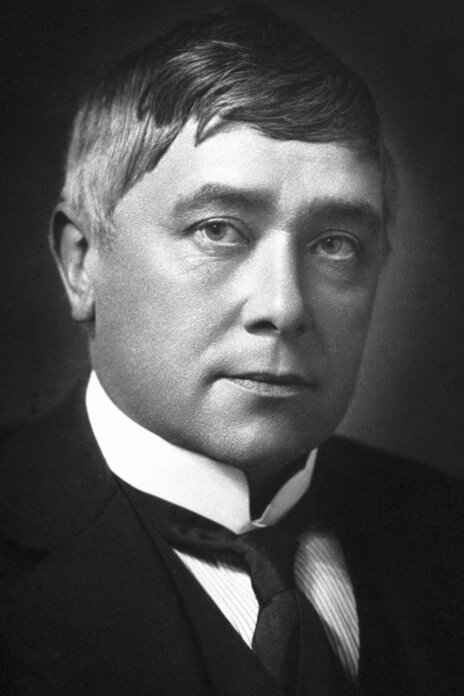
    Maurice Maeterlinck, from the Nobel Foundation Archive

    It is Beckett’s appropriation of the Belgian mystic that provides us with a direct connection toThe Innocent. By the time of Godot and Endgame, the symbolist theatre of Maeterlinck with its lack of plot and love of silence, had lost some currency: an American college student is memorialized as responding, when asked who Maurice Maeterlinck was, that he was the “king of Abyssinia” (William Lyon Phelps, “An Estimate of Maeterlinck,” North American Review 213.782 [Jan., 1921]). Beckett gives these theatrical aesthetics a new breath of life, while revivifying their metaphysical themes.

    Peter Szondi identifies Maeterlinck’s profound perception a defining realization that recurs throughout Beckett’s oeuvre:

    In Maeterlinck’s work only a single moment is dealt with, the moment when a helpless human being is overtaken by fate (32).

    Theory of the Modern Drama, trans. M. Hayes (Minneapolis: U of Minnesota P, 1987)

    It is so Beckettian, and essentially the same metaphysical thematic is at the bottom of two dramaticules in “addenda” to Mushanokoji’s The Innocent.

    Over my next couple posts, I will present an edition of Maeterlinck’s play, The Blind (Les Aveugles 1890) which strikingly demonstrates its significance for Beckett’s writing. Stark simplicity and themes of existential waiting resonate deeply with Beckett’s most iconic plays.

    Ashley Taggart writes of the “thematic debt owed by Beckett to Maeterlinck” identifiable in this work.

    Set in an indeterminate time, the situation depicted has a characteristic simplicity: six blind men and six blind women have been led out from their “asylum” for the day by an old priest. At a clearing in the forest, they stop, and, unknown to the others, the priest dies in their midst. Meanwhile, the blind await his return (from what they think is an excursion in search of bread and water) with mounting anxiety. That’s it. They sit around and wait, a la Godot, but in this case for the priest, whose lifeless body is slumped against a tree in between the men and the women. You could say it’s a one-act play minus the act.

    Maeterlinck and Beckett: Paying Lip-Service to Silence (Samuel Beckett Today / Aujourd’hui, Vol. 22, Samuel Beckett: Debts and Legacies [2010]}

    It is impossible to overlook the tonal and thematic features, broad and detailed, present in Maeterlink’s play, that Beckett lavishes in Waiting for Godot (1948/54) and Endgame (1957). Beckett’s deep engagement with Maeterlinck demonstrates the enduring relevance of these themes, which also reverberate in the background of Mushanokoji’s The Innocent.


    The Blind

    To Charles Van Lerberghe

    An ancient Norland forest, with an eternal look, under a sky of deep stars. In the centre, and in the deep of the night, a very old priest is sitting, wrapped in a great black cloak. The chest and the head, gently upturned and deathly motionless, rest against the trunk of a giant hollow oak. The face is fearsome pale and of an immovable waxen lividness, in which the purple lips fall slightly apart. The dumb, fixed eyes no longer look out from the visible side of Eternity and seem to bleed with immemorial sorrows and with tears. The hair, of a solemn whiteness, falls in stringy locks, stiff and few, over a face more illuminated and more weary than all that surrounds it in the watchful stillness of that melancholy wood. The hands, pitifully thin, are clasped rigidly over the thighs.

    On the right, six old men, all blind, are sitting on stones, stumps and dead leaves.

    On the left, separated from them by an uprooted tree and fragments of rock, six women, also blind, are sitting opposite the old men. Three among them pray and mourn without ceasing, in a muffled voice. Another is old in the extreme. The fifth, in an attitude of mute insanity, holds on her knees a little sleeping child. The sixth is strangely young, and her whole body is [*62] drenched with her beautiful hair. They, as well as the old men, are all clad in the same ample and sombre garments. Most of them are waiting, with their elbows on their knees and their faces in their hands; and all seem to have lost the habit of ineffectual gesture and no longer turn their heads at the stifled and uneasy noises of the Island. Tall funereal trees, — yews, weeping willows, cypresses, — cover them with their faithful shadows. A cluster of long, sickly asphodels is in bloom, not far from the priest, in the night. It is unusually oppressive, despite the moonlight that here and there struggles to pierce for an instant the glooms of the foliage.

    FIRST BLIND MAN (who was born blind): He hasn’t come back yet?

    SECOND BLIND MAN (who also was born blind): You have awakened me.

    FIRST BLIND MAN: I was sleeping too.

    THIRD BLIND MAN (also born blind): I was sleeping, too.

    FIRST BLIND MAN.
    He hasn’t come yet?

    SECOND BLIND MAN.
    I hear nothing coming. [*63]

    THIRD BLIND MAN.
    It is time to go back to the Asylum.

    FIRST BLIND MAN.
    We ought to find out where we are.

    SECOND BLIND MAN.
    It has grown cold since he left.

    FIRST BLIND MAN.
    We ought to find out where we are!

    THE VERY OLD BLIND MAN,
    Does anyone know where we are?

    THE VERY OLD BLIND WOMAN.
    We were walking a very long while; we must be a long way from the Asylum.

    FIRST BLIND MAN.
    Oh! the women are opposite us?

    THE VERY OLD BLIND WOMAN.
    We are sitting opposite you.

    FIRST BLIND MAN.
    Wait, I am coming over where you are. [He rises and gropes in the dark.] — Where are you? — Speak! let me hear where you are! [*64]

    THE VERY OLD BLIND WOMAN.
    Here; we are sitting on stones.

    FIRST BLIND MAN.
    [Advances and stumbles against the fallen tree and the rocks.] There is something between us.

    SECOND BLIND MAN.
    We had better keep our places.

    THIRD BLIND MAN.
    Where are you sitting? — Will you come over by us?

    THE VERY OLD BLIND WOMAN.
    We dare not rise!

    THIRD BLIND MAN.
    Why did he separate us?

    The Blind Leading the Blind by Pieter Breugel the Elder, 1568

    FIRST BLIND MAN.
    I hear praying on the women’s side.

    SECOND BLIND MAN.
    Yes; the three old women are praying.

    FIRST BLIND MAN.
    This is no time for prayer! [*65]

    SECOND BLIND MAN.
    You will pray soon enough, in the dormitory! [The three old women continue their prayers.]

    THIRD BLIND MAN.
    I should like to know who it is I am sitting by.

    SECOND BLIND MAN.
    I think I am next to you. [They feel about them.]

    THIRD BLIND MAN.
    We can’t reach each other.

    FIRST BLIND MAN.
    Nevertheless, we are not far apart. [He feels about him and strikes with his staff the fifth blind man, who utters a muffled groan.] The one who cannot hear is beside us.

    SECOND BLIND MAN.
    I don’t hear everybody; we were six just now.

    FIRST BLIND MAN.
    I am going to count. Let us question the women, too; we must know what to depend upon. I hear the three old women praying all the time; are they together?

    THE VERY OLD BLIND WOMAN.
    They are sitting beside me, on a rock. [*66]

    FIRST BLIND MAN.
    I am sitting on dead leaves.

    THIRD BLIND MAN.
    And the beautiful blind girl, where is she?

    THE VERY OLD BLIND WOMAN.
    She is near them that pray.

    SECOND BLIND MAN.
    Where is the mad woman, and her child?

    THE YOUNG BLIND GIRL.
    He sleeps; do not awaken him!

    FIRST BLIND MAN.
    Oh! how far away you are from us! I thought you were opposite me!

    THIRD BLIND MAN.
    We know – nearly – all we need to know. Let us chat a little, while we wait for the priest to come back.

    THE VERY OLD BLIND WOMAN.
    He told us to wait for him in silence.

    THIRD BLIND MAN.
    We are not in a church.

    THF VERY OLD BLIND WOMAN.
    You do not know where we are.
    [*67]

    THIRD BLIND MAN.
    I am afraid when I am not speaking,

    SECOND BLIND MAN.
    Do you know where the priest went?

    THIRD BLIND MAN.
    I think he leaves us for too long a time.

    FIRST BLIND MAN.
    He is getting too old. It looks as though he himself has no longer seen for some time. He will not admit it, for fear another should come to take his place among us; but I suspect he hardly sees at all anymore. We must have another guide; he no longer listens to us, and we are getting too numerous. He and the three nuns are the only people in the house who can see; and they are all older than we are! — I am sure he has misled us and that he is looking for the road. Where has he gone? — He has no right to leave us here. . . .

    THE VERY OLD BLIND MAN.
    He has gone a long way: I think he said so to the women.

    FIRST BLIND MAN.
    He no longer speaks except to the women?
    — Do we no longer exist? — We shall have to complain of him in the end. [*68]

    THE VERY OLD BLIND MAN.
    To whom will you complain?

    FIRST BLIND MAN.
    I don’t know yet; we shall see, we shall see. — But where has he gone, I say? — I am asking the women.

    THE VERY OLD BLIND WOMAN.
    He was weary with walking such a long time. I think he sat down a moment among us. He has been very sad and very feeble for several days. He is afraid since the physician died. He is alone. He hardly speaks anymore. I don’t know what has happened. He insisted on going out today. He said he wished to see the Island, a last time, in the sunshine, before winter came. The winter will be very long and cold, it seems, and the ice comes already from the North. He was very uneasy, too: they say the storms of the last few days have swollen the river and all the dikes are shaken. He said also that the sea frightened him; it is troubled without cause, it seems, and the coast of the Island is no longer high enough. He wished to see; but he did not tell us what he saw. — At present, I think he has gone to get some bread and water for the mad woman. He said he would have to go, a long way, perhaps. We must wait.

    [*69]

    THE YOUNG BLIND GIRL.
    He took my hands when he left; and his hands shook as if he were afraid. Then he kissed me.

    FIRST BLIND MAN.
    Oh! oh!

    THE YOUNG BLIND GIRL.
    I asked him what had happened. He told me he did not know what was going to happen. He told me the reign of old men was going to end, perhaps.…

    FIRST BLIND MAN.
    What did he mean by saying that?

    THE YOUNG BLIND GIRL.
    I did not understand him. He told me he was going over by the great lighthouse.

    FIRST BLIND MAN.
    Is there a lighthouse here?

    THE YOUNG BLIND GIRL.
    Yes, at the north of the Island. I believe we are not far from it. He said he saw the light of the beacon even here, through the leaves. He has never seemed more sorrowful than today, and I believe he has been weeping for several days. I do not know why, but I wept also without seeing him. I did not hear [*70] him go away. I did not question him any further. I was aware that he smiled very gravely; I was aware that he closed his eyes and wished to be silent.…

    FIRST BLIND MAN.
    He said nothing to us of all that!

    THE YOUNG BLIND GIRL.
    You do not listen when he speaks!

    THE VERY OLD BLIND WOMAN.
    You all murmur when he speaks!

    SECOND BLIND MAN.
    He merely said “Good-night” to us when he went away.

    THIRD BLIND MAN.
    It must be very late.

    FIRST BLIND MAN.
    He said “Good-night” two or three times when he went away, as if he were going to sleep. I was aware that he was looking at me when he said “Good-night; good-night.” — The voice has a different sound when you look at anyone fixedly.

    FIFTH BLIND MAN.
    Pity the blind!

    [*71]

    FIRST BLIND MAN.
    Who is that, talking nonsense?

    SECOND BLIND MAN.
    I think it is he who is deaf.

    FIRST BLIND MAN.
    Be quiet! — This is no time for begging!

    THIRD BLIND MAN.
    Where did he go to get his bread and water?

    THE VERY OLD BLIND WOMAN.
    He went toward the sea.

    THIRD BLIND MAN.
    Nobody goes toward the sea like that at his age!

    SECOND BLIND MAN.
    Are we near the sea?

    THE OLD BLIND WOMAN.
    Yes; keep still a moment; you will hear it.

    [Murmur of a sea, nearby and very calm, against the cliffs.]

    SECOND BLIND MAN.
    I hear only the three old women praying.

    THE VERY OLD BLIND WOMAN.
    Listen well; you will hear it across their prayers.
    [*72 ]

    SECOND BLIND MAN
    Yes; I hear something not far from us.

    THE VERY OLD BLIND MAN.
    It was asleep; one would say that it awaked.

    FIRST BLIND MAN.
    He was wrong to bring us here; I do not like to hear that noise.

    THE VERY OLD BLIND MAN.
    You know quite well the Island is not large. It can be heard whenever one goes outside the Asylum close.

    SECOND BLIND MAN.
    I never listened to it.

    THIRD BLIND MAN.
    It seems close beside us today; I do not like to hear it so near.

    SECOND BLIND MAN.
    No more do I; besides, we didn’t ask to go out from the Asylum.

    THIRD BLIND MAN.
    We have never come so far as this; it was needless to bring us so far.
    [*73]

    THE VERY OLD BLIND WOMAN.
    The weather was very fine this morning; he wanted to have us enjoy the last sunny days, before shutting us up all winter in the Asylum.

    FIRST BLIND MAN.
    But I prefer to stay in the Asylum.

    THE VERY OLD BLIND WOMAN.
    He said also that we ought to know something of the little Island we live on. He himself had never been all over it; there is a mountain that no one has climbed, valleys one fears to go down into, and caves into which no one has ever yet penetrated. Finally he said we must not always wait for the sun under the vaulted roof of the dormitory; he wished to lead us as far as the seashore. He has gone there alone.

    THE VERY OLD BLIND MAN.
    He is right. We must think of living.

    FIRST BLIND MAN.
    But there is nothing to see outside!

    SECOND BLIND MAN.
    Are we in the sun, now?

    THIRD BLIND MAN.
    Is the sun still shining?
    [*74]

    SIXTH BLIND MAN.
    I think not: it seems very late.

    SECOND BLIND MAN.
    What time is it?

    THE OTHERS.
    I do not know. — Nobody knows.

    SECOND BLIND MAN.
    Is it light still? [To the sixth blind man.] — Where are you? — How is it, you who can see a little, how is it?

    SIXTH BLIND MAN.
    I think it is very dark; when there is sunlight, I see a blue line under my eyelids. I did see one, a long while ago; but now, I no longer perceive anything.

    FIRST BLIND MAN.
    For my part, I know it is late when I am hungry: and I am hungry.

    THIRD BLIND MAN.
    Look up at the sky; perhaps you will see something there!

    [All lift their heads skyward, with the exception of the three who were born blind, who continue to look upon the ground.]

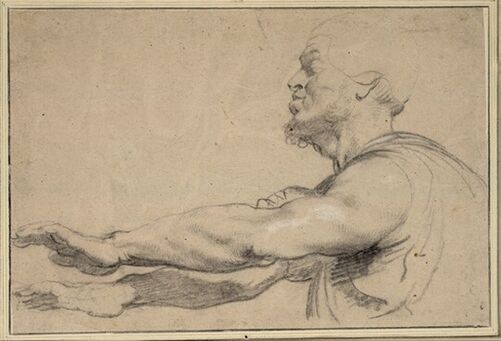
    Studie van een blinde man, 1617-1618, Peter Paul Rubens

    SIXTH BLIND MAN.
    I do not know whether we are under the sky.

    [*75]

    FIRST BLIND MAN.
    The voice echoes as if we were in a cavern.

    THE VERY OLD BLIND MAN.
    I think, rather, that it echoes so because it is evening.

    THE YOUNG BLIND GIRL.
    It seems to me that I feel the moonlight on my hands.

    THE VERY OLD BLIND WOMAN.
    I believe there are stars: I hear them.

    THE YOUNG BLIND GIRL.
    So do I.

    FIRST BLIND MAN.
    I hear no noise.

    SECOND BLIND MAN.
    I hear only the noise of our breathing.

    THE VERY OLD BLIND MAN.
    I believe the women are right.

    FIRST BLIND MAN.
    I never heard the stars.

    THE TWO OTHERS WHO WERE BORN BLIND.
    Nor we, either.

    [A flight of night birds alights suddenly in the foliage]

    [*76]

    SECOND BLIND MAN.
    Listen! Listen! — what is up there above us? — Do you hear?

    THE VERY OLD BLIND MAN.
    Something has passed between us and the sky!

    SIXTH BLIND MAN.
    There is something stirring over our heads; but we cannot reach there!

    FIRST BLIND MAN.
    I do not recognize that noise. — I should like to go back to the Asylum.

    SECOND BLIND MAN.
    We ought to know where we are!

    SIXTH BLIND MAN.
    I have tried to get up; there is nothing but thorns about me; I dare not stretch out my hands.

    THIRD BLIND MAN.
    We ought to know where we are!

    THE VERY OLD BLIND MAN.
    We cannot know!

    SIXTH BLIND MAN.
    We must be very far from the house. I no longer understand any of the noises.

    [*77]

    THIRD BLIND MAN.
    For a long time I have smelled the odor of dead leaves —

    SIXTH BLIND MAN.
    Is there any of us who has seen the Island in the past, and can tell us where we are?

    THE VERY OLD BLIND WOMAN.
    We were all blind when we came here.

    FIRST BLIND MAN.
    We have never seen.

    SECOND BLIND MAN.
    Let us not alarm ourselves needlessly. He will come back soon; let us wait a little longer. But in the future, we will not go out any more with him.

    THE VERY OLD BLIND MAN.
    We cannot go out alone.

    FIRST BLIND MAN.
    We will not go out at all. I had rather not go out.

    SECOND BLIND MAN.
    We had no desire to go out. Nobody asked him to.

    [*78]

    THE VERY OLD BLIND WOMAN.
    It was a feast-day in the Island; we always go out on the great holidays.

    THIRD BLIND MAN.
    He tapped me on the shoulder while I was still asleep, saying: “Rise, rise; it is time, the sun is shining!” — Is it? I had not perceived it. I never saw the sun.

    THE VERY OLD BLIND MAN.
    I have seen the sun, when I was very young.

    THE VERY OLD BLIND WOMAN.
    So have I; a very long time ago; when I was a child; but I hardly remember it any longer.

    THIRD BLIND MAN.
    Why does he want us to go out every time the sun shines? Who can tell the difference? I never know whether I take a walk at noon or at midnight.

    SIXTH BLIND MAN.
    I had rather go out at noon; I guess vaguely then at a great white light, and my eyes make great efforts to open.

    THIRD BLIND MAN.
    I prefer to stay in the refectory, near the seacoal fire; there was a big fire this morning….

    [*79]

    SECOND BLIND MAN.
    He could take us into the sun in the courtyard. There the walls are a shelter; you cannot go out when the gate is shut, — I always shut it. — Why are you touching my left elbow?

    FIRST BLIND MAN.
    I have not touched you. I can’t reach you.

    SECOND BLIND MAN.
    I tell you somebody touched my elbow!

    FIRST BLIND MAN.
    It was not any of us.

    SECOND BLIND MAN.
    I should like to go away.

    THE VERY OLD BLIND WOMAN.
    My God! My God! Tell us where we are!

    FIRST BLIND MAN.
    We cannot wait for eternity.

    [A clock, very far away, strikes twelve slowly.]

    THE VERY OLD BLIND WOMAN.
    Oh, how far we are from the asylum!

    THE VERY OLD BLIND MAN.
    It is midnight.

    [*80]

    SECOND BLIND MAN.
    It is noon. — Does anyone know? — Speak!

    SIXTH BLIND MAN.
    I do not know, but I think we are in the dark.

    FIRST BLIND MAN.
    I don’t know any longer where I am; we slept too long —

    SECOND BLIND MAN.
    I am hungry.

    THE OTHERS.
    We are hungry and thirsty.

    SECOND BLIND MAN.
    Have we been here long?

    THE VERY OLD BLIND WOMAN.
    It seems as if I had been here centuries!

    SIXTH BLIND MAN.
    I begin to understand where we are …

    THIRD BLIND MAN.
    We ought to go toward the side where it struck midnight…

    [All at once the night birds scream exultingly in the darkness.]

    [*81]

    FIRST BLIND MAN.
    Do you hear? — Do you hear?

    SECOND BLIND MAN.
    We are not alone here!

    THIRD BLIND MAN.
    I suspected something a long while ago: we are overheard. — Has he come back?

    FIRST BLIND MAN.
    I don’t know what it is: it is above us.

    SECOND BLIND MAN.
    Did the others hear nothing? — You are always silent!

    THE VERY OLD BLIND MAN.
    We are listening still.

    THE YOUNG BLIND GIRL.
    I hear wings about me!

    THE VERY OLD BLIND WOMAN.
    My God! my God I Tell us where we are!

    SIXTH BLIND MAN.
    I begin to understand where we are.… The Asylum is on the other side of the great river; we crossed the old bridge. He led us to the north of the Island. We are not far from the [*82] river, and perhaps we shall hear it if we listen a moment.… We must go as far as the water’s edge, if he does not come back. . . . There, night and day, great ships pass, and the sailors will perceive us on the banks. It is possible that we are in the wood that surrounds the lighthouse; but I do not know the way out.… Will anyone follow me?

    FIRST BLIND MAN.
    Let us remain seated! — Let us wait, let us wait. We do not know in what direction the great river is, and there are marshes all about the Asylum. Let us wait, let us wait.… He will return…. he must return!

    SIXTH BLIND MAN.
    Does anyone know by what route we came here? He explained it to us as he walked.

    FIRST BLIND MAN.
    I paid no attention to him.

    SIXTH BLIND MAN.
    Did anyone listen to him?

    THIRD BLIND MAN.
    We must listen to him in the future.

    SIXTH BLIND MAN.
    Were any of us born on the Island?

    [*83]

    THE VERY OLD BLIND MAN.
    You know very well we came from elsewhere.

    THE VERY OLD BLIND WOMAN.
    We came from the other side of the sea.

    FIRST BLIND MAN.
    I thought I should die on the voyage.

    SECOND BLIND MAN.
    So did I; we came together.

    THIRD BLIND MAN.
    We are all three from the same parish.

    FIRST BLIND MAN.
    They say you can see it from here, on a clear day, — toward the north. It has no steeple.

    THIRD BLIND MAN.
    We came by accident.

    THE VERY OLD BLIND WOMAN.
    I come from another direction.…

    SECOND BLIND MAN.
    From where?

    THE VERY OLD BLIND WOMAN.
    I dare no longer dream of it…. I hardly remember any longer when I speak of it.… It was too long ago…. It was colder there than here.…

    [*84]

    THE YOUNG BLIND GIRL.
    I come from very far.…

    FIRST BLIND MAN.
    Well, from where?

    THE YOUNG BLIND GIRL.
    I could not tell you. How would you have me explain! — It is too far from here; it is beyond the sea. I come from a great country.… I could only make you understand by signs: and we no longer see. I have wandered too long.… But I have seen the sunlight and the water and the fire, mountains, faces, and strange flowers.… There are none such on this Island; it is too gloomy and too cold…. I have never recognized their perfume since I saw them last.… And I have seen my parents and my sisters…. I was too young then to know where I was.… I still played by the seashore.… But oh, how I remember having seen!… One day I saw the snow on a mountain-top… I began to distinguish the unhappy…

    FIRST BLIND MAN.
    What do you mean?

    THE YOUNG BLIND GIRL.
    I distinguish them yet at times by their voices…. I have memories which are clearer when I do not think upon them….

    [* 85]

    FIRST BLIND MAN.
    I have no memories.

    [A flight of large migratory birds pass clamorously, above the trees.]

    THE VERY OLD BLIND MAN.
    Something is passing again across the sky!

    SECOND BLIND MAN.
    Why did you come here?

    THE VERY OLD BLIND MAN.
    Of whom do you ask that?

    SECOND BLIND MAN.
    Of our young sister.

    THE YOUNG BLIND GIRL.
    I was told he could cure me. He told me I would see some day; then I could leave the Island.…

    FIRST BLIND MAN.
    We all want to leave the Island!

    SECOND BLIND MAN.
    We shall stay here always.

    THIRD BLIND MAN.
    He is too old; he will not have time to cure us.

    [TO BE CONTINUED]


    • In Maurice Maeterlinck, The Intruder: The Blind; The Seven Princesses; The Death of Tintagiles, translated by Richard Hovey, NY: Dodd, Mead, and Company, 1911. Page numbers in the text (*) are from this edition.
    • Featured image is The Blind Leading the Blind by Pieter Breughel the Elder, 1568