Tag: Mystery

  • Errand on Cemetery Road

    Errand on Cemetery Road

    This universe grants the deceased a period of forty-nine days to cross through the boundary zone, a number that unites the tiny and the vast. The shaman – was that him? – did not want to disturb the soul’s awareness, for in this state, newly released from corporeality, swept into the perceptual and spiritual turmoil of the afterlife, it may be just as vulnerable to the perception of a benevolent spirit as it would be to a zombie or ghoul. Often, the soul does not even know it is dead. It drifts in a tenuous form, a molecule in a maelstrom.

    Judgment halls materialise and dissolve. The Hall of Unfelt Regrets, for those who failed to grieve as prescribed: sorrows issued retroactively: wrong order, not transferable. Griefs spooned from repurposed billy cans. Gallery of the Unlived Life. Corridors of one’s could-have-beens: concert cellist version; loving version; not-quite-so-cruel version. “Hey you over there! No touching the dioramas,” warns one of the sullen docents. Dropping to his knees, Forbes notes that beneath the dust, there is an old rolled-out mat from a public school in Nhill, for percussion band time. Depot of Ungiven Names. Filing cabinets disappear in the smoke of raging bushfires. A clever-man with pencil and ochre offers to look up his name, charging three truths and a pencil. Canteen of karmic simulacra selling one’s true desires: pies that are warm but hollow; love that tastes of copper. Waiting Room of the Second Chance That Will Not Be Offered Again. You are told your name is next, and then that it’s not. You were never meant to be here.

    I Ching Hexagram 20 – Kuan (Contemplation), symbolizing observation and insight.

    And on and on. The so-called guide – our Mow Fung? – surely not – regains his composure. In a flash of inspiration, he traces in the red dust the trigrams: penetrating wind above, receptive earth below, summons in his heart the image of a single willy-willy, spiralling upward. Two unbroken yang lines above, four broken yin lines beneath: making the Yi Jing hexagram Kuan, whose power lies in observing and contemplating. When the wind blows over the earth, it stirs everything up, compelling us to observe.

    He envisaged the breeze sending ripples across the surface of a pool, and the soul was drawn toward it. Upon that trembling mirror, a flickering image began to congeal. A voice, at first muted and reverberant, gathered itself into clarity

    • • •

    “Kids’ll be real happy to see you after all this time. I reckon I’d like to see their faces, I’d get a kick out of that. I keep forgettin’ their names. What was it – Thomas you said, yer eldest? Thomas, that’s it, wasn’it? Sounds like a right little wag, that Tom, bright little bugger. I reckon I remember you saying something about him, something you said once, can’t recall now. What was it again, mate? He loves cricket, don’t he? I read up on the Australian Eleven playing over there in England, you know, how they’re doing and all that. I reckon I could tell him all about that, and learn him a few shots, like, keep a straight bat and everything.”

    Forbes tilted his head. “Me uncle learned me real good, but I was better at bowlin’ than battin’ in my day, mate. I’m tall, see, like you, only a bit taller even, so I’m a good fasty, and I can spin a bit too. Here, hold on a bit, let me catch me breath and light up me pipe,” he said.

    “Just bloody do it and catch up. We ain’t got all day for twaddle,” Burns said, thinking, You’ll not call my kid bugger again, you swine.

    The prattle of a halfwit grates no end out here in the Christmas heat. If a man had a gun, he’d be tempted to pull it out and blow the imbecile’s head off, or else his own, just to put a stop to it, let the cicadas have their go, unspoiled by jabbering gibberish that’s meant to mean something but is, in truth, no more than babble.

    The cicadas sing their soaring song beyond words; they sing of the heat, of their deaths not far off, of nothing: of an instant that deafens, and is, to them, filled with serenity and quiet.

    Going by Phelan the produce merchant’s in Patrick Street, Burns stuck his head in the door and called out, “G’day Jim, back later to sort it through with ye, mate!”

    Real hail-feller stuff. Could’ve been a right good salesman or a writer in one of them rags. Got the gab for it. Better still, something in the line of politics, probably. Manly grin like that, he thought, pausing to nod at his reflection, shoulders squaring, who wouldn’t vote for you? Noble – well, masculine – profile, intelligent forehead, its own mould of nobleness. He had that swaggerin’ way with him that the sheilas fall over for while other blokes can’t do nothing else but only stand by and admire. Well, he never got that far, but not through any fault of his own, and in his own way, everything he touches, he leaves his mark there. Walks into a room and they all know who’s the real man here, the stallion, all them pissing little geldings, them sheep and goats. It’s all got to do with knowing yer the number one, tougher and smarter than the next man.

    Up to the corner, and there was the pub on the main street, Fergus’s European. Across the intersection he strode, Forbes trailing in the wide, empty expanse, generous enough for a dozen willy-willies of dust and fine horse-dung. A three-dimensional cruciform emptiness rose into a vaulted silence. High above, at a faraway level past reason, a single white veil of cirrus cloud cut a lilac-tinged rupture in the pale blue surface of the sky.
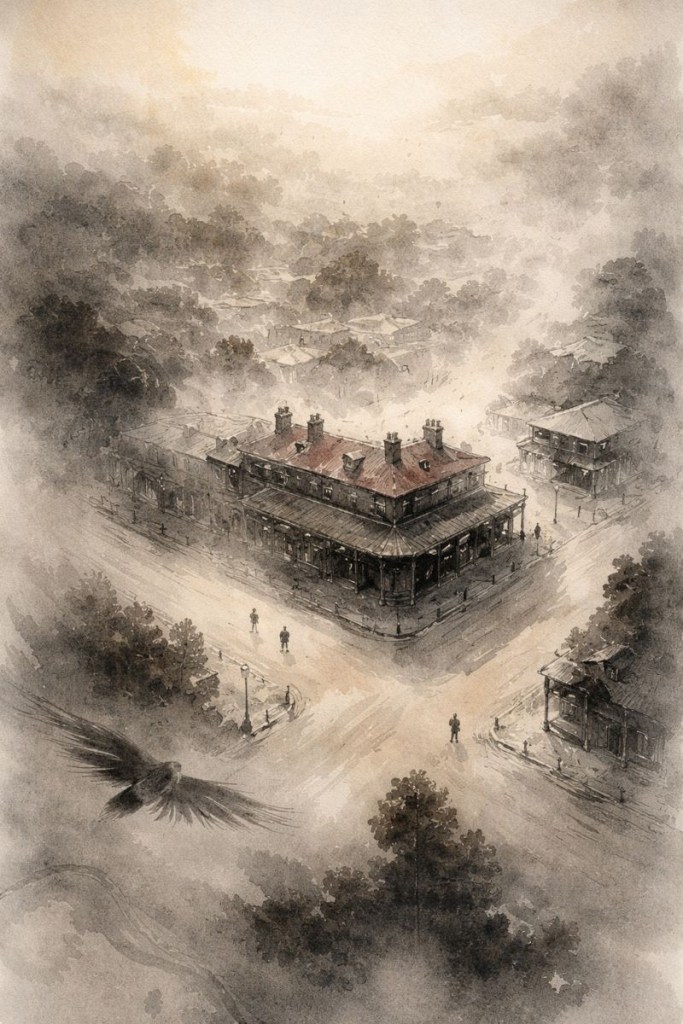
    Aerial view of a street intersection in Stawell, Victoria, with a historic pub on the corner and surrounding buildings under bright daylight.

    He left Charley out on the front veranda blathering to Ben Wellington, a rum-looking old codger with one good eye and one sightless milky-blue, and his mate on the bench. The better to work his magic, to go in alone.

    The sawdust on the pub floor had darkened to a fine grey grit. Burns scuffed it without thinking, left a faint swirl behind him.

    “No, Burns, I know you.” Fergus the publican: a stout man with lambchop side-whiskers, brawny arms under rolled-up sleeves. Choleric, a real Admiral of the Red. The pressure of his blood thrust forth the veins and squeezed beads of perspiration from the pores of his fleshy red phizog.

    “Oh, come on, George, do a cove a favour for once. Just for a night or two. I always give you what I owed you, y’know that.”

    “That’ll be the day. Look, where is he, anyway?”

    “Just out the front, jawing with some old bastards. You should be paying him to stay here to babysit ’em. They thrive on that rot he goes on with. Good entertainment for ’em. Works out well for everyone around, you and all. Pulling his leg keeps them from fightin’ and breakin’ your place up.”

    “Look here, I don’t mind if they all get the hell out altogether. More strife than they’re worth.”

    “Do us a favour, mate, for old times. What about that trench I dug you the other month?”

    “Other year. You know full well I’ve paid you back ten times over. Favours. What rot. Well, where’d he stay last night, anyhow?”

    “Hunter’s Ball and Mouth.”

    Forbes wandered in with a “G’day squire,” and stood grinning at Fergus over the bar.

    “Jeez, ’at one-eyed feller out there knows about the nags. Blue-eyed Dick in the fourth, he reckons.” Chortled madly for who knows why? – unwritten prerogative of a simple mind.

    “Why doesn’t he stay there again, then?”

    “Truth is, I want to get him off the grog. I brought him here for the purpose of having him sober.”

    “What are you going to do?”

    “We are going to Dunkeld to dig some dams.”

    “Bloody Carter Brothers,” Forbes said. “Got three running in the Horsham Cup next week. Lion, Silvis or sompthin, and – what the hell was it? Rosebunch or summit, shit –” He slouched back to the front door. “Was that Rosebunch, Mr. Wellington, was it? Oh, my stars, that’s right. An’ who was that one you tipped me for the Cup? Ah, that’s it, that’s the one!”

    Slouched back to the bar.

    “What are you standing there looking at us like a putty-brain for, yer great galoot? Here, give us a couple of mugs of yer best tangle-foot, thanks mate.”

    Fergus looked at Burns, who shrugged and coughed up two deaners, which rang light on the bar and came to rest together with a clink. Fergus poured out three pots of ale and listened impassively to Burns’s account of their affairs. They would have gone today but were waiting for a watch to come down from Glenorchy, which was being kept for a debt they owed. They sent a telegram yesterday to release it.

    “Rosebud it was,” Forbes said, wiping the moisture from his top lip onto the back of his hand. “Rosebud, that Carters’ nag, but he reckons put a quid on Lady Emily. Lady Emily for the Cup by two lengths, he reckons. Four-year-old. Five? No, four it was, he said. I believe I’ll catch the train up there next week and have a quid or two on her.”

    Burns turned back to Fergus.

    “We got money and more to come. We have ordered thirty quid worth of goods from Mister Phelan and are waiting for them to take them to the station. Else we’d have already gone. Now, I’m at home for a few more days with the missus and kids, and I want him –” sideways thumb at Forbes – “to stay here where I can keep an eye on him.”

    “Yeah, but remember,” Forbes reminded his mate, “I have to come down and meet the missus and young Tom and play cricket and all that.”

    Poor bloody woman, Fergus thought. Burns kept quiet about the appointment, praying it might go away.

    “So I only need a cheque for thirty quid to pay Phelan, temporary like, I’ll get it back to you in no time flat. I just sold a farm for six-hundred quid, and we’re off to acquire another.”

    “There’s land open for selection between Stawell and Glenorchy, didn’t you even know that?” Forbes stared at Phelan, incredulous.

    “There’s an idea!” Burns said. “We take enough for ourselves and leave a portion for you.”

    “Beauty!” Forbes said. “Not bad interest on a thirty quid loan, eh?”

    A low animal urge stirred in Burns’s gut and surfaced as a long, lascivious moan.

    “Real fetchin’, Eliza,” he said. “Looking real fetchin’ today.”

    The young woman behind the bar with a tray full of glasses for the sink, flashed a smile and slipped past behind her father.

    “Gotta love them freckled bushfire blondes, George. Lost the baby fat, though. Don’t work her too hard, mate.”

    Fergus, fidgeting, took a gulp.

    “If her husband hears you, you’ll be laughing on the other side of your face.”

    Ben Wellington limped in and sat down further up the bar. Forbes sidled over – “You don’t want to be a Jimmy Woodser, mate, up north that’s what they call a chap what breasts a public bar and tips the finger alone” – and got him started again on the horses.

    “Vandermoulin and Tallyho the four-year-olds didn’t do no good at Ararat, but McSweeney’s five-year-old Too Late, he’ll be a goer in the handicap hurdles. Paul McGidden has been training him over at Longerenong Pastoral Run. Bloody good trainer, had a runner in the Melbourne Cup, couple years back.”

    “What about Blue-eyed Dick, Mister Wellington, what you reckon there?”

     “I reckon I ain’t heard of him.”

    “You know, Blue-eyed Dick out of Little Nell and Off His Kadoova, you know.”

    “No, I reckon I ain’t heard of ’im, not around the Wimmera I ain’t.”

    • • •

    “Life is strange,” mused he who was once called Mow Fung – the not-shaman. Not easy to hold onto your identity in hell. “We live it forwards but understand it backwards. To develop through the gua, Kuan needs alert observation with clarity. You must restore the eternal while residing in the temporal, both of which move in opposite directions. You must observe closely, in order to tell the real from the false. Hold on to the real and get rid of the false. It is like the shrine ritual. First you wash the dust off your hands, before you make your offering. You have a little shrine made of dust.”

    Dust enveloped the wandering shade, who withdrew into a groan, but as though anticipating a truth in what was to come, forced its awareness back into the play of shadow puppets before them.

    • • •

    Burns rented the place from Phelan the merchant, for whose business his wife took on laundry and sewing. It was a fair-sized block along from the police station, with a parched backyard, tired dwelling, and fence nigh on splintering to ruins; most of its grey palings were askew or off their rails.

    Forbes arrived mid-morning and introduced himself to Florence, who told him Burns had gone down the street to fix up some business or other with Phelan the merchant. Burns mentioned nothing to her about Forbes, but she absorbed his sudden existence with the same anaesthetised calm that filtered the world for her, a symptom of a weariness deeper than the heavy years he’d burdened her with. Once, she’d indulged his fancies of a grand future shaped by his quality and wisdom, and once she used to pine for his return, until even that became a sham and vanished not long after the last echoes of his pretended love fell silent.

    The children grew accustomed to his increasingly lengthy absences, but continued to anticipate his returns. He was always going to bring them a present next time, and they learned to believe there was commitment beneath the promise, initially. They were not lies exactly, but a seductive flicker – something like love or care – that expires without sufficient fuel. They would whisper and giggle to each other in their beds at the bedspring squeaks and concupiscent slurps that ornamented the darkness after he showed up, until soon it would be still again, as usual.

    Forbes made himself useful picking up the abundant dog droppings with the short-handled shovel, disposing of them near the coal heap in the back corner away from the shed, where she told him. The dog was off with the kids and their mates, down to the creek to swim and look for blackberries. She sat darning on the veranda, watching the visitor. When the wind blows over the earth, it stirs everything up, compelling us to observe. Some took her for slow, because of how she never rushed to reply, on the occasions she deigned to. Her needle moved as though with a will of its own; her gaze was like a still pool. Ah, a receptive surface.

    She still had her, the tiny wooden thing. The Dew Doll. She sensed that, tucked away in the dresser beneath some old fabric, among the few precious things she kept, the doll had stirred – as it did only once in a blue moon. It came back to her now, from years ago, the one time she’d wandered over to Deep Lead. The man who ran the curious shop in the Chinese camp had given it to her laughing, when she showed an interest, stroking it, for some reason not wanting to let it go. He couldn’t tell her much, only that it was old. Later the doll started to put ideas straight into her head, and she knew they were right. Things she should do, or say, or leave unsaid. What would go missing. Who to beware. The slip stuck to the back with mulberry paste bore the date some poor baby had died. Between the coiled silk buns of its hair, there was a hole with paper pushed deep inside, which the doll said she shouldn’t try to take out. The doll knew when the dew was going to gather – a rare thing in this country – and would let Florence know, so she could carry her out beside the shed, to feed on it. She’d wake up knowing. The doll had stirred. There’d be dew.
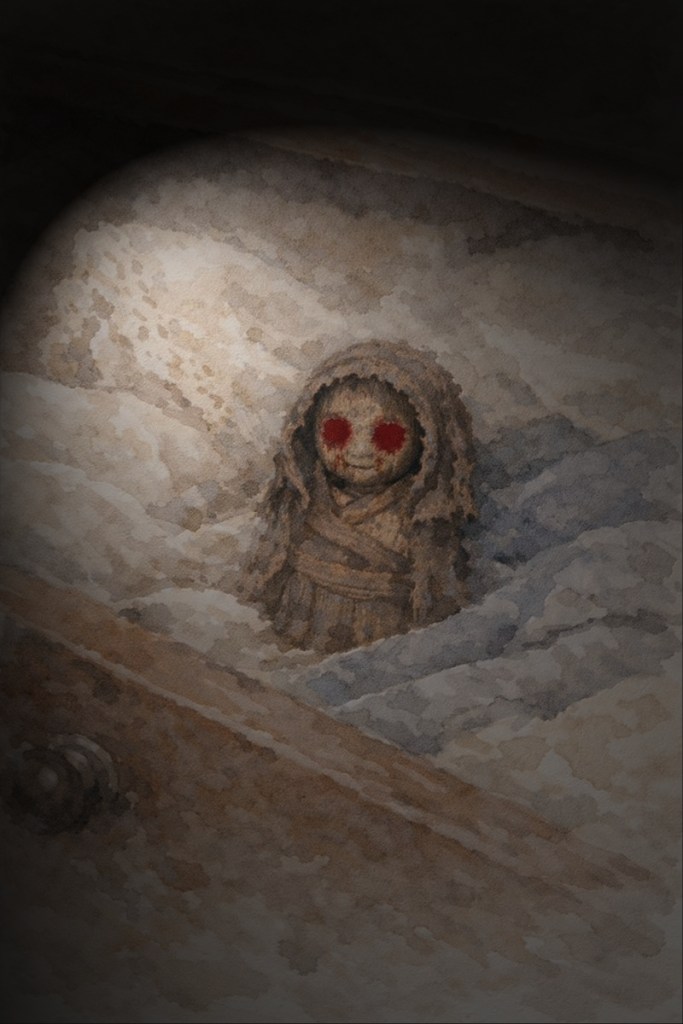
    A handmade Dew Doll in the back of Florence’s drawer, partially hidden among folded cloth; its eyes are faintly red, and its body is bound with twine.

    Forbes found a tin of rusty nails in the shed and set out to mend the fence, a task that drew more curses from him than it would from an average man. After each outburst, he’d flash her a wide, bashful grin and a demonstrative shrug. She’d nod back to him with her tranquil, closed-mouth smile. She was struck by the thought: There is something odd about this childish, well-meaning man. I know! He does not realize he is already dead. But there are others close by who do.

    He liked her drawl and what he took to be her patient attitude, which tended to suppress his frantic exuberance and draw out his contemplative side. When he finished, by a miracle the fence was still standing, and he joined her on the veranda, sitting on the step near her feet in the dog’s spot. Imagining she had an interest in his history with her husband, or more accurate to say, play-acting that she had, he traced through an idealised version of their shared narrative over the past months, since they’d started working together on the line at Naracoorte, on the South Australian border, where he’d stayed at Bridget Enright’s boarding house. Seven bob a week, he got.

    “A well and respected place it was, no drink of any sort sold, not like them what the bloody shanty-keepers run, which sells the vilest, horrible adulterations of all kinds, hideous compounds, they are, made only of chemicals, some sort of blend which costs about sixpence. Full of navvies, mostly slopers only there for a skinful – that’s blokes who’ll get fleeced and then decamp without fulfilling their dues, like. Mugs game to take a hiding and then pay for it, of course.”

    Better be careful what he says there, Bridget took a bit of a shine to Burnsie. Of course, when he detoured, Florence immediately knew the truth, but nothing could have been of less significance to her, it had all been sour for so long. Pretty, pretty doll

    Then they’d headed back over this way to Dimboola. He told her about his mates the Painter brothers and Johnson. Burnsie’s – Robert’s – mates too, of course, though he had a bit of a run-in once or twice with the older one. Told her about his old sweetheart Hessie Hesslitt, who lives over at Mandurang now, but last saw her four or five years ago at Hamilton. As nice as could be, but ran off with some slicker, of course. Florence only tutted, nodded and made gentle wordless sounds as she worked, which warmed the pit of Forbes’s stomach, though there was no such intention.

    He was afflicted by a loss of words, so he took a folded-up newspaper page from his pocket, with the aim of entertaining her further.

    “Robert helps me with these sometimes – explains, you know, helps me read. You get some real informative stuff out of them. This one’s what’s called ‘Answers to Correspondents’ – that’s these jokers who send in questions for things they don’t know about, see …”

    She made one of her pleasant sounds, high-pitched and undulating, but smooth-like, to show she was interested.

    “… so you pick up a lot of good stuff. Take this, for instance, I’ve already read it once or twice, it’s from someone calls ’emself Cornstalk – they’ve got all sorts of names: In writing to the Queen, what form do you use, and to where do you address your letter? What do you reckon, Florence? Well, here’s the answer. We presume you want to write a petition. The form is ‘To Her Most Gracious Majesty Queen Victoria, Queen of Great Britain and Ireland, Empress of Indias: May it please your Majesty,’ and end, ‘And your petitioner will ever pray.’ Address through the Secretary of State for the Colonies.’ I reckon the Queen’ll be hearing from old Cornstalk before long, eh?”

    A placid smile on Florence’s face, shaking her head tutting, her eyes cast down on her darning. Pretty, pretty …

    “Here you go. Kiara asks the distance from Echuca to Sydney, and the cheapest route, and the cost. Answer: The cheapest route is via Melbourne. Train fare, seventeen shillings; steamer, thirty shillings to Sydney – Shit! – Distance overland, five hundred and forty miles. Echuca … That’d be, um, up there near bloody er

    A cattle dog mix heralded the arrival of four of Florence’s offspring, trotting around the corner to greet the woman and sniff at the man, before inspecting changes to its scent-map of the backyard and urinating at the door of the shed. The three boys and a girl stared at Forbes dumbly, and he similarly back, turning suddenly shy. Hearing one referred to as ‘Tom,’ he summoned some bravado and forced a grin.

    “G’day young’un. I know all about you from yer old man, mate. Bloody good little cricketer he said you was, tyke,” but the boy drew himself up and stared wordlessly back, before spitting on the ground and strutting after his siblings into the house.

    “Rough nut, eh?” Forbes mumbled, but Florence was bent away from him, gathering up her work.

    Forbes was smoking his pipe in the falling light when Burns showed up with Phelan and a gallon of brandy, which Phelan had sold Burns and been invited to come along and help drink it. The three set to and lasted into the small hours.

    “Rotten coppers down the street got it in for me,” said Burns towards the end, “so I snapped a couple of their saplings they were trying to grow out the front. Here’s what I’m gunna do, Flo heard it from a Chinese witchdoctor. You go to the cemetery and scrape up a handful of dirt next to a grave. Then you take that and spread it in front of someone’s door, where they won’t see it, so they tramp it all through the house. Brings them real bad luck that won’t never go away unless you get a witchdoctor to come and fix it up.”

    • • •

    The not-shaman says, “We must watch closely. Sometimes, the last thought a person has before dying, if it is a strong, clear, and pure one, will open up an aperture from this dark place, through which he may escape this suffering and chaos by going straight into the spirit world. If not … well, we will just have to wait and see and do our best.

    He detected a resigned sigh, interpreting it as a constructive sign.

    • • •

    About noon the next day, humping their swags and thirty quid worth of supplies, the two men left to make their selection of the land off the old Glenorchy Road and then head for Dunkeld to do the dam. The kids had taken off at sparrow’s twit somewhere with the dog. Florence had watched Burns go to fetch Forbes from the pub that morning, then turned back to go through the stuff Phelan brought her.

    “Fergus ain’t here, we must wait and give him his twenty-seven bob for the room,” Forbes said.

    “Too right,” Burns said. “No, we’ll just slope, do the disappearing trick. He’s a mug, old George – ripe for rolling over.”

    “Do the old Jerry Diddler, eh? I’m up for it, mate.”

    They skirted Main Street and went along Cemetery Road. Burns thought he may as well duck into the cemetery reserve to take care of his little errand, while Forbes stood cockatoo out front under a tree, smoking his pipe. The shadows cast by the headstones were short and sharp in the sun, like a grinful of broken teeth. When he came out, Burns patted his trouser pocket and nodded at Forbes.
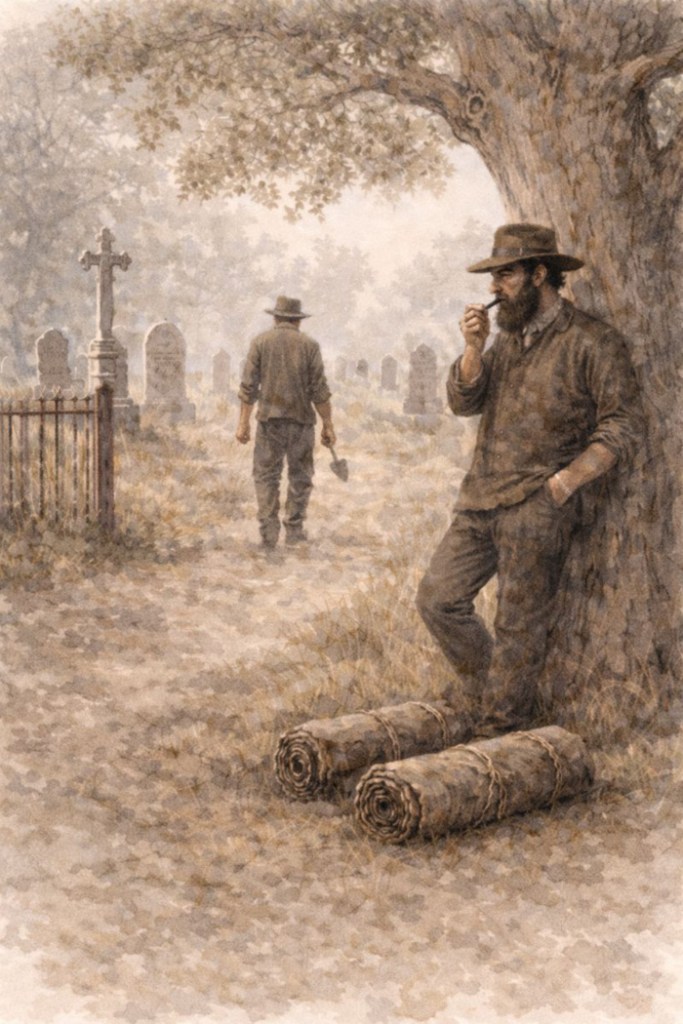
    Burns walks away into the cemetery, his back to the viewer; Forbes leans against a tree in the foreground, smoking a pipe.

    Who should they see fifty yards away, down Mary Street, but George bloody Fergus; he only chucked them a wave, as they turned back into Main Street. Burns had his sly piece of business to see to at the police barracks – in and out. Then they made for the old Glenorchy Road cutting a shortcut through some moderately timbered bushland and struck out for Deep Lead.

    Burns, in no mood for conversation, tolerated Forbes’s whistling, fatuous comments, and laughter inspired by the few birds who had braved the heat to fly or call out. Some Headache Birds had lobbed in to mate and sang out heedless of the two.

    Sleep Didi, sleep. Sleep Didi, sleep. Sleep Didi, sleep, one carried on monotonously.

    Forbes laughed carelessly.

    “Sleep maybe!” he called back in imitation as they tramped. Burns bent over to do up the lace on his boot, then hung back as they went along.

    A flock of Sulphur-crested Cockatoos burst through the brownish treetops in front of them. Raucous, chattering screeches, sharp squawks and whistles, then quieter murmurings as they settled on their branches.

    Abruptly, a lone, hidden Jacky Winter said his piece, as he watched the two turn down a track towards the Four Post Diggings in ironbark country.

    Plicky-plicky-plicky … Plicky-plicky-plicky …

    “Peter, Peter, Peter!” Forbes called, to be answered by the pretty, lilting ditty of a Scarlet Robin –

    Wee-cheedallee-dalee – then quiet, then tick, tick, tick, and a rapid burst of scolding chatter.


    From the draft novel Stawell Bardo © Michael Guest 2025

  • J.F. Smith’s Mystery of the Marsh — Thirteenth Instalment

    J.F. Smith’s Mystery of the Marsh — Thirteenth Instalment

    Almost a century and a half has passed since Smith launched his penny blood, so it is natural that a mere aside by the narrator can set off a question mark that repays investigation. In considering the theory of literature, the French philosopher Paul Ricoeur describes how a text moves from the world of human experience, through a state of representation and back again. In defining this mimetic process, he places significance upon the role of the reader, because “It is by way of reading that literature returns to life, that is, to the practical and affective field of existence.”

    This is the same for any poem or fiction, but the idea seems to ring particularly true in a case like this, where Smith’s novel has lain dormant in a sense, like a sunken ship. The reader feels to some degree at sea, becomes aware of a lack of particular background schema here and there, due to their separation from the author’s life-world, such as was encoded in the text.

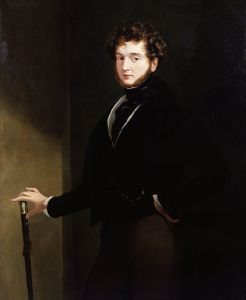
    George “Beau” Brummell, watercolor by Richard Dighton (1805)

    So, for example, Smith characterises the son of Benoni’s new employer as dressing appropriately for his drudging work in the legal office, but after hours transforming into a clothes-horse and butterfly, in attire of which “even Beau Brummell  — the D’Orsay of the day” might have approved. These are “beaux” or “dandies,” men extravagantly attentive to dress and fashion, a determining trait to which further characteristics tend to adhere, until the individual assumes proportions of influence, grandeur and, inevitably, caricature. Smith lends the moral taint of the dandy to Roland Brit, to contrast the upstanding firm into which William Whiston is to pass. The narrator’s digression into the meaning of Goliah Gob’s pet word “frimicating” echoes the theme.

    The “fop” is the historical predecessor to both, and epitomizes a perceived risible and foolish aspect of an excessive devotion to livery; originally and for some centuries, the word meant any kind of fool at all. Though the pejorative sense may adhere in one way or another, the beau and dandy can become a figure of influence, occupying the highest echelons — consider the dandy George IV, Prince of Wales and Prince Regent, far from the least.

    It was thanks to having attracted the attention of the prince that George ‘Beau’ Brummell rose to prominence, setting fashions, holding society in thrall as he strutted among the upper crust, about the salons, parks, clubs and gambling rooms. Some facility with wit is prerequisite to maintaining the position, in order to command fear. When someone offered Brummell a lift to Lady Jersey’s ball, he declined with

     But pray, how are you to go? You surely would not like to get up behind; no that would not be right, and yet it will scarcely do for me to be seen in the same carriage with you.

    Wharton and Wharton

    Fittingly, the Beau’s decline into misery was initiated by an ill-measured remark he made when dining with the Prince Regent and feeling like some more wine: “Wales, ring the bell!” The prince rang, but said to the servant who answered, “Order Mr. Brummell’s carriage.”

    The French amateur painter Alfred Count D’Orsay cannot strictly speaking be claimed to have inherited Brummell’s “descending mantle,” Grace and Philip Wharton consider (Wits and Beaux of Society, 1890) “for he had other and higher tastes than mere dress“. So perhaps that is a fine point of differentiation between beau and dandy.

    Alfred, Count D’Orsay, by Sir George Hayter (1839)

    With his winning tongue, his daring and skill at arms, the irresistably handsome lady-killer, broad-shouldered and slim-waisted, witty, pretty good rider to hounds, irreproachably gotten-up, debonair Count D’Orsay shone in  the Park and dining room. Together with the ultra-glamorous Marguerite Gardiner, Countess of Blessington — his mother-in-law and recognised lover — the two ruled from her brilliant London salon, which attracted the likes of Disraeli, Dickens and Hans Christian Anderson. Even Lord Byron, whom the pair befriended, admired  D’Orsay’s writing.

    His imitators were so avid and so numerous that an antagonist was once dissuaded from issuing him a challenge to a duel when it was pointed out that if D’Orsay fought him, everyone else would be wanting to do likewise. D’Orsay commented:

    It’s lucky I’m a Frenchman and don’t suffer from the dumps. If I cut my throat, tomorrow there’d be three hundred suicides in London, and for a time at any rate the race of dandies would disappear.

    Shore

    In his heyday, tailors paid him to wear their creations, and even inserted banknotes into the pockets. On one occasion when the custom was overlooked, D’Orsay had his valet return the garment with his complaint that ‘the lining of the pockets had been forgotten’.

    D’Orsay like Brummell underwent an ignominious descent, fleeing London from creditors, whom to pay was beneath his dignity, to die bankrupt and broken in Paris a few years later.


    CHAPTER THIRTEEN

    Goliah Gob Arrives Safely in London — Visits to our Hero — The Letter — Benoni Enters the Office of Brit and Son — Whose Practice is in a Different Line from Richard Winston’s

    Lawyer Whiston had gone to his chambers in Lincoln’s Inn Fields, where Bunce was now regularly employed, at a fair salary, as one of the regular clerks, Up to the present date the conduct of the poor tramp had proved exemplary. He not only wrote a good band, but showed himself quick and intelligent, but, what was better still, grateful. He had a fulcrum at last. His employer felt some thing more than satisfied with him.

    Law clerks in England are divided into two classes — articled and unarticled. The first are expected to become full-fledged attorneys in something less than three years, and must posses considerable means, for the process of hatching them is an expensive one. The stamp on their articles costs one hundred pounds; next, the premium to the firm, frequently amounting to a much larger sum. A few of the less fortunate scribes contrive to get admitted by hard work, attending closely to the interests of their employers, who, after years of service, make them a present of their indentures; rarely, however, before they have earned them. We have observed it as rather a singular fact, that men so admitted rarely rise to any great eminence in their profession; probably because the opportunity arrives too late. Whatever the motives of his generosity — and gratitude, we suspect, was not the only one — Richard Whiston, after a few weeks’ trial of his capabilities and conduct, gave Bunce his articles and paid all the expenses, taking his acknowledgement for the same. He also allowed him a moderate salary.

    Even his nephew felt surprised at this liberality, but he felt no jealousy; on the contrary, he rejoiced in the good, fortune of the friendless adventurer.

    ‘I suppose, nephew,’ observed the lawyer, as they sat conversing over the breakfast table, ‘you are somewhat puzzled by my conduct to your friend, Bunce.’

    ‘Exceedingly, sir,’ replied the youth; ‘but not more puzzled than glad. He will prove himself worthy of it.’

    ‘I hope so.’

    ‘And I feel certain of it.’

    ‘It is a speculation,’ observed his relative, thoughtfully. ‘I wish to attach him to me, and to know where to place my hand upon him at any moment.’

    ‘A speculation!’ replied our hero, more and more mystified.

    ‘Yes; but not a moneyed one. And now let us speak of your prospects. I have changed my mind respecting you — that is, if you agree to my proposal. Instead of giving you a stool in my office, I wish you to go to college. You possess fair abilities, and if I have read you rightly, are not without ambition. You shall have the chance I threw away.’

    ‘My dear, kind uncle!’ exclaimed William. ‘Could I have made a choice, it is the very one I would have selected; but the expense — the –‘

    ‘You need not trouble your head about that,’ interrupted Richard Whiston, with a smile. ‘Of course,’ he prudently added, ‘I shall expect you to make it as light as possible. You may. attain a scholarship.’

    ‘I will do my best,’ observed the nephew.

    ‘Not for the money value, but for the distinction,’ added the old gentleman. ‘The fact is I felt so confident you would accede to my views that I have already entered your name on the books of St. John’s College, Cambridge. No thanks; your conduct will be the best acknowledgement you can make me. I trust to that.’

    ‘And it shall not disappoint you,’ thought William Whiston, as the speaker left to go to his office. ‘Kind, generous man! I should be a wretch indeed to prove unworthy of his bounty.’

    Our hero was reflecting on the above conversation, and the unexpected change in his prospects when his friend, Goliah, came bouncing into the room. There was a red spot on his brow, and the youth saw that something had occurred to make him angry.

    ‘Dear old fellow!’ he exclaimed, shaking him warmly by the hand. ‘I was just wishing for some one to congratulate me. I feel so happy to see you.’

    ‘I believe that,’ answered the rustic, ‘for I knowed Lonnon could, not change ’ee; but that old fellow in the hall, when I told him I was come to see thee, said he would inquire if ’ee wor at ome, and threatened to ’noance me. Gorry, I would ha loiked to see ’m try it.’

    Our hero could scarcely repress a smile.

    ‘What be thee a grinning at?’ demanded Goliah.

    ‘Only at a slight mistake. Nothing of any consequence,’ replied his friend; ‘The footman meant to be civil. Of course, he knew that I would see you. By announcing you, he merely intended to say that he would let me know you were here. London ways,’ he added, ‘are not like our simple, homely ways in the country. So you must forgive him.’

    ‘No more they be, the frimicating fools.’

    “Frimicating” is an expressive word, and ought to be admitted into our best dictionaries. It means conceited, artificial. In the eastern counties of England it is in general use.

    After delivering his load of hay, Goliah had rushed off to Soho Square without waiting for breakfast. Of course he had to refresh the inner man. While doing so, William had ample time to read his cousin’s letter.

    ‘Kind, affectionate girl!’ he said as his visitor, whose appetite was satisfied at last, dropped his knife and fork by the side of his plate; ‘but I think she alarms herself unnecessarily. Benoni can do me no injury. Besides, why should he?’

    ‘Can’t tell; sartin he be no friend. I wish thee had seen the look he gave thee when thee turned thee back on him at Deerhurst.’

    ‘As to her mother’s meeting him at the back of the orchard, it must have been for the love of gossip.’

    ‘Aye! aye!’ observed Goliah. ‘Peggy Hurst be mortal curious, for sure. Still I beant quite satisfied in my mind. London be a queer sort of a place.’

    ‘There is no Bittern’s Marsh in it,’ remarked William.

    ‘Maybe there are worse things,’ replied his friend. ‘Come home wi’ me,’ he added, coaxingly; ‘thee needn’t go to thee uncle’s. Mother and I ha’ talked it all over. There be a hearty welcome for thee at the farm. Do come, Willie. It beant home without thee.’

    ‘Dear, true friend,’ said the youth, affected not only by the generous offer, but the touching simplicity of the words in which it was made. ‘I feel all your kindness, but let us talk the matter over calmly. I am not to remain in London.’

    ‘The Lord be praised for that!’ ejaculated his hearer. ‘I am going to Cambridge,’ continued the youth. ‘My uncle wishes it, and I most ardently desire it.’

    ‘And what be thee a goin’ there for?’

    ‘To complete my education.’

    ‘Edication!’ repeated the rustic. ‘Why, thee do know twice, or, for the matter of that, three times as much as I do. Thee wor allays first in school.’

    The speaker could not be accused justly of exaggerating his friend’s attainments.

    ‘You must not flatter me, Goliah,’ said his friend, with a slight touch of humour.

    ‘No. I won’t, Willie, I won’t.’

    ‘I cannot go against my uncle’s and my own interests. That would be folly as well as ingratitude.’

    ‘Are thee to be a parson, then?’

    ‘No. A barrister.’

    Had the speaker declared his intention of changing himself into a hippopotamus it would have conveyed the same amount of information to his rustic friend, who observed that anything was better than being a lawyer.

    The speakers passed the greater part of the day together. William bought a very pretty ring for his cousin, in answer to her letter, and quite won the heart of his companion, by encouraging him in his courtship of Susan.

    ‘You must speak boldly,’ he observed; — there was little fear of her admirer overdoing it. ‘You can’t expect a modest, sensible girl should throw herself into your arms unasked.’

    ‘Gorry! wouldn’t I catch her!’ ejaculated the rustic.

    To crown his satisfaction, William Whiston rode all the way through the city in Goliah’s waggon, and only parted from him when he had seen him safely on the high road to Deerhurst; and on that same evening Benoni arrived in London.

    The offices of Brit and Son, to whom, to use a mercantile phrase, he had been consigned, were situated in the Old Jury nearly two miles distant from Lincoln’s Inn Fields, so that for the present there appeared but little chance of the former friends meeting. Neither of them wished it.

    Our hero, because, it would recall painful recollections of former intimacy, and feelings which, reason as we may, will exert an influence over us; Benoni, from that lingering sense of shame which shows the heart not to be all corrupt.

    The Old Jury is a very different locality from the place where Richard Whiston’s offices were situated. It is a dull, gloomy street, almost in the heart of London, where every foot of ground is, figuratively speaking, worth its weight in gold; in other words, rents are enormously high, and the gains of those who occupy the offices or houses proportionately large to enable the tenant to pay them.

    The practice of Brit and Son was in some respects a peculiar one. They were solicitors to several religious societies, and treasurers to more than one wealthy charity. Criminal suits they rarely undertook, unless in the interests of their clients. The world considered them highly respectable, and so they were as far as outward appearances were concerned. What they really were will be seen as our tale progresses.

    Joshua Brit dressed to his reputation; in fact dress was a part of it; — a plain suit of black, cambric ruffles, white cravat, no collar, and powdered hair, which somewhat toned down the restless activity of his small dark eyes. His son copied his father pretty closely,  allowing for the difference in their age — copied him in the office, and in business hours; but once released from the drudgery of the office, the grub became a butterfly. Even Beau Brummel — the D’Orsay of the day — might have pronounced his attire passable. He had been named Roland, after one of the most popular preachers of the day.

    Such were the persons who received Benoni when the latter was introduced into their private room to present his credentials.

    ‘Well acquainted with London?’ inquired the old gentleman, after a few preliminary remarks.

    ‘The first time, sir, I have been here. My father advised me to be upon my guard; said it was a dangerous place for young men.’

    Brit junior gave a faint smile.

    ‘I trust,’ added the speaker, ‘I shall not be led astray.’

    ‘With the Lord’s help,’ piously ejaculated the head of the firm.

    ‘Certainly, sir — with the Lord’s help. We cannot stand alone.’

    This, in a youth of eighteen, was perhaps just a little overdone.

    Roland Brit looked at him a second time, but there was no smile upon his visage. On the contrary, he regarded the speaker curiously.’

    I am happy to find,’ observed his father, ‘that my old acquaintance, Blackmore, has instilled such excellent principles in his son. We shall get on very well, no doubt. We undertake no questionable cases. Good morning. The managing clerk has instructions to appoint you to a desk, and will set you to work at once.’

    Benoni bowed and withdrew.

    ‘What do you think of our new clerk?’ said Brit senior, turning to his son as soon as they were alone.

    ‘Humbug,’ replied the young man.

    The old gentleman looked rather surprised. The mild cant of the youth had produced rather a favourable impression upon him; and yet, having practised it so long himself, he ought to have judged it at its exact value.

    ‘Have you not condemned him too hastily?’ he asked.

    ‘Humbug,’ repeated Roland Brit, still more emphatically. ‘Can’t say at present whether dangerous or not. Possibly he may prove useful. But I shall keep an eye upon him.’

    Here the conversation ended, and here we must leave the Old Jury firm, principals and clerk, for some time, whilst we return to the country — to green trees and graceful hedge-rows, enameled flowers — nature’s gems upon earth’s bosom. She requires no other.

    Lady Montague, after presenting her niece at the first drawing-room, and giving one brilliant ball to introduce her to society, had quitted London to pay a long promised visit to Sir George Meredith and his daughter. The girls were cousins, and already inclined to like each other. In retiring thus early in the season from observation, the polite old maid had a double purpose in view. In the first place, she wished the rumours, which were growing fainter every day, to die entirely out — be buried in the tomb of a hundred other forgotten scandals. Next she desired to secure to Lady Kate, in the event of her own death, a trustworthy guardian and protector in the person of the baronet.

    In the course of a few weeks the liking had ripened into a warm attachment for each other. Unreserved confidence already existed between them. When we say unreserved, it is just possible there might be one little secret reserved on either side. If so, it was only natural. They had never yet acknowledged it even to themselves, and probably were unconscious of it.

    Sir George and his daughter, who at first had missed the society of Lord Bury more than they cared to confess, began to get reconciled to it. Lady Montague was an admirable hand at piquet — the only game the baronet really cared about; and they sat down to it every evening.

    As for the fair cousins, we might as well attempt to describe the grateful gyrations of the swallow, or count the vibrations on the painted wings of the butterfly, as give a list of their occupations, in which the claims of charity had no small share. They walked and rode together, amused themselves in the garden, for both dearly loved flowers; visited the schools, and once or twice, by Clara’s persuasion — much to Lady Montague’s dismay — Kate allowed herself to be tempted into the hunting field; but when the dear old maid found that most of the daughters of the country families did the same, she contented with herself with observing that things were different in her young days.

    In the evenings the cousins had music and singing. Of course they had their little innocent plots; they would scarcely have been girls had it been otherwise. Amongst others, the one, half formed by Clara, in the interests of Phœbe and Tom was not lost sight of.

    The time had almost arrived to commence the execution.

    ‘What a delightful thing it must be to have a father!’ observed Lady Kate Kepple, with a sigh, as she and her cousin stood watching the bees in their glass hives in the flower garden. ‘If I did not love you so much how I should envy you.’

    Clara silently kissed her.

    ‘Some one to watch and care for our happiness, who is ever preparing some little graceful surprise expressive of affection. How old are you, coz?’

    ‘I shall be nineteen in two months. Why do you ask?’

    ‘Nothing serious. A little curiosity, perhaps.’

    Clara Meredith regarded her for an instant, then broke into a merry laugh.

    ‘You dear little hypocrite!’ she exclaimed. ‘I see it all. Papa has been consulting you respecting a birthday present for me.’

    ‘I promised not to tell,’ observed her cousin, artlessly.

    ‘And kept your promise as papa, I suspect, intended it should be kept. How else could you advise both?’

    ‘Sir George has seen such a love of a bracelet at Rundel and Bridge’s,’ said Kate.

    ‘I have more than a dozen already, and rarely wear one of them,’ replied her friend.

    ‘And a diamond and opal cross,’ added the former. ‘I like opals.’

    ‘And I prefer pearls; but as I have two sets already, they would be useless,’ observed Clara. ‘What I wish for is a farm.’

    ‘A farm!’ repeated her cousin, greatly surprised.

    ‘Yes, a farm of three hundred acres of land, more or less, as I heard the steward say, to have and to hold, dispose of the rents as I please — buy feathers with them if it takes my fancy, or pug dogs.’

    ‘Your father will doubtless buy you one,’ said Lady Kate, looking very much puzzled, for she knew the speaker to be anything but mercenary.

    The laughing girl shook her head.

    ‘That would not answer,’ she exclaimed. ‘What I want is the Home Farm — the one,’ she added, seeing that Kate did not quite understand her — ‘that Farmer Randal is the tenant of. His lease expires, I know, in six months.’

    There was no further mystification possible. The purpose of the speaker became clear, and the girls laughed and chatted over their plot to promote the happiness of the rustic lovers.

    It would have been difficult to find an elderly gentleman more surprised than Sir George Meredith when Lady Kate Kepple informed him of his daughter’s wishes respecting the Home Farm. The suggestion might have puzzled a wiser head than his.

    ‘The Home Farm!’ he ejaculated. ‘What can she want the Home Farm for?’

    ‘Possibly for pin money,’ answered the fair girl, laughing.

    The baronet repeated the words mechanically.

    ‘You have no idea how expensive they are,’ continued the former. ‘No lady can make a presentable toilet without them. They serve so many purposes. Keep things in their place. Sometimes,’ she added, archly, ‘they serve to attach them together.’

    Still the gentleman looked mystified.

    ‘My dear uncle, how obtuse you are! Can’t you see that if the Home Farm were Clara’s, she could let it to whom she pleased — Farmer Randal, his son Tom, or the pretty Phœbe?’

    Sir George Meredith indulged in a hearty laugh. He comprehended the plot at once.

    ‘She shall have it !’ he exclaimed. ‘What a fool I was to suspect my child of a selfish thought! Let it to whom she pleases? Make ducks and drakes of the rent, if she likes. Spend it in white mice and pug dogs. So this is the birthday present Clara wished for?’

    Lady Kate nodded her head in the affirmative.

    ‘She shall have the bracelet, too,’ added the speaker. ‘Gad! I feel so delighted with the girl’s ingenuity that I could find it in my heart to purchase half Rundel and Bridge’s stock, if she desired it.’

    ‘My dear uncle, you must not be too extravagant. The bracelet and opal cross will be quite sufficient.’

    ‘That girl,’ thought the old gentleman, as his niece quitted the room, ‘has a clear head for business. The cross! Humph! I ought to have thought of that. Cost another thousand! Phsaw! what signifies money? The only use I can see in it is to make those around us happy. Rather expensive though.’

    Would that more possessors of the golden gifts of fortune shared the speaker’s opinion!

    The transfer of the farm had been duly made, and a few days afterwards, as the two cousins were taking their morning ride, they encountered old Randal, looking exceedingly dejected and miserable. The absence of his son had told upon him. The farmer had been up to London, taking a hundred pounds with him to purchase Tom’s discharge; but the colonel of the regiment had refused his consent. Lord Bury advised him, but who prompted his lordship we must leave our readers to guess.

    Tom also had declared that he would never quit the service unless to marry Phœbe.

    No wonder his father felt down-hearted and miserable. On seeing the young ladies approach, he doffed his hat, as usual, to them.

    ‘Good morning, Mr. Randal,’ said Clara. ‘Sorry to see you looking so unwell.’

    ‘Worry, Miss. It be all worry,’ replied the farmer. ‘That boy o’ mine is a killin’ on me. Would you believe it? He has gone and ’listed.’

    The young ladies expressed by their looks a proper amount of surprise.

    ‘Tried to buy him off,’ continued the speaker, ‘but Tom wouldn’t leave, and the officer refused to let him go. But I don’t wonder at that. They won’t catch a recruit like my Tom every day. Hard lines for me, beant it, my lady? I am in great trouble.’

    ‘I am not surprised.at that,’ observed Clara Meredith. ‘I thought something quite dreadful would occur. Some persons are so very obstinate.’

    ‘Ain’t they?’ replied old Randal, not suspecting for an instant that the word obstinate had been intended to apply to himself.

    ‘I be goin’, to the Hall,’ he added, ‘to see Sir George about a new lease of the Home Farm, and ask him to speak a good word for me to some of his great friends in London. I must have Tom back.’

    The cousins continued their ride.

    Great was the astonishment of the farmer when, on his arrival at the Hall, Sir George Meredith informed him that he had given the Home Farm to his daughter, Clara, and that any application for a new lease must be made to her.

    ‘You will find her very reasonable, I expect,’ he added. ‘I have no longer any control over it.’

    ‘Well,’ said the old man, upon whose obtuse mind a faint glimmering of light was beginning to dawn. ‘I and mine have been upon the land more nor a hundred years. The land is good land. Can’t deny that. But, then, I allays paid my rent regularly — voted on the right side. I think you ought to have renewed my lease while it was in your power.’

    The baronet winced. It went rather against the grain to plot against his old tenant.

    ‘My daughter, no doubt, will consider these claims,’ he observed.

    ‘Maybe she will, and maybe she wont,’ remarked the farmer.

    ‘Anything else I can do for you?’

    ‘Thank ’ee, Sir George. My boy, Tom, is ’listed.’

    ‘So I have heard.’

    ‘If your honour would only speak a good word to the big guns in London, maybe they might let him off.’

    ‘I will write this very day,’ replied the old gentleman; ‘do everything in my power. But don’t you think,’ he added, ‘it would be wiser, to let your son have his own way?’

    ‘And marry the organist’s daughter?’ exclaimed the visitor, greatly exasperated. ‘Never! Never! I see it all. Thee be agi’n me too. But I won’t give way. Let the farm go. My young lady may lease it to Phœbe, if she likes. I shall have land enough of my own left to live upon.’

    ‘Very glad to hear it, Mr. Randal,’ remarked the gentleman. ‘I always thought you were a prudent person. I will not forget the letter I promised. Good morning.’

    His visitor caught up his hat and quitted the room, muttering as he did so:

    ‘Gentle and simple, they be all ag’in me; but I beant beaten yet.’ We fear not.

    This edition © 2019 Furin Chime, Michael Guest


    Notes, References, Further Reading

    Frimicating: has an entry in Joseph Wright’s English dialect dictionary, being the complete vocabulary of all dialect words still in use, or known to have been in use during the last two hundred years (1900):

    Old Jury: Alternate form of “Old Jewry, a street running from the north side of the POULTRY to GRESHAM STREET, so called as being in the Middle Ages the Jews’ quarter of the city” Wheatley, London Past and Present (1891).

    William Jesse, The Life of George Brummell, commonly called Beau Brummell (1884). Available free at Google Books.

    Grace and Philip Wharton, The Wits and Beaux of Society, 2 vols. (1890). Available free at Project Gutenberg.

    William Teignmouth Shore, D’Orsay; or, The complete dandy (1911). Available free at Project Gutenbeg.

    Paul Ricoeur, Time and Narrative, Vol. 3 (1988).


  • J.F. Smith’s Mystery of the Marsh — Twelfth Instalment

    J.F. Smith’s Mystery of the Marsh — Twelfth Instalment

    Margaret Oliphant’s essay ‘The Byways of Literature: Reading for the Million’ (1858) is something of a seminal study in literature and popular culture. Her elegant piece is by turns endearing — particularly in her approval of our man Smith — and a worry for its tone of condescension towards ‘the Million,’ meaning the multitude, the ‘lower classes’.

    Let us give the masses all credit for their gift of reading; but before we glorify ourselves over the march of intelligence, let us pause first to look into their books.

    There is an irony, which is to some extent to be borne out:

    These unfortunate masses! When first the schoolmaster began to be abroad, how tenderly we took care of the improvement of their minds, and how zealously exerted ourselves to make literature a universal dominie, graciously enlightening the neophyte on every subject under heaven!

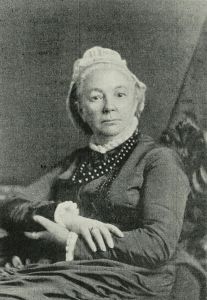
    Edinburgh-born ‘Mrs Oliphant’ (née Wilson, 1828–97) did not herself hail from an aristocratic background but a more bourgeois family. Her father was employed as a clerk in the customs and excise service, and she was afforded an education solid enough for her subsequently to produce more than ninety novels, among more than one hundred books. She was well received by critics and was Queen Victoria’s favourite novelist.

    Margaret Oliphant (1828–97)

    She fell out of currency until the late twentieth century, when some of her works returned into print, in an atmosphere of renewed interest in women’s writing. Merryn Williams compares her to Jane Austen and George Eliot and considers her ‘indispensible reading for anyone interested in women in the nineteenth century‘ (Women in the English Novel, 1800–1900).

    Bear in mind that the occasional tone of condescension I mentioned is characteristic of the era, in which a revolution in industry — including the attachment of a steam engine to a rotary printing press capable of printing on both sides of a sheet of paper — made possible the production of millions of copies of a single page in a day, and thus the birth of a mass media. Political, moral and financial imperatives came into play: on the one hand, considerations of the education, edification, ‘betterment’ and socializing of the masses; on the other, anxieties about the breakdown of social order.

    Questions arose such as, What kind of reading is appropriate for the working class (obviously, something useful)? And even fears about the ‘contamination’ of one class by another — more than a metaphor when it came down to instituting public libraries.

    In her essay, Oliphant writes of a summer afternoon in a cathedral town. She has charge of a restless child, whom she takes to a grassy patch by the cathedral, beyond the ‘verdant turf of the cathedral close’, having spent sixpence on some miscellaneous literature to amuse her with. The child is more fascinated with the ‘living daisies outside better than the dead effigies within’, and Oliphant spreads the papers out on the grass.

    Grave literature and learning, decorum and dignity, the authorities of society, stood represented in those grave old houses, from which no careless human eye looked out; and scattered over the daisies, with the wind among their leaves, lay the unauthoritative, undignified, unlearned broadsheets, which represent literature to a great portion of our country people, despite of all the better provision made for their pleasure.

    There could not possibly be a more marked or total contrast than between the object of our immediate attention and the scene.

    Thus is revealed an epiphany, which is not too far from the reader-response and reception theories of nowadays, to the effect that, ‘the multitude’, the reading public — those girls in the mills — will freely take what it pleases and do as it likes with the literature that is put in front of it. And so it ought.

    But here’s the good part. Whom should she uncover from her little trove of cheap writings among the daisies? Of course:

    Here is one personage, for instance, whom rival publications vie for the possession of, and whom the happy successful competitor advertises with all the glow and effusion of conscious triumph,—J. F.; nay, let us be particular,— John Frederick Smith, Esq. This gentleman is a great author, though nobody (who is anybody) ever was aware of it […]

    [Y]et we protest we never read a word of his writings, nor heard a whisper of his existence, until we spread out our sixpenny budget of light literature upon the June daisies. What matter? His portrait, from a photograph by Mayall, may be had in those regions where his sway is acknowledged; and the everybody, who is nobody, bestows upon him that deep-rolling subterraneous universal applause which is fame.


    CHAPTER TWELVE

    Goliah Gob’s Watch — Great Excitement in the Village of Deerhurst — Two Fathers and Two Sons — Viscount Allworth and Lord Bury — The Schoolmaster and Benoni

    Our readers, we flatter ourself, will step back with pleasure to see what some of their old acquaintances have been doing all this time.

    There was great excitement in the village of Deerhurst when it was known that Goliah Gob had received a splendid gold watch from one of the girls he assisted to rescue, and the interest was still further increased by the mysterious manner in which it had been conveyed to him — left at his mother’s farm by an itinerant preacher who had slept at the house overnight, and found on the table in his room, addressed to the honest rustic.

    It was a great puzzle to him, no doubt. But the London lawyer knew how to choose his agents.

    Peggy Hurst spitefully declared, without ever seeing it, that the watch would prove brass. Even Susan doubted, but it might be otherwise.

    We wonder if she had an eye to future contingencies. At any rate, she gave her mother, who watched her with the stealthiness of a lynx, no reasonable cause of complaint. She quitted her home, which had become intolerably dull since the departure of William, only on Sundays, to accompany her father to church. Not even his wife’s influence could prevent the old man from attending it. He had done naught to disgrace himself, he said, and would not give his neighbours cause to blame him.

    Mrs. Hurst prudently abstained. She had not forgotten the scene in the justice room at Squire Tyrell’s, the insults of the crowd, and above all, the triumphant, jeering glances of the Widow Gob.

    Absenting herself from church was the one weak spot in the programme she had traced for keeping Goliah and her daughter apart. There might be nothing between them at present; she admitted that, and determined within herself there never should be if she could prevent it.

    The last few days had greatly intensified her hatred of the Gob dynasty.

    ‘Mind and return as soon as the service is over,’ she said, after carefully tying her husband’s cravat.

    ‘I don’t expect anyone will invite us to stay,’ observed her husband, dryly.

    ‘And look closely after Susan,’ added his wife.

    ‘Aye, aye. I’ll take care on her.’

    ‘And watch if she exchanges looks or words with any of the singers in the organ galleries.’

    ‘I can’t,’ said the farmer.

    ‘Nonsense, Peter.’

    ‘I won’t,’ he added, firmly. ‘Susan be a good girl. Why should I play the spy upon her and feel ashamed to look my own child in the face? And it is my opinion there be naught to spy out. Now you know my meaning.’

    Mrs. Hurst looked thunderstruck. It was the first symptom of rebellion against domestic government that had occurred since they had been married. No wonder it startled, if it did not greatly alarm her.

    As for her daughter, she appeared rather amused than otherwise at her mother’s astonishment. Possibly she also did not place much confidence in her father’s resolution.

    ‘Peter,’ gasped his wife, in a tragic tone, ‘answer me one question.’

    ‘I will if I can.’

    ‘Are you in your right senses?’

    ‘No.’ The admission seemed to afford Peggy considerable relief.

    ‘I thought not,’ she muttered.

    ‘But I am coming to them,’ added her husband.

    Catching up his hat with an air of determination, the speaker quitted the kitchen, and, accompanied by Susan, started on his way to church; and Peggy, disconcerted by forebodings of the approaching end of her reign, sank into her easy chair to meditate.

    The truth was, she had stretched her authority too far. She muttered to herself: ‘He misses Willie, and the loss has made him mad.’

    This conclusion appeared to afford her considerable relief.

    ‘It can’t last, and it sha’n’t last,’ she resumed. ‘Why, Peter never ventured to cry snip unless I first said snap! and now — We shall see, we shall see. I’d rather die than give in to him. What would Mrs. Gob say?’

    Many wives have made similar resolutions before, and yet been obliged eventually to yield. Patience, gentle reader; the domestic battle is only just commenced. A shot from the outposts; nothing more.

    Up to our present writing we have barely alluded to the village schoolmaster, and yet he is destined to play an important part in our tale, as well as his treacherous son, Benoni.

    Theophilus Blackmore — or old Theo, as his pupils called him — seemed to have been born without any strong moral perceptions; and yet he was neither dissipated in his habits, vindictive in temper, nor naturally inclined to cruelty. He had no sympathies, no hates, but looked upon life as a mathematical problem, which, once solved, could have no further interest for him.

    His one solitary passion was for books; provided that were gratified, the world with its petty rivalries, jealousies, ambitions and crimes, might jog on as it pleased. They were the one necessity of his existence; he hungered for them.

    Reading had made him a ripe scholar. Science rendered him familiar with the latest discoveries; and yet he had never applied his knowledge to any practical or useful purposes.

    The Village Schoolmaster (1881), Charles West Cope. Source: Leicester Arts and Museums. Public Domain.

    When we say the old man had no sympathies, we ought to have admitted one exception. He felt a sort of dreamy kind of regard for his son Benoni. He had educated, but failed to make a man of him. All the higher qualities of manhood were lacking — honor, truthfulness, courage, fidelity in friendship.

    The fatal influences of his childhood clung to the young hypocrite still.

    How the old schoolmaster ever thought of marrying was a wonder to most persons who knew him. Possibly he wanted a cook or housekeeper. Certain it is that love had small, if any, share in his resolution. Since the death of his wife he had never been known to allude to her. In short, there appeared to be a mystery about the man which no one had ever been able to fathom.

    For several days the continued presence of Benoni in the house failed to excite his attention. When he did notice it he attributed it to the absence of his companion, Willie. As weeks passed, and the youth still avoided going to the village, or event attending church service on Sundays, the curiosity of Theophilus Blackmore became excited; not that he thought of questioning him. He knew his soon too well for that. Truthfulness was not one of Benoni’s characteristics. He took a surer way, and speedily learnt from his pupils the story of the boy’s treachery.

    Some parents would have felt grieved — would have remonstrated, corrected; not so the old bookworm. He regarded it as a thing that was to be — a mere incident in the drama of existence.

    The state of quietude was broken by a very unusual circumstance — the arrival of a visitor, who drove directly to their solitary abode, and remained nearly two hours in close conversation with the owner. Vainly did Benoni try to catch the subject — he was not above listening — but the door of the room was kept locked till the departure of the stranger.

    The following day his father delighted his pupils by informing them that for three days they might take a holiday — business of importance obliging him to pass that period in London. In short, he at once dismissed them, and as they quitted the school-room, settled himself down to one of his favourite authors. The curiosity of his son was excited to the highest pitch.

    ‘Did you say you were going to London?’ he demanded, alter a pause, trusting that his father might impart something more.

    ‘Did you not hear me?’

    ‘Am I to accompany you?’

    ‘No.’

    The querist looked terribly disappointed.

    ‘I have never been in London,’ he observed.

    ‘And what would you do there?’ inquired Mr. Blackmore, sharply. ‘You have not a single friend or acquaintance there that I am aware of. You might have had one, but foolishly lost him by your treachery.’

    The youth colored deeply.

    ‘To preserve a friend,’ added the speaker, ‘we must observe the laws which govern friendship — truth, honor, sincerity.’

    ‘Do you reproach me?’ exclaimed Benoni, getting excited.

    ‘I never indulge in reproaches,’ observed his father, for the first time raising his eyes from the volume before him. ‘They do no good. Besides, you would not feel them.’

    ‘And whose the fault?’ retorted the young man. ‘Yours! You trained me to distrust the natural feelings of the heart, calling them weakness; taught me to be as cold and artificial as yourself; and now find fault with your own work.

    ‘I tried to make you a philosopher,’ said the schoolmaster.

    ‘And trained a hypocrite,’ replied his son.

    ‘We will not dispute on terms,’ remarked the book-worm. ‘They are convertible, as mathematics teaches. What folly induced you to release the two ruffians in the Red Barn?’

    ‘They were from the Bittern’s Marsh,’ answered the youth, sullenly.

    ‘Ah!’ ejaculated his hearer.

    ‘And recognised me.’

    ‘That gave the act some show of reason,’ observed Mr. Blackmore after a pause. ‘An excuse, but not a necessity,’ he added. ‘You should have consulted me.’

    ‘There was no time for consultation. I had to decide,’ replied his son. ‘Consult, indeed! Father,’ he continued, ‘has there ever existed the least confidence between us? I know as little of your past life as of the future. That you are a cold selfish hypocrite, I have long since discovered; but there my knowledge ends. It would be better for us to part.’

    ‘What!’ said the old man sarcastically. ‘The tiger cub would break its chain?’

    ‘You should have forged it stronger,’ was the muttered reply.

    His parent closed the book he had been reading, and commenced pacing up and down the room for several minutes, muttering to himself, ‘Kismet! Kismet!’ the Arabic word for fate. Suddenly he paused in his peregrination, and fixed his glaring blue eyes upon the inflamed countenance of the speaker.

    ‘You are right,’ he said. ‘It is time that we should part. Cold as you think me, I will not suffer you to cast yourself upon the world without some chance of escaping shipwreck. But you must leave the means to me. This visit to London is most opportune. Yes, yes,’ he muttered to himself, ‘I will insist upon it. You must await my return. My absence will not exceed three days. Promise me.’

    Benoni pledged his word to remain. Nor that the speaker placed much reliance upon it; he trusted more to the fact that, with the exception of a few shillings, he knew him to be penniless. That same evening he started upon his journey, and at the time appointed returned to Deerhurst.

    Vainly did his son try to read in his face the success or disappointment of his hopes. The countenance of the Sphinx could not have been more impassive. Unable to endure the suspense of doubt, he boldly questioned him.

    ‘Have you succeeded?’ he demanded.

    ‘Yes,’ was the reply, ‘In a week or two you will enter the office of Brit and Son, London.’

    ‘What are they?’

    ‘Lawyers.’

    ‘Only lawyers!’ remarked Benoni, in a tone of disappointment.

    ‘Did you expect to be articled to a cabinet minister?’ asked his father, sarcastically. ‘Such personages do not generally take apprentices.’

    ‘No. But I –‘

    ‘Shall I tell you what a lawyer really is?’ continued, the former, interrupting him. ‘He is the depository of secrets affecting the honor, and sometimes the fortune, and sometimes the lives, of his clients; an agent to baffle the ends of justice more frequently than to assist them. The fortunes of the fools who trust them pass through their hands, which are birdlimed, and some of the feathers of the golden geese are sure to stick to them. Only lawyers!’ he repeated. ‘You are unworthy to be my pupil if you fail to find your advantage in this.’

    ‘But all lawyers are not alike,’ suggested the young man.

    ‘Perhaps not,’ was the reply. ‘I only state the rule, and waste no time or thought upon the exceptions, I know what is best for you.’

    His son thought so, too, and began to feel pleased with the idea, although it was not the profession he would have chosen. But, then, it promised change — change from the dreary, dull, unloving home to the busy realities of life; activity, success, and possibly revenge upon his former friend, Willie, whose honest scorn of his treachery had deeply stung him.

    Two weeks before the departure of Benoni for London there was to be a wedding at Deerhurst church, which Susan naturally felt desirous of attending. All girls like to be present at weddings; at least we never knew one that did not.

    Peggy Hurst made but a faint attempt to prevent her daughter from going. The wish was so natural. Then her father spoke out, and somehow his wife felt less inclined to oppose him than formerly. It did not appear quite so safe. She was a tactician in her way, and husbanded her forces for serious occasions.

    The church was crowded, as is usual on such occasions. The farmer met several old friends and acquaintances, who appeared something less inclined than lately to censure him very strongly. The fact was, they knew where the shoe pinched. They were mostly married men, and had worn it themselves, Opinions, like the weathercock, were veering round in the old man’s favour.

    Whilst he was chatting with some and shaking hands with others Susan contrived to slip from his side, and made her way to the organ-gallery. Behind the instrument she found Goliah. Of course she appeared very much surprised.

    ‘Dear me, Mr. Gob,’ she exclaimed. ‘You here!’

    ‘Ees,’ answered the rustic; ‘beant this the place?’

    She had forgotten, for the instant, a message she had sent him. There was no time for coquetting. She felt that, and came at once to her purpose.

    ‘I am uneasy in my mind’ she began. ‘Benoni is about leaving for London, and I have written a letter to put my cousin on his guard, for I feel certain some treachery is intended. He has twice held long talks with mother at the bottom of the orchard. I dare not post it in the village. Mother and post-mistress are too intimate. Can’t you take it?’

    ‘You may swear to that,’ replied her admirer — ‘not that I ever heard of thee swearing. I be goin’ wi’ a load of hay in the mornin’. Dear! Dear!’ he added. ‘I do feel mortal bad.’

    ‘What can be the matter with you?’ inquired Susan, archly .

    ‘I think it be love. And now the murder’s out!’

    ‘Nonsense!’ said the village beauty, as she disappeared down the gallery staircase. ‘Mrs. Gob’s dumplings were too heavy! It can only be indigestion!’

    The honest fellow looked after her wistfully.

    ‘It beant dumplings,’ he muttered. ‘Mother’s dumplings are allays light. What will I do?’ he added. ‘Sartin it be love!’

    We think so, too.

    Viscount Allworth would have made an excellent stage manager of a vaudeville theatre. Neither was he without some talent for tragedy. His mise en scene, too, was admirable. He could set his face to any expression he pleased, for, like the Roman actor who of old had worn the mask so long, his features took the impress of bronze.

    For several days his lordship had been expecting a visit from his son, and remained at home, watching with calm confidence his arrival. No sooner did he perceive the brougham enter the square than he walked deliberately to the mirror in the dressing-room, to arrange his countenance for the occasion. Satisfied of his artistic success, he seated himself at a table. The bell had rung for the performance. He was ready.

    ‘Welcome, my dear boy!’ he exclaimed, as the young man entered the apartment. ‘I am glad you are come. I have been anxiously expecting you.’

    ‘Doubtless, my lord,’ was the reply, ‘for the honour of our name is dear to me.’

    ‘The honour of our name is untouched.’

    ‘Hear me, father –‘

    ‘You must first hear me,’ interrupted the aged hypocrite, with well-affected dignity. ‘Unjust accusations are always regretted; forbearance rarely is so. You have heard the rumours?’

    Lord Bury bowed in the affirmative. I have done everything in my power to stifle them — not without success, I flatter myself. Something also I have exacted by way of atonement. Clarence Marsham has quitted the army.’

    ‘His debts compelled him.’

    ‘Not so,’ observed his parent. ‘Lady Allworth was quite prepared to pay them but I refused to listen to any compromise.’

    ‘And where is the scoundrel now?’ demanded the visitor, the, frown upon his brow slightly relaxing.

    ‘In France.’

    ‘Paris?’

    ‘I presume so.’

    At the very moment he uttered the equivocating lie the speaker had a letter dated from Dinent, in Brittany, written by his step-son, in his pocket.

    ‘What more can I do?’ continued his father. ‘I cannot divorce my wife because her son has acted like a fool. Is it not better to let the rumors quietly die out than to create any further scandal? My own conduct has been perfectly clear in the affair, but I leave the decision with you.’

    ‘Possibly you are right,’ observed Lord Bury, after reflecting on the circumstances. ‘At least, I shall not oppose it; but this acquiescence, forced upon me by consideration for my cousin, Kate, will not prevent me from proceeding immediately to Paris and calling Clarence to account.’

    ‘I have no opinion to offer on that point,’ observed the viscount, gravely. ‘And now, Egbert,’ he continued, ‘weigh all that has taken place calmly; question me on any point of my conduct you please, I am ready to answer you.’

    ‘Father,’ replied the young guardsman, ‘I would fain believe, and dare not question you, lest some painful doubts should be re-awakened. God forgive you if you have deceived me!’

    It is a hard thing to force upon a son the terrible conviction that his father is a villain. Lord Bury took his leave, hoping and trusting probably against his better reason. A few minutes after his departure Lady Allworth entered the dressing-room. She had overheard every word that passed.

    ‘Admirable!’ she said. ‘Yes; I think I have pretty well mystified him. We have now a clear field before us. ‘But the bonds?’ he added, eagerly.

    ‘Shall be paid the instant you have signed the lease of the Bittern’s Marsh.’

    This edition © 2019 Furin Chime, Michael Guest


    Notes, References, Further Reading

    dominie: Scottish English term for a schoolmaster.

    [Margaret Oliphant], The Byways of Literature: Reading for the Million’, Blackwood’s Edinburgh Magazine 84 (August 1858) 200-16. Available at Internet Archive. [Author’s name not given on the text.]

    John Sutherland, ed., Longman Companion to Victorian Fiction, 2d ed. (Routledge, 1988).

    Victorian Fiction Research Guides, ‘Margaret Oliphant‘.

    Lewis C. Roberts, ‘Disciplining and Disinfecting Working-Class Readers in the Victorian Public Library’, Victorian Literature and Culture, Vol. 26, No. 1 (1998),105-132.

  • J.F. Smith’s Mystery of the Marsh — Eleventh Instalment

    J.F. Smith’s Mystery of the Marsh — Eleventh Instalment

    This chapter presents insights into the motivations and machinations in play at the ‘higher end’ of society. A far cry from Mrs. Hurst’s scheme to have William and Goliah banged up for the ‘theft’ of the horse and wagon, motivated partially by her rivalry with Mrs. Gob over her excellent butter.

    Nevertheless, the differences appear to be more in terms of their degrees of subtlety and complexity rather than in essence. Smith presents the moral attributes of the characters in a system of defined binary oppositions, which work at times to undercut each other in the same character. Someone who wears a ‘black hat’ in the first instance may be shown subsequently to have redeeming qualities to some extent. (Cinema quite commonly applies similar techniques.)

    It seems on cue to turn, as we do in the present chapter, to a deeper context of meaning for his play of morality and human nobility. The scene in the regimental headquarters of the Royal Life Guards and Horse Guards (also known as The Blues) serves to diminish the importance of the social hierarchy per se, with this proximity to royalty and empire.

    These are the two most senior regiments of the Royal Household Cavalry, dating to the restoration of Charles II in 1660. They boasted an illustrious record of service at home and abroad in any number of theatres of war over the subsequent centuries, including Waterloo.

    In the Victorian era, the British Empire had become one upon which ‘the sun never set’. A certain mode of history — ‘Whig historiography’ — assumed popularity, one that viewed this position of world leadership as a logical and inevitable development, a march towards global enlightenment based on the principles enshrined in British governance.

    Lord Macaulay’s (1800–1859) five-volume History of England (1848) is considered the archetype of Whig history. But guess in whose history we can discern shades? Correct: in John Frederick Smith’s own volume of the nine-volume Cassell’s lIlustrated History of England (1874):

    The slow building of a constitution which finds no parallel in the world is the most distinctive, as it is the largest feature in English history … If we do not profit in heart and head by the experience which the ages have gathered for us — if we do not grow, as they would have us, not only in wisdom but in humility, in moderation, in humanity — we have to blame, not these unerring teachers, but ourselves.

    Preface to Volume 1

    The Celtic queen Boadicea leading the British revolt against the Romans, 60/61 CE. Frontispiece to Cassell’s Illustrated History of England Vol. 1 (cropped).


    CHAPTER ELEVEN

    Clara Meredith Does not Feel Quite Satisfied with Herself — The Sketch — Return of her Cousin to London

    Clara was seated in the library, thinking over the events of the last few days, and taking herself to task for her conduct to her cousin. To be sure, his neglecting to make her acquaintance in London — her first season, too — was unkind, to say the least of it; but had she the right to resent it, and turn him into ridicule on his arrival in the country? After turning the circumstances over in her mind she came to the conclusion that she had not. It was undignified, to say the least of it; and she felt dissatisfied with herself, and all the more so that he had endured her sarcasm with such polished good humour.

    That her cousin was ultra-fashionable, and not a little fastidious, she did not doubt; but that he merited the title some of her dear friends in London had given him of a “cynical, heartless man,” she could not believe. Had he not danced with the May Queen at her request; defended her from the insulting familiarity of Burcham? Shaken hands with Tom Randal as he reluctantly yielded to his right to protect his rustic sweetheart?

    What better proofs of manhood could he have given?

    ‘Clara,’ said his lordship, as he entered the library, ‘I am come to fulfil my promise. I told you when I made it that I was not much of an artist; but I have done my best.’

    He placed the sketch in her hand.

    The young lady coloured slightly as she received it. She had secretly hoped he had forgotten it; but Bury was a man of his word. Despite the seriousness of her late thoughts she could not help laughing gaily as she contemplated the drawing. It was really exceedingly well done for an amateur, and he had carried out her description to the letter. There stood the old mansion in the distance; Clara, in a short frock and blue sash, screaming on the bank of the pond; his lordship floundering in the water. One of the famous red morocco shoes floating on the surface, and a goose swimming after it.

    The last, by-the-by, was an introduction of the artist’s own, intended, probably, as a slight epigram on the playful malice which had recalled the incidents.

    ‘I am glad,’ observed Clara, recovering her seriousness, ‘that you have recollected your promise, and yet it scarcely amounted to one. But why represent me twice?’

    ‘I scarcely understand you, cousin.’

    His cousin pointed to the goose sailing after the shoe. His lordship smiled.

    ‘I am ever so much obliged to you,’ resumed the fair girl, after a pause. Is it really mine?’

    ‘Undoubtedly, since you have honored me by accepting it. Shall the drawing find a place in your album, or be sent as a contribution to the next fancy fair?’

    ‘Neither one nor the other,’ answered his cousin, with a show of feeling at which she felt provoked with herself. ‘I can dispose of it in a far more fitting way. And yet it is a almost a pity,’ she added, as she crushed the sketch in her little hand, dropped it into the fire, stood watching it until it was consumed, and then, with a quiet courtesy, quitted the room.

    Lord Bury stood for some little time gazing after her in silence. Possibly the problem was becoming interesting to him.

    ‘Pshaw!’ he muttered, as he took up a newspaper to while away the time till luncheon. ‘Why should I feel surprised? Good blood will tell.’

    Had he said good principles, the observation, we suspect, would have been more germane to the matter, as our friend, Shakespeare, says.

    Three days after the interview in the library, which neither of the cousins thought fit to allude to again, Lord Bury, who had just received his letters, informed Sir George that he was obliged to start the following morning, on particular business, for London.

    ‘Nothing unpleasant, I trust. Can I be of any use?’

    ‘Exceedingly unpleasant, uncle, for it concerns the honor of one who ought to be very dear to me. Unfortunately,’ he added, ‘you cannot be of the slightest assistance to me.’

    ‘That scamp of a father, I suppose,’ thought his host, who had noticed the word “ought.” ‘He is always getting himself into some infernal scrape or another. Older, too, than I am.’

    Of course he kept these reflections to himself.

    ‘Possibly I may be able to renew my visit,’ said his lordship, ‘in the shooting season. That is, if I have not worn out my welcome.’

    ‘We are homespun, Egbert,’ observed his relative, ‘and can stand a vast amount of wear and tear. Come when you will, always glad to see you, Make it a promise, and I will keep the home cover for you. Make it your home if you like.

    ‘That is,’ he added, noticing the blush upon his daughter’s cheek, ‘as long as I live, Of course I cannot answer for my successor.’

    ‘That would be unreasonable, Sir George,’ observed the nephew, who had noticed the blush and the correction of the speaker’s offer. ‘Thanks, I will not abuse your hospitality.’

    The next day Lord Bury started for London.

    ‘Well, Sparks,’ said his lordship, when the sergeant-major entered the room the morning after his arrival at headquarters, to report on the condition of his company, ‘anything important?’

    ‘Not very,’ answered the old soldier. ‘There has been a fine young fellow here from the country, who wants to enlist, but won’t engage in any company but yours. Such a chest! Stands six feet two; straight as a pike-staff. Knows the points of a horse as well as the regimental vet, himself. Hope we shan’t lose him.’

    ‘But why in my company?’ demanded Lord Bury.

    ‘Heard that you were a kind officer, most likely.’

    ‘No flattery, Sparks. Did the young fellow you were speaking of give his name?’

    ‘Tom Randal, my lord.’

    ‘Find him; bring him to me instantly,’ exclaimed the officer, greatly interested. ‘You said truly, he is a fine fellow — a man every inch of him.’

    In a few minutes the lover of the pretty Phœbe entered the luxuriously-furnished room of the officer, who frankly held out his hand to him.

    Although the countenance of the new recruit flushed with a momentary satisfaction, he did not accept it.

    ‘You forget,’ he observed, ‘that I am about to become a private soldier.’

    ‘No, I do not,’ replied his lordship; ’till you are enlisted, you are a free man, and a prince might shake hands with you. Once in the ranks,’ he added, ‘it would be different; but that will be neither your fault nor mine.’

    The hand was again extended, and this time cordially shaken. The sergeant discreetly withdrew. He thought it best to leave the officer and his rustic friend together.

    Tom Randal, after the quarrel with his father, had made the best of his way to London on foot; for he had very little money, and proceeded at once to the barracks of the Guards. Our readers know the rest. Vainly did his aristocratic friend try to argue him out of his intention to enlist, pointing out the difficulty of obtaining his discharge when once he had taken the fatal shilling.

    ‘The colonel,’ he added, is a good man — a kind man — but will never consent to let a fine young fellow like you leave the regiment when once engaged in it,’ and advised him to take a few days to consider of it.

    ‘Not an hour, my lord,’ replied the lover of Phœbe. ‘I have lost the only girl I can ever love, and all through my father’s prejudice, pride, and obstinacy. It has cost him his son,’ he added. ‘He shall find I can be as resolute as he is. My mind is made up.’

    Trooper of the Royal Horse Guards, 1828. (Created 1847) Public Domain. Source: Wikipedia

    Lord Bury sent for Sergeant Sparks, and Tom Randal quitted the room, duly enlisted into his majesty’s first regiment of Life Guards.

    The poor fellow, we suspect, had inherited some of the old farmer’s temper; if so, the army was, perhaps, the best school to work it out of him.

    The expiration of his leave of absence was not the only motive which brought his lordship to London. He could easily have obtained a prolongation of it. He had received a letter from one of his most intimate friends, informing him of certain ugly rumours that were whispered in society of an attempt to force his cousin, Lady Kate Kepple, into an unequal marriage with Clarence Marsham, and that Lord Allworth’s name was unpleasantly mixed up with the transaction. ‘Of course,’ added the writer, ‘I do not vouch for the correctness of these reports; but as they are levelled at the honor of your family, I felt it my duty to inform you of them. All I really know is that the chancellor has deprived your father of the guardianship of Lady Kate’s person, and that his step-son has sold out of the army. The last two facts I affirm on my knowledge. There the duty of friendship ends. It is for you to act as you think best.’

    On his way to town, the young guardsman had perused the letter at least a dozen times, and each reading added to his mortification. As we before observed, he was both proud and honorable, weak in some things and extremely sensitive; but, then, we are not drawing a perfect character; absolute perfection, we fear, would be just a little insipid.

    His first visit was to Montague House. There, at least, he expected to learn the truth. Its owner, with whom he was a favorite, received him nervously. Our readers have not forgotten her intense dread of scandal, and the feeling increased tenfold when he had explained the object of his visit.

    ‘It it possible!’ she exclaimed, ‘that, despite my precautions, the unfortunate story has leaked out?’

    ‘It is true, then?’

    ‘I cannot deny it.’

    Lord Bury rose to take his leave.’

    ‘Egbert! Egbert! cannot the affair be hushed up?’

    ‘Impossible!’ was the reply. ‘At present it is only whispered; in a week’s time it will be a common topic of conversation in half the drawing-rooms in London. It is my duty,’ he added, firmly, ‘to see that your conduct and Kate’s should be unquestioned.’

    Again he moved towards the door.

    ‘Stay,’ said her ladyship, lowering her voice to a whisper. ‘You do not know all.’

    ‘For Heaven’s sake, let me hear it, aunt!’

    ‘Kate escaped from Allworth Park in boy’s clothes; walked all one night in them, and slept the next in a barn.’

    ‘Is that the worst?’

    ‘What could be worse?’ replied the aristocratic old maid, blushing deeply as the veiled meaning of his question dawned upon her mind. ‘Is not Kate living — slowly recovering her health and spirits?’

    A terrible suspicion passed from the heart of Lord Bury. He knew the speaker too well to doubt her word for an instant. A third time he was about to depart.

    ‘Stay,’ said Lady Montague, ‘Do tell me where you are going.’

    ‘To see my father,’ answered her visitor, gloomily. ‘I have a hard task before me, but will not shrink from it.’

    This time he succeeded in quitting the room.

    ‘Poor Egbert!’ sighed Lady Montague, as he disappeared. ‘He is very much to be pitied. Why did my sister marry Allworth? I told her he was a roue, repeated all the evil reports I ever heard of him, warned her every way; but it was of no use — seemed to increase her infatuation. If she had accepted some plain country gentleman, or even a bishop’s son I should not so much have minded, although, of course, it would have been a misalliance. But no, she would have a peer. Poor girl; she paid dearly enough for her folly. And yet,’ she added, thoughtfully, ‘I do not think it was all ambition. At the worst,’ continued her ladyship, ‘Kate and I can return to Montague Castle, live like nuns, and when we die, leave our fortunes to found a hospital for old maids.’

    However improbable, the project certainly was not an impossible one, although somehow we have an idea that Lady Kate will feel but little disposed to join in it.

    Viscount Allworth never believed it would be possible to keep the disgraceful escapade of his stepson from the knowledge of society — he knew the world too well for that — so he prudently resolved to make his own share in the transaction appear as harmless as possible. What he most feared was the indignation of his own son, who had lately shown a spirit which startled him.

    ‘Bury behaved exceedingly well in the Chellston affair,’ he muttered to himself, as he turned the incidents over in his scheming brain. ‘Must keep friends with him if possible.’

    Having traced a line of conduct for himself, Lord Allworth was not the man to be easily moved to depart from it; and the less so, that for the first time for years he found himself — thanks to the Chellston trickery — tolerably at ease in his pecuniary affairs; hence the firmness with which he insisted on Clarence Marcham’s retirement from the army.

    ‘Absurd!’ exclaimed his wife, when he informed her of his determination. ‘A mere boyish folly; the world soon forgets such things.’

    ‘In some persons, perhaps, but not in others,’ remarked the husband, gravely. ‘You made no objection when I stated my intention to Lady Montague.’

    ‘Because I did not believe you to be serious. In fact I never know when you. are serious. I considered it merely a sop thrown to the old Cerberus.’

    His lordship appeared greatly shocked.

    ‘I wish, Lady Allworth,’ he observed, but without losing his temper, ‘that you would be a little more refined in your expressions. I am aware that the defects of early education and associations are hard to overcome. Still it may be done. You will oblige greatly by striving to recollect this the next time you speak of my first wife’s sister, a woman of high birth, large fortune, and spotless reputation.’

    There was a momentary lull in the stormy conversation. The viscountess bit her lips to avoid giving expression to her rage at his provoking coolness.

    The husband — and we feel there are but too many like him in the world — enjoyed his wife’s mortification exceedingly.

    ‘I perceive what you are driving at,’ observed the angry woman. ‘You require money?’

    ‘No.’

    The lady gazed at him with astonishment. It was the first time in her married life she had received such an answer to a similar question.

    ‘Money,’ continued the speaker, ‘is an excellent thing in its way. I can’t imagine how some people contrive to exist without it; but it is not everything. Listen to me — my conduct is not so unkind as you suspect. You are far from being a fool, Lady Allworth. I know that you can control your temper on some occasions, and act with prudence.’

    The wife could scarcely repress a smile; she recollected how cleverly she had contrived to outwit him in the settlement of her fortune.

    ‘I have seen the commander-in-chief,’ added the speaker; ‘the affair has got wind through the rascally lawyers. I suspect Clarence is in bad odor at the Horse Guards — very bad. His royal highness is decidedly of opinion that he ought to sell out; and you know what such an opinion from such a quarter means. The price of his commission I am told, will barely pay his debts.’

    ‘Debts!’ gasped the astonished mother; ‘why, his allowance has been most liberal!’

    ‘Not feeling the slightest interest in the subject,’ said his lordship, ‘I made no inquiry as to their amount. You perceive the step is inevitable. Clarence had better return to France; living is cheap there; great resort for half-pay people. But he must decide quickly; in three days he will be arrested.’

    It is quite true that Viscountess Allworth loved her son, but, then, she loved herself a great deal more, and did not care to impoverish herself to pay off his liabilities. He must do that, she thought, by a wealthy marriage. So far from having abandoned the project, she clung to it more tenaciously than ever. Two days afterwards the unmanly scapegrace landed in France.

    We scarcely need to remind our readers that these last arrangements were made during Lord Bury’s visit to the country.

    This edition © 2019 Furin Chime, Michael Guest


    Notes and References

    ‘as our friend, Shakespeare, says’: ‘The phrase would be more germane to the matter if we could carry cannon by our sides’ (Hamlet, V, 2).

    ‘[to take] the fatal shilling’: sign up as a soldier, ‘from the former practice of giving a shilling to a recruit when he enlisted’, wordhistories.net

    Macaulay, Thomas Babington, Baron, 1800-1859, History of England from the Accession of James the Second (1901). Digital facsimile available at the Internet Archive. Link opens Vol. 1.

    Smith, John Frederick, Cassell’s Illustrated History of England (1874). Beautifully illustrated digital facsimile available at the Internet Archive. Link opens Vol. 1.

    While all nine volumes of Cassell’s Illustrated History are sometimes attributed to Smith, Andrew King and John Plunkett reveal that he actually only wrote the first. Subsequently Cassell ‘realized that Smith was less concerned with facts than narrative drive’ and handed the rest of the work over to William Howitt (1792–1879) (King and Plunkett, Victorian Print Media, OUP, 2005, p. 415).

  • J.F. Smith’s Mystery of the Marsh — Recap

    J.F. Smith’s Mystery of the Marsh — Recap

    I’ll keep good the promise made by the 1883 newspaper sources for this reconstructed penny blood mystery, by providing their mid-way summary. The author of the novel is the Englishman John Frederick Smith, the most popular writer of the mid-nineteenth century — but in later years all but forgotten. The annotated instalments include contextual notes along with glimpses of the life of this intriguing writer.


    In order that new readers may begin with the following installment of this story, and understand it just the same as though they had read it all from the beginning, we here give a synopsis of that portion of it which has already been published:

    Two girls, clad in male attire, one evening appealed for help to William Whiston, nephew of Farmer Hurst, of Deerhurst. William — who was accompanied by two friends, Goliah Gob and Benoni Blackmore — gave the fugitives refuge in his uncle’s red barn. Soon afterwards a tramp, named Bunce, took refuge in the barn, and two ruffians came there also, in pursuit of the girls. Bunce defended the girls against the ruffians, till Goliah Gob, a young fellow of gigantic size and strength, came to his assistance. The ruffians were overpowered and bound.

    Isaac Israëls (1865-1934), Bois de Boulogne (1904). Public Domain. Source: 1stdibs.com

    Goliah then summoned William and Benoni, and after consultation William and Goliah set out in a waggon for London with the girls, who proved to be Lady Kate Kepple, an heiress, and her maid Martha. Lady Kate was fleeing from Clarence Marsham, an officer in the Guards, who attempted to force her to marry him. They arrived safely in London, where Kate went to the protection of her aunt, Lady Montague.

    William called on his uncle, Lawyer Whiston, and told him the story. The old lawyer was Lady Montague’s legal adviser, and was delighted to find what part his nephew had played in Lady Kate’s escape.

    Benoni had been left in charge of the bound ruffians in the red barn, with directions to hand them over to the authorities in the morning, but he set them free, and told such a story to Farmer Hurst that Mrs. Hurst insisted on having William and Goliah arrested for stealing the farmer’s horse and waggon. This was done, but Lawyer Whiston came down from London, rescued them, and overwhelmed the Hursts and Benoni with exposure and shame.

    William, who was half-owner of the Hurst farm, then went to London with his uncle.

    Goliah loved Susan Hurst (William’s cousin), and Mrs. Hurst hated him for it. Lawyer Whiston, to whom Bunce showed some old family papers, provided handsomely for the wanderer, and Lady Kate Kepple sent William and Goliah each a handsome watch as a token of her gratitude.

    Clarence Marsham, the persecutor of Lady Kate, was a step-son of an unprincipled nobleman, Lord Allworth, who, after the death of his wife, married Clarence’s mother for her money. Lord Allworth had a son of his own — Egbert, Lord Bury — whom he had swindled out of an estate called Chellston, that Egbert had inherited from his mother. Sir George Meredith, Egbert’s uncle, had bought Chellston.

    Clara Meredith, sole child of Sir George Meredith was a beauty and an heiress. Egbert — Lord Bury — was on a visit to Chellston. Clara felt piqued at Lord Bury, who was an officer of the Guards and noted for his exclusiveness, because when she was on her first visit to London the season before, he did not call upon her. For this reason she snubbed him, reminded him how he had fallen into the duck pond when he was a boy, and requested him to make her a drawing of the scene.

    At the May Day festival Lord Bury defended the May Queen, Phœbe Burr, from a ruffian named Burcham, until her lover, Tom Randal, came upon the scene, and claimed the right to act as her champion. Farmer Randal, Tom’s father, was so incensed at his son for avowing his love for Phoebe that a quarrel ensued and Tom ran away. Clara was a friend of Phœbe’s and resolved to help her to marry Tom despite his father’s opposition.

    This is the state of affairs at Chellston when the following chapter opens …

    This edition © 2019 Furin Chime, Michael Guest


    Next instalment will be Chapter Eleven. All the previous chapters are available at Furin Chime website.