Tag: Early American Popular Literature

  • A.C. Gunter’s Baron Montez: 15. Winterburn’s Museum

    A.C. Gunter’s Baron Montez: 15. Winterburn’s Museum

    An unopened powder canister bearing the stamp “Dupont Rifle Powder, 1852″ embedded in a tree branch is just one of the curious mysteries the reader will confront in this chapter. There are also alligators and snakes—lots of snakes; and as well, young girls smoking cigarettes.

    Louise, our courageous heroine, finds her accommodation comfortable in the house of Martinez, the notary. The family warmly welcomes her and she is treated to a tour of Silas Winterburn’s museum of strange artefacts. In the process, the mystery of Mrs. Silas Winterburn’s Christian name is revealed, though another curious mystery concerning her husband’s treasures remains for another day.

    After acquiring his less than salubrious accommodation, Harry’s first act is to purchase a ‘wide-brimmed sombrero de Guayaquil’. While the word ‘sombrero’ may evoke an image of Mexican cowboys and mariachi musicians, it is simply Spanish for ‘hat’. Guayaquil is the largest port and city of Ecuador, and the hat Harry has purchased would have been handwoven by locals from a palm-like plant called Paja Toquilla (or Carludovica Palmata). The sombrero de Guayaquil was popular among workers on the canal. Although made in Ecuador, it is Panama that gives this stylish hat its name, and makes it famous world-wide.

    Types of Notables in the Capital, Province of Santander [Colombia] (1850), watercolor, Carmelo Fernández. Source: National Library of Colombia

    When it comes to his mission, whereas before it was only a suggestion of the narrator, now Harry personally dons the knight’s armour. There is some confusion, however, over which damsel’s colours he bears. He is aware that the only weapons he possesses are his physical presence, good looks and charm; and because of Louise, he feels invested with strong resolve. Previously he has referred to his travel to Panama as a ‘wild goose chase’, and at this point the reader may speculate about what he hopes to achieve.

    First through Louise, and now in this chapter, Harry is seeking a means of getting the dirt on Baron Fernando Montez, but to what end? He will be unlikely to discover that Montez is not a Baron. However, if he does find some incriminating or unsavory information about Montez, it is hard to fathom how discrediting the Baron publicly will serve to regain Miss Severn and Frank Larchmont’s fortunes. Of course, possessed of information that Montez does not want made known would give Harry the opportunity to blackmail him, but is that the action we expect of a knight errant?


    BOOK 4

    THE STRUGGLE IN PANAMA


    CHAPTER 15

    WINTERBURN’S MUSEUM

    Striking a bargain with a mulatto charioteer, half in the English tongue, half in Spanish, Winterburn procures a carriage, and the party take route up the lane leading from the railway station; and passing into the old town of Panama, between houses whose balconies come very close together, they reach the Calle del Cathedral or Main Street.

    A moment after, Miss Minturn gives an exclamation of pleasure, for they have come out on the great plaza of the town, and the sunshine is upon it, making it look very bright and pleasant compared to the dark streets through which they have passed.

    They drive along this, past a little café, with seats and tables on the sidewalk, after the manner of Paris, and then in front of the old Grand Hotel—the one in which Montez had made the acquaintance of the Franco-American. This is now devoted to the offices of the Panama Canal Company—the upper floors being used for business purposes, and the lower one being turned into a general club full of billiard tables for the use of its employees; all lavishly paid for by the money of the stock holders.

    Then they come to another café or restaurant, more elaborate than the first, whose tables and chairs are upon the sidewalk like those of the grand Boulevard cafés in far-off Paris. Turning the corner, across the Plaza with its walks and tropic plants, the girl sees the great Cathedral of Panama, old with the dust of centuries. But this is distant and ancient; and the Grand Central Hotel and a lot of offices are near her and modern.

    At the old Club International, they turn away from the Plaza and go towards the sea wall and the ‘Battery’; and after passing through more narrow streets with over hanging verandas, they come to the house of the notary, Martinez.

    Here Mrs. Winterburn is received in voluble Spanish, by the wife of the official, a Creole lady of about thirty-five, but looking much older, and her numerous progeny; all of them daughters, ranging from twenty-two to fourteen, and all of them, in this rapid sunny part of the world, of marriageable age.

    Louise’s Spanish soon makes them her friends, and she finds herself settled very comfortably in a room that looks out over a wide veranda on a little patio, or enclosed courtyard, around which the house is built. This courtyard has a few plants and flowers, in contradistinction to most of the Panama patios, whose inhabitants are too lazy to put into the earth anything that merely beautifies, though the land only requires planting to blossom like Sharon’s Vale. Her apartment is up one flight of stairs, for there are stores underneath, and the family, as in most of the Spanish portions of Panama, live over them.

    Inspection discloses to Miss Minturn that she has a clean room, with whitewashed walls and matting upon the floor; a white-sheeted bed, and a few other articles of furniture that are comfortable, though not luxurious. At one end of her room swings a hammock.

    “Hammock, or bed! You can take your choice, señorita!” laughs the old Spanish lady. “But if you take my advice, you will choose the hammock—it’s cooler!” and leaves her alone.

    Then Louise looking around, finds there is a veranda overhanging the street, to which a door leads directly from her room. With this open there is a very good draught, which is pleasant, as it is now the sultry portion of the afternoon.

    Soon her trunk, which has been attended to by kindly old Winterburn, arrives, and the girl unpacking it, makes her preparations for permanent stay, and looking out on the prospect, thinks: “How different this is to Seventeenth Street in New York!” Then she murmurs: “How quiet! and this for a whole year!” and sadness would come upon her; but she remembers there are Anglo Saxon friends in the house with her. She thinks, “Were it not for his thoughtfulness I should be alone and home sick. And I was unkind to him—not because of his proposition, but because”—then cries—“I hate her any way!”

    After this spurt of emotion, being tired with the railroad trip, and worried over Mr. Larchmont, Louise thinks she will take, after the manner of the Spanish, a siesta and forget everything; and climbs into her hammock. Being unused to this swinging bedstead, she gives a sudden shriek, for she finds herself grovelling on the floor; the management of this comfort of the tropics not being an accomplishment that is acquired in one siesta.
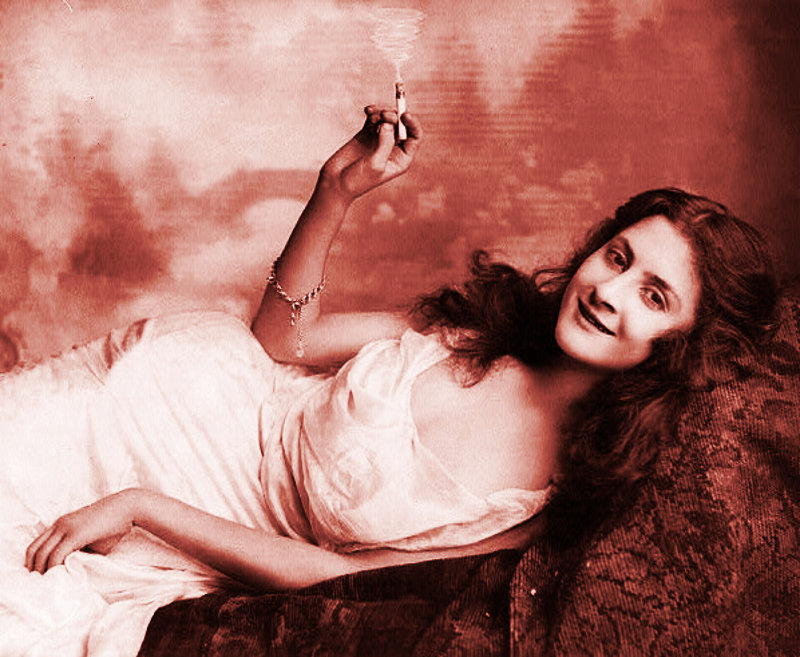
    Anon. 1902

    But the heat will not let her sleep, so she goes into a daydream, from which she is aroused by one of the young ladies of the household coming in, and crying: “Señorita Luisa, I have brought you some cigarettes!”

    “For me? I never smoke!” laughs the American girl, partly in dismay, partly in astonishment.

    “Not smoke?—and you speak Spanish!” says the Isthmus maiden in supreme surprise. “Let me teach you!”

    She lights up, and lolls upon the bedstead, telling the young American lady, to whom she seems to have taken a great fancy, that her name is Isabel, but all who love her call her Belita, giving out incidentally the petite gossip of Panama, between deft puffs of smoke that rise in graceful rings about her.

    Louise sits looking at her dreamily, thinking that Panama is a very quaint and quiet place, as it is to her, this afternoon.

    Mr. Larchmont’s experiences, however, are different. He drives into the town over much the same road as the Winterburns have taken, but stops at the Grand Hotel, and would engage a suite of apartments of most extraordinary extent and price for a man depending upon the salary of a clerk in the Pacific Mail Steamship Company, or any other clerk for that matter, except, perhaps, some of the Canal Company, who are paid most extravagant prices; but suddenly Harry remembers he is supposed only to have one hundred and fifty dollars a month for his stipend, grows economical, and chooses quarters that do not please him and make him swear—this luxurious young man.

    Then having made himself as comfortable as the heat will permit, attired in the whitest linen, and a wide-brimmed sombrero de Guayaquil, which he has purchased in the French bazaar as he drove into town, Harry Larchmont steps out to see the sights of this arena upon which he has come two thousand miles, like a knight of old, to do battle for a young maiden, against the giant who has her in his toils.

    Like Amadis de Gaul and Saint George of Merry England, on his journeying he has found another Queen of Beauty to look upon the combat; and though her place is not on the imperial dais, and under its velvet canopy, still one smile from her would make his arm more potent, his sword more trenchant, his charge more irresistible, and nerve him to greater deeds of “daring do,” than those of the maiden for whom he battles, or those of any other maid in Christendom.

    So with chivalry in his heart, and a great wish to strike down Baron Montez, the evil champion opposed to him, though scarcely knowing where to find rent in his armor of proof, Sir Harry of Manhattan steps out upon the Plaza de Panama, to see a pretty but curious sight.

    A Spanish town turned into a French one!

    Not some quaint old village of Brittany, or Normandy, but a bright, dashing, happy-go-lucky, “Mon Dieu!” Cancan, French town! In fact, a little part of gay Paris transferred to the shores of the Pacific. A modern French picture in an old Spanish frame.

    As he leaves the hotel, the Café Bethancourt, just across the street, is filling up with young Frenchmen arrayed very much as they would be on the Champs Élysées or Boulevard des Italiens. They have come in, as they would in la belle Paris, to drink their afternoon absinthe.

    Open carriages, barouches, landaus, are carrying the magnates of the Canal management, with their wives and their children—or perhaps some one else—about the Plaza preparatory to their drive to the Savanna; which, unheeding the mists of the evening, they will take as they would in the Bois du Boulogne, though the miasma of one breeds death, and the breezes of the other bring life.

    All this looks very pretty to the gentleman as he strolls through the Plaza, between green plants and over smooth walks, and notes that about this great square none of the surrounding buildings, save the great Cathedral and the Bishop’s Palace, have now the air of old Spain. The rest have become modern Parisian cafe̕s, offices, hotels, bazaars, or magazins.

    After a few moments’ contemplation of this, the young man says to himself: “But I came here for work! To discover the weak spots in this villain’s armor, it is necessary for me to know those who are acquainted with him, those who have business with him; in fact, the world of Panama! And to become acquainted with these novel surroundings, first my letters of introduction.”

    So he starts off, and after a few inquiries, finds the office of the American Consul General, which is just opposite the Bishop’s Palace, in the Calle de Comercio.

    Fortunately this dignitary is at home, and Harry, presenting his credentials, is most affably received, for his letters bear very strong names both socially and politically, in the United States.

    “I’ll put you up at the Club International immediately,” says the official. “There you will meet every body! Supposing you drop in there with me this evening?”

    “Delighted!” returns Harry, “provided you will dine with me first—where do they give the best dinners?”

    “Oh, Bethancourt’s as good as any.”

    “Well, dine with me there, will you? Half-past seven, I suppose’ll be about the hour.”

    “With pleasure,” answers the representative of America. And Mr. Larchmont, noting the official has business on his hands, leaves him and saunters off to kill time till the dinner hour, curiously enough asking the way to the house of Martinez the notary, but contenting himself with walking past and giving a searching glance at its windows, though he does not go in.

    Panama City, typical street scene, early 20th c. Library of Congress

    Then he strolls back to the hotel to dress, and being joined by the consul the two go to the swell café of Panama, where Mr. Larchmont gives the representative of Uncle Sam a dinner that makes him open his eyes and sets him to thinking, “What wondrous clerk has the Pacific Mail Company got, who spends half a month’s salary upon a tête à tête and that to a gentleman? Egad, I’d like to see this young Lucullus entertain ladies!” a wish this gentleman has granted within the next few days, in a manner that makes him and the whole town of Panama open their eyes; for Harry suddenly goes to playing a game at which he cannot be economical.

    This comes about in this manner. Larchmont and his new friend are enjoying their coffee, seated at one of the tables outside; scraps of conversation coming to them from surrounding tables. The one next to them is occupied by two excitable and high-voiced Frenchmen, one an habitue of the Isthmus; the other a later arrival.

    “I wish,” says the newcomer, “that I could get some definite word out of Aguilla about their contract with me. But he puts me off, saying that Montez when he arrives will attend to it. Now Baron Fernando likes the great Paris better than the little one. He has not been here for a year. I am waiting two months, and I’m rather fatigued!”

    “You won’t have to wait much longer,” laughs his companion, the Panama habitue. “Baron Fernando will shortly arrive.”

    “Ah, has his partner told you?”

    “No, Aguilla never says anything.”

    “Then how do you know?”

    “How?” says the old resident, with a wisely wicked smile. “By that!” and he points to a placard hanging on a wall nearby. Following his glance Harry Larchmont sees that it announces that Mademoiselle Bébé de Champs Élysées of the Palais Royal, Paris, will shortly make her appearance at the Panama Theatre.

    “When Mademoiselle Bébé is announced, Baron Montez very shortly afterwards steps on the stage,” continues the gentleman at the table.

    “Ah, she is a friend of his?” queries the other.

    Sans doute! So much of a friend that she never comes here without her cher ami, Baron Montez, arriving very shortly after her.”

    “You seem interested in the conversation next us, Larchmont,” whispers the consul. “Do you know the famed Baron Montez?”

    “A little!” answers Harry abstractedly, for he has just thought what he thinks a great thought, and is pleased with himself.

    It is something after this style: “Perhaps here is a flaw in my enemy’s armor of proof. Perchance Mademoiselle Bébé de Champs Élysées has the confidences of her cher ami my adversary. Mayhap from her I can gain some knowledge that may give me vantage over him! “Then he laughs to himself quite merrily. “By Jove! what great friends Mademoiselle Be̕be̕ and I shall be!”

    With this rather unknightly idea in his mind, the young gentleman proceeds to pump the consul and everyone else he meets this evening, about the coming dramatic star at the Panama Theatre, and very shortly discovers that de Champs Élysées is a young lady, who, though she is by no means prominent on the Parisian boards, is considered a great card in Panama.

    This has been chiefly owing to the push that has been given to her artistic celebrity by the devotion of Baron Fernando, who has lavished a good deal of money and a good deal of time upon this fair élève of the café’s chantants and the Palais Royal.

    After a little, anxious to learn more about her, Harry proposes to his guest that they drop into the theatre. So they saunter to the temple of Thespis where a Spanish opera company that has come up from Peru is giving “High Life in Madrid”, which is so much like high life in Paris embellished by the chachucha and fandango instead of the cancan, that it greatly pleases the mixed French and Spanish audience.

    Though everyone else is interested in the performance, Mr. Larchmont is not. He is devoting himself to discovering all about the attraction that is to follow it. Getting acquainted with one of the attachés of the theatre, he learns that Mademoiselle Bébé de Champs Élysées will arrive within a day or two, and appear probably the next Monday. That she is not a very great singer; that she is not a very great actress; that she is not a very great dancer; but that she is “a very diable” as the old door keeper expresses it.

    “However, Monsieur is young, handsome, and I hope rich. So he can soon see for himself,” suggests the old man with a French shrug of the shoulders.

    The opera over, Harry and the American official go to the Club International, which has been moved from its former quarters on the Grand Plaza, to a house called “The Washington,” somewhat nearer the railroad, and in the old Spanish quarter. Here they find some billiard-playing, some chess, and lots of Frenchmen, Spaniards, and in fact a good deal of the male high life of Panama.

    Mr. Larchmont is introduced right and left, and being anxious to make friends, soon has lots of acquaintances, for his offhand manner wins everybody. All that he learns here, using both tongue and ears with all their might, satisfies him on one point, and that is, that Mademoiselle Bébé de Champs Élysées will know the secret thoughts of Baron Fernando Montez, if any one does.

    Ellen Baxone, Belle Epoque stage actress, Antique French postcard, 1905. From the Bygone.

    So he chuckles to himself: “I’ll nail this scoundrel Samson of Panama by this naughty Delilah of Paris!” and considers himself a very great diplomat, and a wonderful cardplayer in the game of life, as he goes to bed about three o’clock in the morning, which is a rather bad time for an industrious clerk to retire to rest, if he wishes to be at his duties in the Pacific Mail Steamship Company’s offices early the next morning.

    But even as Harry turns into bed, he mutters: “If she had been kinder, I should not have done this thing!”

    Still, notwithstanding his buoyant nature that considers half the battle won, this young gentleman, as he closes his eyes, gives half a sigh, and wonders what has been lacking in his life this day; then suddenly becomes wide awake, as he mutters: “By Jove! I have not seen her face—I have not looked into her eyes—or heard her voice for twenty-four hours!”

    Next grows angry and indignant and cries out: “Hang it! I will go to sleep. No woman shall keep me awake!”

    But notwithstanding this determination, he tosses about on a sleepless bed for an hour or two, and wonders if it is the mosquitoes of Little Paris.

    As for the object of his thoughts, she has passed a quiet evening with the Winterburns, and the family of old Martinez, who has lived a long time upon the Isthmus, and tells her anecdotes of the earlier days of Panama, before it became, as he calls it, “a French colony”.

    Some of his daughters are musical, and Louise and they sing snatches of the old operas together, in duos, trios, and quartettes, to the accompaniment of mandolin and guitar; music which seems in keeping with the tropic evening and quiet of this Spanish portion of Panama, which is half deserted after nightfall.

    Winterburn breaks in after each selection with a quaint mixture of American applause and Spanish bravos, sometimes saying with a sigh: “Tomorrow I’ll have to be going off to work on my Chagres dredger again at Bohio Soldado.”

    ‘“You have lived on the Isthmus a long time,” remarks Miss Louise. “I suppose now you’re used to it.”

    “Well, yes, pretty well. I’ve been on it so long that I know everything about it.”

    Then he astonishes the girl, by ejaculating suddenly: “Would you like to see my museum?”

    “Your what?” asks Louise.

    “My collection of curiosities. I’ve got most enough to run a dime show, in the U. S. Just let me add a couple of San Blas Indians, a live crocodile, an anaconda, and throw in a Spanish dancing girl, and the pen with which De Lesseps signs Panama bonds, and diablo! I will do a fine business on the Bowery!”

    “The Bowery!” says his wife. “Why, Silas, have you ever seen the Bowery?”

    “Yes, I saw it on my third wedding tour, ten years ago,” he remarks contemplatively. “Sally—she was the one before you—was very much taken with it also. I’ll give you a show at it, too, Susie, some day.”

    On this cheering remark Miss Minturn breaks in, saying: “The museum, quick!”

    “Then I’ll accommodate!” replies Silas genially. “I always like to accommodate pretty girls, even when they’re thick as candles in a cathedral, as they are about here,” and he looks around at the various señoritas of the Martinez family, with a jovial chuckle, and a horrible soto voce remark: “Perhaps some day, if I live long enough, I’ll be marryin’ one of ye.”

    So they all troop into a big room at the end of the house, which had once been occupied by domestic impedimenta of the Martinez family that are now crowded out by the collection of this pioneer of the Isthmus.

    It is a conglomeration of odds and ends picked up in nearly forty years of the Tropics. This he proceeds to walk around, giving a lecture very much after the manner of exhibitors of similar collections in the United States.

    “Here,” he says, “ladies and gentlemen, is the first spike that was ever driven in the Panama Railroad. I know it’s genuine, for I pried it out and stole it myself.

    “This,” he shouts, pointing to a hideous saurian of tremendous size, “is an alligator I killed myself down on the Mindee in ’55. There were lots of them there in those days—big fellers! This chap is reported to have eaten a native child, but I don’t guarantee that!

    “Here,” and he points to some curious images, “are some of the old statues taken from Chiriqui temples. Dug ‘em up myself, and can swear to their bein’ the real genuine. Archaeologists declare that they take us back as far as the times of most ancient record, equivalent to days of Pharo’s Egypt.

    “Lot number four is a bottle of snakes of my own killin’ also. The one with the big head is what the natives call the Mapana down on the Atrato, whose bite is certain death. Here is a Coral, likewise deadly. Killed it in the ruins of old Panama. And that reminds me—by-the-by, Miss Louise, I want to give you a little advice about snakes in this country. Most people will tell you there ain’t none about here. So there ain’t, in town here, and along the works of the Panama Canal and Railroad. But I remember in the days in old Gargona, when the passengers went down from the board hotel to take boat for Cruces early in the morning, and a negro boy always went ahead, swinging a lantern, to scare the creepers away. When you go into the country, you wear high boots, and don’t skip around old trees in openwork stockings!

    “Here is a counacouchi,” and he points to a stuffed snake some thirteen feet long. “The natives here call it a name I can’t pronounce, but it is the same as frightens people in Guiana under the high title of ‘Bushmaster’. It is the deadliest and fiercest viper on earth. He don’t wait for you to come at him—he comes at you. Look at them inch and a half fangs! There’s hyperdermics for ye!” And he shows the two fangs of that deadly snake, some of which inhabit the more inaccessible parts of this Isthmus of Panama, together with the no less dreaded lance-headed viper—the Isthmus prototype of the hideous Fer de lance of Martinique, and Labarri of Guiana, scale for scale, the only difference being that climatic changes have given different coloring to the snake.

    “Oh, no more of this,” shudders Louise. “I shall dream of snakes!” and turns away to examine a hideous idol.

    While doing this, she cries suddenly: “What is this?” and points to the branch of a large tree, in whose solid wood is imbedded a powder canister, which bears the stamp “Dupont Rifle Powder, 1852,” though age has rendered it scarcely legible.

    “The first,” says Silas, “is an idol that the Indians used to worship before the Spaniards taught ‘em better. The second is a proof of the wonderful growth of all vegetable substances in this rapid land. I was working my dredger on the main Chagres last rainy season. It was just after a flood, and there was a pile of brushwood coming down the river, when I seed somethin’ glisten in the floatin’ rubbish, as it went past me, and fished this out, and brought it over here. That tree must have been growin’ around that old Dupont powder canister that probably some California miner flung away, for perhaps thirty odd years, and has now become part of it.

    “Well! you have not much curiosity, though you are a Yankee!” laughs Louise.

    “Why?”

    “Because you have never removed the lead stopper from it. There might be something inside.”

    “Oh, open it, Silas!” cries his wife. “Perhaps there’s money in it!”

    “Oh, leave that for a rainy day. Ye can spend an afternoon investigating it, when I’m on the dredger. At present I am goin’ on with the museum: Lot number six. Bow and poisoned arrows. Have been used by the San Blas Injuns in fighting off surveyors and explorers. The high mountainous nature of the country prevents their bein’ conquered, and at present they are the only politically free people in the State of Panama!”

    “Hush!” cries the old notary, laughing. “Don’t touch on politics, my friend Winterburn.”

    “Oh, ho! Is there another revolution on foot?” inquires the Yankee, and goes on with the description of his collection.

    Some of his curiosities are very peculiar, notably an idol with revolving eyes.

    After a time, Miss Louise grows tired of idols, bows and arrows, snakes, lizards, and jaguars, and suggests that they leave the balance of the curiosities for another day, as she is anxious to be at her post early in the morning.

    Alone in her room, Silas’ warning about snakes impresses her so much that she climbs into her hammock, thinking with a shudder that it is safer than the bed. But she can’t sleep in the hammock and crawls timidly to the bed, and there forgets about snakes, for her pretty lips murmur—“Harry” as unconsciousness comes over her and closes her bright eyes.


    Notes and References

    • Carmelo Fernández watercolor: Fernández worked for the Comisión Corográfica of New Granada (present day Colombia and Panama): “The commission, which began work in 1850, studied the geography, cartography, natural resources, natural history, regional culture, and agriculture of New Granada”. He painted about 30 watercolours for them between 1850-52. Library of Congress, World Digital Library.
    • ‘San Blas Indians’: Showing Louis his collection, Silas makes a comment about the ‘Sans Blas Indians’, remarking that they are the only free people in the State of Panama. Sans Blas is a group of three hundred and sixty low-lying islands off the east coast of Panama in the Caribbean Sea. The Guna (Kuna) people who previously lived throughout Columbia and Panama, retreated to the islands to preserve their culture, and to escape other hostile tribes and the mosquitos of the mainland. They maintained their own religion and government, fiercely rejecting attempts to suppress their traditional culture. Following a successful revoltion in 1925, The Guna forged a treaty with Panama to retain their cultural autonomy. Self-governing, the islands are administered as a ‘country within a country’. San Blas province is rich in tradition. The Guna follow their own customs, laws, and legislation, and preserve their natural environment and heritage. See Howe, J. , A People Who Would Not Kneel: Panama, the United States and the San Blas Kuna. (Smithsonian Books 1998).
    • Sans doute: French – without a doubt
    • cafe chantants: a café where singers or musicians entertain the patrons
    • Thespis: Greek poet. First credited with appearing on stage as an actor portraying a character.
    • diable: devil
    • The Bowery: a street and neighborhood in the southern portion of the New York City borough of Manhattan.
    • Chiriqui: Chiriqui Grande in the region of Bocas del Toro is a town located in Panama – some 177 mi or ( 285 km ) West of Panama City.
    • Sharon’s Vale: in the Bible it only occurs as the name of two separate regions: one is a pasture land east of the Jordan occupied by the sons of Gad (1 Chronicles 5:16), the other is the plain that covered much of the north coast of Israel (1 Chronicles 27:29).
    • Amadis de Gaul: 14th Century Spanish chivalry story series
    • Lucullus: Lucullus was a Roman general who is known for his campaigns in Asia Minor against Mithradates, but is even more renowned for the extreme luxury in which he lived, both in camp and at his estate outside Rome. The word “lucullan”, in fact, means extreme opulence. Jump to Reference

    Howe, J. A People Who Would Not Kneel: Panama, the United States and the San Blas Kuna ( Washington, D.C.: Smithsonian Institution. 1998)

    Panama Hat: Historia del panama hat

    This edition © 2021 Furin Chime, Brian Armour
  • A.C. Gunter’s Baron Monez: 14. Little Paris

    A.C. Gunter’s Baron Monez: 14. Little Paris

    Following Louise’s outburst at Harry’s suggestion she spy for him, emotions are still up in the air. She remains stalwart, and Harry is flummoxed by her behavior. Following a request from the captain, Harry gets to strut his stuff once more with another young lady, much to the chagrin of Louise. However, Harry’s parting gesture is to secure her safe accommodation in Panama.

    The steamship completes its voyage at Colon on what was a ‘marshy islet‘ called Manzinillo. Relieved of the confines of shipboard relations, our romantic characters assume further depth through their interactions with other new characters: Mr. Stuart of the Pacific Mail company, who shows her around the town; and a flamboyant Silas Winterburn and his wife. Historically, the town of Colon had been a focus of ongoing political struggle and civil war in Colombia (bearing in mind that Panama was still a province of Colombia). Three years earlier than Gunter’s setting in 1888, Panamanian rebels had destroyed most of the town by fire, during the Panama crisis of 1885.

    Gunter provides descriptions and scenic notes on the train trip to Panama city, dramatizing the historical route. Works information given by Louise’s new friend’s husband, Silas Winterburn, is graphic and picturesque as the character himself. Starting from Colon (earlier called Aspinwall) on Manzinillo Island, they traverse the Mindee river, pass Monkey Hill (Mount Hope), and move on through the settlements of Gatun and Bohio Soldado (“Soldiers’ Home”). Crossing the Chagres River, they transit further villages along the line–Barbacoas, Gargona (Gorgona), and Culebra–before reaching Rio Grande station, Panama.

    Excavation of Culebra Cut (1896)

    Historically, apart from Yellow Fever, a gigantic excavation known as the Culebra Cut was the primary obstacle in engineering the Panama Canal. The Culebra, or ‘Snake river’ in English, is part of the Continental Divide, separating Lake Gatun on the Atlantic Ocean side from the Pacific Ocean access. In total, the French excavated 18,646,000 cubic yards of material from the Cut (Avery, p. 72). They reduced the height above sea level from 64 m (210 ft) to 59 m (193 ft) (Goethals).

    This chapter is the end of Book Three. Having settled his romantic characters in Panama, Gunter has his narrator comment on the possible future of the canal attempt. It is one thing for him to speculate on future fictional events; but hardly those of actual outcomes in the real world. In the novel, it is 1888, a crucial year in the history of the French undertaking to build the Panama Canal. In January, Gustav Eiffel’s men had arrived to make preparations for the installation of a series of locks. This was a major concession by De Lesseps, who had always insisted that the canal would be à niveau’—at sea-level.

    The required funding did not eventuate, and by December1888 the company was declared bankrupt and placed in the hands of liquidators (Parker, pp. 180-182). Gunter is of course aware of these events; indeed, January, 1893, the year of the novel’s publication, saw De Lesseps and his son Charles before the courts. The narrator’s comments obliquely preface the coming collapse of the French enterprise and offer a forlorn prophecy regarding a return to Nature. Gunter did not live to see the United States’successfully complete the Panama Canal in 1914.


    CHAPTER 14

    LITTLE PARIS

    Neither Harry Larchmont nor Miss Louise Minturn make their appearance at lunch this afternoon upon the Colon.

    At dinner, only monosyllables pass between them, which the captain noticing whispers into Miss Louise’s pink ear to make it red: “Didn’t I tell you kisses stop at the gangplank?”

    Just here the seadog’s attention is fortunately attracted by what is happening to another young lady under his charge.

    Miss Madeline Stockwell, the pretty girl who is going to California to be married to the Los Angeles orange grower, oblivious of the vows she is journeying to take, has been indulging in a flirtation with the young Costa Rican, which has gradually grown from mild to tempestuous; from tepid to boiling hot!

    This young gentleman, not understanding English very well, has failed to catch what has been generally known about the ship, of this young lady’s engagement. But now, the voyage drawing to a close, some one has been kind enough to inform him, in good Spanish, that Miss Madeline, who has entangled him in the silken meshes of love, and whose bright eyes have grown to be very beautiful to him, and whom he has had wild dreams of transporting, after Church ceremony of course, to his coffee plantation near San Jose, is already promised to another!

    So all the afternoon Don Diego Alvarez has been going about with a Tibault glare in his eyes, and is now eating his dinner in a gloomy, vindictive manner, cutting into his salad as he would into the orange farmer’s throat, were he within knife reach.

    Soon after, all go on deck.

    Here is his opportunity. He steps towards the pretty Madeline, who has been hiding from him in her stateroom most of the day, and whispers something in her ear, at which she turns deathly pale, for she is now mortally frightened at this demon of Spanish love that she has conjured up, and that will not down.

    Noting this, the skipper, laying his hand on Larchmont’s shoulder, whispers to him: “Harry, will you do me a favor?”

    “Certainly, if possible.”

    “Well, here is a matter in which I cannot interfere unless I go to extreme methods. Young Alvarez is frightening that foolish girl. She has been silly enough to encourage him, and Spanish blood, when encouraged and then jilted, is sometimes obstreperous. Now you kindly take care of the young lady this evening. Tomorrow morning we will be at Colon, and after I have landed her, pretty Miss Madeline Stockwell can handle a Spanish flirtation as she pleases. Don’t leave her alone with him—that’s a good fellow!”

    Anon. vintage photograph

    Now Mr. Harry is exactly in the mood for something desperate himself. He has just had another short but exciting tête-à-tête with Miss Minturn, in a little dark spot of the deck that the rising moon has not yet intruded on.

    “You have not changed your mind about me, I see?” he has whispered, noting that Louise’s eyes are still uncompromising in expression.

    “Certainly not; about your proposition!”

    “And you accuse me of attempting to gain your friendship with the idea of making it?” the young man has asked hotly.

    “It would seem so. Why else?”

    “Why else? You are too modest. Don’t you think,” he has gone on warmly, “that you have other attractions than being the stenographer of Baron Montez? Didn’t I treat you with consideration before that? Did I ask your aid until those accursed letters showed me that you were probably his victim as well as my brother and Jessie?”

    “Oh, it is for Miss Severn’s sake that you ask me to do a thing I consider dishonorable? Learn that I consider a stenographer’s conscience as valuable as an heiress’s money!” the girl has muttered very haughtily, for her position makes her oversensitive. “Please do not speak to me again until you remember it also!”

    So turning away, she has left Larchmont in a very bad humor, for he feels he is badly treated. He has muttered to himself sarcastically: “I wonder if she thinks I saved her from the snow that night, because I divined she was going to be the stenographer of Montez, Aguilla et Cie.? She’s as unjust as she is beautiful.”

    Consequently at present Harry is about the worst person the captain could have chosen to pour oil upon the troubled waters of Miss Madeline Stockwell’s flirtation, although he accepts the office with alacrity. He whispers to the skipper: “See me cut the Costa Rican out!” then proceeds to join a tête-à-tête that is becoming exciting; for young Alvarez has just placed his hand upon his heart, and said with a rolling of the eyes: “Señorita, remember it is his life or my own! Tell that to your orange rancher!”

    “Good evening. Miss Madeline!” interjects Harry; and is very effusively received by the girl, who would be pleased at any time to receive attentions from this élève of New York society, but at this moment would be happy to have Old Nick himself intrude upon her interview with Don Diego.

    It is a little trembling hand that the American takes in his as Miss Stockwell whispers nervously: “I—I am delighted to see you, Mr. Larchmont. Permit me to present Señor Alvarez. I—I cannot always understand his Spanish. He speaks so fast and ex—excitedly.”

    “Can’t understand him, eh?” says Harry; “then permit me to be your interpreter;” and coolly places a steamer-chair between the young Costa Rican and his inamorata.

    Next turning upon the astonished Don, he mutters rather surlily: “Supposing you say to me what you were going to say to her.”

    “Say to you, Americano,” gasps the astounded Alvarez, “what I was going to say to the light of my soul, the Señorita Madeline?” Then looking at the American contemptuously, he says: “Bah! you do not interest me!”

    “Don’t I?” replies Harry courteously “Then perhaps Miss Maddy will be kinder to me. Don’t you think a promenade this pleasant night would suit you?” and he offers his arm to flirtatious Miss Stockwell, and takes her away, leaving the Costa Rican grinding his teeth at him, for Mr. Larchmont has a very tender manner with pretty girls, and Alvarez, noting his devotion to the young lady in the moonlight, includes him in his vendetta with the orange farmer, as rival number two.

    Harry’s attentions to Miss Stockwell are not unobserved by Miss Minturn, who thinks to herself: “He has not succeeded in gaining me over to his plans. Therefore I am of no more interest to him. See how he proves the truth of what I accuse him!” This feminine logic makes Louise’s heart grow very hard to Harry Larchmont, as he paces the deck of the Colon, whispering idle nothings to Miss Madeline Stockwell; for this young lady has a habit of thinking all men in love with her, and rolls her eyes most affectionately at the big fashionable creature, who she thinks has fallen before her charms.

    So Louise, growing desperate, mutters to herself: “If he shows indifference, why not I?” And Herr Alsatius Wernig chancing to come along, she receives his effusive attentions with a great deal more kindness than she has hitherto shown to him, and puts him in the seventh heaven of expectant delight, though ever and anon Mr. Larchmont turns an evil eye upon her, as he passes her on the deck.

    Consequently Miss Louise Minturn and Mr. Harry Larchmont, who had greeted each other this morning so warmly, go to bed this evening with bitter feelings in their hearts towards each other. Not the bitterness of hate, but the bitterness of love, which is sometimes equally potent, and ofttimes produces as unpleasant results.

    As for Miss Stockwell, she is radiantly happy. She imagines she has got rid of one flirtation that bothered her, and taken up another that she thinks will not bother her.

    Later in the evening, Mr. Larchmont, after packing his baggage, and getting in general order for going ashore next day at Colon, sits down and writes a letter, giving to it one or two sighs, and one or two imprecations; and just before going to bed, remarks: “So far, I don’t think my trip to Panama has been a success!” for this very evening he has added another enemy to his list—Don Diego Alvarez, the Costa Rican.

    The next morning, bright and early, everyone is up, for land has been sighted!

    From the deck, they see the distant Andes of South America.

    Then, after a time, from out its mists, they can distinguish the Tierras Calientes, that rise, a mass of tropical verdure, before them: from which, wafted by breezes over sparkling waves, are the odors of myriad plants and flowers. For what has been blustering, chilly spring in New York, is now early summer under the Equator.

    Then churning the blue waters, the great ship enters Navy Bay, and before them lies Manzinillo Island, on which stands the town of Colon—a mass of low red brick structures, brightened here and there by palm trees; embellished on its sea side by a number of parallel wharves that go straight into the bay, lined with the shipping of all nations.

    To their left are the pretty residences of the officers of the canal, on the Island of Christophe Colon, to which a causeway has been filled in, at great expense, by the ever-lavish Canal Interoceanic.

    Then the steamer running into her dock, ranges alongside the wharf, and ties up to it.

    All of this would have been noted with a good deal of interest by Miss Minturn, did not a more personal matter take up her attention.

    In the last moments of a voyage, just before landing, some of the niceties of ship etiquette are forgotten; and taking advantage of this, a pleasant looking round-faced woman, very neatly dressed, and leading by the hand a pretty child, leaves the second cabin, and coming to Miss Louise, presents a letter saying: “Mr. Larchmont asked me to give you this.”

    Looking over it, the girl is astonished by the following:

    Steamer Colon, March 30th, 1888.

    “Dear Miss Minturn:

    “Though you may consider it an impertinence, I take the liberty of making this suggestion to you. I have been thinking over the position in which you will be placed—a young lady, unknown, and alone in a foreign city—Panama.

    “Of course the firm by whom you are engaged, and Mr. Stuart, will do everything they can for your comfort; but still perhaps the matter of domicile may be a difficult one to you. You should have a home with some company and some protection.

    “Under the circumstances I venture to suggest to your favorable consideration, Mrs. Silas Winterburn. She has rooms and board in the Spanish family of an old notary named Martinez, in Panama—that is, when she is not with her husband, who is stationed with his dredger at this end of the Canal.

    “The Martinez family, she informs me, will be able to accommodate you, at a reasonable figure. Consequently I presume to mention this to you.

    “Yours most respectfully,

    “Harry Sturgis Larchmont.”

    Looking at these words, the girl sees the handwriting that came on the card with the violets, and her heart grows softer to the gentleman whose hand has penned this note.

    She says to the woman: “I am happy to meet you, Mrs. Winterburn. Mr. Larchmont has been kind enough to mention that you could assist me in obtaining a domicile in Panama;” and holds out a welcoming hand.

    This is cordially gripped by the woman, who replies:

    “Thank you very kindly! I hope you will come with me. It will be so nice to have someone to talk to in English. The other time I was there, I did not understand Spanish, or French, and it was so lonely!”

    As she says this, the steamer is at the wharf, and Louise finds herself face to face with a kindly-looking florid gentleman, whom the captain introduces as Mr. Stuart of the Pacific Mail, and to whom Miss Minturn presents her letter of introduction.

    As he is reading it, Mrs. Silas Winterburn and her pretty child have been hugged, kissed, and hugged again, by a peculiar-looking man, who was once tall, but has apparently been shrivelled by the sun from six feet one to five feet ten.

    “Miss Minturn, this is my husband!” says the woman very proudly.

    And the man adds: “By Plymouth Rock and Sanctus Dominus! I’m almighty glad to grip such a pretty girl by the hand.”

    “Oh, how do you do, Winterburn?” remarks Stuart cordially, looking at the mechanic.

    “Quite spryish, governor,” is the answer.

    Here Miss Minturn takes opportunity of explaining what Mr. Larchmont had suggested in the letter.

    After a moment’s consideration, Mr. Stuart says: “I really think that would be the best plan for you in Panama. Of course I shall see you safely onboard the cars, and that all preparations are made for your pleasant transport across the Isthmus. But though I can engage rooms for you in Panama, by telegraph, I do not think for a young lady situated as you are, they will be as pleasant as those in the family of old Martinez, the notary, where you will have at least American society and the protection of honest Silas Winterburn and his wife.”

    “Oh, everybody knows me,” remarks Silas, “from Colon to Panama, and from the Atrato to Chiriqui! I am the American pioneer of the Isthmus!”

    “The pioneer of the Isthmus?” echoes Louise, astonished.

    “Yes! Caramba! I beg your pardon!—I beg your pardon! I sometimes swear in Spanish from force of habit. I was a fireman on the first through train on the railway in ’55.”

    “And have you been here ever since?”

    “I’ve buried three families here, of yellow fever,” says the man, wiping a tear from his eye. Then he goes on in a happier voice: “But I’ve got started with number four!” And looking with loving eyes upon his wife, he whispers: “I think she’ll last me through. The other three were timid things from factories in Mass’chusetts, and most died of fright at the thought of Yellow Jack!”

    This is said in a manner that astonishes Miss Minturn, for Silas seems to suffer agony at the remembrance of his three lost families, but to be equally happy in the contemplation of the present one.

    By this time they have all got ashore, Louise noting that Mr. Larchmont is well ahead of her, and already in conversation with one or two officers of the Panama Railroad, who chance to be Americans he has seen in New York. This young man’s chief object now seems to be to make acquaintance with everybody on the Isthmus, and apparently he is succeeding.

    Then genial Mr. Stuart shows his pretty charge over the town, which consists chiefly of two rows of houses and stores running the length of the island, with the Panama Railroad shops on the south end of it, and the attachment called Christophe Colon at the north, and the canal, which is the Chagres River turned from its course, running past it: all this with a few palm and cocoanut trees thrown in, a mangrove swamp behind it, and a series of wharves in front of it that run out into the blue waves and soft surf which ripples upon a beach of coral sand.

    Half an hour of this is sufficient; then Mr. Stuart puts Louise on the train beside Mrs. Winterburn, the happy Silas and his little daughter occupying the opposite seat. The cars are crowded by a heterogeneous mass of foreigners. The bulk of the conversation however is French, for this canal with its thousand officers and myriad laborers in 1888, had made the Isthmus from Colon to Panama practically a French colony.

    Mr. Larchmont is not on the car in which Miss Minturn is seated. Therefore she does not speak to him, though she would have liked to; for she is beginning to repent of her hasty expressions towards him, which had been caused not only by his proposition, but by Miss Severn’s connection with it.

    She is even now thinking, “His letter this morning brought me protection, when I had treated him harshly. He has done me many kindnesses; and I have refused to do him one! I don’t think I could ever bring myself to his proposition, still I forgive him for making it. Yesterday, jealousy made me cruel!”

    Then she mutters to herself: “Jealousy! Pshaw! I am not jealous! Whom am I jealous of?” And glares around as if to find out the person on the train, but only catches the eye of Mr. Winterburn.

    This eccentric says: “What’s the matter, sissy? Are you looking for a beau? There’s plenty here. Por Dios! I beg your pardon for the swear. Most every one’s unmarried about here. By all the saints in the Cathedral! bachelors and widowers predominate.”

    “You—you seem to be very well acquainted with the Isthmus, Mr. Winterburn,” stammers the girl, throwing off meditation. “You say you are a pioneer?”

    “Yes, had the fever in 1856 and got acclimated. Since then I have found it as healthy as the Penobscot—for me! Other people sicken and die, but I thrive. I reckon, when we were building this railroad, we planted a man for every tie. Now I think the Canal is even beatin’ our average.”

    This eulogium upon the climate of the Isthmus gives Louise a shiver; she turns the conversation by suggesting: “You must have seen many curious things here?”

    “Yes, everything from revolution and riot, to balls and fandangos.”

    “Revolution and riot!” says the girl, and is about to ask him something eagerly, when glancing out of the car window she suddenly ejaculates: “How beautiful! How fairylike!”

    For the train has run out of Colon, and leaving the island, is dashing through the swamps of the Mindee that are fairylike in beauty, but awful in miasma and death.

    So they come to the mainland with its rank vegetation, in which are trees of a myriad species, flowers of a thousand hues, vines and creeping plants, each different from the other, making a thicket that is a garden.

    So passing Monkey Hill, they reach Gatun, getting here a first glimpse of the main Chagres; and turning up its valley, the cars run under great lignum vita; trees covered with parasites, and palms of every species, from the giant grande̕ to those of smaller stem and more feathery leaves.

    Every now and then, they pass a little native rancho with its thatched roof, and inevitable banana plantation. These are varied by occasional orange groves, and now and then a glimpse of the Chagres River, quiet and limpid in this the dry season, and rippling peaceably between banks of living green to the Caribbean. It is now disturbed, here and there, by the huge dredgers of the American Company—great masses of machinery that scrape the mud of the river from its bottom, to build up side walls to protect its banks.

    “It is one of them fellows that I work on as engineer, Miss Minturn,” says Winterburn, looking up from his little daughter, who has grown tired, and is sleeping contentedly in his lap.

    Now and again they get glimpses of trading stations for canal laborers, some of them kept by Chinamen, till finally they arrive at Bohio Soldado.

    “That’s my place of residence!” ejaculates Silas, who has now become communicative. “But I’ve three days leave, and so I’ll see you and the old lady through to Panama. Do you note that p’int?” he says, after twenty minutes more travel, “that’s the head of the dredging, and from there on, the Canal Company tackles not mud, but rocks. And rocks,” here he whispers to the girl, a curious twinkle in his eye, “is what’ll down ’em!”

    And then passing the great bridge over the river at Barbacoas they run up the other bank to Gargona, and from that on, by gradually increasing grades, come to Culebra, where the Canal people have their deepest cut to make.

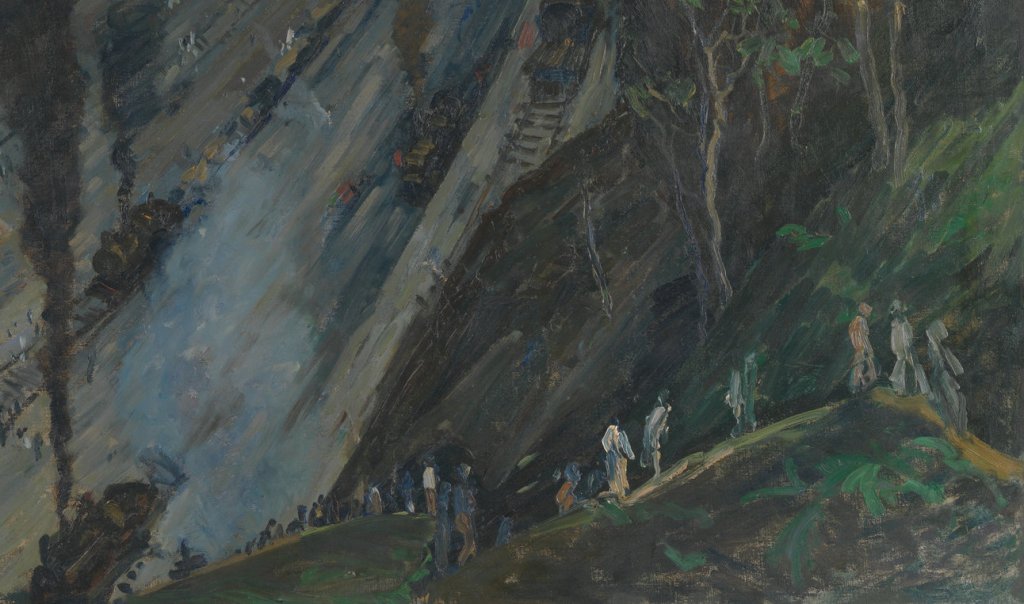
    The Conquerors (Culebra Cut, Panama Canal), 1913, Jonas Lie (Source Wikimedia Commons; public domain)

    “Oh, goodness!” cries the girl, “what an enormous excavation!”

    “It’s the biggest in the world,” answers Silas. Then he whispers confidentially, “But there is five times as much more to dig.”

    “Why,” cries Louise, “they’ll never do it!”

    “Not this trip! Por la Madre!” assents Winterburn solemnly.

    But other views drive Culebra from the girl’s mind. They are descending the mountain; before them the great savanna that leads to Panama, and the white waters of the Pacific. Running down through hills that gradually become smaller, they come to the Rio Grande station, and first see the river that is to be the western waters of the canal.

    From there on, dashing over savannas ever green, they note at their right hand, some gray buildings on a hill.

    “That’s the Canal yellow-fever hospitals, where the poor critters will get a little breeze,” says Silas, eager to do the honors of the Isthmus.

    But leaving these, three miles away they run into a little station where carriages with native drivers are waiting for them, to drag them through dirty lanes into the town of Panama itself.

    This is now a little Paris. French people jabber about them at the station, and the language of Normandy and Brittany dominates the Spanish tongue; for la belle France has come over the Isthmus to capture Panama.

    Twice before this has been attempted. Twice with success! Once Morgan and his daring band of every nation freebooters came up the Chagres, and conquering, bore away with them the treasures of the western ocean. Then American enterprise fought its way with iron rail through the swamps of the Mindee, and up the valley of the Chagres, and through the gate of the mountains, and reached this town, to take its tribute from the commerce of the world, and pay to stockholders the dividends of Dives.

    And now comes France—not to cross the Isthmus, but to drive through it, and thus levy toll upon the navies of the sea!

    The Isthmus, subdued twice, will it be conquered again? Nature—the awful giant nature of the tropics—will it triumph? Will this land go back to nature, and become silent as when the Spanish Conquestadores first landed on its shores to make the Indians curse the white sails which bore to them a Christianity that came with blood and bigotry, to make them slaves?


    Notes and References

    • ‘this élève of New York Society’: élève meaning ‘student’, in the sense of l’élève de la nature, ‘the student of nature’ (e.g., De Beaurieu, 1789).
    • inamorata: A woman loved in a romantic way is one’s inamorata. From the Italian innamorare, “to fall in love”. Vocabulary.com
    • Tierras Calientes: Tierra caliente (hot land) includes all areas under about 900 m (3000 ft). These areas generally have a mean annual temperature above 25°C (77°F). Their natural vegetation is usually either tropical evergreen or tropical deciduous forest. Farms produce tropical crops such as sugar-cane, cacao and bananas. – Geo-Mexico.com
    • Penobscot: North American Idian tribe. ‘The word “Penobscot” originates from a mispronunciation of their name for themselves: Penawapskewi. The word means “the people of where the white rocks extend out” and originally referred to their territory on the portion of the Penobscot River between present-day Old Town and Verona Island, Maine’ (Wikipedia).
    • Dives: the rich man of the parable in Luke 16:19–31. Any rich man. Pron. dahy-veez (Dictionary.com). ‘Dives’: Latin for ‘rich’. See Mainly Norfolk.

    Avery, Ralph E. America’s Triumph in Panama. Chicago, 1913: L.W. Walter Co.. Freely available at Internet Archive

    Goethals, Colonel George W. (Chief Engineer). The Panama Canal (Address to National Geographic Society Feb., 1911)

    Parker, M. Hell’s Gorge:The Battle to Build the Panama Canal. Arrow Books, 2007

    This edition © 2021 Furin Chime, Brian Armour

  • A.C. Gunter’s Baron Montez: 10. A Chance Meeting At Delmonico’s

    A.C. Gunter’s Baron Montez: 10. A Chance Meeting At Delmonico’s

    Chance is the key word, and those readers who have been following the story will quickly relate to the proverb ‘two times lucky, three times a charm’. If Harry’s uncle hadn’t required a stenographer and collapsed mid-sentence, if in the course of the Great White Hurricane, Louise had not gone to work, and Harry had not been riding about in near impassable streets, if Tompkins, trying to impress Louise, hadn’t taken their party to . . .

    Delmonico’s Restaurant, the first fine dining restaurant in The United States, opened in 1837. The first eating establishment to be called ‘restaurant’ and the first to use tablecloths, it was also the first to offer facilities for a ball or gala event outside a private residence. The third floor consisted of private dining rooms where, as Delmonico’s puts it, ‘discriminate entertaining was the order of the day.’ The basement held over a thousand bottles of wine. Dishes such as Eggs Benedict, Lobster Newburg and Bombe Alaska were created in this restaurant, which became world-renowned. In 1868, Delmonico’s was the first in New York City to serve women unescorted by men, hosting The Sorosis Club, the first professional women’s club in the U.S.(Delmonico). Gunter provides an effective sensory description of the noisy and hectic atmosphere on the dining floor of the busy restaurant in 1888.

    Prior to dinner, Louise’s friend Sally throws a bit of a hissy fit that they are not going to see a play, ‘Fauntleroy‘, which is ending its run. Tompkins, Louise’s partner for the night, is taking them to the Paragon theatre instead, though what they see doesn’t deserve comment. Some of Gunter’s readership may have been aware of the significance of mentioning the play at this time (late March, 1888), but to the modern reader it is something in the order of an insider joke.

    It sets the preparative theme of ‘what might have been’ for the majority of the chapter to accentuate resolution at the end. We have: Alfred Tompkins’ aspirations and hopes for Louise Minturn, and Louise’s reflections on Harry Larchmont, Sally’s regrets over her station in life and Mr. Jenkins anger at his loss of preferred regard in Sally’s eyes.

    The curious thing is, Gunter knows that if a play called Little Lord Fauntleroy were playing in New York at that time then it would have to have been an adaptation of Frances Hodgson Burnett’s novel, the plagiarized version written by the British playwright E.V. Seebohm. This unauthorised play opened in London on 23rd February, 1888, but never appeared in New York, as Burnett took legal action to prevent it.

    Elsie Leslie as Little Lord Fauntleroy in the Broadway Theatre Production (1888)

    Burnett’s novel Little Lord Fauntleroy was tremendously successful, both in its original serialization in St. Nicholas Magazine from November 1885 to October 1886, then as a book by Scribner’s (the publisher of St. Nicholas) in 1886. The main character, modeled upon her son Vivian, was not only a bestseller, but also became an influence in children’s fashion: velvet suits, lace collars, even chocolates were merchandised (McCarthy). Burnett and her husband and children were in Florence when she heard about Seebohm’s play, a comedy, in which great slabs of her novel had been used (Nierman). As reprinted in the New York Times of 4th March, 1888, a London Truth article titled ‘Mr. Seebohm’s Literary Morality’ describes dramatically how Seebohm used the attention Burnett’s story had attracted:

    . . . he seizes upon it, dramatizes it, advertises it, uses for his play the title of Mrs. Burnett’s story, trades on the reputation of it, and then, when the authoress informs him that it is her story, that she invented it, and that she herself has dramatized it, and is anxious to produce it on the stage, Mr. Seebohm tells her that she has no grievance! Why! Because says Mr. Seebohm, the play is mine not yours; because I have widely departed from the original, and because, if it does succeed, I don’t mind giving you a bit! Mr. Seebohm impudently declares that no man could have behaved more honorably. That opinion will be scarcely be shared by the public, who consider that, be the law what it may, the authoress of the charming story has been very unfairly and shabbily treated.

    New York Times, March 1888

    Burnett discovered that copyright laws did not extend to plays. She took the matter to court, and on May 12th, won a landmark court decision on property rights to a work of fiction. This forced Mr. Seebohm’s play off the boards. The Society of British Authors was so moved that she was presented with a diamond ring and bracelet (Nierman), and bracketed with James Russell Lowell, sturdy defender of international copyright laws, as guest of honor at a banquet in Queen’s Hall (Mc Carthy). Burnett’s Little Lord Fauntleroy opened on December 3rd, 1888 in the Broadway Theatre, New York and closed on May 11th, 1889.

    As a playwright and author, Gunter could not have failed to be aware of these events as they directly impacted on concerns that his own works be protected. Gunter uses artistic licence, mentioning ‘Fauntleroy’ nine months before it opens, to add momentary colour to the night outing, and to press home the point through Tompkins’ budget off-Broadway choice, and Sally’s complaint that there is an economic class ceiling under which they survive. Louise’s later comments on their male companion’s attire bear this out. But also, naming the play perhaps represents a subtle nod of thanks to his fellow writer, Frances Hodgson Burnett.


    CHAPTER 10

    A CHANCE MEETING AT DELMONICO’S

    As I enter from my unsuccessful promenade, Sally’s sweet lips give me a kiss, and Sally’s laughing voice says: “Well, Miss Lazy, I beat you home after all!”

    Then, as if sudden suspicion has come to her, she cries: “Did you meet him?”

    “Him—who?” I gasp, as a startled blush comes upon me.

    “Why, Mr. Tompkins, of course!”

    “Mr. Tompkins?” I reply icily, “Do you suppose I would go out walking with Mr. Tompkins?”

    “Oh, you didn’t think I meant Alfred! Who did you suppose I meant? Is—is there someone else? Those violets! Are you keeping a secret from me?” and Sally’s bright eyes are gazing into mine with sudden and embarrassing inquiry.

    Whatever have been my wild thoughts about this gentleman of clubs and cotillons and fashion, I have made no confidant of my chum, nor anyone else—nor ever shall!

    To turn the conversation from this dangerous ground, I suggest: “Come! Help me pack my trunk, as you promised to.”

    “Not till tomorrow,” answers my volatile companion. “You must keep your best dress out for tonight.”

    “Tonight—why?”

    “Tonight Mr. Tompkins and Mr. Jenkins have requested the pleasure of escorting us to the theatre.”

    “The theatre! I have too much to do.”

    “Nonsense! Your trunk isn’t such a very large one. I’ll help you tomorrow. Besides, you’ll spoil our party. I can’t go out with two gentlemen. This will be your last chance to do me a great favor.”

    As she says this, Sally’s blue eyes are fixed in entreaty upon mine. The thought of parting from her makes me pliable to cajoling. “Very well!” I assent.

    “Ah! I thought I could persuade you, and have already arranged the party,” says Miss Broughton, who is even now in her best bib and tucker, and looks very well in ither bib being a handsome fur-trimmed jacket; and her tucker, a pretty and modest fawn-colored cloth dress, that drapes her rather under-sized, but plump figure, with graceful folds.

    “This will make him happy,” she continues thoughtfully. “He comes to take us to dinner—”

    “He—who?”

    “Mr. Tompkins, of course! It is to be at the Dairy Kitchen, where they have music. We will have a jolly time! But goodness, hurry! I hear his step upon the stairs, and you are not yet in festive array!”

    Thus adjured, I retire to our bedroom, and in fifteen minutes come out to meet Mr. Tompkins, who is talking to Sally, as she puts on her hat. As I enter, their conversation floats to me.

    “She is so deuced haughty!” says the gentleman.

    “Haughty? How absurd! She’s affability itself,” returns the young lady.

    “Yes, to girls!” answers Mr. Tompkins snappishly. Then he turns and sees me. My efforts at personal adornment seem to be pleasing to him, for I catch a stifled “By Jove!” as he regards me, and Sally gives a little cry, partly of surprise, partly—I am vain enough to think—of admiration; for before my glass, a sudden thought had flown into my mind. “Perhaps at the theatre I may meet him!” And I had drawn upon the utmost limits of my wardrobe, to make myself as alluring as possible, with, I think, very good effect.

    Perchance this accounts for Mr. Tompkins’ more than usually effusive manner, as he greets me with, “Hew are yer?” and then murmurs: “This is exquisite, Miss Louise. I take it as a personal compliment!”

    “I never compliment anybody!” I reply icily.

    Then I grow red a little, for it has suddenly struck me I have been complimenting Mr. Harry Larchmont. My blushes seem to please Mr. Tompkins. He shows a rapture in his face which embarrasses me. A moment after, he suggests: “You have something on your mind?” For I have got to thinking of Panama, and have placed my latchkey on the table, instead of putting it in my pocket.

    “Yes,” I reply, “there is something on my mind. I am going—”

    A biting pinch from Sally’s quick fingers makes me pause—half in astonishment, half in pain.

    A second after, getting opportunity as we put the finishing touches to our toilettes in the little bedroom, she whispers: “Don’t tell him now.”

    “Why not?” I ejaculate.

    “Because you’ll spoil our theatre party. I can’t explain now; but don’t tell either of the gentlemen till we get home. Promise!”

    “Certainly. It is a matter of indifference to me whether Mr. Tompkins or Mr. Jenkins ever know of my departure!” I answer.

    So we rejoin our escort, who is a florid little fellow, not much over five feet seven, with a quick, dapper walk. He wears the conventional evening dress of the day, embellished by a heavy gold chain across his vest, that does not seem to me to be exactly the mode. At all events, Mr. Larchmont never wears one.

    A moment after, we are under way for the Dairy Kitchen, a gorgeous restaurant on Fourteenth Street, that accommodates the well-to-do hundred thousand, and furnishes them with a very fair dinner at a reasonable price, accompanied by the music of an indifferent orchestra, and the discordant sounds of half a hundred waiters, who clash their dishes together with vivacious activity.

    Under its brilliant arc-lights we meet Mr. Jenkins, one of the floorwalkers of Pacy & Company, who says in a loud voice, that is suggestive to me of “Cash!”: “I have kept this table for you for twenty minutes, and am hungry.”

    “Then you must wear your dress coat in the store. I don’t think you ever get away till at least a quarter after six, at Pacy’s,” sneers the haughty Alfred Tompkins.

    Mr. Jenkins, crushed by this business sarcasm, regards us in gloomy and hungry silence, as we take seats at his table, and Mr. Tompkins suggests: “Have you ordered the menu, Horace?”

    “No! What’s that?” asks Jenkins suddenly, at which I stifle incipient laughter, and Miss Broughton suggests with playful sarcasm: “Perhaps he thought it was the oysters!”

    At Sally’s badinage Mr. Jenkins grows so savage, that I turn the conversation, by hastily asking: “To what theatre are you going to take us?”

    After giving the necessary orders for our entertainment, Mr. Tompkins condescends to furnish me the information I ask. “I have procured tickets,” he says, “for the Paragon.”

    “The Paragon!” Sally screams in horror. “Why do you always take us to the Paragon? Now if it had been Fauntleroy, that I have been dying to see for six months, that would have been something like. Couldn’t you do it now? It is getting near the end of its run.”

    Here Mr. Jenkins candidly remarks: “Fauntleroy tickets are not on the bargain counter yet.”

    At this soft insinuation Mr. Tompkins hems and blushes.

    The theatres that Mr. Tompkins patronizes, are always those that have on their boards either unsuccessful pieces, or plays that have been performed so long that, their first flush of glory being over, the management are liberal with complimentary tickets. His position as floorwalker in a leading dry-goods establishment gives him rather a command of these tributes of managerial favor, for he has been quite successful, in his day; in making full houses for them; and several times the employees of his house have attended some of our leading theatres almost in a body, giving them the appearance of great prosperity and crowded houses. To “first nights” Mr. Tompkins seldom invites any one. In fact, he says he does not like them. He prefers a play to grow mellow and old, and to receive the polish of one hundred and fifty performances, before he visits it. At the Paragon, however, he sometimes invites people to “first nights,” though at the box office it is always said:” “We are sold up to Q.”

     Consequently it is the Paragon to which Mr. Tompkins is going to take us this evening.

    At his announcement, my heart sinks; for I am very certain Harry Sturgis Larchmont will not be in its orchestra chairs or boxes: and a half hysterical regret, for which I anathematize myself, comes into my mind. “Perhaps I will not see him before I go.”

    Noting my preoccupied manner, Mr. Tompkins in his most dulcet tones suggests: “Is the something on your mind, that Miss Sally spoke of, destroying your appetite?” Then he whispers, a Romeo timbre in his voice: “Is it about me—Alfredo?”

    At this I give a start. The romantic tone of the gentleman—Sally’s hint not to tell him of my departure. A sudden suspicion comes into my mind, that makes me very icy and haughty to Mr. Tompkins.

    A few minutes after, we all stroll over to Broadway to take car to visit the Paragon, a little theatre where they sometimes have very good plays, but rarely full houses.

    The performance this evening is a pleasant one, and the party leave the theatre in very good spirits, except me.

    We walk over to Fifth Avenue, and turn down this great thoroughfare, crowded with rushing cabs and carriages coming from the theatres. During our walk Mr. Tompkins announces to us that he has had a great stroke of business luck; that he has been promoted to a higher department, with a better salary. He has apparently kept this piece of news to impress either Mr. Jenkins, Sally or myself.

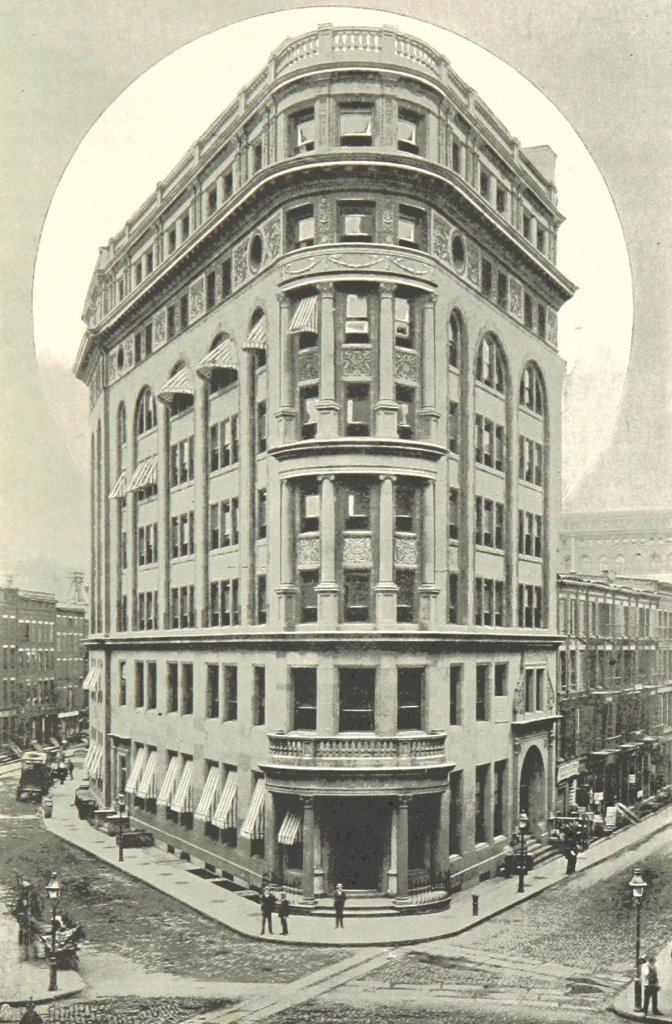
    Delmonico’s, Beaver and Williams Streets, opposite the Cotton Exchange (1893)

    As we approach Twenty-sixth Street, this gentleman’s good fortune seems to have made him financially reckless. He suddenly says: “What do you say, young ladies, to supper at Del’s?”

    “Supper at Del’s!” ejaculates Sally in unbelief.

    “Certainly.”

    “Catch me!” gasps Miss Broughton and pretends to be overcome. But Tompkins repeats sternly: “I mean it! A supper at Del’s!”

    This is too good a chance for Jenkins to refuse. He answers, “Right you are!” and promptly leads the way.

    For a moment I am about to draw back. An awning is up on Twenty-sixth Street; a cotillon, or dinner dance, or Patriarchs’ ball, or something of that kind is going on in the ballroom upstairs. It is quite probable that Harry Sturgis Larchmont may be there. I may meet him in the restaurant or the hall, and I shrink from this fashionable gentleman encountering me under the escort of the florid Tompkins.

    But Sally pulls at my arm, whispering: “A supper at Delmonico’s! It is the chance of your life!”

    Hesitation would be absurd. I know she will try and drag me in if I do not go, and I follow them.

    Looking on our party as we pass in, I am content with Miss Broughton and myself, though the gentlemen do not impress me “as to the manner born” to the glories of this fashionable restaurant. Sally’s dress is certainly very nice. My own I know is all right. Besides, the hall boy, as he takes and checks our wraps, is politeness and humility itself. The haughty head waiter, however, impresses me more strongly, as he precedes us, remarking: “Table pour quatre!”

    Our escorts’ clothes, however, do not impose upon me. True, they both wear swallowtail coats, but their fashion is not of the latest mode; and their vests are not of the white duck I see some of the gentlemen at the neighboring tables wearing. Besides that, both of them have three horribly big exaggerated studs in their shirt fronts.

    I am delighted when they sit down and hide their watch guards from view; for this atmosphere is one to disclose slight defects in the dress of either man or woman.

    The room is a blaze of electric light. The toilettes of the ladies, some of whom are in graceful and beautiful evening gowns, having just come in from the opera, are nearly all magnificent; the dress suits of the gentlemen, perfect in detail.

    “This time we have a menu,” remarks Mr. Tompkins proudly, and shows it to Mr. Jenkins, as the waiter places it in front of him.

    A moment after, he surreptitiously passes the carte du jour to me, muttering: “Confound it! It is printed in French. Won’t you assist me, Miss Louise?” my knowledge of that language being known to him.

    Supper after the Opera at Delmonico’s, New York, engraving by Albert Edward Sterner (1898)

    “I’ll save you the trouble,” laughs Sally. “The other side of the card is in English.”

    Then Mr. Tompkins, his face covered with embarrassment, orders oysters, some cold partridges, ice-cream, and a bottle of champagne; and thoughtlessly being lured into unknown fields of extravagance by the waiter’s suggestion, adds terrapin to his bill of fare, and we have a very pleasant meal of it.

    My ears, however, are devoted to the conversation at the table next us. The people there are giving me information that interests me. One of the ladies remarks carelessly: “Mrs. Dewitt, I hear, goes to Europe on Saturday. I believe she chaperons Miss Severn.”

    “Of course Mr. Larchmont goes with his ward,” is the reply of a gentleman.

    “Oh, certainly; they leave on the Aurania. They say Mr. Larchmont is interested in pretty Miss Jessie much more personally, than as trustee of her estate, and guardian of her person.”

    I catch no more of this conversation, as the party giving it to my ears now rise and leave the restaurant.

    Soon we are going also, Mr. Tompkins looking sorrowfully at his bill. As we reach the hall, the incident comes to me that I have dreaded, yet hoped for. I again see Harry Larchmont’s pleasant face.

    He is talking to a gentleman standing near the office.

    His friend says: “You lead the cotillon with Miss Severn, I understand, tonight?”

    “’Yes, for the last timeperhaps.” This with a little sigh.

    “Why the last time?”

    “I am going away.”

    This confirms the news I have just heard of him from the party in the restaurant.

    A moment later, his glance catches mine. The hall boy is about to hand me my wrap.

    In a second he stands beside me, with outstretched hand, which I do not refuse, and says:”How do you do, Miss Minturn? No after effects from the blizzard?”

    “No,” I reply, “only gratitude.”

    But the blizzard has left an after effect on me. I turn my head away, my cheeks are burning.

    “Nonsense!” he replies lightly. “Don’t think of the affair in that serious way. I regard it now—only with pleasure.”

    “What! When you slept on a counter that night,” I return.

    As this is going on, he is cloaking me with that deft ease which indicates the squire of dames, while Mr. Tompkins, who has hurried to my side to proffer a similar attention, stands glaring at this unknown swell who is acting as my cavalier for the moment.

    A second later, Mr. Larchmont whispers: “I am most happy to have seen you before I go away.”

    “Oh, I am going away also!” I reply.

    “Indeed! Where?”

    “On the Colon—

    He interrupts this with a little start, saying: “On the Colon? Then I shall only say au revoir,” bows, rejoins his friend, and the two go upstairs, from which the sound of music tells us of the coming dance; while I look on his departing figure, wondering what he means.

    During this, Sally has been gazing at me with very large eyes; and as we pass out, is questioning eagerly: “Isn’t he very handsome? Who is he?”

    I reply, attempting nonchalance: “Mr. Harry Sturgis Larchmont.”

    This announcement is received by unbelieving sneers from both Mr. Jenkins and Mr. Tompkins, who have read many times of Mr. Larchmont in the society columns of their morning newspapers.

    “What!” screams Sally, careless of overhearing cabmen, “the leader of cotillons? the howling swell?”

    “I don’t know about the howling swell,” I reply, “but I believe he leads the cotillon this evening.”

    “Good heavens! Why did you not introduce me?” This is a sigh of unutterable reproach at lost opportunity; then Sally goes on impetuously: “I would so like to know a real swell before I die!”

    At this uncomplimentary speech, Jenkins grinds his teeth, as he walks by her side, and Mr. Tompkins grows pale, for he fears I have told the truth.

    So we go home, they all questioning me, “How did I know him?”

    This Sally answers for me. She says proudly: “He is a relic of her former life. You know that Louise is Miss Minturn—one of the real Minturns. You can read of her cousins, aunts, and uncles every day, in the society columns of the papers. They are dancing now, perhaps, with Mr. Harry Sturgis Larchmont.”

    At this suggestion comes the thought that he is dancing now with Miss Jessie Severn, and the idea which has been in my mind so often, comes up with renewed force. Had not misfortune befallen my mother’s parents on the Isthmus, I might have been dancing the German with him, in her place, and this makes me severe—severe with poor Tompkins, from whose remarks I turn with disdain.

    By this time we are at our home in Seventeenth Street. Mr. Jenkins leaves us at the door, apparently not having forgiven Miss Sally for her remark about a real swell.

    A moment after, Mr. Tompkins bids us adieu, and turns to follow him.

    I am about to bid him goodby as well as goodnight and tell him of my intended departure; but Sally whispers to me: “He will know tomorrow.” Then as the young man disappears she archly says: “Yes, he is sure to turn up tomorrow. He turns up every day. Perhaps Mr. Tompkins will sleep better tonight if he does not hear the news until tomorrow.”

    “Don’t talk nonsense!” I return, as we run up together to our rooms. In the parlor, Miss Broughton, who has been in high spirits all the evening, suddenly changes her mood.

    She looks at me wistfully, and says: “Louie, only one night more together after this!”

    Then we two lonely ones in this world gaze at each other, and our eyes grow dim; and after we have gone to bed I hear dear little Sally sobbing, until sleep comes to us both and gives us rest.

    The next morning Miss Broughton has apparently regained her spirits. She whispers: “You will write to me often, and if you don’t like it there, come back.”

    “I have a contract.”

    “Come back, contract or no contract. They can’t chain you there. With sixty dollars a week you can save money to pay your own passage.”

    “And you!” I say anxiously. “What are you going to do?”

    “Oh, I’m all right!” she runs on. “I have got Laura Dutton to come and take your place. She won’t be such pleasant company, but is of a motherly disposition, and I think will keep me in good order.”

    So, breakfast being over, I am compelled to go to the office of Flandreau & Co., to sign the contract, and complete my arrangements for departure.

    There I meet the dapper little clerk again, who is very polite to me, and has the contract drawn up, to be signed in duplicate, by which I bind myself for one year to furnish my stenographic services to the firm of Montez Aguilla et Cie., contractors construction, Panama, for the sum of sixty dollars per week and the various other emoluments that had been agreed to between us.

    These documents are in printed forms in Spanish, apparently being in general use by the Panama firm to cover their agreements for labor.

    Somehow or other, the name of the firm—Montez Aguilla et Cie., seems to me familiar.

    These contracts I take to Miss Work, who has advised to this effect, and she gets a young lawyer in a neighboring office to see if they are what I wish. I translate them to him, and this gentleman pronounces them, in his judgment, satisfactory. I put my name to them, and returning to the office in South Street, they are signed by Flandreau & Co. as agents for the firm with which I contract.

    My ticket for Panama, for a first class passage, is given me, and I am informed that the captain of the steamer Colon will take charge of me as far as the Atlantic side of the Isthmus. There Mr. Stuart, the agent of the Pacific Steamship Company at Colon, will see about my railroad ticket, and transfer me across the Isthmus. I am given letters of introduction to both these gentlemen, and sufficient money in hand for any reasonable expenses that may come to me upon the voyage.

    All this has been done by one o’clock in the day, and I depart for our rooms up town, I purchasing on the way a little souvenir de remembrance for Sally. Miss Broughton is waiting for me, for she has given up her day’s work to pack my trunk and see the last of me. This packing does not take long. My wardrobe, though good, is not extensive; but I have purchased a few light and I think pretty gowns, suitable for a warm climate. So together we soon make quick work of the trunk. But this very packing brings the past back to me.

    Among the mementos left me by my dead mother are a few things she had received from her own. One is a picture of a beautiful lady in the dress of thirty years ago. It is a tintype, bearing on the back: “Edouart’s Gallery, Ambrotypes and Daguerreotypes, 634 Washington Street, San Francisco.” There is also a package of letters my mother had received as a schoolgirl, from her parents in California. These I have looked over before. Some time on the Isthmus I will read them again.

    Perhaps I may learn the fate of the writers at Panama. Perhaps I may regain the treasure that was lost with them. Perhaps I may be—Pshaw! Nonsense! Their fate came on them thirty years ago.

    We have had our dinner, and eight o’clock comes, and with it Mr. Tompkins. The trunk is now out in the parlor, strapped and labelled.

    This trunk seems to give Mr. Tompkins a sensation. Almost as he wishes me good-evening, it catches his eye. He says hurriedly: “You are going away?”

    “Yes, tomorrow.”

    “And where do you think she is going?” interjects Sally.

    “To Long Island,” suggests Mr. Tompkins uncertainly.

    “To Panama for a year—under contract at sixty dollars a week—and first class passage there and back!” cries Miss Broughton.

    “To Panama!” gasps the gentleman. “Impossible!”

    “Look at that trunk! Read its label!” returns Sally.

    “Miss Louise Ripley Minturn, Panama, via steamship Colon.”

    Reading this, Mr. Tompkins believes, and sinks down, overcome, upon our little sofa. But only for a moment. Then conviction has such an awful effect upon him, that Sally and I stare at his emotion.

    He rises, an inch added to his height, a desperate determination in his face, and cries: “Put that trunk away! Unpack it at once! I forbid you to go!”

    His manner is so extraordinary, and there is such a wild light in his eyes, that Miss Broughton, having raised the Romeo in him, runs away from it into the other room, with a stifled giggle.

    This is perhaps fortunate, as Mr. Tompkins’ emotions have suddenly become of a most embarrassingly ardent nature to me. At last I realize why Sally has prevented any knowledge of my departure reaching the romantic Tompkins before. He is given to the emotions in their most violent and dramatic form.

    Looking at me he mutters in reproachful tones: “And you kept it from me?” then again cries out in a desperate way: “But I will not let you leave!”

    However, I steady myself and say determinedly: “That is impossible! I have signed a contract.”

    “I want you to sign a contract with me!” he returns, an awful romantic significance in his voice, “a contract to be my wife.”

    He is coming towards me. In another moment his arm will be about my waist. With a gasp of consternation, I place the trunk between us.

    From the other side of it he still addresses me. “Yesterday I was made very happy. My salary was raised. It is sufficient to support a wife. Tell me, Miss Minturn—Louise, that you will enjoy that salary with me!” He reaches to seize my hand, but three feet of trunk prevent him.

    “I am glad to hear of your business success, Mr. Tompkins,” I reply, trying to stifle any emotion that may be in me.

    “Your Alfred’s success!” he cries. “Call me Alfred!” and steps to my side of the trunk, but I, with a deft spring, keep it between us.

    “Will you marry me?” he asks in eager tone.

    “No!” I answer desperately, for his hand has caught my arm, and there are kisses in his eyes, “No! Never!”

    Then comes an awful scene. He reproaches me for having made him love me—me, who had hardly given him a thought—who had not even cared enough about him to guess what Sally’s insinuations had meant.

    Finally he exclaims: “I know it now; you love another!” and grinds his teeth.

    “Another?” gasp I. “I forbid you to continue!”

    “Why not?” he cries. “Why not? Didn’t your eyes tell me your hideous secret last night at Delmonico’s when you looked at the swell? Harry Sturgis Larchmont, that’s his name! What chance have we workingmen against these gentlemen of fashion? But, frivolous girl, I warn you of him! With my last word, I, Alfred Tompkins, warn you!”

    With this invective he departs.

    I pray God he will be happy. True hearts are scarce in this world, and though Alfred Tompkins’ love for me is perhaps not of the most exalted type, still he has given me the whole of it.

    Then Sally comes out to me and whispers: “You have sent him away?”

    “Of course!”

    “I knew you would, ever since you looked, last evening, at the swell in Delmonico’s. Why, what awful blushes! but they’re very becoming, Louise.”

    “Nonsense!” I cry. “Don’t dare to speak such ineffable idiocy. No more of Mr. Tompkins!”

    “No more of Mr. Harry Sturgis Larchmont?”

    “No more of anyone!” and I turn from the subject, though Sally brings it back to me several times upon this last evening we spend together. The last night of our friendship! If I come back, I will be changed, and she—Any way it will be different!

    SS Colon, leaving Colon

    But at present we are all in all to each other, and mingle our farewells with tears and caresses, and promises to never forget each other.

    So the morning comes to us, and my trunk is taken away by the expressman, and Sally and I go down to the great steamship, at its dock in the North River. I present my letter of introduction to the captain, and find that I have a very pleasant stateroom, all to myself. Here Sally and I bid each other farewell. A moment after, I give a start.

    Alfred Tompkins is standing before me. He says, heedless of Sally’s presence: “Whether you change your mind or not, I have come down to bid you good by!”

    And I whisper to him: “I can’t change my mind! You will forget me in time.”

    Then the cry comes up of “All ashore!”—the cry that is separating me from the land of my birth. And Sally and Mr. Tompkins have gone across the gangplank to wave adieu to me as the steamer leaves its dock.

    Other farewells are being said. Husbands are parting from wives, and sisters from brothers, and a lot of fashionables are waving farewell to some gentleman comrade. Carelessly I turn to look at him.

    I give a gasp of astonishment. What does it mean to my life? The man waving an adieu to his friends, and standing carelessly on the bulwarks of the ship—the man sailing away with me to Panama—is Harry Sturgis Larchmont.

    Sally and Tompkins have seen and recognized him too. I see it by the look of amazed alarm upon their faces. Good heavens, if they think it an elopement! I give a start of horror, and fly to my stateroom dismayed and overcome at emotions that give me curious joy and bashful fear.


    Notes and References

    • tucker: a piece of linen, muslin, or the like, worn by women about the neck and shoulders.
    • emoluments: profit, salary, or fees from office or employment; compensation for services
    • swell: a person who is very fashionably dressed, a man of high social or political standing.
    • terrapin: a term formerly used to refer to any aquatic turtle but now restricted largely, though not exclusively, to the diamondback terrapin (Malaclemys terrapin) of the turtle family Emydidae. (britannica.com)

    James Russell Lowell (1819–1891), poetryfoundation.org

    Little Lord Fauntleroy, Internet Broadway Database.

    Mccarthy, Tom, ‘The Real Lord Fauntleroy’, American Heritage Magazine.

    Nierman, Judith, ‘Piracy Inspires “Real” Stage Version of Children’s Classic’, copyright.gov, PDF

    Shattock, Joanne, ed. The Cambridge Bibliography of English Literature, Volume 4, 1800–1900. 3rd ed. Cambridge: Cambridge University Press, 2000, 1475.

    Turner, Stephanie. ‘Delmonico’s Goes Through 200K Pounds of Beef Every Year‘, New York Eater.

    This edition © 2021 Furin Chime, Brian Armour
  • A.C. Gunter’s Baron Montez: 8. The Stenographer’s Dream

    A.C. Gunter’s Baron Montez: 8. The Stenographer’s Dream

    A refreshing and dramatic change in the narrative treatment. Our narrator has disappeared into the history he has related for readers. Now Gunter uses the form of diary extracts as a literary device to introduce a new pivotal character: Miss Louise Minturn. Rather than the story continuing to be told in third person by an omnipresent narrator, Gunter has made the decision to break up the tone of the narrative stream and intensify observations from a first-person point of view.

    The diary excerpts are wonderful records, insightful, precise and unabashedly indiscrete as diaries are wont to be, because the words stem from the qualities of the female character Gunter has created. Miss Minturn, a nineteen-year-old, is such a keen observer and recorder of events, that one could hardly ask for anyone more accomplished. Reading the detailed dialogue, she has transcribed verbatim, there arises the consideration she might possess a photographic memory which she has yet to reveal.

    There is a moment where Miss Minturn herself reads from the diary an earlier entry, and curiously the reader is privy to what she reads. It is at this point she ceases to be the author of a diary Gunter has somehow purloined for us to read, and becomes a fully-fledged character in her own right. It is a subtle shift but signifies Gunter abandoning the constraints of his diary extracts conceit and taking on Miss Minturn’s point of view in totality. The reader will notice the absence of day and date information usually associated with a diary. The pretense of diary entries is both a mollifying concession to his female readers, who might have been disturbed by the abrupt change from a gruff male narrator to a young lady, and an invitation to intimate thoughts for his voyeuristic readership.

    Louise’s heritage, which the reader will recognize, makes her integral to the larger plot resolution, in addition to her presence bringing an element of romance to the story. The narrator thus far has been almost embarrassingly effusive in describing the many admirable qualities of Harry Larchmont the footballer, but Miss Minturn who is also infatuated takes this adoration to a whole new level.

    Also in future pages the reader will be reminded of how thankful they should be that in case of medical emergency all they need do is call Triple Zero, or that someone present knows CPR, rather than ensuring social decorum is maintained first, before aid.

    A 15th Century Persian doctor, Burhan-ud-din Kermani was the first to describe the use of chest compression for those afflicted with abnormal breathing or shortness of breath, for those with a pulse but in respiratory arrest, and also for those with a weak pulse (Dadmehr et al). In the 1780’s the Royal Humane Society introduced EAV (Expired Air Ventilation) or mouth-to mouth method to the US (Trubuhovich). Rescue Breathing, what we know today as CPR, was developed in the 1960’s through the work of Doctors James Elam, Peter Safar and Archer S. Gordon (Lenzer).

    If indeed, some form of CPR is performed, to the uninitiated the practice would seem both brutal and confronting, so perhaps it is understandable Miss Minturn refrains from describing actual actions, and attributes the resuscitation process to secret men’s football business.

    Although the universal knowledge, prejudices and perspective of our narrator have gone, we now have the delightful Miss Minturn at the centre of affairs to inform, and enlighten us with her opinion.


    BOOK 3

    The American Brother

    CHAPTER 8

    THE STENOGRAPHER’S DAYDREAM

    [Extracts from the diary of Miss Louise Ripley Minturn.]

    “A typewriter, I believe?”

    “A stenographer,” I reply as sternly and indignantly as an Italian tenor accused of being in the chorus, “stenographer!”

    “Oh, excuse me, mademoiselle! Certainly, a stenographer—that is what we require. What salary will you ask to go to Panama, to act as stenographer?”

    “To Pan-a-ma?” There is an excited tremolo in my voice as I say the words, for the proposition is unexpected, and the distance from New York perhaps awes me a little. “Panama, where they are constructing the great canal?”

    “Certainly, mademoiselle. It is because they are building the great canal that I ask you the question.”

    “What will be the cost of living there?”

    “That I hardly know. It will not be small, I am certain, judging by the bills of expense I have seen from there.”

    “Very well,” I reply, American business tact coming to me, “if I go, we will say thirty dollars a week, and expenses.”

    “You are able to take stenographic dictation in English?”

    “Certainly.”

    “And in French?”

    “Yes; but that will be ten dollars a week more.”

    “And in Spanish?”

    “Perfectly. Ten dollars extra.”

    “Ah,” remarks the little clerk, who is half American and half French, “your charges are high; but everyone gets their own price—on the Isthmus.”

    Prompted by this ingenuous remark, and actuated by American business greed, I ejaculate hurriedly: “I also take dictation in German, which will be another ten dollars a week.”

    “Let me try you,” says the little man; and in six minutes he has given me English, French, Spanish and German dictations, to my astonishment, and I have taken them down, and read them correctly, much more to his amazement.

    “Your work is perfectly satisfactory in every language,” he replies. “You will come on the terms you mentioned?”

    “That is, sixty dollars a week, and expenses there and back,” I say, “if I go.”

    “Ah, you are not certain you would like to leave New York? You have ties here?”

    “None,” I reply, a tremble getting into my voice, as I think of my loneliness, and of my mother, who passed away from me but a year before.

    “You would like time to consider the proposition?” suggests my interviewer.

    Typing pool, c.1890

    Looking around upon the dingy copying establishment of Miss Work in Nassau Street, the girls slaving over interminable legal documents on their typewriting machines, and thinking of the drudgery that has been, and still promises to be my lot, I say desperately: “Yes, I will go!”

    “Very well. Remember, you must sign a contract for a year from tomorrow. That is till the twentieth of March, 1889.”

    “Yes.”

    “You must be ready to start the day after tomorrow.”

    “Certainly. Only, of course, as I said before, my contract includes a first-cabin passage to and from Panama.”

    “It shall be as I have promised. Call at the office of Flandreau & Co., No. 331/2 South Street, tomorrow at eleven, for your instructions and contract. Good afternoon—Miss Minturn, I believe your name is?”

    “Yes; make out the contract for Louise Ripley Minturn. But you have not told me the name of the person by whom I am to be employed.”

    “Montez, Aguilla et Cie., Contractors Construction, Panama. You can ask about them at the agents of the canal, Seligman & Co., bankers, or the French Consul—are these references satisfactory?”

    “Perfectly,” I gasp, overcome by the solidity of their sponsors as I sink back, before my Remington, overwhelmed with what I have so hurriedly, and perhaps rashly done, as the dapper little clerk, bowing with French empressement to Miss Work, and with a wave of his hand to the other typewriting ladies, leaves the apartment.

    Montez, Aguilla et Cie. Where have I heard the name before, and Panama—the place my mother used to talk to me about when I was a child. My mother—all thought leaves me save that I have lost her forever, and tears get in my eyes.

    A few minutes after, time having brought me composure, I step over to Miss Work, a sharp Yankee business woman of about thirty-five, and tell her my story.

    “I supposed you would go, Louise,” she says kindly, “when I recommended you for the position. I am very glad that you have got a situation that will enable you to save money. There is, I understand, plenty of it on the Isthmus. I presume you are anxious to go home and make your preparations.”

    Then she settles with me for the work I have done, at the same time telling my companions of my good fortune, which makes a buzz in the room even greater than at lunch-hour, as they come clustering about, to congratulate, and wish me a pleasant journey and good luck, and all the kind wishes that come into the hearts of generous American girls, which even toil and drudgery cannot harden.

    Just as I am going, Miss Work, after kissing me good by, remarks: “Be sure and make every inquiry about your employers, and under whose protection you are to go out to Panama, as the journey is a long one; though I know you are as well able to take care of yourself as any young lady who has been in my employ, and I have had some giants, both physical and intellectual.”

    “Thank you. I’ll remember what you say,” I reply, and turn away.

    As I reach the head of the stairs, there is a patter of light feet after me, and my chum and roommate, Sally Broughton, puts her arm around my waist, and says: “I shall be at home early, too, Louise dear, to help you pack, and do anything I can for you. But,” here she whispers to me rather roguishly, “what will Mr. Alfred Tompkins say to this?”

    “Say!” reply I. “What business is it of Mr. Alfred Tompkins, what Miss Louise Ripley Minturn does?”

    “Notwithstanding this, I’ll bet you dare not tell him.”

    “Dare not tell him? Wait until this evening, and see me,” I answer firmly, as I step down the stairs on my way home to East Seventeenth Street, just off Irving Place, where Sally and I have two rooms—one a parlor and the other a bedroom, for joint use, that we call home.

    Notwithstanding my defiant reply, as I am being conveyed by the Fourth Avenue cars to my destination, Sally’s remark has not only set me to thinking about Mr. Tompkins, one of the floorwalkers and rising young employees of Jonold, Dunstable & Co., but also of—some one else.

    Fifth Avenue and the Vanderbilt Mansions seen from St. Patrick’s Cathedral, New York, 1890

    Mr. Tompkins’ blond face fades from my imagination. His yellow hair becomes chestnut; his English side whiskers transform themselves into a long, drooping, military mustache; his pinkish eyes become hazel, flashing, and brilliant. His slightly Roman nose takes a Grecian cast. His wavering chin changes into a firm, strong, and dominating one. His five feet eight, grows into six feet in his stockings. In short, Mr. Alfred Tompkins of Jonold, Dunstable & Co.’s dry-goods establishment, expands into Harry Sturgis Larchmont of the United and Kollybocker Clubs, the leader of cotillons at Newport, Lenox, and Delmonico’s, the ex-lawn-tennis champion and football athlete. I go into a daydream of stupid unreality, and call myself—IDIOT! What have I, one of the female workers of this earth, to do with this masculine butterfly of fashion, frivolity, luxury, and athletics?

    Still—I am a Minturn!

    He dances with my first cousins at Patriarch balls. He takes my aunts down to dinners in Fifth Avenue residences, and plays cards with my uncles at the United and Kollybocker Clubs; a second cousin of mine is one of his chums; though they all apparently have forgotten they have a relative named Louise Ripley Minturn, one of Miss Work’s stenographic and typewriting band at No. 1351/2 Nassau Street, New York, in this year of our Lord, one thousand eight hundred and eighty-eight.

    My drifting away from my fashionable relatives had been easy: the drifting was done by my father, when he married my mother. He had no money. Neither had my mother, and so they drifted.

    The thought of my mother brings Panama into my mind, and I give a start, for it calls back the sad tale she had told me so often, in my early girlhood, though before her death it had become even an old story to her: the statement of the unrecorded fate that befell her parents upon the Isthmus, no detail of which was known to her, she being a girl of sixteen at that time, at a school near Baltimore.

    Her father, George Merritt Ripley, and her mother, Alice Louise Ripley, were returning from California. Enthusiastic letters said they came laden with the gold of the Sierras, to bring all the blessings of wealth and love to the one daughter of their heart. They had arrived in Panama in April, 1856. Since that time, no word had ever come of their own fate, or that of the treasure they brought with them.

    Their daughter had tried to discover—the lady principal of the school at which she was, had made repeated efforts to learn of George Merritt Ripley and his wife from the American Consul and the agent of the railroad company—but could never discover anything save that my mother’s parents arrived at Panama by the steamer George L. Stevens from San Francisco and then disappeared.

    The lady principal, however, was kind; and my mother, having no near relatives who would assume the care of the orphan, had remained at her school—partly as pupil, partly as music teacher—until Martin Minturn had met her, after he was in his middle age, and had already, during the War of the Rebellion, lost his fortune, which he had invested in Southern securities.

    Turning from the world, perhaps embittered by his losses, he had become one of that class least fitted to battle with its storms and currents—a scientist and philosopher. He was professor of chemistry in a Baltimore university, and came three times a week to lecture at the young ladies’ seminary in which my mother lived a tame and passionless existence as instructor on the piano.

    Mutual sympathy for the misfortunes that had come upon them brought them together. They loved and married.

    Inspired by his love for her, my father had determined to again take up the battle with the world. He had brought his wife with him to New York, and after eight years of heartbreaking disappointment as an inventor and the maker of other men’s fortunes, had died, leaving my mother with very little of this world’s goods, and burdened by myself, a child of six.

    My father before his death had drifted entirely away from his rich and fashionable relatives in New York, who once or twice, in a halfhearted manner, had tried to aid him, and then had finally shut their doors against the man of ill fortune who only came to them to borrow.

    Too proud to ask assistance from those who had turned their backs on her husband, my mother again devoted herself to teaching, this time in a New York school. Here she had lived out her life for me, giving me all she could obtain for me by parsimony and self-denial—a first-rate education, for which God bless her! my dear mother, who has gone from me!

    At last she died, and I, left alone in this world at eighteen, was compelled to put my talents into bread and butter. A fair musician, I was not artist enough to become celebrated. A poor music teacher is the veriest drudge upon this earth. I had studied stenography, and was an accomplished linguist. That seemed a better field. To the moment of writing this, it had been a hard one, though the previous year had been to me generally a pleasant one, and I had made a friend—not a fair-weather friend, but an all-weather friend—Sally Broughton, who sat at the next typewriter to me, at Miss Work’s. Mr. Alfred Tompkins of Jonold, Dunstable’s establishment, and Mr. Horace Jenkins of the rival dry-goods house of Pacy & Co., had also become known to me. These gentlemen are chums, though the haughty Tompkins, whose business place is on Broadway, rather looks down upon his Sixth Avenue factotum.

    Mr. Jenkins greatly admires Miss Sally Broughton. Mr. Alfred Tompkins—but why should I mention a matter that hardly interests me? My life is so lonely, I must talk to someone at times—though Mr. Tompkins says, I am told, that I have a great and haughty coolness in my manner.

    I have also seen, met, and spoken to the athlete, who fills my mind, at the house of his uncle, Larchmont Delafield, the great banker.

    Here the conductor of the Fourth Avenue car disturbs my meditations by calling out in stentorian tones: “TWENTY-THIRD STREET!”

    With a start, I remember Seventeenth is my destination, and jump off the car, reflecting that my musings have cost me an unnecessary promenade of six Fourth Avenue blocks.

    While making this return trip, my mind goes wandering again. It seems, now that I am about to leave New York, to take me to the object that has most interested me in it—the frank hazel eyes, that have appeared to be always laughing, when I have seen them, and the graceful athletic figure of Harry Sturgis Larchmont.

    So getting to the little bedroom and parlor en suite that Miss Broughton and I call home, I take out my diary, and in its pages go back to the time I first met him.

    His uncle, Mr. Larchmont Delafield, had had a good deal of stenographic and typewriting work done at Miss Work’s office. Mr. Delafield, being anxious to complete some very important correspondence, was confined to his house by an attack of gout. I was sent to his house on Madison Avenue, one evening, to take a dictation from him.

    Arriving at his mansion about half-past seven o’clock in the evening, I found evidences of an incipient dinner party. A magnificent woman and very charming girl, both in full evening dress, preceded me up the grand staircase. The footman was about to show me after them into the ladies’ reception room, when I told him my call was simply one of business with his master.

    A moment after, I found myself in the study of the banker, who was apparently in one of those extraordinary bad tempers, peculiar to gout.

    “Shut the door, John!” he thunders at the domestic, “and keep the odors of that infernal dinner out of my nostrils. I long for it, but can’t have it!”

    “Yes, sir,” replies the footman, about to retire.

    “Stop!” cries the banker. “Tell my nephew, Harry Larchmont, to come up and see me at once. Has he arrived yet?”

    “Yes, sir, with Mrs. Dewitt and Miss Severn.”

    “Of course—of course—with Miss Jessie Severn! the girl with the plump shoulders that she shows so nicely,” says the old gentleman, with a savage chuckle. “Tell him to come up—that I want to see him instantly, though I won’t keep him long.”

    A moment after, Mr. Harry Sturgis Larchmont stalks lazily into the apartment, in faultless evening dress, decorated with a big bunch of lilies of the valley, and looking the embodiment of neat fashion.

    “Harry, my boy,” says the banker, “I want to see you for a moment.”

    “So I was just told. I’m awful sorry the doctors won’t permit you to join us,” returns the young man, giving the elder a hearty grip of the hand.

    “Don’t speak of the dinner,” mutters old Delafield. “My mouth waters at the thought of the canvasback ducks now. But it is of this I wish to speak to you. You must occupy my place, as host, with Mrs. Delafield. I know I can leave my reputation for hospitality in your hands.”

    “I’ll do my best, sir,” replies young Larchmont. Then he gives a sudden start of horror, and ejaculates: “Great goodness! My taking your place as host entails my taking that fat dowager, Mrs. John Robinson Norton, in to dinner.”

    “I’m afraid it does, my poor boy,” grins his uncle, “but I spoke to my wife, and pretty little Miss Jessie Severn sits on the other side of you. You have only to turn your head to see her blue eyes and plump shoulders. She has also exquisite ankles; you should have kept her in the short dresses she came over in from Paris a month ago. You’re kind of half guardian to her, ain’t you?” runs on the old man.

    “It is necessary to drape a young lady’s ankles to bring her out in society,” returns Mr. Larchmont. “Miss Severn is now out. Mrs. Dewitt is chaperoning her. Besides,” the young man goes on, playfully, “you’re too old for ankles. At your time of life the ballet!

    “If you didn’t know, Harry, that you were my favorite nephew, you wouldn’t dare such wit,” chuckles the uncle. Then he goes on: “I suppose you feel so financially comfortable already, that you never think of my will?”

    “Thank God, I never do, dear old uncle!” says the young man, earnestly.

    Antique postcard, n.d.

    “Besides, if you marry Miss Severn, she’ll have a pretty plum,” goes on old Delafield.

    At this the nephew suddenly looks serious, and I think I detect a slight sigh.

    Somehow or other, as I look at Harry Sturgis Larchmont, I begin to dislike the pretty little Miss Jessie Severn. I had seen this gorgeous masculine creature, when I was sixteen and enthusiastic, at a football game, and had gloried in his triumphs on that brutal arena.

    Interest begets interest, and as the young gentleman turns to go, he casts inquiring gaze upon me. This is answered by his uncle, in the politeness of the old school, as he says: “Miss Minturn, let me present my nephew, Mr. Harry Larchmont.”

    “Miss Minturn has kindly consented to act as my stenographer this evening, on some important business, that cannot be delayed;” interjects the elder man, as the younger one bows to me, which I, anxious to maintain my dignity, return in a careless and nonchalant manner.

    A moment after, Mr. Larchmont has left the room. While his uncle chuckles after him sotto voce: “A fine young man! I wish that French brother of his, Frank, the Parisian la de da, was more like him—more of an American!” Then he snaps his lips together, and says: “To business!”

    “But your dinner!” I suggest hurriedly, for I have somehow grown to sympathize with the old gentleman’s appetite.

    “My dinner? My dinner consisted of oatmeal gruel, which was digested two hours ago, thank Heaven! To business!” cries the old man.

    With this, he commences to dictate to me a number of letters on some very important and confidential transactions. As we go on, these letters approach a climax. I have been at work nearly two hours, when an epistle to the president of a railroad, who, he thinks, is attempting some underhand game with its preferred stock holders, makes the old gentleman intensely angry. His face gets red; as he continues, his letter, from being that of a business man, becomes one of vindictive and bitter animosity. His asides are, I am sorry to say, strong almost to the verge of profanity. His hands tremble, his voice becomes husky, and as he closes the letter with “Yours most respectfully,” Larchmont Delafield utters a savage oath, and rising from his chair, after two or three attempts at articulation that end in gasps and gurgles, falls back into it. I am alone with a man apparently stricken with an attack of apoplexy, brought on by his own passions.

    I hastily open the door. The noise of laughter and gayety downstairs, comes to me, up the great staircase. The perfume of flowers, and the faint music of the orchestra, tell of revelry below.

    I hesitate to make this scene of gayety one of consternation and sorrow. I hurriedly press the button of an electric bell.

    A moment after, a footman coming to me, I say: “Please quietly ask Mr. Harry Larchmont to come up to his uncle. Mr. Delafield wishes to see him immediately.”

    “I can do that easily, now,” replies the man. “The ladies are in the parlor, and the gentlemen are by themselves in the dining room.”

    I wait at the head of the stairs. Mr. Larchmont coming up, says: “My uncle wishes to see me, I believe.”

    ‘“No!” I reply.

    “No?—he sent for me.”

    He did not send for you—I did.”

    “You?” The young man gazes at me in astonishment.

    “Yes; I did not wish to disturb the gayety of the party below. Your uncle has had a seizure of some kind—a fit!”

    “Thank you for your consideration,” he answers, and in another second is by the side of the invalid, and I looking at him, admire him more than ever.

    This gentleman of pleasure has become a man of action.

    “Some cold water on his head—quick!” he says sharply. I obey, and he lifts his uncle up, and proceeds to resuscitate the old gentleman by means that are known to athletes. While he is doing this, he says rapidly to me: “Ring the bell, and give the footman the notes I will dictate to you.”

    As I do his bidding, and sit down; never relaxing his efforts to bring consciousness back to his uncle, the young man dictates hurriedly:

    “Dear Sir: Come to Mr. Larchmont Delafield’s, No. 1241/2 Madison Avenue, at once. He has had an attack of epilepsy or apoplexy—I think the latter. Simply ask for Mr. Delafield. There is a dinner party below.

    Yours in haste,

    HARRY STURGIS LARCHMONT.”

    “Triplicate that letter,” he says. “Send one to Dr. George Howland, another to Dr. Ralph Abercrombie, and the third to Dr. Thomas Robertson; you’ll find their addresses in that directory.”

    As I finish these the footman comes in.

    “Not a word of this, John,” Mr. Larchmont says, “to anybody! Take these three letters, go downstairs, and give them to three of the servants. There are half a dozen in the kitchen. Tell them they must be delivered, each of them, within ten minutes—and a five-dollar bill for you.”

    A quarter of an hour later, the young man has partially revived his uncle.

    A moment after, one of the doctors summoned stands beside him, and says that the attack is not a serious one, and that the old gentleman will be all right with rest and care.

    “Very well,” replies Mr. Harry; “if that is the case, I will go down to the dinner party. No one has been alarmed—not even Mrs. Delafieldand all owing to the thoughtfulness of this young lady, to whom I tender my thanks.” He bows to me and goes down to the festival below, while I gather up my papers and dictation book, and make my preparations for departure.

    A few minutes afterwards, I come down the great stairway also, and stand putting on my cloak in the hall.

    As I do so, through tapestry curtains, that are partially open, I see, for the first time in my life, one of the great reception rooms of a New York mansion. Lighted by rare and peculiar lamps, each one of them a work of art, adorned by numerous pictures, statues, and costly bric-a-brac from the four corners of the earth; embellished and perfumed by hothouse plants and flowers; and made bright by lovely women in exquisite toilettes, and men in faultless evening dress, the scene is a revelation to me.

    But I linger only on one portion of it. In front of a large mantel-piece stands Harry Larchmont, talking to a young lady who is a dream of fairy-like loveliness in the lace, tulle, and gauze that float about her graceful figure. She is scarcely more than a child yet, but her eyes are blue as sapphires, her chin piquant, her laugh vivacious, her smile enchanting. I am compelled to admit this, though for some occult reason I do not care to do so.

    For one short second I compare the face and figure in the parlor with the one I see reflected in the great hall mirror beside me. A flash of joy! It seems to me I am as pretty as Miss Jessie Severn. Perchance, if I wore the same exquisite toilette, my lithe figure and brunette charms would be as lovely as her blonde graces. Perhaps even he—

    Here fool’s blushes come upon me. His voice sounds in my ear.

    It says: “I have excused myself for a moment from my guests, to again thank you, Miss Minturn, for your presence of mind and thoughtful action this evening. The night is stormy—you have been kept here late.” Then he turns and directs the man at the door: “John, call up the carriage for Miss Minturn.”

    He holds out a hand, which I take, as I stammer out my thanks, and looking in his eyes, I know he means what he says. Perhaps more—for there is something in his glance that makes me, as I go out of the massive oaken doors and down the great stairs, and pass through the little throng of waiting footmen, and take the equipage his care has provided for me, grow bitter, for the first time in my life, at my fate.

    As I ride to my modest rooms in quiet Seventeenth Street, I clinch my hands, and mutter: “Had my mother’s parents not disappeared upon that Isthmus of Panama, their gold might have made me the guest, instead of the stenographer. At dinner he might have gazed upon my pretty shoulders—not Miss Jessie Severn’s.”

    Fool that I am, I think these things! For I have admired this young gentleman’s victories on the football field, and his presence of mind and action more this evening. “He seems to me a man who might make a woman—” But I stop myself here, and gasp: “You are crazy! Typewriter! you are crazy!”

    Reaching home, I take out my clicking Remington, and over the correspondence of Mr. Delafield the banker, Miss Minturn the stenographer tries to forget Mr. Harry Larchmont the man of fashion.


    Notes and References

    • cotillons: “French country dance, a social dance, popular in 18th-century Europe and America. Originally for four couples in square formation.” Belvedire Heritage.
    • apoplexy: “stroke, a sudden, usually marked loss of bodily function due to rupture or occlusion of a blood vessel, a hemorrhage into an organ cavity or tissue or a state of extreme anger.” Dictionary.com.
    • empressement: display of cordiality.
    • factotum: “a person, as a handyman or servant, employed to do all kinds of work around the house, also any employee or official having many different responsibilities.” Wordreference.com.

    References

    Dadmehr, M., Bahrami, et al.: Chest compression for syncope in medieval Persia. European Heart Journal, Volume 39, Issue 29 (2018) 2700-2701. Jump to article

    Lenzer, J.: Peter Josef Safar: The father of cardiopulmonary resuscitation.

    Trubuhovich, Ronald B.: History of mouth-to-mouth rescue breathing. Part 2: the 18th century. PDF at Researchgate.


    Ambience: Ella Fitzgerald, Manhattan

    This edition © 2021 Furin Chime, Brian Armour
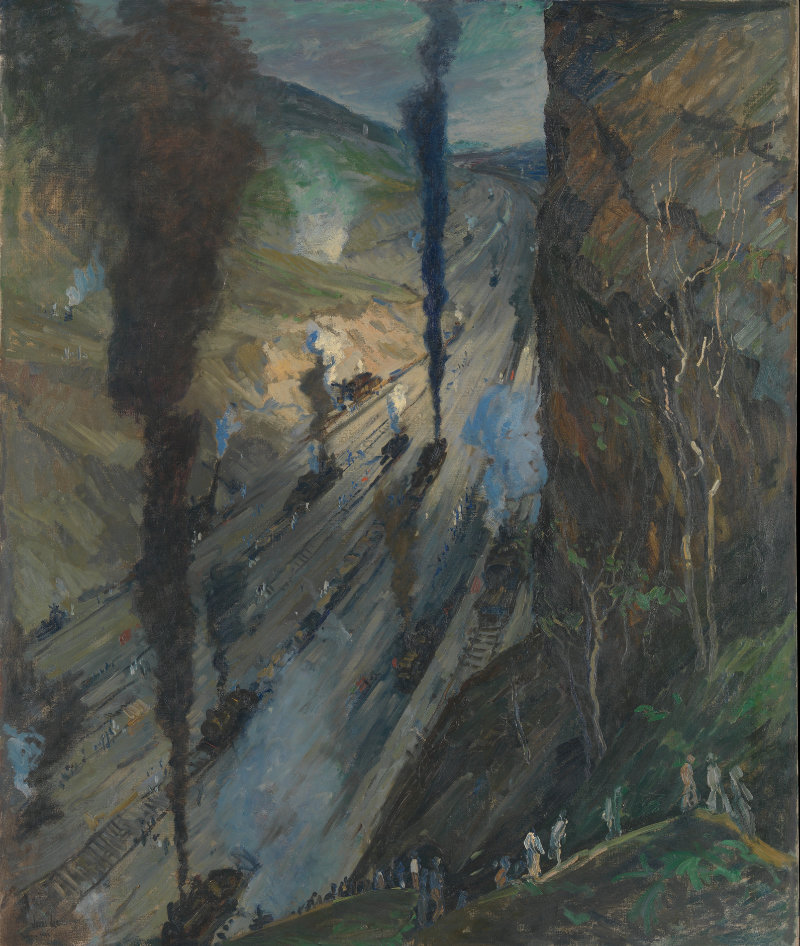
  • A.C. Gunter’s Baron Montez: 7. “NO! BY ETERNAL JUSTICE!”

    A.C. Gunter’s Baron Montez: 7. “NO! BY ETERNAL JUSTICE!”

    In her letter Jesse does not describe or elaborate on her dire predicament. It is only following the arrival of Larchmont’s brother, Harry, back in Paris for all to be revealed in personal dialogue between the two. Given the generous insights of our narrator, our good readers may hazard a guess at what has occurred to precipitate this action on Jesse’s part. After all she is the seventeen-year-old ward of Frank Larchmont, she and her fortune under his guardianship as according to her late father’s will.

    Today, given the wealth Jessie is due to inherit on coming of age, in the absence of finaglers like Montez, one might expect her to live a relatively charmed life, however in her time there was what was known as coverture. Although Jessie’s life has been one of privilege, in terms of education and living conditions compared to the oppressive circumstances surrounding most women of the period (see Johnson, Edwards), she cannot remove herself from the legal constraints placed upon the rights of all women.

    At the Women’s Rights Convention in Senneca Falls, New York in 1848, Elizabeth Cady Stanton (1815-1902) delivered her Declaration of Sentiments, a large part of which protested against coverture, the legal doctrine that treated a married woman’s possessions, wages, body and children as property of her husband, available for him to use as he pleased. Coverture gave husbands total control—from finances and place of residency to wife-beating and marital rape (Edwards).

    Elizabeth Cady Stanton with her sons (1848)

    Having deprived her of this first right of a citizen, the elective franchise, thereby leaving her without representation in the halls of legislation, he has oppressed her on all sides. He has made her, if married, in the eye of the law, civilly dead. He has taken from her all right in property, even to the wages she earns.

    Excerpt from “Declaration of Sentiments” —Stanton

    Conflicts, and obstacles to be overcome, are requisites of any good story. Gunter has been working toward the end of this story arc, engineering through character definition, and events related for the reader, the abrasive, but decisive interaction that is to occur between the brothers, Larchmont. As a playwright, dialogue is Gunter’s stock in trade, and the spoken word, over an author’s exposition, communicates a direct, if sometimes false, truth, for the reader’s evaluation. Although the words exchanged are personal, the author’s intention to implement a theme of American vs European is transparent.

    The question a reader of our time might ask is why has he been setting up this nationalistic clash of cultures via two brothers, why should this appeal to the readers of his time? It is 1887, over a hundred years since the US gained independence, yet it appears the people are still defensive enough in regard to their global identity to appreciate jingoistic expression. Or perhaps, as today with extensive American coverage of the travails of Prince Harry and Megan Markle’s romance, Prince Charles and the terrible plight of Princess Diana, or the delightful children of Prince William and Duchess Catherine, there is a proportion of the American public that continue to be so enamored and fascinated with European culture and royalty to warrant chastisement.

    Ironically, using Jesse’s ‘chevalier’, as she has called Harry, or knight, fashioned to ennoble and set right American values, Gunter relies on a trope of European origin.


    CHAPTER 7

    “NO! BY ETERNAL JUSTICE!”

    The words are blotted with tears, and the whole appearance of the epistle is such as to give the young man a shock. He throws this off, however, remarking to himself, “Pshaw! She’s only a child in short dresses yet! I presume she must have been naughty. Even if she has been disobedient she needn’t fear Frank, he is gentleness itself to her.” But this evasive kind of reasoning does not suit him. After communing with himself fifteen minutes the action of the man comes into play. He was dawdling by the Rhine. He dawdles no more. And in one hour afterwards he is en route to Paris, as fast as an express train can take him.

    Arriving there next day, he goes over from the Gare du Nord, as fast as a fiacre can take him, to the pretty little villa on the Boulevard Malesherbes.

    “Ah, Monsieur Henri, you have come back from Germany,” says the footman, opening the door, a grin of welcome upon his Breton face, for this young gentleman has endeared himself to the servitor by many fees.

    “Yes, you need not mention the matter to my brother, if he’s at home,” says Mr. Larchmont, “but I presume he is out?”

    “I think he is at the Bourse.”

    “At the Bourse? That is rather astonishing.”

    At the Stock Exchange, Edgar Degas (1878)

    “Oh, he goes there every day, now,” answers the man.

    “The dickens!” ejaculates Mr. Harry, and this information would set him wondering, did not another idea fill his mind. He says: “Step upstairs, please, Robert, and tell Miss Jessie that I am here, and would like to see her.”

    “Mademoiselle Jessie is at her lessons,” replies the footman, “and I don’t think the governess cares to have her disturbed.”

    “Never mind about the studies, Robert, I have only a few hours to stay in Paris. Just show me up to the school room, and I will break in upon the lessons, and help her with them,” returns Mr. Harry, and walks up to find Miss Jessie and get a surprise.

    As he opens the schoolroom door and looks in upon her she is prettier than ever, but not wearing out her blue eyes over books, though there is a troubled look in them. She springs up with a cry of joy, and, as he gazes at her, he notes that during his few days’ absence an occult change seems to have come over the girl. Her short skirts had seemed to him her proper costume; now as she glides toward him they appear too juvenile.

    She utters a warning “Sh-h-h!” and puts a taper finger to her lips, then whispers: “My governess is in the next room. She thinks I am studying, but I was thinking—thinking;” next gasps, “Harry! Dear good Harry! God bless you for coming to me!” and the pathos in her manner, and look in her eye, tell him that a great trouble has come into this child’s life.

    “I am here,” he says, astonished at the girl’s manner, “to do anything you wish, Jessie; but it seems to me you should have applied to my brother, who is your guardian, before coming to me.”

    “It is he who makes me come to you!”

    “My brother?”

    “Yes! Your awful brother is using his authority as my guardian. After the horrid manner of the French, he has betrothed me.”

    “Be—betrothed you?” stammers the young man shortly in intense surprise.

    “Yes, to that odious Baron Montez!”

    “What, that old stockjobber? He’s twice your age! You are but a child.”

    “I am seventeen, and, in spite of training, an American seventeen; and that is old enough to know that I never will marry Baron Montez!” cries Miss Jessie, angry at the suggestion of youth, more angry at the thought of Montez.

    “Oh, ho, you love another!” laughs the young man, who tries to take this matter quite easily before the ward, though great indignation has come to him against the guardian.

    “No, I love no one! I hate everyone. Rather than marry Fernando Montez,” falters the girl, her lips growing pouting and trembling, “I’d sooner go into a convent.”

    Whereupon the gentleman says, in offhand manner: “Pooh! Pooh! No convent for such a beauty as yours.”

    “And you will save me, even though your brother uses his authority as my guardian?”

    “Certainly!” says the young man.

    “Swear it!”

    “Very well, you have my promise,” returns Harry who is loath to take the affair seriously; “but I don’t think you need have troubled me. Had you spoken to my brother, he would have most assuredly not tried to coerce your inclination in such a matter.”

    But here Jessie’s words bring astonishment, disgust, and displeasure against the man he calls brother, to the gentleman facing the excited girl. She whispers: “I have told your brother! I have told him that I loathed, I detested, I hated the man he wished me to marry!”

    “And he did not listen to you?”

    “No! He said it was absurd for me to rebel against his lawful authority. That I must, and I should, do what he told me.”

    “He did, did he? Then hang him! I swear you shall not!” cries the young man, for something in Jessie’s manner tells him she is speaking from her heart. “You shall only marry the man you want to!”

    So he leaves the young lady reassured, and strolls over into the Parc Monceau (his brother not having returned from the Bourse), and communes with himself in the exquisite little pleasure ground, looking at the beautiful naumachie and rock grotto, and would reflectively toss stones into the lake, did not a gend’arme restrain him.

    La Naumachie, Parc Monceau (postcard, n.d.)

    And all the time his eyes grow more determined, and the indignation in his heart against his brother increases.

    Then he strolls back to the house, and Mr. Francois Larchmont being at home, walks into that gentleman’s library, with a very nasty look upon his countenance.

    “You here?” says Frank, starting up with unnerved face. “This is a surprise!”

    “Yes,” says the other nonchalantly. “In Cologne I received a letter from Miss Severn—I suppose we must call her Miss Severn, since you consider her old enough to marry. By the by, I think you had better have her governess put her in long skirts; she’s been growing lately.”

    While he has said this, notwithstanding Harry’s manner, Frank’s face has become white. He suddenly asks: “Did that stop your journey?”

    “Certainly! An appeal from a woman would stop any man’s journey. I have seen your ward. She tells me what I find it very hard to believe—that you wish to exercise your authority as her guardian, to coerce her into marrying this South-American stock-jobber, and gambler—Baron Fernando Montez. Is it true?”

    “It is,” falters the other. “I wish her to marry him!” Then he goes on suddenly, noting the look of disgust upon his brother’s face, “Don’t misunderstand me, Henri, it is necessary. She has now arrived at the age when it is best for her—for any young woman—to enter the world; and to do that in France, it is necessary for her to take a husband.”

    “But not such a husband.”

    “He will give her title.”

    “Pooh! titles are common here.”

    “He will accept her—and this is the important part of the matter—without a dot.”

    Without a dot? Why, she is worth a million dollars in her own right.”

    “Nevertheless she will have no dot!

    “What do you mean?” gasps the other.

    Then Frank bursts out hurriedly: “Don’t look at me so. I have lost Jessie’s money in speculation.”

    “Then you must make it up out of your own fortune. You are a very rich man!”

    “I was.”

    “Good heavens! have you lost that also?”

    “Yes, it is involved. At present I could not, if called upon, hand over Miss Severn’s fortune, which was entrusted to me by her father’s will, when I gave her to her husband. In France it would be demanded at once, if anyone else except Baron Montez married her.”

    “And you have lost all this money—in what?”

    “In the shares of the Panama Canal, I think.”

    “In the Panama Canal, you think?” sneers Harry. Then he scoffs: “You—you are the only American who has not made money out of that giant fraud? You are so afraid of being thought a man of business, that you have let that swindling South American make you bankrupt?”

    “I—I do not know—my affairs are involved. I have entered into so many speculations with Baron Montez.”

    “Ah, he has your money!” cries the New Yorker.” He has Miss Severn’s money. He has got the dot before. Now he will take the bride, generous man, without it, but she shall not marry him! I have sworn it!”

    “Great heavens! You would ruin me!”

    “I would ruin everyone to save this girl’s happiness!”

    “You—you love Jessie?” gasps Frank with twitching lips.

    “As a brother! That is all. But it is well enough to see she is not wronged by you!”

    “You forget I am her guardian!”

    “And I am her protector! She shall not marry Baron Montez! I’ll prevent it with my fortune—with my life! Do you suppose I will stand by and see a lovely, beautiful, young American girl sacrificed on the altar of your speculations? No! By eternal justice!”

    “You will save her?” asks Francois Leroy Larchmont, a curious wistful look coming into his uncertain eyes.

    “Yes!”

    “God bless you!” cries the man, and sinks down into a chair, sobs in his voice, but no tears in his eyes.

    “Why do you thank me for saving her from your friend?”

    “He is not my friend! I hate him! I fear him! I loathe him now, but I am in his power! But thank God! Henri,” and the weak man has seized his brother’s hand and wrung it, and is muttering to him: “Thank God! you will save her—save her from marrying him—save her for me—for me—I love her!”

    “Not for you!” cries the other, breaking away from his brother’s grasp, and an awful contempt coming into his soul. “You are not worthy of her. You love no one but yourself, and that not well enough to fight for your own hopes, desires or loves! When you renounced your country, you gave up manhood! But I’ll save her for some good American!”

    With that he leaves his brother, who has sunk down, and is cowering away from Harry Larchmont’s indignant eyes, and goes up to again see the lovely girl her guardian’s weakness would have sacrificed, and tells her to be of good cheer, that he will save her. “Only one thing—procrastinate this matter,” he adds. Then he queries wistfully, “Can you be woman enough to procrastinate? Are you still a child?”

    “Why not defy him? With you by my side I’ll snap my fingers in Montez’ face.”

    “That,” says the young man, wincing a little, “will require a sacrifice from me.” For he knows, if matters come to a climax now, to give this girl her fortune and keep his brother’s name in honor before the world, will sadly cripple his means and make him comparatively poor.

    Looking in his face the girl says suddenly: “No, I see it is important. I am not child enough to ask too much. I will do as you say.”

    “In every way?”

    “In every way.”

    “Then procrastinate. Get my brother to bring you over to New York for this winter; put off the wedding till the spring—till the autumn. If Frank demurs, tell him you will write to me, and that will settle the affair, I think.”

    “You—you are going away?” falters the child, growing pale at the thought of his desertion.

    “Yes, I am going away.”

    “Why?”

    “To save you.”

    “How?”

    “To find out more about this man, who has my brother in his powerthis Baron Montez of Panama and Paris. Here he is surrounded by all the Panama clique; there is no rent in his armor that I, an American, unaccustomed to the ways of Paris, can pierce. If he has a flaw in his cuirass, it is at the other end of the route. I am going to Panama. Please God, I’ll nail him there! I leave this evening for England. Then to New York, to arrange several matters of business, for if the worst comes to the worst—”

    “You will permit me to be sacrificed?”

    “Never! It is for that I go to New York.”

    “But if the worst comes to the worst, you—”

    “It is for that reason that I go to New York. Don’t ask me questions. Only know that I am forever your protector. What my brother has forgotten, I will do; his dishonor shall be effaced by me.”

    “His dishonor!” cries the girl. “What do you mean?”

    “Nothing that I can tell you; but good-by, Jessie. Be sure of one thing—that you need never marry Baron Montez of Panama!”

    “God bless you!” cries the girl, and gives him the first kiss she has ever given him in her life. But it is the kiss of the child, not of the woman. The kiss of gratitude—the kiss that beauty gives to the knight that risks his life to save her from the giant Despair.

    Twenty-four hours after, Harry Larchmont sailed for New York on the Etruria, and a month later his brother brought his ward to America upon the Gallia; but Baron Montez said to him, “Remember, mon ami, you must bring her back by Easter. Springtime in France will suit Mademoiselle Jessie’s beauty.”

    Four weeks after the Larchmonts arrive in New York a letter comes to Fernando, from a co-laborer of his in the Panama scheme, one Herr Alsatius Wernig, who is in America on some joint business, and will shortly proceed to the Isthmus.

    This epistle contains some curious news about the Larchmonts.

    After reading it the Baron’s face grows grave for a moment, then it suddenly lights up. Montez, with a jeering smile, exclaims: “What? That idiot who plays football and takes the chance of being killed for fun!” A moment later he remarks meditatively: “There is always danger in a lunatic!” and an hour afterwards sends a carefully prepared cablegram to Herr Alsatius Wernig in New York.


    Notes and References

    • trope: “a recurring theme or motif, as in literature or art: e.g. the trope of motherhood; the heroic trope. A convention or device that establishes a predictable or stereotypical representation of a character, setting, or scenario in a creative work” (dictionary.com).
    • fiacre: “a small four-wheeled carriage for public hire” (lexico.com).
    • stockjobber: “a stockbroker, esp one dealing in worthless securities” (Collins).
    • naumachie: an artificial lake, orig. used for mock sea battles for entertainment.
    • without a dot: colloquial—less than nothing—zilch, nada.
    • cuirass: “a piece of armour consisting of breastplate and backplate fastened together” (OED).

    Accampo, E.A., Rachel G. Fuchs and Mary Lynn Stewart (eds.), Gender and Politics of Social Reform in France (Baltimore: Johns Hopkins University Press, 1995).

    Edwards, Rebecca: Early Women’s Rights Activists Wanted Much More than Suffrage. history.com, 2028. Jump to Article

    Johnson, Julie Anne: Conflicted Selves: Women, Art & Paris 1880-1914. PhD Thesis, Queen’s University
    Kingston, Ontario, Canada, 2008. Jump to file

    Stanton, Elizabeth Cady, “Declaration of Sentiments” address, Seneca Falls, New York, 1848. Jump to Transcript

    Tilly, Louise and Joan Scott, Women, Women, Work, and Family (New York: Holt, Rinehart, and Winston, 1978)

    This edition © 2021 Furin Chime, Brian Armour