Tag: Australian historical fiction

  • 2. Autopsy at the Junction Hotel (from the draft novel Stawell Bardo)

    2. Autopsy at the Junction Hotel (from the draft novel Stawell Bardo)

    Autopsy at the Junction Hotel

    Sound of hooves and iron‑shod wheels on gravel reached the Junction Hotel door, a rare interruption in the sleepy settlement. Huish‑Huish brushed back her hair before going to answer the knock. A detective stood at the doorstep, one finger tapping lightly against his thigh. He was waiting for Mow Fung to answer, a name he knew from the licensing roll. He had driven from his headquarters at Stawell, only a few miles away.

    “Mrs Mow Fung, I presume? I am Detective Forster.” He made a slight, polite bow. A nervous man, a lean man, she observed, and the lean, nervous man removed his grey felt hat and fingered the brim. If he meant to unsettle her, he’d have to try harder. She caught the tang of carbolic soap clinging to him in the close air of the doorway. It suited him somehow. She ushered him into the bar. Theirs was a modest establishment, but scrubbed spotless. The faint smell of lamp oil and aged wood lingered in the cool interior, a scent that seemed to settle into its polished tables and floorboards. She had been topping up the lamps, and a tin container of oil remained open on one of the tables, next to a neat pile of linen squares.

    They passed the bottom of a staircase, halting at a child’s footsteps that came thumping down.

    “Mama! Alice won’t eat her porridge. I’ve told her and told her but she just picks at the egg and won’t touch anything else.”

    The mother suppressed a sigh. Such was the morning ritual. “Tell her the police have arrived. Once they deal with your father, I will have them deal with her too, if she is not careful.”

    Detective Forster could not prevent a cough, but immediately resumed his grim composure.

    The girl, aged twelve or so at most, ascended a few stairs, halted, unafraid but inquisitive.

    “What will they do with her, Mama?”
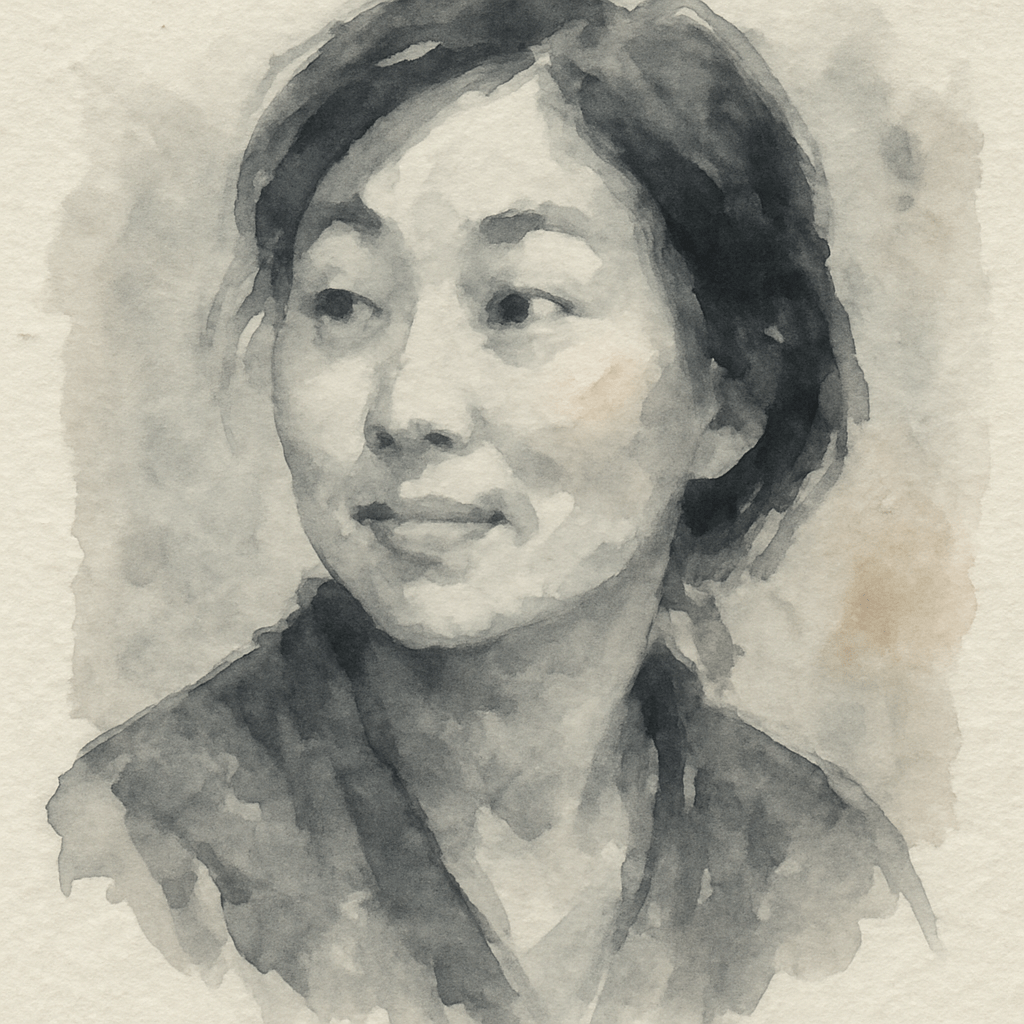
    “Use your imagination!” Huish-Huish was outdone – the child was incorrigible. “Now make them eat their breakfast properly and off to school with you! Foolish girl.”

    The daughter climbed the stairs with purpose, the hem of her uniform brushing the narrow boards.

    The mother stopped at a door halfway along a dim, unadorned hallway. The air smelled faintly of cold ash and last night’s cooking fires. From behind emanated the ghost of a voice. No distinct words, but what the newspapers mocked as “Oriental mishmash.”

    Turning to Forster, she said, “My husband is inside here with the gentleman.”

    “The others have already arrived?”

    “Only the dead one so far,” she said with a smile. “Mow Fung is a very silly man, who nurtures some foolish superstitions from old China. You must forgive him.”

    But she did not go barging in. There may be others. She laughed softly. “He daydreams, fantasises he communes with the dead. You know, he sinks down into the Ten Courts of Hell and has a bit of a chat. Haha!” She said it in a melodramatic tone with a gently mocking lilt.

    The faint chant in the room faltered, as if aware of their intrusion, then died altogether. She pushed the door open. The candle was out. The trace of a strange perfume lingered in the air. His odds and ends were tucked neatly out of sight. Forster felt the change in atmosphere as they stepped in – the pall was unsettling after the murmur that hung in the hallway.

    Mow Fung drew back a curtain, and the morning sun slanted through a haze of fine dust. He smiled at Forster and bobbed his head in a dumb-show of humility. There was something indefinably unusual about the fellow, Forster thought.

    A noise of wheels and hooves announced more visitors, and Huish-Huish left the room to meet them. Forster jotted a few notes in his pad as he examined the corpse.

    “This is exactly the same state it was in when it arrived yesterday?”

    “Of course, detective,” Mow Fung said.

    “You haven’t touched it?”

    “Touched it?” Mow Fung repeated. “Good idea. A very good idea! You are an excellent detective, I see that already. Splendid.” He pressed his palms together in a position akin to prayer and nodded. Forster found himself almost infected with the broad smile.

    “Very nasty business,” said the oriental. “Murderer came up from behind, a trusted companion, a good mate. Never knew what hit him!”

    Was that a laugh? A cackle? What was wrong with these people?

    Forster stepped to the table and took hold of the neck of the cadaver, stretching the flesh about the open wound. A sharp instrument had been used: an axe, probably, or maybe a tomahawk. The weapon evidently slipped in its course at first, creating minor abrasions before cutting right in through the neck.

    He turned to the Chinese man.

    “Mrs Mow Fung tells me you have been … communicating with the deceased,” he said.

    Mow Fung smirked. “The missis,” he said, “is a silly woman who nurtures some foolish superstitions from old China.”

    Forster gave him a piercing look. “Be so kind as to tell me, then, how you could have arrived at your – your deduction otherwise?”

    At that moment, Doctor Bennett, the constable, and Henry Wilson  – the miner who found the body – came into the room. Bennett cut Forster’s introductions short to begin the post‑mortem, and the constable took out his notebook. Forster and Mow Fung took chairs, while Wilson remained standing nearby, arms folded, watching in silence.

    “A European. Body very dried up. Bad state of decomposition,” Bennett dictated. “Much of the skin has been eaten away – particularly from the arms and legs – torn off in patches, very much dried up and leathery. A good portion of the integuments is gone.”

    “A lot of wild cats out there at them old Four Post diggin’s,” Wilson volunteered, but Forster silenced him with a look. “We’ll go through all that later on,” he said.

    “Too far gone to examine the internal organs,” Bennett continued. “The head is off – missing. It wasn’t found at the location, I take it?”

    The constable shook his head. “No, sir.” Of course not: some things the bush will not give back.

    “The upper margin of the skin on the neck has been divided by some sharp heavy instrument. About an inch below the margin of the neck is a transverse cut through the skin, which extends down to the vertebrae, evidently made by the same implement, probably a hatchet or axe. No other marks of violence. The upper margin of the neck is indented as if by a succession of cuts. The head has evidently not been severed from the body by one single blow, but by several. One cut extends transversely across the neck. Numerous abrasions in the vicinity. The vertebrae have been severed with that heavy blade. No, I should not think it was done with one blow.”

    “Not suicide then?” Wilson said deadpan.

    Forster gave him a withering look.

    The doctor continued. “I would estimate the height of the body to be that of a man about five foot ten or eleven inches. As for the length of time the body was exposed, I could not speak with certainty. But I would say any time from four weeks upwards – probably two months or so, to become dried up and mummified like this. Absolutely bloodless. From an examination of the bones and hair, I would conclude that the body was that of a middle-aged man probably between the ages of thirty-five and fifty-five years.

    “Internal organs – those of the chest and abdomen – are very much decomposed, and in the condition of… well, pulp. From the upper margin of the neck to the heel is five foot one and a quarter inches; from the tip of the shoulder to the ankle, four foot nine. The frame is large-boned and that of a big man. Some of the hair of the beard is on the neck – reddish-brown hair mixed with grey.  Skeleton is perfect. No broken bones.”

    He drew a surgical saw from his case and cut off a piece of vertebra and two fingers, then scraped some sandy‑red hair from the neck. He placed the specimens in a jar, which he plugged with its cork stopper.

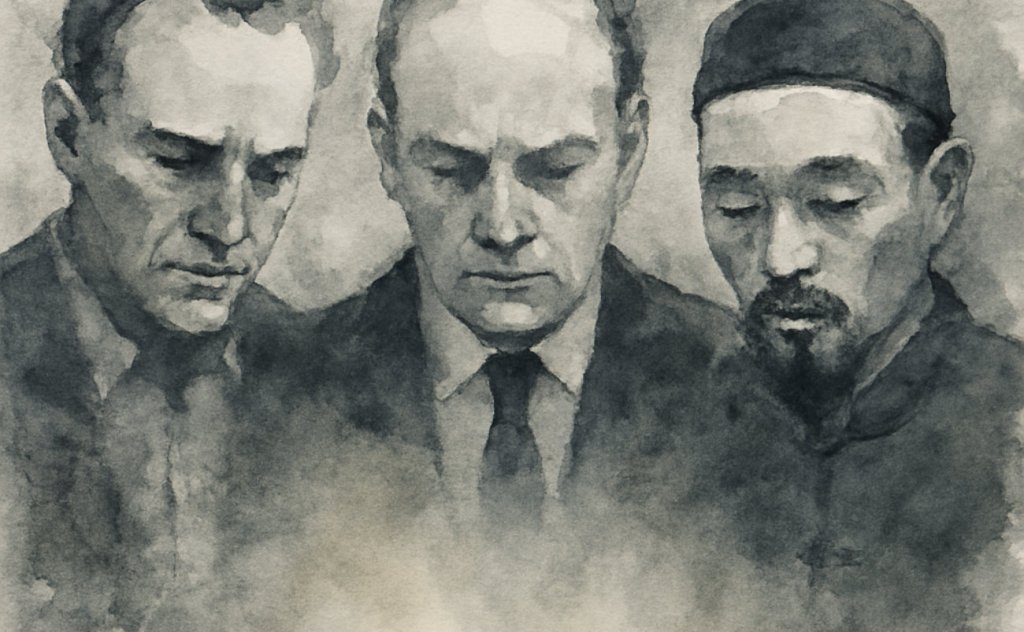
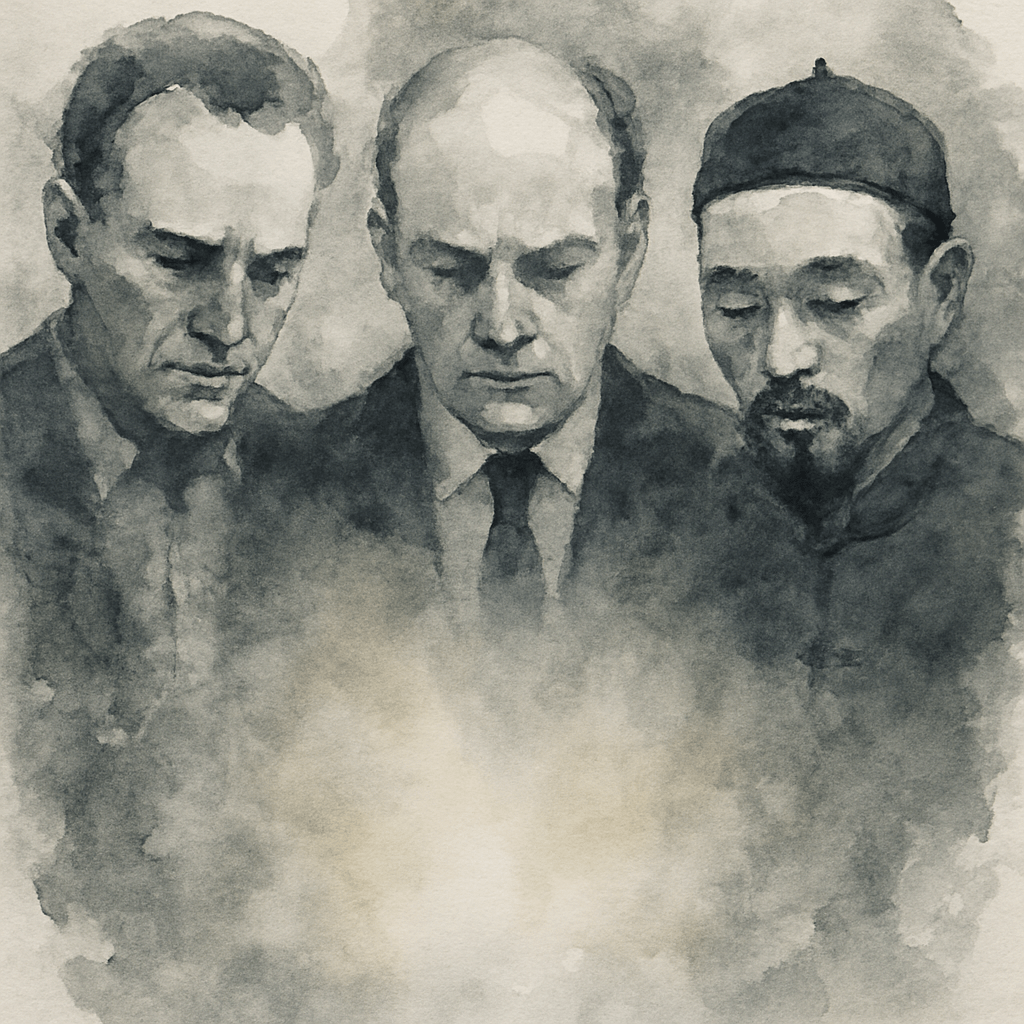
    “Apparently after having consulted the victim in the afterworld, Mr Mow Fung here informs me that the deceased knew and trusted his murderer – enough to let him come up behind and take him by surprise,” Forster said.
    The constable chuckled.

    “Come on, leave off Sarge!”

    His superior paid him no mind, studying the body as he spoke.

    He turned to Wilson. “You discovered the body lying as it is now, Mr Wilson? On its back?”

    “Yes, sir. On its back when I found it, and your coppers brought it here the same way,” Wilson said.

    “Mm. Yet observe these abrasions on the chest, and the tiny stones impressed into the flesh – or where the flesh was exposed when he hit the ground. Even if the clothing was stripped away afterwards, the marks are clear enough: they suggest the body struck the earth face down.”

    Forster leaned over the table, his hand hovering a few inches above the corpse’s limbs, tracing out their outline. “And note the awkward sprawl of the arms and legs. The hands, palms upward as he fell, show no attempt to break his fall. Whoever removed the clothing may have shifted him somewhat, but that detail remains. He never knew what hit him. A pretty business indeed.”

    He straightened and glanced at Mow Fung. “Does my analysis accord somewhat with yours, Mr Mow Fung?”

    Mow Fung said nothing, gazing clearly into the detective’s eyes, a hint of a smile hovering on his lips.

    “I am a simple hotel-keeper. I am sorry – I do not follow your complicated talk.” Pensively, he stroked his sparse black beard (one day it may grow into a venerable white one). “Perhaps we do not see things as they are,” Mow Fung continued, “but as we are, as it was said in the old time.”

    “Quite so.”

    “Will I put that in, Sarge?”

    “Might be a good idea to insert it as a footnote for you to incorporate into your own meditations, which I’m sure you engage in regularly.”

    Mow Fung watched the buggies of the detective and the doctor, and the uniformed constable on horseback, recede at a leisurely pace down the dusty main street of Deep Lead – towards the old abandoned gold diggings on the Old Glenorchy Road. They rounded the bend, passed Bevan the ironmonger’s, and disappeared into the bush.
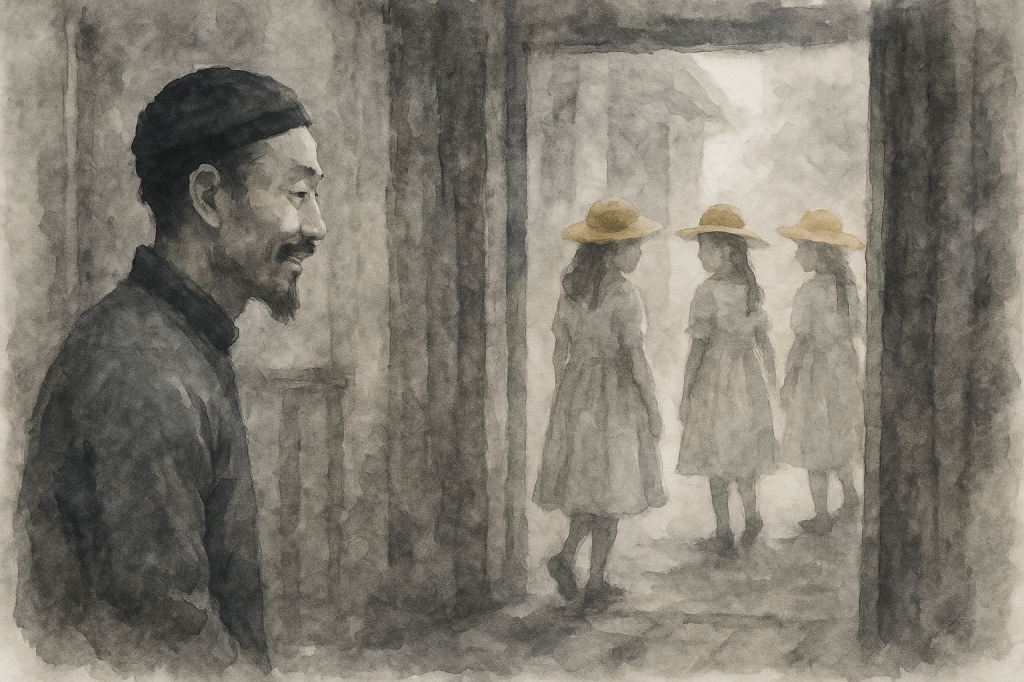
    He met Huish-Huish coming in from the laundry with an armful of towels, their youngest daughter Alice trailing on her skirts. At that moment, the other daughters trooped down the staircase, Lena – the eldest at twelve years – herding her siblings. School uniforms and wide-brimmed straw hats floated in a bubble of chatter, expressing such immediate and minute issues as are memorialized perhaps in the record of human souls, but seldom if ever recalled in human life. “Hurry now,” Huish‑Huish called. Alice was moaning about the porridge. Lena hesitated at the threshold as the others spilled outside, her hand lingering on the doorframe.

    Mow Fung could not refrain from a smile and faint shake of the head as they left with no fare-thee-well, though Lena struck him as older than her years. His eyes followed the children as they disappeared, then shifted to the bush beyond the paddocks. He remembered what Wilson had said: the body had been found at the Four Posts. He gazed at the bush a moment longer, the name settling uneasily in his mind.


    Michael Guest © 2025

    Images generated by AI

  • 1. Down Train from Horsham (from the draft novel Stawell Bardo)

    1. Down Train from Horsham (from the draft novel Stawell Bardo)

    Though railway convention would designate a train travelling from Horsham toward Melbourne as an up train, I have titled this chapter Down Train from Horsham intentionally. The descent invoked here is not geographical but tonal: a movement into rougher country, uncertain fortunes, and subterranean narrative currents. It is, in spirit, a passage downward.


    Down Train from Horsham

    Some dragon stirred from its rest with a snort and shrill hiss. Flame flashed beneath her firebox, steam jetted behind the front wheels, a plume burst from the smokestack. The engineer tugged the pull cord and let go two long, shrill blasts on the screamer.

    Over on the wide, newly asphalted street, their cart driver pulled his horses up to a stop. Forbes was on the ground by the time Burns hauled himself down.

    “Slow today ain’t we?” Forbes said with a wink.

    Burns grunted, dusted off his coat, and spat.

    Both strong, stout men they were, both with full beards, Burns’s brown, Forbes’s flecked auburn when the sun hit it right. The two barely had time to buy tickets, but the guard spotted them and didn’t give the flag.

    “Get a move on, youse blokes,” he growled as they strode up to the door of the last carriage.

    “Go blow your nose, General,” Burns said.

    “Thanks old mate,” Forbes said, smirking at the guard and touching the brim of his grimy, battered wide-awake hat. No nap, no fuzz on the felt – that’s what ‘wide-awake’ meant, Burns told him. He liked that.

    “No call to go tippin’ your lid to the likes of him,” Burns snarled, striding ahead. “All they do is blow on their whistles and wave their bloody flags, riding about all day on railways that we builds for them.”

    AI generated image of train waiting to leave the station at Horsham

    Burns pushed back the reversible seat to make two facing seats, and they swung their swags up onto the overhead rack. Forbes let his bulk fall, crashing down on the forward-facing seat with a thump that startled everyone in the carriage. Heads turned, eyes exchanged glances, eyebrows arched.

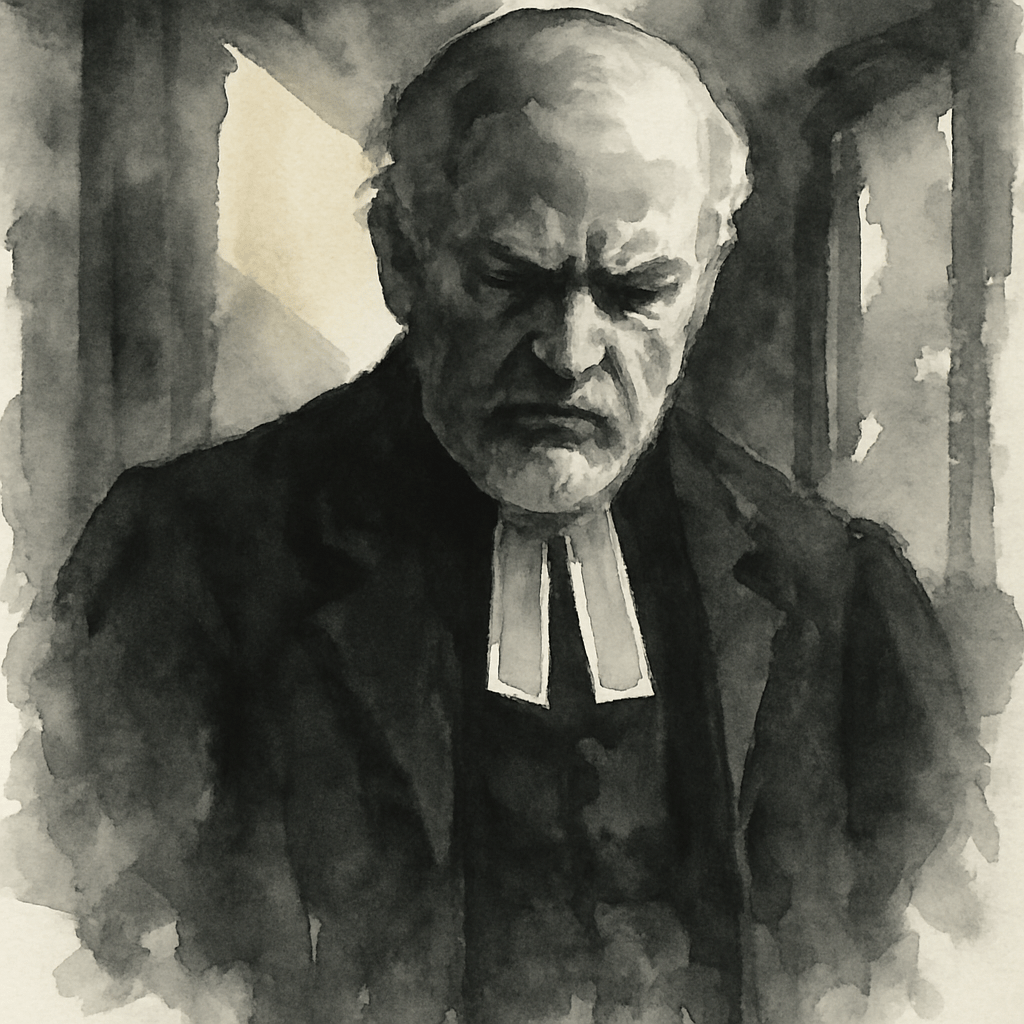
    An upright matron leaned to the ear of her companion, a young wife, who commented under her breath, in a tone heard through the carriage, “Navvies by the look.” She pulled a grimace of distaste and flashed a glance toward heaven. Two wide-eyed children across the aisle from the women craned their necks, straining for a better look at the commotion. The elderly clergyman turned his attention back to the Melbourne Argus in his lap, his eye pausing on the masthead: “I am in the place where I am demanded of conscience to speak the truth, and therefore the truth I speak, impugn it who list.” Ah, the brave words of John Knox, a fellow Scotsman.

    Acting oblivious to the disapproving looks but inwardly savouring them, Forbes leaned back to think on the waves of heat rising from the platform. Burns stood with his hands on his hips, staring down at his mate, gripping the seat to adjust his balance as the carriage lurched forward.

    “No, I won’t go backwards,” Burns said.

    “What’s that?” Forbes said, still looking out, the hint of a rascally smile on his lips.

    “It gives me the pip, going backwards does.”

    “Gives everyone the pip, Burnsy. Be a man.”

    “Come on, we’ve been over all this. Get over to this side, at least for a little bit. It’ll have me spewing, mate.”

    “Sit down and shut up, man,” Forbes said. “We can swap after a bit.”

    “For Christ’s sake, I’m not feeling too well after last night.”

    “It was me finished that last quart of rum off with Johnson and the Painter brothers after you flaked out.”

    “Well damn you then.” Burns slumped into the seat across the aisle and looked sullenly out the window, watching the buildings slip by. He took off his hat and ran his hand across his balding scalp. Getting tired of this redheaded prick. “You’re like a naughty kid sometimes. I’m not going to read the newspapers with you anymore now. You were looking forward to that, weren’t you? Over a beer at the pub when we get in.”

    “I’ll read them by myself,” Forbes said petulantly, with a touch of true hurt.

    “Oh yes, oh yes. You are a great reader by yourself, you are.” Burns gave a short derisive laugh. “A regular font of learning. A real Aristotle. Great Peripatetic Philosopher, you are, for sure. A true Bard and all rolled into one. Ha!”

    The train rattled along, passing across the town boundary. A sweet breeze cooled the carriage and Burns’ temper. This was grand country – miles of grazing country, like parkland, and burgeoning seas of wheat turned ghostly in the sun – pale dragons gliding low over the gold. Any man’s heart would glow, and he whistled a few bars of an old ditty that had been playing on his mind the past few days. Trilli-la, trilli-la, as the lassie flung them tripes, flung them far …

    He turned to Forbes and called out over the rhythmic clatter, nodding to the scene. “Magnificent property – the Cawter Brothers, squatters of course, you understand.”

    “Sorry about all that, just pulling your leg.” Forbes said. “Here, take a swig on this, the real article. Found it in back of the cart. Blakey can get another one at the pub, blow ’im.” He offered the flask with a grin and a look that said: ‘we mates again?’ “Look Burnsy,” he said, ”I know I wouldn’t be reading at all if you hadn’t showed me, and I thank you for it, I do, I really do. Mates?”

    Flask to his gob, Forbes froze mid-gulp and grinned. “Can’t hear you. Come on over here, come on.” Forbes swung himself over onto the rear-facing seat. Burns took the place he had vacated.

    Burns shrugged off his aggravation with a mighty swig. “Grumph! God, that’s rough, you ratbag! Gad, that is poison. Villainous vile low stuff indeed it is.”

    “My word! Produces the desired effects, nonetheless, don’t it?”

    “Aye, to be sure – makes the vendor rich and the buyer mad, if that’s what you want.”

    They laughed raucously and then stopped, collapsing abruptly into a sober silence filled with sporadic vague recollections of drunken aftermaths. Pause of indeterminate length and depth. Some stubby vegetation jogged past and the carriage rocked and creaked.

    “Passable whisky.” Forbes had come to love a game with Burns.

    “Passable? My stars, whisky, you reckon! Whisky! There ain’t the slightest suspicion of malt in the composition of this grog. More a concoction of cheap liquor and primitive adulterating agents mixed in by some low, roguish bush publican. Water for toning it done, tobacco and bluestone for bringing it up to the required ‘biting’ standard. That’s what it is. Impossible to calculate the amount of evil wrought by foul stuff like this. What do you reckon? Passable, right enough!”

    Forbes laughed a child’s open, careless laugh. “Righto, well you are free to give it me back then. I’ll down it, no worries.”

    “Steady on, son! I fancy trying another drop or two yet, just to make sure it’s alright for you.”

    “How’s that, then?”

    “Not too bad when you can get it down.”

    Forbes blinked. “What’d you say back there, mate – something Brothers?”

    AI generated image of the two men smoking in the train carriage.

    “Carter Brothers,” said Burns. “Own that place outside of Horsham. North Brighton Estate, la-di-da, fancy stuff. Nothing around like that these days for the likes of honest blokes like us. The rich got the best, and you need money for grazing. Thousands of selector homesteads around these parts, though, I’ve got to admit. At first the squatters tried to get rid of them – pulled up their pegs as fast as they could put ‘em down and burned down every patch of bull-oak in sight – makes decent timber that stuff. Squatters thought they’d won out. Got all the best bits, creek frontages and fertile spots, and didn’t bother to buy up till it was too late and the selectors all got in. Now they own most of the land in the district. Yeah, plenty of selectors in the Wimmera, and soon we may be pleased to number ourselves among ’em, indeed, I’ll wager. Stake my life on it.”

    Forbes yawned and stretched. He took out a two-bladed knife and a plug of tobacco from the pocket of his grimy, gray tweed coat and proceeded to cut some tobacco for a smoke. The knife was a small one with a white handle, but one half of the bone was off, the handle on that side showing the brass. “So how about this place you want to select?” he said. “Is it worth me putting in? What do I want to go on the land for? I’m free as the breeze in the work I do, can go when and whither I wish. That’s the life.” His sly attempt to kick off more sport.

    “Ar, not again,” Burns said, taking up the flask for a swig. “Wake up to yourself, man. You’re a navvy. You want to dig ditches all your life? You’re still young. You want to get yourself a stake. What’s a navvy do, son?” He lit his pipe.

    “I don’t know … digs holes?” …

    “That’s right, digs holes. And what else?”

    “Digs more holes.”

    “Correct. And what then?”

    “Digs some holes and then some trenches for good measure.”

    Burns laughed. “Yes, very good. Anything else?”

    “Cuts some dams.”

    “Yes, for a break, and when he finishes with that? Come on, what have we been doing out at Dimboola?”

    “Ballast. Spreads tons of damn ballast along the line.”

    “Of course he bloody does!” Burns said. “And that’s a lark for you, ain’t it! Anyway, we’ve got nothing to be ashamed about. It’s men like us what builds these railroads, son. Railroads into the future, I reckon. But there’s too much of our sweat and blood in ’em. What you want is to go up in the world. Like I’ve been saying, keep our dough together and build up from there. We’ll be full-blown gentleman in the long run. Whisky, women and song for the asking. In South Australia I was born …” His sonorous tenor cracked with volume, his rhythm matching the pulse of the wheels over the railway sleepers.

    “Heave away, heave away ….” Red-headed Scotty Forbes, so-called, being Irish, was gifted with an equally stirring off-key tenor. He coughed back some reflux and took a big guzzle.

    South Australia is me home …

    Heave away, heave away …

    “Don’t worry, I looked after you over there, didn’t I, son? I’ll fix you up here too, no two ways. Oh heave away you rolling king, we’re bound for South Australia …

    The carriage rocked and clattered along. Forbes packed his pipe and lit it up, twisted his body around and leaned back over the seat. “This is a smoking carriage, is it not?” he asked of the woman diagonally across the aisle. “You don’t object to smoking, madam?”

    It was no smoking, but the woman submitted grimly and said no. Further down, the young wife staged a little drama, rousing her children and shepherding them out.

    The pipe smoke curled lazily in the light. It caught a shaft of sun and hovered there, luminous and insolent. Forbes leaned back, legs stretched long beneath the seat, puffing like he had nowhere particular to be. Beside him, Burns smirked toward the window.

    After a minute or two, the clergyman rose indignantly. He stepped up the aisle, steady as a magistrate, and came to a stop at Forbes’s elbow. “I for one,” he said, glaring down through the smoke, “do object to that filthy habit. And if you persist in indulging in it here, I shall be forced to quit the carriage.”

    Forbes didn’t look up. “Here’s a bonny little reverend, then.”

    Burns sucked on his pipe and exhaled with exaggerated pleasure. “Blind me, people can be disagreeable. Proper cantankerous old ratbags, I’ve had a gutful of their sort.”

    The clergyman’s gaze turned sharp. “Passengers who wish to smoke,” he said, “ought to remove themselves to one of the carriages provided for that very purpose.”

    “Filthy with ash and worse,” Burns said, with wide, innocent eyes. “Even a hardened smoker can’t stand the stink. Anyhow, they’re full. We usually go first class but feel like slumming it today.”

    The Scotish clergyman looking down sternly.

    Forbes puffed on his pipe, grinning back at his companion. He leaned over and hawked something from the back of his throat. The spit hit the outside of the window with a soft, wet smack.

    Burns said to the clergyman, “I know better men than you who partake of the weed.”

    “I shall request the guard remove you at the next station.”

    “No need for that, Bishop,” Burns said. “We plan to alight in that parish in any case, where we have some important business in which to attend. To wit, the acquisition of a prime piece of real estate, for your information.”

    “It’s a good half hour and more to Glenorchy,” the clergyman insisted. “These good people should not be poisoned by smoke and nauseated by your vile expectorations.”

    “Alright, have it your way, if you’re going to be like that,” Forbes said, tapping his pipe against the windowsill, so that the embers fell out onto the floor. He made a show of stomping them out.

    “And if drunken men are permitted to travel, it ought to be in a special carriage.”

    “Look, you’ve got your way,” Burns said, pointing his pipe at him. “Now if you’d kindly go and do your preaching elsewhere, we’d be much obliged.”

    The clergyman blinked, lips pursed. No one else moved. Burns leaned back and took one last puff.

    “Off to buggery with you where you belong, if you don’t mind, good sir. Go to hell with the rest of your sort.”

    The clergyman strode back to his seat, amid some covert approving nods and comments from his fellow travelers for the effort he had made, and took up his newspaper. For the rest of their journey, in loud, vulgar tones, Burns aired his views on Presbyterian priggery and wowsers, white bearded, bald headed old Scottish hypocrites, bastards and coots, and so forth, for the entertainment of Forbes, who hooted and cackled at his mate’s performance, clapping his hands in unpredictable spasms of mirth, as he would do at times, in a way that would cause the casual onlooker to think he might be touched.

    As they drew closer to Glenorchy, the red-headed Forbes drank and nodded, while the balding Burns, his elder, shared his wisdom, audible to their captive and drowsy companion travelers … “Won’t hurt to find out about it, anyway, price is very reasonable … together we’ll be right … Look at this bloody scrub … Good places coming up here at Wal Wal that got had up by selectors … be right with our stake at Glenorchy though, right as rain … Don’t worry about all that, I’ve got it all for you … Six hundred quid in the bank at Dunkeld, anyhow … Breed a few sheep here and all …”

    “I do love a train ride!“ Forbes said.

    “Fine ride, fine ride. It’s the future, you know. We are living in the future, my friend,” said Burns.

    Mother speaking quietly to her little daughter by a carriage window.

    “You can see the scenery, and the occasional sheep. Very fine indeed. trees and pastures and all the rest. Exceeding rapidity. Velocity of modern times, and no mistake,” said Forbes.

    “We are kings, mate, kings of the rail,” said Burns.

    “Considerable dry day though. What day is it, anyway?” said Forbes.

    “Monday, don’t you recall? We resigned our positions on the Sunday?” said Burns.

    “Wind’s changed. Look at the steam!” said Forbes.

    “Nice smell, eh? Sweet-like, but then it hits you in the back of the throat, as well,” said Burns. “Get your head back in, Scotty! God you’re a child. Pull ya bloody noggin in or you’ll get it knocked orf!”

    The train crawled to a stop and sighed an immortal hiss. The two men gathered their swags and pocketed their pipes, leaving the empty flagon adrift on one of the seats, and lumbered towards the front, Burns bumping into the clergyman’s seat as he passed. The wife and daughter of the ironmonger at Stawell silently watched them go out, eyes on their backs.

    “That’s the sort of people you get on the trains,” murmured the mother to her daughter.

    “Here’s to land, mate – ours soon enough,” Burns said, stepping down onto the stationary earth.

    Michael Guest © 2025


    Graphics are AI generated