Tag: A.C. Gunter

  • A.C. Gunter’s Baron Montez: 25. The Preferred Creditor

    A.C. Gunter’s Baron Montez: 25. The Preferred Creditor

    Welcome to the final dramatic chapter of Baron Montez of Panama and Paris. We witness the culmination of Louise and Harry’s romance and the end of Fernando Montez. Readers have been eagerly anticipating the final revenge against Montez, for every time they pick up the yellow-back novel to read, the cover screams of the lustful, violent crimes he committed.

    Be prepared to be confronted by how the romance of Louise and Harry is treated. For the purposes of securing the desired outcome, Louise must be transformed to meet current societal standards. First, she is coerced, softened by the presentation of three dresses, and as the evening progresses the reader will observe her become increasingly objectified. The narrator is literally lost for words in describing her appearance. Louise is for the most part quiet and acquiescent during the chapter though she strives to maintain her integrity and independence.

    Harry recalls the Roman writer, Livy’s depiction of the rape/abduction of the Sabine women by Romulus to satisfy Rome’s need for females, as if this is a historical precedent for his forceful behaviour towards Louise. Readers of today will be familiar with the scene, it having been re-enacted in various forms in films, for expressing a man’s power over a woman. Louise can’t get a word in, and so far as Harry’s ‘proposal’—he even has the hide to accept it on her behalf.

    The mention of ‘marriage settlements’ may recall from my introduction to Chapter 7 (“NO! BY ETERNAL JUSTICE!” ) the definition of ‘coverture’: the legal doctrine that treated a married woman’s possessions, wages, body and children as property of her husband, available for him to use as he pleased. Coverture gave husbands total control. The use of the word ‘guide’ by both Jessie and Louise is an attempt to mollify the true master/subordinate relationship. After their marriage, Louise asks Harry for permission to spend her money.

    However, though cast through a male point of view, there is an alternative reading mired in the eternal struggle of relations between men and women. Post proposal, Louise says: ‘I shall give you even more trouble than Jessie’, and prior to the evening’s events stated that she would ‘put her best foot forward’. It is not beyond imagination to suggest that Louise has done exactly that, and her show of independence, her steadfastness, is a deliberate move to force the dunderhead Harry to act.

    The pre-marriage arrangements and indeed the marriage itself are treated summarily and finish with a honeymoon in Italy.

    The second part of the chapter dealing with the last moments of Fernando Montez is done in retrospect, similar to the previous chapter, only with the return of Frank to the door of the apartments late at night, having previously escaped his bodyguards. Two other enemies of Montez are present in the final moments. It would be a shame to reveal too much detail—suffice to say that Gunter handles the last moments of our protagonist, at the hands of his former prey, in an imaginative and efficient way.

    The novel has used the French attempt at the construction of the Panama Canal as a background to the adventures within, but the timeline of the story, unfortunately, cannot contain the full extent of real events. Before his demise, Montez assumes that, with the Lottery Bill having passed the Senate, outstanding debts to him for contracts associated with the Canal will be paid. In truth though, this is unlikely. It will take two months of preparation before the Lottery shares are put to the public for sale. On the 11th December, a day before the last day of the sale, Ferdinand De Lesseps himself takes the stage in the hall of his company, which is packed full of desperate investors and declares:

    ‘My friends, the subscription is safe! Our adversaries are confounded! We have no need for the help of financiers! You have saved yourselves by your own exertion! The canal is made!’

    Ferdinand De Lesseps, qtd. in Parker, p183

    De Lesseps leaves the stage in tears and embraces the cheering crowd. The following day Charles De Lesseps, his son, fronted a similar crowd. He informed them that of the 800,000 bonds on offer only 180,000 had been sold, and this being under the minimum requirement, all deposits collected would be returned. This led to the eventual liquidation of the company (Parker, p. 184)

    At the close of the novel is a small epilogue, more an aspirational scene for readers, for the fulfilment of the American Dream. The three major characters stand on a hill looking towards an optimistic future. Louise now has the fortune she should have had all along, and this together with her marriage to man-about-town Harry, has placed her in the social position where she felt she always belonged. The last words are spoken by Frank, who in his derangement mistakes a naval parade on New York’s Hudson River for the opening of the French Panama Canal—of course, an event that in reality never occurs.

    Gunter’s career as a dramatist is reflected in the style of the novel. The previously mentioned objects, such as the enamelled box or the black pocketbook might be props, and Gunter is excellent at staging interactions between characters, and of course, his facility with dialogue is the mainstay of the novel. Consistent with this, perhaps because it would be right before the eyes of an audience watching it on stage, are minimal physical description and use of colour. Apart from descriptions of the flowers of Tabogo Island and the sunset over the rail of the SS Colon earlier in the novel, and Jesse’s blue eyes, the use of colour is limited. The reader may have noticed an absence of descriptions of interiors, the colours of dresses, how Louise wears her hair, what colour it is, or her eyes—all are missing. Also, there is little incidental interaction of characters with their environment. In a sense, Gunter’s work can be viewed as a precursor to film scriptwriting.

    In closing, I would like to thank all the readers who have joined me on this journey through this work of Archibald Clavering Gunter—through the time and world his characters inhabited a hundred and thirty years ago. I would also like to thank Michael Guest for giving me the opportunity to write for Furin Chime and for assisting me edit the text and select images.


    CHAPTER 25

    THE PREFERRED CREDITOR

    Then Mr. Larchmont looks at his watch. He has just time. He springs upstairs to the door of Louise’s room, raps on it, and would shout: “Victory!” but the girl knows his step, and is before him. His face tells its own tale.

    She cries: “You’ve won! Thank Heaven! I—I am so happy for you.”

    “Yes, we’ve won!” answers Harry—“won in full! But to nail our flag over his—I must go at once—I have just time to do it! Goodby—our interview this evening!” His voice grows very tender, and wringing her hand, he mutters: “God bless you! It was all you!”
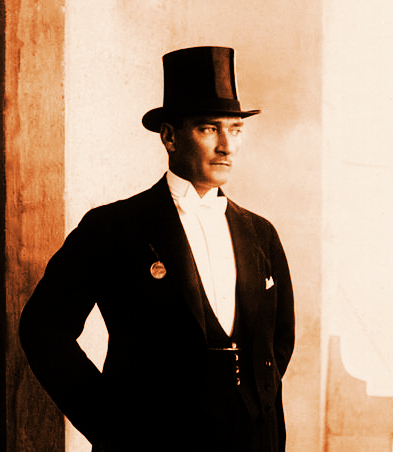
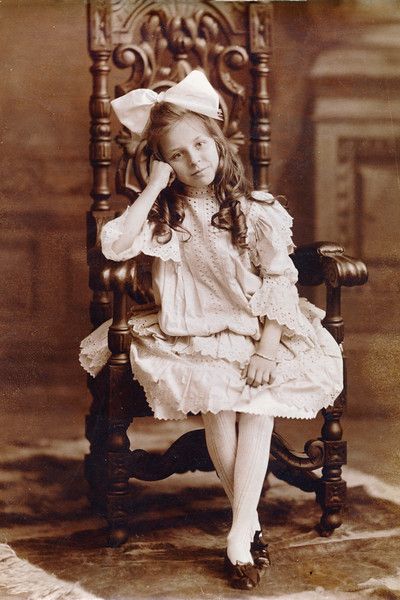
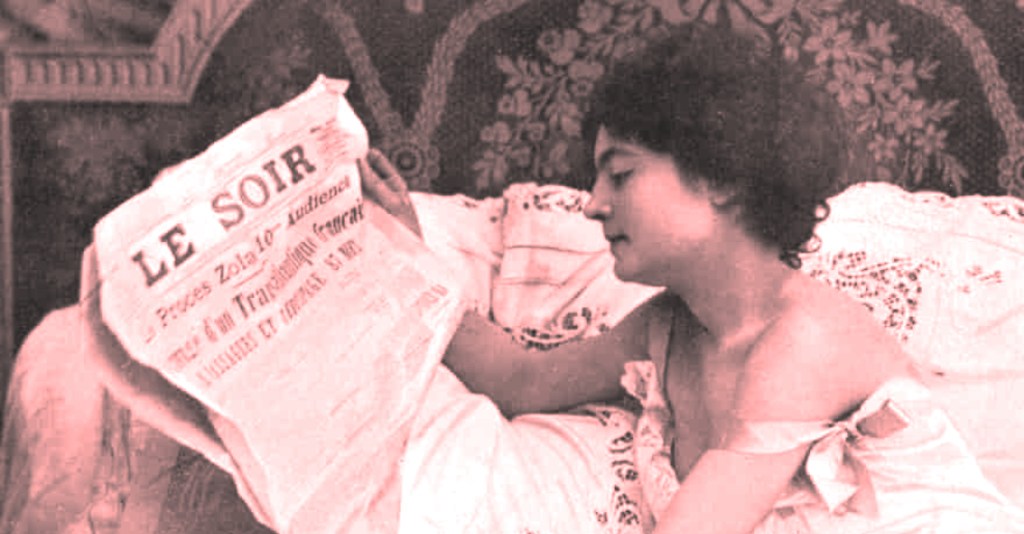
    Vintage anonymous portrait (ack. Memory Lane)

    By this time he is down the stairs, but at the foot of them he turns and cries: “I’ll attend to your dress!” then opens the front door, springs down the steps, and gets into his brother’s carriage, which has been waiting for him for the last hour.

    In it he drives, with even more than Parisian recklessness, to his American lawyer, Mr. Evarts Barlow, and getting him into his carriage, the two post off to the Paris agents of the New York bankers who hold the American securities of Fernando Montez. At their suggestion, the agency cables their home house, that all the stocks, bonds, and investments of Baron Montez in their hands have been transferred and made over to Harry Sturgis Larchmont, by personal deed of their former owner, properly acknowledged and registered, which they (the agency) now hold; that all further dividends upon said securities, earned now or in future, are to be paid in to Mr. Larchmont’s account, at his bankers in New York.

    This being done, Harry remembers he has another errand, and telling it to his lawyer, the latter laughs: “What?—Parisian modiste, so soon!”

    “Certainly! She’s worn one dress three days running!” replies Harry. Then he says, in a voice that makes Barlow glance very sharply at him: “She’s like a dream in muslin! What will she be under the genius of a Worth or a Felix? You’ve a treat before you tonight!”

    So it comes to pass that, about four o’clock this afternoon, a forewoman of a great Parisian dressmaker calls upon Louise, and presents a note which reads:

    My Dear Miss Minturn:

    With this I send you some robes to choose from. You need not fear the expense. If you take them all, they are easily within your income. I’ll explain the financial part of it this evening. I’ve nailed everything—by your aid.

    “Yours most sincerely,

    HARRY LARCHMONT.

    P. S. Please, for my sake, put on the prettiest tonight. The great lawyer I told you of will call with me—upon your business.”

    This kind of a note dazes the girl. The dresses displayed to her delight but astound her. In her present state of mind, she would send the woman away and tell her: “Tomorrow—any other time!” But Harry’s note says: “For my sake!”

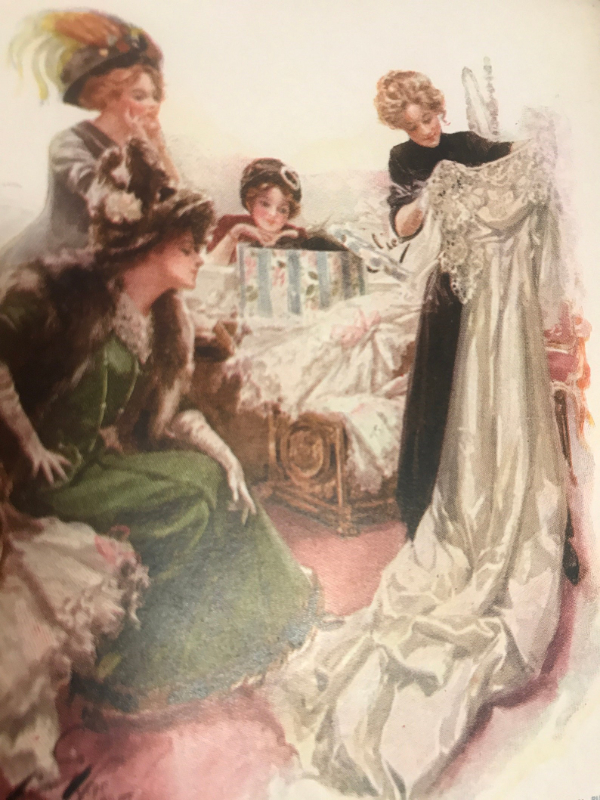
    So Louise looks over the robes, and now the legacy left her by Mother Eve comes into play. The dresses fight their own battle; for they are exquisite conglomerations of tulle and gauze—the tissues and webs of Lyons thrown together by a genius for such effects.

    Just at this moment Jessie adds her efforts to this scene. She comes in and chirps: “My! How lovely!” and looks over the gowns with exclamations of delight, but not of envy. For she cries: “How beautiful you will be this evening!”

    “This evening! Mr. Larchmont has written you?”

    “Yes—this unsatisfactory note, half an hour ago,” pouts Jessie. It only says: ‘Have a nice dinner for four this evening at eight sharp. I shall bring Mr. Evarts Barlow with me.’ Evarts Barlow?—he is one of the great lawyers of Manhattan. I saw him last season. He’s not so old, either,” goes on Jessie, contemplatively. “I think I’ll put my best foot forward. I’ve got some dresses of the Montez trousseau that are rather comme il faut, I imagine. I’ll go at that trousseau and wear it out quick, before I’m promised again. It shan’t do double duty!”

    She goes away, and Louise, thinking of Miss Severn’s remarks about putting her best foot forward, says to her self: “Why should not I do the same? My foot is also a pretty one, I believe!” Then she laughs, for there is something in all these remarks of Mr. Larchmont’s and Jessie’s, that brings a sudden spasm of doubt to an idea that had burned itself into her brain in those hot days on the Isthmus, when Harry had raved in the delirium of the fever.

    Then Mother Eve flying up in this lovely creature, with the assistance of the forewoman, who is very expert in such matters, Louise finds herself in such a toilette by dinnertime, that, looking on herself, she is amazed, per chance a little awed, by her own image; for she is a dream of fairy beauty.

    So Miss Minturn coming down into the great parlor of Franc̗ois Larchmont, with its wealth of bric-a-brac, statues, and paintings, Jessie runs to her and says: “Don’t we contrast just right!—only you overpower me—you have so much esprit!” for Jessie has a dear, generous heart, and there is a great soul in Louise’s eyes this night.

    As they stand together, two gentlemen in evening dress enter and gaze upon them amazed.

    “Great heavens, Larchmont!” whispers the lawyer to Harry. “Why didn’t you tell me I had such pretty clients? I would have worked for them as if inspired.”

    “I—I didn’t know she was quite so pretty, myself!” mutters Harry, who has eyes for only one of them.

    A moment after, the introductions are made, and Barlow and Jessie, followed by Louise and Larchmont, go in to one of those pretty little dinners, that are all the more pleasing because they are not quite banquets.

    As they sit down, Miss Minturn’s thoughts give a jump to the time she first saw the gentleman beside her in evening costume—to the night of the dinner party at Larchmont Delafield’s, when she was not guest, but stenographer. Then recollections bring blushes. It is her pretty shoulders Mr. Larchmont is now looking at, not Miss Severn’s.

    Into this reminiscence Jessie breaks: “Guardy Harry, have you got me into your clutches thoroughly? Are you legally my guardian now?”

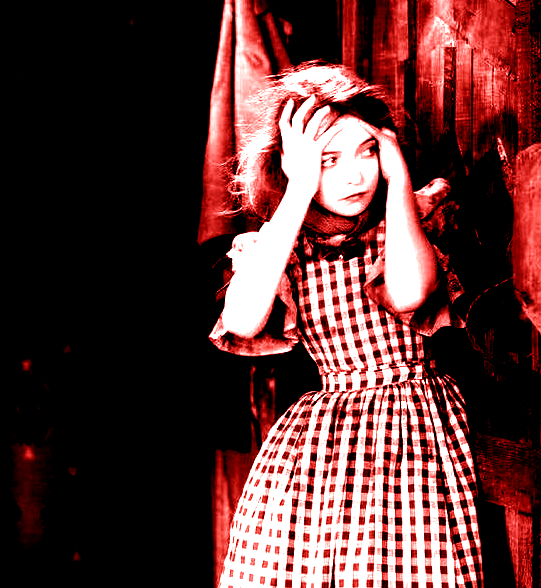
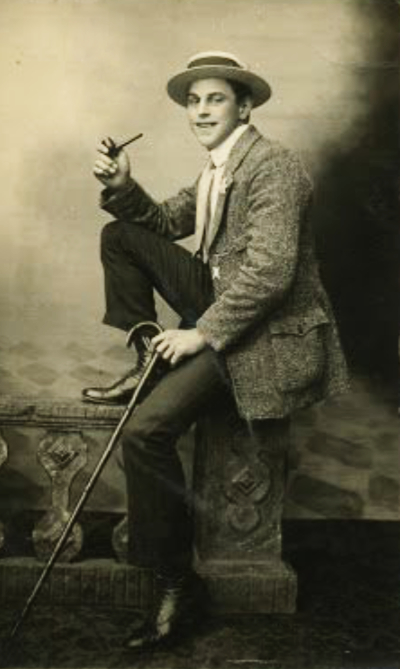
    Vintage anonymous portrait (Ack. Memory Lane)

    “Yes!” replies Larchmont. Then he looks curiously but anxiously at Louise, and says: “I am also the guardian of another young lady!”

    “Another ward? You wholesale guardian; who is she?” laughs Jessie.

    “Miss Minturn!”

    “I!” gasps Louise, her eyes growing astonished and almost affrighted.

    “Why, certainly!” remarks Barlow. “I had the order of court made today. You’re only nineteen?”

    “Y-e-s!”

    “Then not of age in Paris, though you may be in America. It was necessary for the proper protection of your interests and property, that a guardian should be appointed. Heiresses must be looked after.”

    “Heiress!—I—?” stammers Louise.

    “Of course,” interjects Harry, “if you don’t like it, you can have someone else appointed tomorrow—Mr. Barlow, for instance—but for tonight,” he rises and bows profoundly to her, “I believe I have the honor of being your guardian and your trustee.”

    Here Jessie suddenly exclaims: “Both Harry’s wards! Delightful! Louise, we can do our lessons together and have the same governess. Half of the present one will be enough for me!”

    “Jessie!” cries Larchmont, sternly, for Louise’s eyes have looked rebellious at the mention of lessons and a governess. “Miss Minturn is a little older than you. This appointment is more form than otherwise.”

    “Oh!—Well, it don’t matter being Harry’s ward,” giggles Miss Severn. “He is a good, indulgent guardian. He lets you do as you like. But if it was Frank!—Whew!—Louise, he might decree that you were only eleven or twelve years old tomorrow morning!”

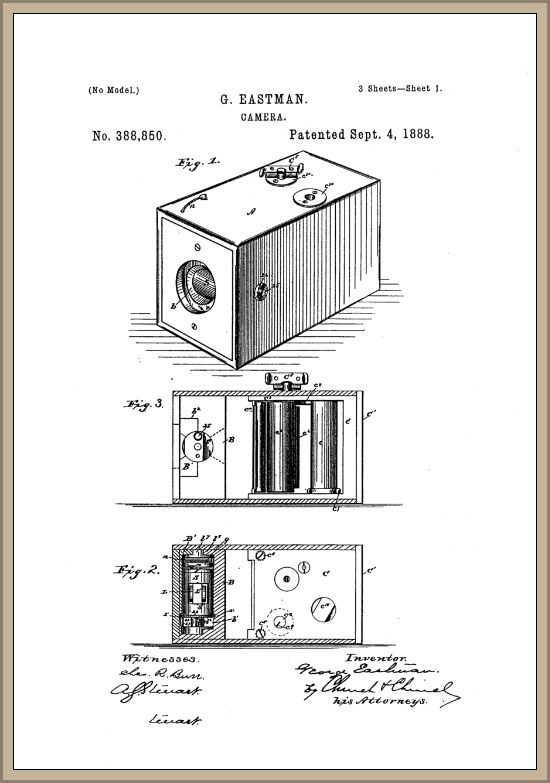
    “And if you were sullen, kodak you,” interjects Harry, grimly.

    But a scream from Jessie interrupts him. “Oh, goodness!” she ejaculates. “He didn’t get a picture of me!”

    “Yes—a very charming one. It is labelled, ‘L’enfant gâté’. You look as if you were springing at the camera.”

    “And so I was!” mutters poor Jessie. “I thought he had not snapped it in time. Did he really get one?” The tears come into her eyes, and she begs: “Please don’t show it—Please——.”

    “Not if you’re a good, obedient little girl!” says Harry, with great magnanimity.

    As for Louise, she has been silent during this. The word “heiress” has put her into a kind of coma; the term “guardian” has given her a fearful start, and sometimes her eyes look at Harry Larchmont in a half-bashful, half-frightened sort of way.

    Then the conversation runs pleasantly on, Harry telling Barlow of his Isthmus adventures; some of his stories making Miss Minturn, who has gradually been regaining her intellect, blush, though they make her more tender to the man relating them, for they bring back the days she had struggled for his life by his bedside in the room of young George Bovee.

    This talk of the Isthmus leads to talk of the Panama Canal, Barlow remarking: “The Senate will probably pass the Lottery Bill tonight.”

    “That will give the enterprise six months longer to exist, I imagine; but more empty pocketbooks and more bankrupt stockholders, when the inevitable crash comes,” rejoins Larchmont. “By the by, I wonder if the Baron is looking after it this evening! Eh, Jessie? What would you have said to journeying to Italy about now, with his chocolate face beside you?”

    At this Miss Severn shudders, grows pale, but says firmly: “He has kinks in his hair. I would have said, ‘No!’ right in his face, to both notary and priest.”

    With this, as the dinner is over, Miss Jessie rises, and going to the door, turns, and lifting her skirts a little, courtesies, after manner of dancing school children, and says: “I bid you adieu till après le cigar, my guardian!”

    And Louise, who has risen also, a kind of reckless mirth coming to her, follows Jessie’s example, and, courtesying to the floor, murmurs: “Your obedient ward, Monsieur Larchmont!”

    Then the two go off laughing towards the parlor, leaving the gentlemen to cigars and coffee. But they don’t take very long over these, for Barlow says: “We owe a little explanation to Miss Minturn about her affairs.”

    To this Harry replies: “Very well! Let’s get it over!” a curiously anxious look passing over his face.

    Then the two coming into the parlor, Mr. Larchmont takes Jessie aside, and whispers: “Would you mind running upstairs for a little? Mr. Barlow and I have some business with Louise—Miss Minturn.”

    “Shall I not come down again?” falters Jessie.

    “No, perhaps you had better not. Perhaps it would be well to bid Mr. Barlow good evening now! I imagine you have lessons to learn!”

    At which Miss Jessie astonishes him. She says: “Yes, and you have something to say to Louise. But—I’ll be down to congratulate!” and so with a bow to Barlow moves out of the room.

    Then Harry and Mr. Barlow go into a business conversation with Miss Minturn.

    Mr. Larchmont says: “I have received a number of millions of francs in trust for three creditors of Baron Montez. You, Miss Minturn, are the preferred creditor. Your dividend first!”

    “My dividend on what?”

    Here the lawyer remarks: “You are the sole heir to your mother, and she was the sole heir of her parents. They were robbed, I understand from Mr. Larchmont, of sixty thousand dollars on the Isthmus, in 1856. This at interest at six per cent., for thirty-two years, compounded yearly, amounts to nearly four hundred thousand dollars—two millions of francs.”

    “Oh, goodness!—So much?”

    “Certainly!” answers Harry, “I’ve computed it!” and he bows before her, and says: “Behold another American heiress!”

    Here Louise astounds the lawyer and stabs Harry to the heart. She says in broken voice: “You, Mr. Barlow, take it for me—you be my guardian. You can be appointed tomorrow!”

    “Good heavens!” cries Larchmont. “What have I done? Can’t you trust me?”

    “Trust you? Of course I can!” murmurs Louise; “but two wards will be too much for you to guide.” Then she says faintly: “Yes, let Mr. Barlow be my guardian—take care of my money—I’ll leave it to his judgment!”

    “Of course, if you ask it I can hardly refuse,” returns the lawyer; “but you had better think over it till tomorrow.”

    And noting that the girl is strangely agitated, Evarts Barlow remarks: “I will go now, and see you in the morning. Your interests this evening are thoroughly safe in the hands of Mr. Larchmont!”

    So this diplomat makes his bow, and taking Larchmont with him to the hall door, he whispers: “This . strain has been too much for your pretty ward. If you’re not careful, she’ll require the doctor, not the lawyer! I’m afraid she has wounded your feelings.”

    “My heart!” replies Harry, with a sigh. And Barlow bidding him adieu, Larchmont marches in to his fate, and goes into the great parlor where Miss Minturn stands, more beautiful than ever before this evening.

    It is the beauty of resolution.

    As he looks at her, the laces and tissues clinging about her exquisite figure are so still, she would seem a statue, were it not for the quick heaving of a maiden bosom that throbs up white and round and trembling beneath its laces, and a little nervous twitching of lips that should be red, but are now pale. There is a fear in her eye She uplifts a dainty hand almost in warning, for he has come up to her, pride upon his face, agony in his heart, and anguish in his eyes, and said sternly: “How dare you do it?”

    “Do what?”

    “Refuse to accept me as your guardian! Imply I was not worthy of the trust—I, who think more of it than any man upon earth!”

    “Oh,” says the girl, “I presume I can choose my mentor—I have arrived at years of discretion enough for that!” Then she falters: “Let me go away! I—I have saved your bride for you!”

    “Have you?” mutters Harry, surlily. “That’s some little blessing!”

    “Yes—let me go away.”

    “Not out of this house tonight!”

    “Why not?”

    “Because I forbid you! “answers Harry. “Tomorrow you may have Barlow—or anyone else you like—but today the courts of France made me your guardian—and tonight you obey me!

    “You forget—tomorrow—you are not my guardian then! Let me go! May you be happy!” And, fearing for herself, Louise glides towards the door. But his hand is upon her white arm, and his voice whispers: “Not without me!”

    On this the girl pulls herself away, faces him with eyes that blaze like stars, and stabs him with these cutting words: “Do you want to compel me to run away from you as I did from Montez that awful night?”

    “Why won’t you have me for your guardian?”

    One ward is enough!”

    “Ah! You are jealous of Jessie!”

    “Pish! Of that child?”

    “Yes—jealous of her!” answers Harry, who has discovered that the Roman way is the only true method of winning this Sabine virgin. Then he astounds and petrifies her, for he murmurs: “You love me!”

    “I? My Heaven! How dare you?” And the girl is before him with flaming eyes.

    But he smites her with: “Because I have your DIARY!”

    “Impossible!”

    “Yes, from Mrs. Winterburn in Panama!”

    “Ah! the traitress!” Louise’s hands fly to her affrighted face; she bows her drooping head, tell-tale blushes cover her face, her neck, and even her snowy shoulders, making what had been glistening white, gleaming pink. But she forces herself to again look at this man, and her eyes seem to be scornful, and disdain is on her lips, as she mutters: “And you dared to read it?”

    “No!”

    “Then how did you discover——?”

    “Ah! I have you—ah!”

    “O Heaven!”

    “A bunch of violets and a card dropped out of it—my tokens of the blizzard. They were mine before—they are mine now!” cries Harry, and pulls them out of his breast and kisses them. Then he says tenderly: “I stole your confession—I give you mine! I love you with my soul! good angel of my life—whose scorn kept me from making a fool of myself in Panama—whose kind nursing saved me from the fever! I love you! Without you for my wife, life has but little for me—what does the kind nurse—who saved it in faraway Panama:—say?”

    And Louise stands fluttering before him—loveliness personified—loveliness astounded—loveliness in doubt—loveliness blushing—loveliness that is about to be happy; for a sturdy arm that has played in many a football game is round her waist, and is giving her such a grip as never Princeton man received in college jouissance.
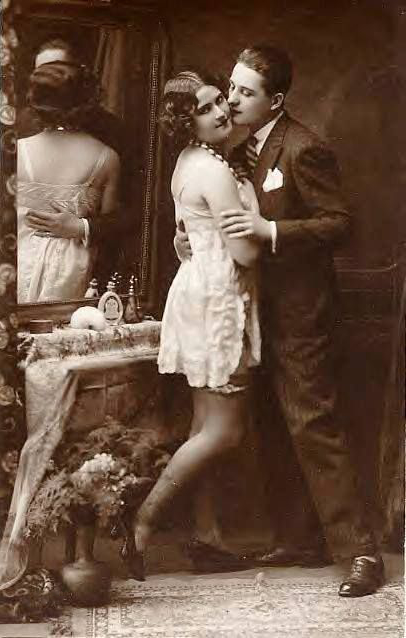
    Vintage postcard

    The girl gives no answer save a little sigh; she has almost fainted in his arms. But a moment after, her happy eyes seek his, and she falters: “Was it only to save your brother? Was it only to save your fortune you went to Panama?”

    “That at first,” answers Harry, stoutly. “But afterwards I fought to be rich enough to put you in the place in society that you will adorn!” Then he queries: “Shall I continue to be your guardian? Shall I tell Barlow he need not oust me in court tomorrow?”

    “Since you are going to be my permanent guide,” returns the young lady with a piquant moue, “I suppose you might as well get into practice as my guardian.”

    “Then may God treat me as I treat you!”

    There are tears in her beautiful eyes, there are kisses on her cherry lips, as Louise says playfully: “Dear Guardy! I shall give you even more trouble than Jessie!”

    “Then I will cut my guardianship very short!” cries Larchmont, a gleam of joy flying into his face as he walks up to the girl, who can’t now meet his eyes, as his arm goes around her waist again. For he says: “I, Harry Sturgis Larchmont of New York, demand of you, Harry Sturgis Larchmont, at present of Paris, the hand of your ward, Miss Louise Ripley Minturn, in marriage! And I, Harry Sturgis Larchmont, guardian of said young lady, accept your proposition, my worthy young man, for I have a deuced good opinion of you, and solemnly betroth her to you, and announce that the nuptials shall take place WITHIN THE MONTH.”

    “Within the month!” falters Louise. “But I have only known you four!”

    “Yes, but guardians must be obeyed!”

    Then there are more kisses, and Mr. Larchmont walks out, and mutters to himself: “By Jove! that was a harder battle than I had with the Baron this morning!”

    About half an hour afterward, meeting his friend Barlow at the Café de la Paix, he says: “You need not make any motion about that guardianship business! The young lady has had the good taste to accept me, after all!”

    “As a guardian?” asks Barlow, in tones of cross examination.

    “As a husband as well!” remarks Larchmont, “and the sooner you get to work at the wedding settlements, the better it will please both the guardian and ward.”

    The next morning Mr. Larchmont, coming from his apartments on the Boulevard Haussmann, takes Louise, and says to Jessie quite solemnly: “This young lady is to be my wife. As the wife of your guardian you will obey her, eh, rebellious one?”

    But Jessie gives a mocking bow, and laughs: “Oh, I know all about it! She told me last night! We have been talking about you most of the time since. I have promised to be obedient, if she asks me to do just what I want to!”

    “Ah!” replies Harry, “then I shall exhibit the kodak.”

    And Jessie cries: “No! no!”

    But he is in a merry mood, and shows the picture of l’enfant gâté’. to Louise, and they all laugh over it.

    But though Jessie giggles, she also begs; so piteously he gives it to her. Then she tears it into a hundred pieces, and tossing them over her head, dances on them, crying: “That’s how I leave my childhood behind me!” next says: “No more governesses! Eh, Guardy?” with a pleading look.

    “AFTER the wedding!” remarks Mr. Larchmont, for he has thought upon this subject, and he has concluded that a governess for Jessie will be very convenient during the honeymoon.

    But the next morning he is relieved to find Mrs. Dewitt has returned from Switzerland. He introduces her to his coming bride, and this lady is most happy to take charge of Miss Jessie during his wedding tour.

    In one of their numerous communings, within the next day or two, Louise says to Harry: “We are so happy! Can’t we do a little to make others happy?”

    “To whom do you refer?”

    “To a dear little friend of mine in New York, who is going to be married also, Miss Sally Broughton,” answers Louise. “Could I send her a thousand dollars?”

    “Of course! ten thousand if you like. It’s your money, dearest,” answers Harry, cheerfully.

    “Oh, thank you!” replies Louise. “A thousand is enough. It will mean a great deal to Mrs. Alfred Tompkins.”

    “So Sally is going to marry Tompkins!” remarks Larchmont, grimly. Then he suddenly continues: “Tompkins was the man who shook his fist at me when he saw me sail away on the Colon with you? Eh?” and his eyes ask awful questions.

    “Y-e-s!”

    “Ho-oh!” Then Larchmont smiles a little and says: “Any other gentleman you want to do a good turn?”

    “Yes, to George Bovee, who nursed you on the Isthmus so tenderly—who was such a good chum to you out there. He is growing pale also—someday he may have the fever, and there will be no one to nurse him. Could not you?—you need someone to manage your affairs—” For Harry had been complaining about the amount of business that had suddenly come upon him, from his brother’s incapacity.

    “Oh, I cabled George yesterday; he is now on his way to Paris!”

    “On his way already?”

    “Yes, so as to be my best man.”

    “Oh,” cries Louise, “you are always talking of the wedding!”

    “Of course! I am always thinking of it!”

    Probably Louise is too, for she and Jessie are driving about town, from milliner to dressmaker, and dressmaker to jeweller; and all the gorgeous paraphernalia of a mighty trousseau is being manufactured in this the town of trousseaux, as fast as nimble fingers of French working women can put together things worthy of the beauty of the bride.

    So one morning, at the American Legation, Louise Minturn is married to Harry Larchmont, and Evarts Barlow, who has stayed over for the ceremony, gives the bride away. George Bovee stands behind his old chum of the Isthmus, with Miss Jessie, the only bridesmaid, but with the concentrated beauty of six average ones in her pretty self.

    Then bride and bridegroom go to Italy—southern Italy and the isles of the Mediterranean—where they see palms and orange trees, and dream they are in Panama—but there is no fever! And coming back from this trip, they linger out the happy autumn time in Paris.

    But one evening Francois Leroy Larchmont, in a careless moment of his keepers, escapes from them, and is out all night. The next morning, he comes back with a sleepy look upon his face.

    But Harry Larchmont, reading the morning journals, gives an awful start! Two days after, the whole party are en route for America, taking the brother, whose mind is now permanently gone, with them.

    * * *

    Crushed, defeated, but not altogether subdued and dismayed, Baron Montez staggered down the steps of the Larchmont mansion.

    The next day he calls at the American embassy, and delivering up his order, receives, after identification, a sealed envelope, which he tears open, and finds his pocketbook—not one memorandum gone, and his eyes glisten.

    He thinks: “With this I have enough to feed upon the vitals of this republic. Some of their public men are in my power!” Besides, his fortune, outside of his American investments, is large, and the Lottery Bill almost immediately passes the Senate of France and becomes a law. He receives large sums of money, delinquent payments due from the Canal Company, and though he is forced, by the record of the ledgers Louise has taken, to make some restitution to Aguilla, still, as he does not make restitution to anyone else, his fortune is enormous.

    Though the shares of the Canal go down and down, he has no interest in them, and lives the life of a gay bachelor in Paris.

    In the course of time, the deluded investors will take no more lottery bonds, and in December an assignment is made to a receiver, and the work practically stops on the Canal Interoceanic.

    As this happens, Fernando Montez becomes possessed of a shadow. Though he does not know it, as he walks along the boulevards, a shabby creature slinks along behind him. When he goes to the opera or theatre, the creature is waiting for him as he comes out. This unfortunate one evening stands outside the gay Café de la Paix, with its flashing lights, and sees Montez eating the meal of Lucullus. As Fernando comes out, well fed, contented, even happy, this shabby creature mutters to himself: “Nom de Dieu! for his dinner he paid more money than I saved in my whole first year of deprivation!”
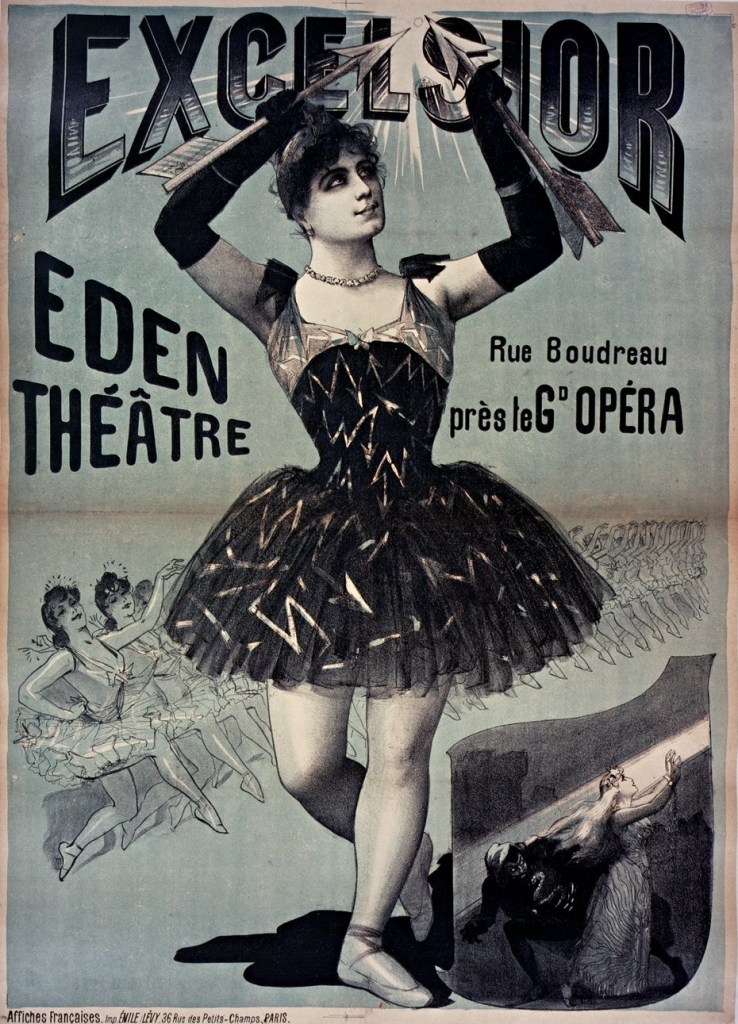
    Excelsior. Eden-Théâtre, c. 1890

    And Bastien Lefort, the miser, who has been sold out of his glove store on the Rue Rivoli, utterly ruined by his grand investment in the Canal Interoceanic, follows, shivering with cold, and brushing the snow off his rags, the steps of the well-dressed, debonnair, and happy Baron Montez.

    But there is another—a black man with snowy wool, and two great red gashes upon his cheeks, and a form bent by age, but strong with hate. He comes alongside Lefort and whispers: “How now, miser! Are you on the track of your enemy? I, Domingo of Porto Bello, have come a long way to see him, also!”

    And the two become bloodhounds, and follow the Baron Montez of Panama all that evening to the haunts of gay bachelors in Paris: to the Eden Theatre, where there is a ballet; to the Palais Royal, where he laughs at a suggestive farce. But whenever he comes to the streets—these two dog his footsteps.

    So it comes to pass, late that night, returning from a petit souper with some fair sirens of the gay world of Paris, who are very kind to rich men, Montez enters his apartments, to find his valet is not in them, and mutters to himself:

    “The worthless beast! I will discharge him tomorrow!”

    Then Fernando sits down to await the coming of Herr Wernig; for these two are hunting in couples again.

    So Montez meditates and is happy; but, chancing to think of his lost American securities, he utters a snort of savage remembrance, and taking the poker in his hands breaks up the coals burning in his porcelain ornamental stove—and as the blaze flickers up, thinks he sees a face. He starts and gazes round, and sees three faces—the faces of the wronged, the faces of the past—Domingo’s pirate head, the miser’s wistful face, and the pallid cheeks and big eyes of the lunatic, Franc̗ois Larchmont.

    Fernando thinks it a dream. The lunatic says with cunning chuckle: “I enticed your valet away, my dear Baron—ha, ha!—and let myself in with my old passkey—you forgot the passkey—ha, ha! I was coming in here to do your business myself—but these two gentlemen joined me—ho! ho! ho!”

    THEN MONTEZ’ DREAM BECOMES REAL!

    He springs up to cry out and defend himself—but the lunatic’s hands close round his throat, and the voice of a madman cries: “Oh, ho! my friend! Baron Montez of Panama and Paris!”

    And though Montez struggles he cannot say anything, and his eyes have despair in them, for three men have surrounded him. He sees, half in a dream, the form of Domingo, the ex-pirate, whom he has robbed, who whispers in hoarse voice: “Ah, ha!—the punishment of the buccaneer—who steals from his fellows!”

    And the miser cries: “For the gold of my ruined life!”

    Then a surging is in his ears; there is the report of a pistol, and three forms glide out into the darkness; and on the floor, his own revolver in his hand, lies the form that was once—Baron Montez of Panama and Paris!

    A few minutes after, his old chum, Alsatius Wernig, comes in with laughing voice and merry mood, crying: “Oh, ho! my dear Fernando! you leave your door open. You should be careful! You might be robbed!” then utters a horrified “Mein Gott!” and staggers from the prostrate form before him. Next he says slowly, with pale lips: “Murder! If they have stolen the pocketbook!” With this his hand, trembling, goes deep into the bosom of the dead man, and he gives a gasp of joy as it draws forth the black pocketbook of Montez.

    Then Wernig mutters: “In other hands, this would have been my ruin! But now!” and the German’s form becomes larger, and his eyes grow luminous with coming potency, as he jeers: “I own the secrets of many Deputies and some Ministers! I will bleed them till they die! I will be rich forever. I hold the politics—perhaps the destinies—of France!”

    Then he cautiously leaves the room, and none see him come down the stairs.

    The next morning it is reported that Montez of Panama must have committed suicide—though it is hinted to the police not to make too thorough an investigation of the affair—some of the powers that be seeming to fear Baron Montez, dead as he is, will rise up like Banquo’s ghost.

    But Herr Wernig lives on the fat of the land, and bleeds some of the potentates of France, right and left. He spares not Ministers nor Deputies who have been bribed, and would keep on so forever; but one day, years afterward, scandal comes, and investigation follows, and he flies from France, fearing that more than any other country upon earth—the country he has debauched and plundered. For the foreign adventurers who came to Paris, lured by the millions spent or squandered upon the Canal, were the greediest, the most devouring—the Swiss, the German, the man of all nations.

    * * *

    One afternoon in 1892, in the autumn, there is a great naval parade upon the Hudson River, and the flags of all nations are thrown into the air from vessels belonging to the great countries of the world.

    And from a private retreat, situated on the Palisades overlooking the river, kept by a doctor well known for his skill in treating diseases of the mind, a gentleman comes forth onto the lawn. He is very elaborately dressed in the latest fashion, and seems happy, as he should be, for a beautiful woman and handsome man walk by his side, and he calls them sister and brother. He looks over the great river, and jabbers, “Ha!” to the guns.

    Then, seeing the flag of France, he cries: “It is the opening of the Panama Canal! Montez was right! My dividends! My dividends!” And gazing over the beautiful Hudson he chuckles: “Mon Dieu! What a glorious canal this is at my feet! What dividends we’ll make! Hurrah for De Lesseps, Franc̗ois Leroy Larchmont, and Baron Montez of Panama and Paris!”


    Notes and References

    • modiste: a fashionable milliner or dressmaker
    • comme il faut: behaving or dressing in the right way in public according to formal rules of social behaviour
    • Lucullus: Lucius Licinius (ˈluːsɪəs lɪˈsɪnɪəs). 110–56 BC, Roman general and consul, famous for his luxurious banquets.
    • petit souper: French – a little supper
    • Banquo’s ghost: Shakespear’s Macbeth Act 3, Scene 4: During a banquet, Macbeth is horrified to see the ghost of Banquo sitting in his place at the table.

    Parker, M. Hell’s Gorge: The Battle to Build the Panama Canal (London: Arrow Books, 2008).

    This edition © 2021 Furin Chime, Brian Armour
  • A.C. Gunter’s Baron Montez: 24. Baron Montez’ Wedding Day

    A.C. Gunter’s Baron Montez: 24. Baron Montez’ Wedding Day

    The reader is treated to the resolution of affairs with Baron Montez, so far as the Larchmont family is concerned. This is orchestrated by Harry, with the unexpected assistance of his brother, who is still flitting between mental states.

    This penultimate chapter opens with Baron Montez deliberating on the fate of his black morocco-bound pocketbook. Strangely enough he is primarily concerned that it not be found, from which the reader may deduce that its only worth is in its incriminating value. Just as Montez has placated his concerns with the whereabouts of the implicative object, he receives a surprising wedding invitation from Francois which stirs his worries anew. Fernando Montez takes action with deadly overtones to remove the threat of Harry Larchmont, and stop him ruining his wedding to young Jesse, with whom he is clearly obsessed.

    Louise is disturbed by a label she acquires courtesy of the French press: adventuress. To readers of today this may seem rather innocuous, in fact, some people would love to wear such a badge. But in the day, it denotes someone who has crossed the line, stepped outside of civilized society and entered the wild with a desire for the thrill of adventure. But beyond this, Gunter’s use of the word signals the beginning of a transformation for the formerly independent character, Louise.

    “L’Affaire”, Le panorama: Paris la nuit, Ludovich Baschet, 1890-99

    The thing is, Louise believes the newspaper’s depiction of her. This causes her to decry the predicament in which her actions on behalf of Harry have placed her. She still labors under the belief that Harry has been working to save Jessie as a prospective marriage partner. To stay in a gentleman’s hotel rooms, in the same dress for three days, in the presence of said juvenile prospect, on the run from the French police, not only contravenes standards of proper conduct within the society in which she lives, it unnerves her. She finds the situation is barely tolerable. Harry cannot find the time to say those three simple words despite countless opportunities, or to at least dispel her illusions in respect of Jesse. As becomes clear, she is not of concern so long as Harry can keep her on the premises. She takes a back seat during the chapter and Harry tells her little,

    Perhaps it could be a question of social conventions that prevents Harry from declaring his feelings, but no, it is purposeful on Gunter’s part, as he wishes to reserve the Harry-Louise romance resolution for another chapter—first Harry must deal with Montez. In need of no man, throughout the novel Louise has been portrayed as possessing an independent spirit, without which she could not achieve what she has thus farbut things are about to change. She, captive and constrained, snarls at Harry, like a lioness who needs to be tamed, for how can she be overcome by Harry if she is already compliant?

    The backbone of the novel involves a sequence of objects: first, George Riley’s casket of gold, and his pistol, together with a string of pearls, forge a relationship between Montez and the Californian couple. Of the pearls: one, the price of a venomous snake, the remainder with a blood message for the future granddaughter, Louise. The tintype image of Alice Ripleyconnecting her with Louise and Montez. The typewriter that brought Louise in contact with Montez and took the confession of Domingo; the house gifted to Bébée by Montez that proved fatal to the chanteuse; and Louise’s diary currently in Harry’s possession. In these closing chapters, we have seen the first Kodak camera and the manifestation of another crucial object—the black pocketbook of Baron Montez containing all the details of his secret dealings.

    For the third time, the reader will be told the outcome if the contents should become public: being torn to pieces by the Parisian mob. These vertebrae of the novel provide connections between characters and motivations for action, and surprisingly, in this chapter a new object, in the shape of an enamelled box, makes an appearance for purposes of coercion.

    Twice the length of previous chapters, it is primarily a stage-managed dialogue between the footballer Harry and the played Montez. Harry gives a consummate performance, although in the end Montez, known murderer, implicated in another death and now attempted murder is permitted to go free with access to the pocketbook. So much for saving the HONOR OF FRANCE.


    CHAPTER 24

    BARON MONTEZ’ WEDDING DAY

    Within two hours a few of the detective force of the Rue de Jérusalem are on this young lady’s trail—only a few that the minister thinks he may trust.

    They soon find out where Louise has been living, and at two a.m. the household of Monsieur Pichoir is aroused with inquiries for the lady who has been stopping with him.

    To their astonishment he says: “She has not yet returned. She is still at the office of Baron Montez!”

    Then the town is searched, and railroad stations guarded, and for two days the gentlemen of the Rue de Jérusalem make every effort—but Louise Minturn has disappeared!

    From Ancienne Préfecture de police de Paris, rue de Jérusalem (c. 1850), Pierre Ambroise Richebourg (INHA: National Institute of the History of Art)

    Word of their failure being brought to Montez, he has exclaimed: “These policemen are idiots!”

    But in this he has not treated the officers of sûreté fairly. For the minister and he have not dared to tell the truth to the detectives. They have described Louise Minturn as an adventuress, not a clerk; they have stated what she stole was a pocketbook containing securities, stocks, bonds, etc.—not what it really did hold.

    Here Montez stops the search, for an idea has come to him. After reading the letters given Miss Minturn by Aguilla, he has chuckled to himself: “It is only the attempt of my partner to protect himself!” and felt a great relief.

    Though he has had the passenger lists of all ships bound for the Isthmus searched, and finds no record of her, still he imagines Louise must have gone by some steam line from England, if not by way of the United States; or perchance by some tramp ship carrying merchandise to the port of Colon, for a great many vessels laden with supplies and plant for the Panama Canal sail to that point.

    Then Fernando has communed with himself cheerily: “Does my charming little stenographer think she will get back to Panama and Aguilla with her plunder in her hands? My smart little Yankee girl will find an Isthmus jail less comfortable than the Mazas.”

    Therefore he cables to Colon, to an agent of his; and if Miss Minturn arrives there, she will probably find it necessary to apply to the American consul for protection, if she can get a chance to have word with him, for they have a way of putting people in dungeons there, and holding them, without notifying authorities or troubling courts—when the power requesting it is potent.

    But Fernando is relieved. From the reports of the police, he is satisfied the pocketbook is not in Paris, the place where he fears it may be used against him. The other is a bagatelle.

    All this makes him anxious to press his suit in regard to Miss Severn. He has her guardian under his thumb. The marriage must take place immediately! Then he will be free, if the worst comes to the worst, to leave France, a very rich man.

    So Fernando writes to Mr. Francois Leroy Larchmont, asking him to call at his apartments on the Rue Auber, to arrange for the immediate marriage of his ward, and receives in reply the following most satisfactory note:

    “2381/2 BOULEVARD MALESHERBES,

    June 3, 188S.

    “MY DEAR BARON:

    “Your letter has come to me. I am so glad you are here. My brother Henri, who has returned from Panama, has treated me most unkindly. He would, if he dared, prevent Mademoiselle Severn marrying you. But of course that is impossible! I am her guardian! I have ordered the ceremony to take place at one P. M. tomorrow. The notary will be here for signing the civil contract.

    “The trousseau is here—all that is necessary is the bridegroom!

    “I did not like you, mio Fernando, a few months ago. You were dictatorial! But my brother is more so; and I love you—and hate him! My brother is very foolish since he has come back. He thinks he can destroy you by a black pocketbook. He is a fool! How can a black pocketbook destroy anybody? Just the same, I saw a girl bring it to him two nights ago—I went down and saw it from the hall—I heard him say to her, ‘I think that will settle Montez!’ And the girl said, ‘Destroy the bandit!’ Neither my brother nor the girl likes you. I think they do not like each other.

    “The girl stays here. Henri has taken apartments on the Boulevard Haussmann.

    “Don’t forget—tomorrow at one, punctually, the bridegroom must be here.

    “Yours till then,

    “FRANÇOIS LEROY LARCHMONT,

    Franco American.

    “P. S. I have taken a beautiful photograph of the bride when she was at the age of eleven. I call it l’enfant gâtée.

    As he reads, Montez gives a shudder. The black pocketbook is here in Paris, in the hands of his enemy

    He thinks over the matter deeply. He knows he cannot obtain it from the strong hand of the young American, without recourse to the processes of civil law. The examination of the papers contained therein, which must take place, cannot be kept entirely secret—even a French court could hardly do that; and if it once became known—one little bit of it—there would be such a hue and cry from the Parisian public, that everything within its morocco case must be given to the citizens of Paris.

    Here he mutters with a shudder: “Diablo! the Parisian mob! They would tear me and Wernig in pieces! Even the Government could not save us—if they could save themselves! Besides, the Lottery Bill would then never go through the Senate, and that is necessary for my full success!”

    After an hour’s thought he murmurs with a great sigh: “I must do it—there is nothing else;” and finally brings his teeth together with a snap, and says: “It is he, or I! it shall be he!”

    So, putting on his oldest clothes, and making himself as seedy as possible, Fernando walks out of his rooms, and strolls to a far-off quarter of Paris, where the anarchists live—on a curious errand.

    He goes by himself, taking no carriage; and there comes to a Russian nihilist, one who had helped blow up the Czar of the Russias. This personage Montez had once done a favor. The man is a mechanical genius. He had made an invention of some little appliance to a dredger. This small piece of machinery Fernando had induced the Canal Company to buy.

    He holds a short conversation with the mechanic, and comes away quite relieved. “It is arranged,” he thinks, “quite easily.” Then he mutters: “Sapristi! I don’t like it; but it is the best I can do!”

    However, he goes quite contentedly to a jeweller’s that afternoon and orders sent to his coming bride a magnificent parure of diamonds.

    Next morning he looks over the papers and is astonished. It is not there! but he mutters: “They have not discovered yet. These reporters are lazy.”

    But there is no more triumphant creature in gay Paris this day than Baron Montez of Panama, as he drives to his nuptials, his horses jingling with chains, and his lackeys laced with silver, as he comes along the Boulevard Malesherbes about one p.m., and gazes at the Parc Monceau, gay with the bright dresses of playing children and their attendant bonnes and nounous.

    Now, all that Francois wrote to Baron Montez is as true as the letter of any irregular mind can be.

    Louise Minturn has hardly said her words to Harry Larchmont, as he stands at the door of his brother’s house on the night of his return to Paris, before she finds both herself and the pocketbook drawn into the library, and Harry looking at her with eyes of joy.

    Her trembling lips, throbbing bosom, and agitated eyes make her beautiful as an excited Venus—and she has got a new gown—what woman in Paris would not? Gazing on this loveliness, the young man would speak to her now—to his tender nurse of Panama—but other things are imperative first.

    Antique postcard (n.d.)

    Louise hastily tells him her story, concluding, “When I had the pocketbook, I knew it was so valuable that great efforts would be made to recover it.”

    “Undoubtedly!” answers Harry, looking hurriedly over its contents, and growing more and more excited as he examines.

    Then he gets up, seizes both the girl’s hands in his, and whispers: “God bless you! By your aid, I think I will win!”

    “You think so?” cries Louise, excitedly.

    “Yes; I think this pocketbook will settle Montez,” returns Harry. “But these are things for anxious conference with some great lawyer! Besides, the police! I must make some arrangements to protect both you and this! You cannot leave here!”

    “Why not?”

    “By this time your description is all over Paris. You must stay in this house very quietly!”

    “Here!” exclaims the girl, astonished.

    “Yes, with Miss Severn. She will make you perfectly at home—you will be treated en princesse! ‘“Then he goes on eagerly, for he sees signs of refusal: “I beg—I entreat you.”

    To this Louise rises, and says: “Impossible!”

    “But if you go into the streets, you will be subject to arrest. This is stolen property!” He holds up the pocketbook of Montez.

    “Yes, stolen!” cries the girl; “but stolen from a bandit! Don’t you think this must destroy the murderer of my relatives?” for she has now some inkling of what she has pilfered means.

    Then he looks tenderly at her, and says: “So much the more reason for my keeping you from danger from this man. You must let me protect you! I will introduce you to Miss Severn. Her governess is with her. I shall not be here!”

    “You are going away?”

    “Yes! What you have brought me gives me business this very night. After that I shall not return here, but take apartments. You must let me guide you till this is over.”

    But the girl looks at him, a kind of despair in her eyes, and sighs: “You do not know!”

    “I know everything that is necessary! I took care of you faithfully and truly in the blizzard?”

    “Yes.”

    “Don’t you think I will take care of you more carefully now that I have to thank you for this chance against the bandit who has robbed my brother—and you?”

    “Very well!” falters Louise, his mention of the blizzard seeming to make her pliable.

    But Harry, about to ring the bell, checks himself, and says: “The servants are not up. Besides, it is better that they do not see you this evening. Please remain here. I will see Miss Jessie!”

    Then he goes upstairs, leaving Louise tremendously agitated. She will speak, for the first time, to this girl who has the heart she loves—this one whose fortune she is saving so that she may become his!

    Then Harry, returning, announces: “Miss Severn had not gone to bed yet. In a minute she and her governess will be here.”

    Almost as he speaks, that young lady enters, and he introduces her: “Miss Minturn, this is my ward, Miss Severn.—Jessie, this young lady is to be our honored guest. She nursed me through the fever in Panama; to her I owe my life—and much else!”

    And Jessie, who had been about to bow, for the attitude of Louise is haughty as that of Diana of the Greeks, suddenly runs forward, kisses her, and says: “Thank Heaven! you saved him! I don’t know what we should have done without our Harry!” and so puts anguish into the heart of the woman standing before her, whose face grows very pale. So pale that Miss Severn cries out: “You are sick—you are going to faint!”

    “No—but I—I have not had anything to eat—I—I—have been so agitated this evening!”

    “Quick, Jessie—the pantry!” cries Larchmont. “Don’t arouse the servants—run about yourself!”

    Then she and the governess go about in a fidgety kind of manner, and do not find much in the larder, for they don’t know where to look for it. But finally they get wine, biscuits, and something cold. And the wine gives strength to Louise, who has gone through a great deal this evening—more than any of them think she has.

    As she eats and drinks, Larchmont suddenly says: “The memoranda of my brother’s accounts from Montez’ ledger—I believe you told me you had them!”

    “Yes—in my pocket!” And Louise producing them, he, after inspection, suddenly says: “I must go!”

    So, after a few more words, impressing secrecy on both the governess and Miss Jessie as to their sudden guest, Larchmont leaves them, and departs upon business that will take him all night.

    Before morning Harry has the pocketbook where he considers it safe, though he has made a very careful examination of the matters therein.

    He has not slept all night, making these arrangements. Early the next morning he engages apartments for himself in the Boulevard Haussmann, and thinks: “That’s pretty well for a man only three weeks over the fever. But before I go to bed, something else!”

    He hires himself to a celebrated American lawyer, who is at present on his summer vacation in Paris, and, telling him the whole matter, gets from him certain opinions of American law, and certain advice, that please him so much that he acts upon them at once, cables to America, and then goes to bed satisfied that he has done a good night’s work.

    Being very anxious to get a glimpse once more of a face that he has become accustomed to seeing during his sickness in Panama, the next afternoon finds Harry at his brother’s hotel again. There he learns that the invalid is well taken care of.

    But while there, one of the attendants says: “Mr. Larchmont, your brother has demanded writing materials.”

    “Very well,” answers Harry, “let him have them. I don’t think they will do him any harm. Perhaps they will do him good!” and thinks nothing more about the matter.

    Then the physician comes and gives his advice; which is, to humor the patient. “Let him do what he likes!” This Harry is very much pleased to do, thinking it will keep Frank’s mind off subjects that agitate him.

    Then he asks for Miss Minturn, but Jessie says she is not well enough to see him—“She is worn out!”

    He sends a message to her, but the answer comes back: Will Mr. Larchmont please excuse her—unless it is imperative! For the girl has read an article in one of the Parisian papers, which briefly states that last evening Baron Montez was robbed by an adventuress! And this makes her ashamed.

     She has thought: “For his sake I endure calumny—and what does he give me in return—misery!”

    Perchance, were it not for this unfortunate newspaper article, she would consent to see the man hungering for sight of her fair face, and these days might be happy ones to Louise Minturn instead of miserable ones.

    As it is, were it not for absolute fear of arrest by the police, she would fly from him, and from his house, and from the girl she thinks his betrothed.

    So Larchmont is compelled to content himself with messages from her, for he is tremendously busy, and under his lawyer’s direction is cabling to and receiving messages from America. But he consoles himself with the sage thought: “Wait!

    This lasts for two days, when coming to his room in the Boulevard Haussmann, late at night, after a long interview with his New York lawyer, he remarks: “Now I’m ready for Señor Montez!”

    Then, careless of everything but fatigue, he springs into bed to go to sleep and awake the next morning with a very peculiar headache. He looks astonished and rubs his eyes, half in amazement, half in agony, for the pain is excruciating.

    Then he suddenly exclaims: “The headache of Culebra!—that came from—what can have given it to me in Paris? There’s no——”

    His valet entering about this time—for Harry has fallen into his old style of luxurious living—he says to him: “Amadie—since I left yesterday morning, what have you done to my rooms?”

    “Nothing! I’m going to leave them—I don’t think they are healthy.”

    “Humph!— you remained in all last night?”

    “ Yes, sir; I was too unwell—I had a fearful headache!”

    “Ah!—when did it come on?”

    “About ten o’clock last evening. I was too sick to get up to assist you, though I wished to, as there is a package—a present, I think it is—that came for you about five yesterday.”

    “How was it sent?”

    “It was left with the concierge—I do not know who brought it.”

    “Ah, ha! it came at five and your headache at ten. Describe your pain to me.”

    “Oh!” exclaims Amadie—“how can I? My head was in four pieces—each at the other side of the room.”

    “The same!—Let’s look at my present!” remarks Larchmont, grimly. And removing its paper covers, a beautiful enamelled box of peculiar design is seen; but no card is with it.

    Harry looks at this curiously a moment, then thinks deeply, and makes an investigation.

    And this being over, Harry Larchmont, looking very serious and much impressed, goes off to the hotel on the Boulevard Malesherbes, where excitement destroys his headache; for he learns that his brother, Mr. Francois Leroy Larchmont, has just announced that it is the wedding day of Miss Jessie Severn and Baron Montez of Panama.

    The vagaries of this gentleman, his attendants and servants have been instructed to obey, as far as is consistent with his and their safety. So they have followed his directions. And his orders have been that Jessie’s trousseau and her wedding presents—those that he has made her, and a very handsome one that has just come in from Baron Montez—be arranged in the parlor; he has also announced that his ward is to be wedded this day by civil contract.

    Francois is just about to send for the necessary notary, but his brother, who comes hurriedly in, says: “There is one in the house now, preparing other documents.”

    “Very well,” remarks Francois, “he’ll do! Baron Montez, the bridegroom, will come at one p.m. Let the bride be ready!”

    “What makes you think that?” asks Harry, looking astounded.

    “Why, I wrote to Montez that the ceremony would occur at that time.”

    “The dickens you did!” murmurs his brother, and goes to privately questioning the sick man’s attendants.

    They tell him that a letter was received, and answered, by the invalid. They did not suppose it would do any harm, as Monsieur Larchmont had told them to let Monsieur Franc̗ois do all the writing he might wish.

    “Quite right!” remarks Larchmont, and he goes to his brother most cheerily, and says: “Very well! I shall be delighted to see your friend, Baron Montez. If he had not called today, I was about to see him myself!”

    Then suddenly a peculiar look comes in his face, and he chuckles to himself, thinking: “Egad! I have what will fetch him, in more ways than one—this bridegroom! I’ll weaken his nerves first. It takes spinal vibrations to make gentlemen of his kidney sign away what I’ll make him disgorge!”

    Calling Miss Severn to him, he says: “Jessie, I must ask you to remain upstairs this afternoon. I expect a visitor—one I do not care for you to see.”

    “Who’s that?”

    “Baron Montez!”

    “Oh, I’m delighted to keep out of his way. Ugly faces are not pleasant to me!”

    “Thank you!” whispers Larchmont; next asks eagerly, “Where is Louise—Miss Minturn?”

    “Oh, she’s in her room, I think. I have not seen much of her. She seems so quiet—and reserved—I think she’s sad!”

    “Sad?” ejaculates Harry.

    “Yes, sad! I don’t think she likes me, either.”

    “What have you done to her?”

    “I?” gasps Jessie. “N-nothing!” for Mr. Larchmont’s tone is awe inspiring.

    “Nothing?”

    “Nothing except to give her every dainty I could think of to eat, and ask her to tell me all about your doings in Panama.”

    “Oh! Ah! Very well! Run upstairs—that’s a good little girl,” mutters Harry, remembering his friend’s words in that city, and a suspicion that is rather pleasing to him than otherwise coming to his mind.

    So, coming to Miss Minturn’s door, he knocks and says: “Can I see you for a minute? It is important!”

    “Certainly!” comes a voice from within—a voice that astounds him, it is so unhappy.

    She comes out; he looks in her face and falters: “Good heavens! You have been miserable here! You have not mingled with the family to any extent!”

    “How could I?” answers Louise, attempting a moue, “without any clothes? I have only this dress.”

    “I—I beg your pardon! Forgive me! I am a man! I forgot your trunks were at Pichoir’s. You have not dared to send for them!”

    “Of course not, without your directions!” says the young lady.

    He stands meditating a second, then replies: “You’ll have to wait till this afternoon.”

    “Why till then?”

    “Then I shall have annihilated your enemy and my own—Baron Montez!”

    “This afternoon!”

    “Yes—in the parlor downstairs. After that I think I can promise you toilettes ad libitum—Worth, Pingat, and Felix!”

    “Impossible! Remember I am a poor girl! You said you wished to see me on a matter of importance!” answers Louise, reproach in her eyes, for she likes not his tones, which are nervous, perhaps bantering.

    “Yes, of great importance!” he says, growing very earnest, for the girl’s manner makes him think she is suffering. “This afternoon I hope to have two interviews—one with Baron Montez; it will probably deeply affect you. Will you put your interests into my hands?” As he says this he looks at her with all his eyes.

    “Y-e-s.”

    “Understand me,” he goes on, “this interview may affect you—financially.”

    “Oh, what have I to do with the matter? Regain your brother’s and your ward’s fortune from him. That is all. Don’t think of me; let me go away as soon as I can!”

    “Your interest first of all!” returns Harry, determinedly. “Then for the other interview!”

    “What one is that?”

    “The one with you!” And his heart is very tender as he clasps her pretty fingers and whispers: “You—my interview with YOU! It is the most important!” and perhaps would say more, but there is a ring at the doorbell. So he mutters: “Afterwards! I must go now,” wrings her hand, and departs, leaving her a mixture of blushes and anxiety.

    At one o’clock in the afternoon Harry has every preparation made—a notary with papers drawn up—an attaché of the American Consulate to make acknowledgments good for the United States.

    So he, in perfect afternoon costume, a big white chrysanthemum in his buttonhole, strolls into the great parlor of the house, and looking around grins—for the room is en fête, the wedding presents are arranged upon a table, one great parure of diamonds from the bridegroom quite prominent; besides, a portion of the bride’s trousseau is displayed, which is decidedly out of form, but is the idea of the erratic Franc̗ois.

    The Trousseau, Antique Postcard (n.d.)

    Then Franc̗ois Leroy Larchmont comes in crying, “Flowers for the bride!” and tosses rare exotics all over the table in his old artistic style—and begins singing a little French wedding song and dancing a pas seul.

    But Harry quietly gets him from the room, saying: “You must not make your appearance until you bring down the bride!”

    “Oh, certainly!” and Franc̗ois returns to his room, where his brother tells his two attendants to keep him.

    Then, looking everything over, Harry adds to the presents his own.

    He places upon the table, next to the magnificent parure of diamonds of Baron Montez, a box of enamel of curious design, a little key hanging from its ornamental lock, and chuckles, “Now let the bridegroom come!”

    But sitting down to wait, this big ex-athlete, who has stood unmoved facing a foot-ball wedge that is going to throw upon him two thousand pounds of undergraduate college veal, and smite him to the earth, and trample upon him with twenty-two murderous football shoes, grows nervous—the stake he will play for today is so large—the goal seems so dim and distant.

    Next, he suddenly jumps up and rather curiously locks all the windows of the room, which seems a needless precaution against prying eyes, as the curtains have been already drawn and blinds closed by Mr. Fran̗cois’ order, he having had the gas lighted to give effect to the bride’s toilette.

    A moment after there is the rattle of a carriage drawing up outside, and, peeping from the window, Harry Larchmont mutters: “Jingo! What a carriage! What liveries!”

    For Fernando’s equipage is of South American and barbaric splendor this day.

    A short half minute, and Robert announces: “Baron Montez!” And the door being thrown open, in comes the bridegroom, a smile of expectancy upon his olive face, and his white teeth a little whiter than ever; his hair done up very barbarously, and a white chrysanthemum in his buttonhole.

    As he enters, he gives a little gasp of joy. The room is prepared; the wedding is beyond peradventure. Then a look of expectancy comes into his subtle eyes as he rolls them about, thinking to see the blonde hair, blue eyes, and graceful figure of Miss Jessie, his bride. But just here the Baron gives a start. His eye catches Harry Larchmont.

    “You—here?” he falters. “I—” he stops strangely agitated.

    But Larchmont, springing up, breaks in rather easily: “Baron—your hand! This affair has gone so far, that, though I opposed it, I presume it must continue now. My brother will be down shortly. The bride”

    “Ah, yes—of course, brides are always late. It is their little way!” interjects Fernando, who has glanced about, and is reassured.

    The room is en fête, the wedding presents on exhibition, and through the open door leading to the library he can see a notary, and another official gentleman, with legal documents upon a table before them, that are doubtless wedding contracts ready for signature; though most of this comes to him in a kind of a daze, he is so astonished at seeing Harry Larchmont.

    His view of the case is surely correct. In fact, Larchmont proves it to him, for he continues chattily: “The notary in the next room is preparing the nuptial documents.” Ringing the bell, he says to Robert: “Find out when Monsieur Lebeau will have the contracts ready.”

    During the servant’s absence, Larchmont casually remarks: “What exquisite jewels you sent the bride, Monsieur le Baron! Jessie was overcome at the sight of them!”

    But the Baron seems overcome also at the sight of them.

    As he has followed Larchmont’s careless wave of the hand, his eye has lighted on the beautiful enamelled casket with its curious ornaments, standing beside his sparkling gift. A little hectic flush flies into each cheek, making them look like chocolate ice-cream with spots of strawberry—that melt away, to leave deadly, ashy pallor such as only comes to those who have a little of the blood of Africa in their veins.

    Then Robert, returning, announces, “The notary will be ready in five minutes.”

    “All right!” replies Harry, cheerily.

    But Montez does not reply to this. He seems to be interested in the casket beside the jewel case. His eyes never leave it. It appears to fascinate him, as a snake does its prey. He gets one awful, close look at it, and for a moment it seems to paralyze him. He appears amazed.

    “Then before the notary—let’s get to the bride’s settlement,” remarks Larchmont. “As my brother is not strong, I must act for him, and account for Miss Severn’s dot to you, as her husband, under the contract. The securities, receipts, and deeds belonging to Miss Severn are, my brother has informed me, in this box.” He lays his hand upon the ornamental casket that has brought coma upon Fernando.

    At this, the Baron, looking at him, gives a little hoarse rattle with his tongue, as if it were parched. The perspiration of fear is on the palms of his hands, though his fingers move nervously. He contrives to mutter: “The bride—she is coming!” and totters towards the door.

    “Ho! ho! impatient bridegroom!” laughs Harry. “But your anxiety duped you. The bride is not here yet, but her fortune is.”

    But Montez cares no more for brides—HE ONLY CARES TO GET OUT OF THIS ROOM ALIVE.

    Then Larchmont, placing the box on a little table be side him, continues quite calmly: “We will examine the securities together. Take a seat on the other side of the table.”

    But Fernando, who seems to have shrivelled up, his eyes never leaving the casket, sinks down on a sofa across the room from Larchmont. Looking at his agony Harry thinks he has won.

    But at that moment there is a sound of light footsteps and rustle of feminine skirts on the staircase in the hall. Montez staggering up cries frantically, “The bride!”

    For one second Harry grows pale himself, thinking: “Hang Jessie! She may spoil my coup.”

    But he strides over to Fernando, laughing: “Not so fast, Romeo! Business first! We must examine these securities while we have time!”

    “No business for me!” gasps Montez, “when I have—ah!— rapture in my heart!” Then he gives a sudden affrighted shrieking, “Aaah!” for Harry is holding the box right up to his face, and is putting the key in the lock.

    “No, no! Not now!” he screams. Next moans, “I am not feeling well!” His hand goes up in a spasm, for Harry is turning the key. Then there is a click of shooting bolt.

    “It’s unlocked! Now for Jessie’s securities!” continues Harry, gazing at the Baron. The blue eyes are very calm, for there is Saxon blood behind them. The dark eyes, very drooping and timorous, for there is all nations’ blood behind them, and the drop of the timid Cingalese is on top, and the drop of Morgan’s buccaneer is at the bottom.

    Harry Larchmont is opening the case!

    There is a howl of terror! That makes the notary and the official in the next room spring up.

    Then Montez, clutching both Larchmont’s arms, cries hoarsely: “For your life, don’t open it! By the Virgin! don’t open it! You will blow me to pieces! It is an infernal machine that will blow me up! IT IS DYNAMITE! IT IS DEATH!”

    “IT IS WHAT YOU SENT ME, YOU INFERNAL ASSASSIN!” cries Harry Larchmont, with awful mien and awful voice.

    And Montez would run away, but Harry has him in a grip of steel. And the notary and the official gentleman in the other room would run away also, for there is a sound of commotion from them, and cries of astonished terror; and Larchmont knows he has all the witnesses he wants. So he goes on jeeringly: “Ah! ha! condemned by your own lips!”

    And the other gasps: “Be careful how you handle it!” for Harry’s hands are on the box again.

    “Pshaw! I don’t fear it!” And with a snap Larchmont throws open the lid, as Montez, with a shriek of terror, grovels upon the floor, and the clerk and the notary yell with fright.

    “Pooh! Baron!” jeers Harry. “This does not contain nitro-glycerine NOW! Your gift arrived last night. Fortunately I did not open it. I awoke this morning with an awful headache—one I recognized— such as no man can have once, and not remember—the peculiar headache from the fumes of nitro-glycerine. With due precautions I opened the box, and I replaced what you had sent me by THIS!” He produces several papers. “These documents represent Miss Severn’s estate.”

    Then he steps quietly to the door and says to the notary: “You will remember this gentleman’s confession. In a few minutes I shall have some documents for you to acknowledge!”

    Coming back from this, he picks the Baron up, who is still gasping, and palpitating, and trembling, and puts him into a chair, with his strong hands. Then laughingly fans Fernando Gomez Montez back to life, for fright has nearly killed him, and Harry does not want him to die until he has signed some papers.

    So, after a little, the Baron recovers somewhat, and grows very angry, and swears and curses, though his hands still shake and quiver.

    But here Larchmont astounds Montez, for he suddenly asks this curious question: “My dear Baron, have you ever played the game of football?”

    “No! Sacre! Diablo! What do I care for your beastly, idiotic game?” snarls the Baron.

    “Well, in the game of football there is one point—one great point,” remarks Larchmont, easily, “that is to get the ball. The side that has the ball generally kicks the goal. Now, Baron, I am ready to play with you, because I have got the ball—I have got your pocketbook! I know what it contains, and though there are no bank bills nor certificates of deposit in it, it is worth to you your whole fortune!”

    “My whole fortune! Absurd! Bah! It is a bagatelle! You frighten me, and you think that makes me a fool!”

    “The pocketbook will kill you as surely as dynamite,” whispers Larchmont, “if I make this thing public in the present state of feeling in Paris! I blow you up and the Panama Canal together! You and your friend Herr Wernig will be torn to pieces by the mob! Let it but be known that you bribed the Deputies, the Minister of——”

    Here Montez cries: “My God! no, no! never!”

    “Then,” remarks Larchmont, “supposing I let you gosupposing I give you your pocketbook—what will you give me of the plunder of which you have robbed my brother, and the girl you said you loved—the girl whom you expected to call your bride today, but robbed also?”

    “A million francs!”

    “Pooh! when I have all your American securities?”

    “Impossible! What do you mean? What do you know about my American securities?”

    “I know that you did have three million dollars worth of the best in the world, in the hands of your New York bankers.”

    “Did have?”

    “Yes, DID have, for I have attached them all now in New York.”

    “It is a lie!”

    “If you had gone to your office this morning, Mr. Bridegroom, instead of coming here, you would have found a cable from your New York bankers to that effect. You are an alien—it was easy!”

    “It is a lie!”

    “Now, look here, Baron!” says Larchmont. “I’ve taken dynamite from you and two lies. The next time you say that to me I’ll put your little round head through the back of your chair!” Then he goes on again: “I have proofs—written evidence from your books—that you never made the investments in the Panama Canal stocks you reported to my brother. You simply said you made them. You simply charged them to him on your ledger, but your stock book shows no such purchases, at that time, nor at any other time. You put my brother’s and his ward’s money into your own pocket, but never bought the shares. I know well enough, if I bring suit in America, where I will bring it, having nailed your securities there, for I have had advice on this point, that American courts will follow a precedent they have already established, and decide in favor of my brother.”

    “But this is even more than I have taken from him and your ward,” falters Montez.

    “There is a young lady upstairs you have robbed.”

    “Who?”

    “Miss Minturn.”

    “What—my stenographer? She shall have her salary,” says Fernando, grimly.

    “She wants more! She is the sole heir of George Merritt Ripley, and Alice his wife, whom you murdered on the Isthmus, and robbed of their gold—some sixty thousand dollars!”

    “You can’t prove it!”

    “Whether I prove it or not, I’m going to collect it. I have notes and an assignment covering the value of all your New York securities, made out to me, in that room. Will you sign them, or shall the contents of your pocket book be given to the papers tonight?”

    “There is no Parisian paper that would dare to publish them.”

    “There is one!”

    Imbecile! You rave! What one?”

    “The Parisian edition of the New York Herald!

    “Yes,” mutters Montez, “you’re right! That terrible American paper would publish any news!”

    “Now will you sign, or not?”

    “No!” cries Montez, desperately, and rises to go.

    “Ah, you hope to slip away from town before the Herald can give them the news—but you don’t go!”

    “What will stop me?”

    “The contents of this box you sent me! I’ve got witnesses in there of your own confession! I’ll have you under lock and key in half an hour! You can’t get out on bail even, before I’ll spread over town the knowledge of the contents of that pocketbook. Then you know you will never leave Paris alive!”

    “No!” cries Fernando, desperately, for he knows he could not exist two hours before the Parisian mob, knowing its contents, would rise up against him. “I’ll sign!”

    Then he puts his hand to his brow, and mutters: “Three million piastres! Give me the pocketbook!”

    “When you have signed! Not before! I also want an assignment of your contract with the young American lady, Miss Minturn.”

    “Oh—certainly! You ask a small thing after very great ones.”

    So Harry leads him into the room, where there is an affrighted notary and an astonished attache̕ of the American consulate. Here Baron Montez, the agony of restitution being on him, does the hardest five minutes’ work of his life—he signs over, in proper legal form, all his American securities to Harry Sturgis Larchmont, in trust for various other parties. These acknowledgments are certified to by the notary, and made good in the United States by the seal of the American consulate in Paris.

    Then Montez whispers: “The pocketbook? Quick!”

    “You did not think I had it upon me with such gentlemen as you about!” laughs Larchmont, who has grown faint himself now that he has won. “I’ll give you an order on the American Legation for it—good after three o’clock tomorrow. By that time the American stocks are in my hands, or there are no ocean cables.”

    This being done, Montez turns to go. Larchmont follows him to the hall, for he thinks it just as well to see this gentleman outside his portals, as he has heard female voices upstairs, and fears descent from inquisitive young ladies.

    At the door, Montez turns and hisses: “It was for this you brought me here—so that you might play with me and conquer me!”

    “Oh,” replies Harry, very modestly, though the triumph of victory is on his face, “I did not conquer you—it was a young lady—Miss Minturn!”

    “Ah, that damned stenographer!” shrieks Montez. “She who plotted with you, and entered my employ to destroy me! She—your accomplice—your toolyour——”

    “I’ll trouble you not to say anything about her!” mutters Harry, his face growing very stern. “Please go away!” He has opened the door.

    But upstairs there is a maniac chuckle: “Lo, the bridegroom goeth—Let me at him! I’m going to throw an orange peel at Baron Montez of Panama!”

    “What is that?” says the Baron with a start.

    “That is the voice of my brother whom you have made a lunatic!” whispers Harry. Then he says:

    “For God’s sake go away. If I hear him again I shall kill you!”

    Montez with a gasp runs down the stairs of the mansion, and springs into his carriage very nimbly, as Harry Larchmont, closing the door, mutters to himself: “Damn him! I don’t think he’ll forget his wedding day in a hurry!” Then tears come into his eyes and he murmurs, “Poor Frank!”


    Notes

    • l’enfant gâtée: the spoiled child
    • moue: pouting expression Dictionary.com
    • Worth, Pingat, and Felix: famous French dressmakers/couturiers of the time. Fashion Timeline
    • pas seul: dance for one person
    • parure: a matching set of jewels or ornaments
    • bonnes and nounous: French housemaid/nursemaid and nannys
    • dot: dowry
    • Note on the final two images, proxies for the characters Baron Montez and Harry Larchmont respectively. The first is a photograph (1925) of Mustafa Kemal Atatürk, first President of the Republic of Turkey; the second (1916) is of Irish-American actor, Creighton Hale. The images were left unlabelled to avoid distraction.

    This edition © 2021 Furin Chime, Brian Armour
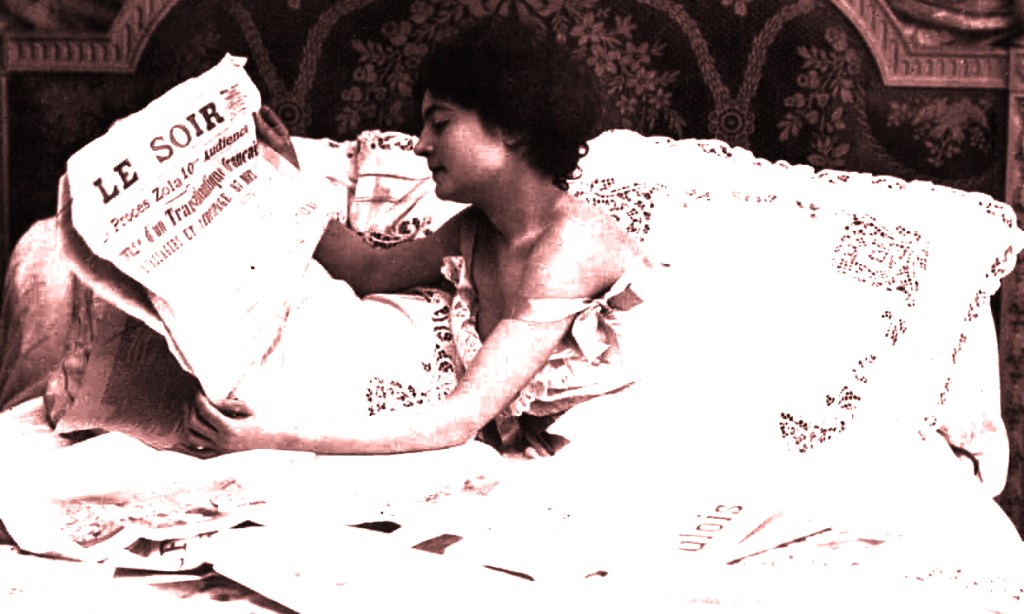
  • A.C. Gunter’s Baron Montez: 23. The Honor of France

    A.C. Gunter’s Baron Montez: 23. The Honor of France

    The previous chapter closed dramatically with a frightened and frantic Louise at the door of Larchmont’s hotel clutching ‘THE BULKY, BIG POCKETBOOK OF BARON FERNANDO MONTEZ!’ Gunter’s decision to end the previous chapter like this, with Louise rejoining Harry, means that this coming chapter falls into retrospective: detailing how Louise came to have the object in question. Another writer might have ended Chapter 22 in an alternative way, promoting ongoing suspense—for example, a simple mysterious knock on the door—and preserving the concurrent narrative streams until the close of the new chapter, where Louise might return to Harry, triumphant in having secured evidence against Montez.

    However, Gunter has chosen otherwise. This action-filled chapter ends in a somewhat deflated manner, with the narrator editorializing on ‘The Honor of France’, though why Louise or any character, with the exception of Sebastien Lefort, should give two hoots about that is a mystery. Discussion of what might have been is pointless, yet it is worth considering, as Gunter, the writer, made the decision. Perhaps he thought that the previous chapter, dealing with the details of Frank Larchmont’s behaviour and mental illness, lacked dramatic intensity. Also, the reader will note, the narrator, as if unable to tolerate any suspense, attempts to elevate the melodrama mid-chapter with an outburst.

    We know Louise is smart and fluent in four languages, and now she proves herself to be something of a forensic accountant, as well as a stealthy and cunning thief. She remains resolute in her mission despite the dangers surrounding her.

    Herr Wernig, the Franco-German, now simply German, makes an appearance and in heated words with Montez, we discover his interest in bribing some French parliamentary Deputies. The physical action between the two is largely handled well, what might be expected of a tussle between two older men, while Louise plays the silent part of ghost in the shadows.

    Lillian Gish in The Wind (1928)

    Gunter’s portrayal of a central female character is laudable—possessed with the freedom to act independently, with purpose and will. Louise has done the hard yards. She discovered evidence to link Montez to the murder of her grandparents, took the confession of the terrible Domingo, and now acquires the one thing that will save the day, at great risk to her own personal safety. Yet above all, there appear to be impediments to an enhanced view of womankindit is still a man’s world. At the height of the action Louise is reduced to being a `trembling girl’.

    These deprecating descriptors usually occur when the female character is under duress or in a tenuous position. Gunter is not averse to a touch of voyeurism, as we have seen previously with Jesse in children’s clothes, observed by a male through a camera viewfinder. At the close of this chapter, there is the morocco-bound black pocketbook ‘clasped to [Louise’s] fair, panting breast’. In comparison, we have Harry, our knight in shining armour, who in the course of the adventure has nearly died and, it could be argued, was indirectly the cause of Mademoiselle Bébé’s death. If it weren’t for Louise, he might not have survived at all, though she did owe him one for rescuing her from the snow. From the close of this chapter on, Louise takes the back seat, and it is Harry who has control.

    After reading, spare a thought for the condition of a character whom we shall see no more, the recently introduced, kind-hearted clerk, Gascoigne, who at the close of the chapter still lies on the floor of the offices of Montez, Aguilla et Cie. unconscious.


    CHAPTER 23

    THE HONOR OF FRANCE

    Miss Louise Minturn arrives in Paris on schedule time. The weather has been very pleasant—the sun bright. She has sailed over a summer sea; so it comes to pass, that early one morning, in the latter part of May, arriving by the Chemin de Fer de l’Quest she drives straight from the Rue Saint Lazare, and presents her letter of introduction from Aguilla, to Monsieur Jacques Pichoir, a shopkeeper, who has a jewelry store on the Boulevard des Italiens, and a comfortable home nearby on the Rue Laffite.

    By this gentleman she is most cordially received. Besides being an old friend, he is under considerable trade obligations to Aguilla, whose letter is a pressing one; therefore Louise shortly afterward finds herself very comfortably domiciled with the family of the jeweller. At noon that day, she stating that her business is pressing, he kindly takes her through the crowds congregating about that temple of Paris speculation, the Bourse, to the office of Montez, Aguilla et Cie., on the Rue Vivienne, just off the Boulevard Montmartre.

    Parisian Street Scene, Jean Béraud (1885) [View of Boulevard des Italiens from corner of Rue Laffitte]

    Here she presents her business letter from Aguilla in Panama, to the manager, one Achille Gascoigne, and is informed by him that Baron Montez sails this very day from New York on the Normandie. He has just received a cable to that effect.

    This news is received by Louise with a sigh of relief, though she succeeds in making it inaudible.

    Then Monsieur Gascoigne, begging her to be seated, examines her despatches from Panama, and looks a little troubled. They are direct orders from the junior partner, for the bearer of the letter, Mademoiselle Minturn, to make such copies of the ledgers as she has been directed; and, furthermore, for Monsieur Gascoigne himself to certify to their correctness. Still that gentleman hesitates.

    He would cable Baron Montez, if that were possible, but his chief is on the ocean.

    He comes in and suggests affably, for Achille Gascoigne is a man of compromises: “Mademoiselle Minturn, you had better wait until Baron Montez arrives.”

    “Impossible!” falters the girl, and her heart nearly stops beating at the suggestion.

    “Why not? You can have a pleasant time in gay Paris for a week. Your salary will, of course, go on!”

    “In a week I must be on my way back to Panama!” says Louise, determinedly, almost desperately. “You have your written orders from the junior partner of the firm. I have mine also. If I do not obey them—” here feminine artifice comes to her, and she mutters: “I shall lose my position!” tears in her lovely eyes—partly those of artifice, partly those of disappointment.

    This remark about losing her position impresses itself upon Gascoigne, for he has also a very good one. He is now between two millstones. He does not know what Montez will say to this; but he knows very well what Aguilla will say to disobedience of his orders.

    “I would cable——” he murmurs hesitatingly.

    “Cable!” answers Louise. “That’s right! Cable Panama quickly, if you have any doubt of my authority and my directions.”

    “I will do so,” murmurs Gascoigne. “You will excuse meit is a matter of such importance!”

    He cables, and receives such an answer from Aguilla, that the next morning he throws open the old ledgers of the firm, in hurry and trepidation, to the young lady’s prying eyes and ready pen.

    These back ledgers are all kept in an office adjoining the private one of the firm; a door opens into it, so that ready access can be had to the books in case it should be necessary to refer to them. These ledgers are locked up in a large safe. This is opened, and they are placed at Miss Minturn’s disposal.

    Then the girl finds an enormous work before her. She has four months of very heavy and diverse transactions to take down from that great ledger. It must be done before Montez’ arrival.

    She works at this from early morning until they close the office; and, telling Gascoigne she must labor at night, this gentleman kindly unlocks the office and safe doors for her in the evening, as he goes to some place of amusement; and coming back, on his return from café chantant, or operetta, or some other nocturnal enjoyment, puts away the ledgers, lets the young lady out, and locks up. For her evening visits Louise hires a carriage. Promenading the streets of Paris alone at night would be very unpleasant for a lady, and Aguilla has told her to spare no expense.

    While looking over these accounts, the name of Franc̗ois Leroy Larchmont comes under her eyes, and in copying the ledger, the peculiarity of the entries astonishes her. Wonderment comes into her face—then, sudden hope.

    So in making memoranda of the general ledger for Aguilla, she takes a complete account, through all the back years, as the ledgers are at her hand, of the transactions in stocks of the Panama Canal and other securities, made for Francois Leroy Larchmont, and thinks: “Perhaps these are what Harry wants.”

    These accounts, she unites with the general accounts of the firm, and gets Monsieur Gascoigne’s signature to their correctness before a notary, day by day, ostensibly for the use of Aguilla in Panama.

    But time has flown! While she has been doing this work in Paris, the two steamers, one bearing Baron Fernando Montez from New York, and the other bringing Harry Sturgis Larchmont from Colon, are ploughing their way towards the shores of France.

    The S.S. La Touraine of the French Line at sea (1891), Antonio Nicolo Gasparo Jacobsen

    The days have passed rapidly. Louise has forgotten that Montez will shortly be due, and one evening, having been let in to do this work, she scribbles away until eleven o’clock, and looking up, with tired hands and pallid face, murmurs: “It is done, thank God, in time!”

    IS IT?

    Then she waits for Monsieur Gascoigne to come and lock up the place, and let her out.

    But in the silence of the night, voices come to her, and she hears two steps instead of one. Her cheeks grow suddenly ashen, she hurriedly turns out the light in her room; for one is the voice of Baron Fernando Montez of Panama, and the other that of Herr Alsatius Wernig of Paris. Both are angry and excited.

    The girl’s lips tremble; she wonders: “What will Montez do to me when he finds me here alone, at night, and unprotected—a spy upon him?”

    As she thinks, she thrusts her memoranda made this evening into her pocket. Suddenly there is a match struck; the gas blazes in the next room, the private office of the firm. Then the voices of the man of all nations, and the German, come to her; for the door is slightly open.

    She peeps in. The Baron is in travelling costume, a little grip-sack in his hand; the German, in the full evening dress of the Boulevards, with white vest, snowy shirt, diamond studs, and opera hat and coat.

    Montez says : ” My friend, if you will permit me, I will go and have a little dinner. I simply drove here direct from the Gare Saint Lazare to get my mail, and I find you waiting at the door of my office for me.”

    “Yes, I knew you would come here first,” answers the German, “and I made up my mind to see you before you saw anyone else. The Lottery Bill has passed the Chamber of Deputies.”

    “Of course—two weeks ago! But not the Senate,” remarks Montez. “That will come later.”

    “To be sure! And now I come to you for my dividend!”

    “Your dividend on what?”

    “My dividend on the money left from what you received to assist the passing of this bill. The money you did not give to press writers or deputies—the residue—the large residue!”

    Then he goes on, laughingly: “Ah, you are a deep one, Montez! You made this Franc̗ois Leroy Larchmont your tool. While bribery and corruption have been going on, you who directed it were not even in Paris—you were in Panama! Ah, you are safe forever! But I wish a little statement of your accounts! You know I was to have my share!”

    “Oh!” laughs Fernando, unlocking the safe in the private office and selecting his mail, which has been kept for him in an inner and stronger compartment. “Call tomorrow and get it. At present, I am going to my dinner!”

    He looks over the documents waiting for him carefully—among them are two long envelopes, very carefully sealed.

    “To dinner?” echoes Wernig, gazing curiously at the envelopes.

    “Yes, to dinner, of course—or supper—I don’t carewhat you call it. I’m hungry after my railroad journey from Havre. Will you join me in a petit souper at the Café de Paris? We cannot have the company of Mademoiselle Bébé. You have heard, I suppose, the sad news that she died in Panama?” rejoins Montez, producing a handkerchief and wiping his eyes as if affected. Then he opens the two envelopes, draws out his black pocketbook and deftly places their contents within its morocco binding; next, as it is now very full, secures it with a rubber guard.

    “What do I care about your Mademoiselle Bébés, or your suppers at the Paris?” says the German.

    “No?” and Montez throws the residue of his mail back into the safe and locks it; and gazing at the pocketbook, a curious triumph in his eye, is returning it to his pocket. He says affably, “If you are not going to supper, I am.”

    “Not yet,” growls the German.

    “Why?”

    “If you get away from me now, I know you will have accounts to show me that will prove you have spent all the money upon the journalists and the deputies,” answers Alsatius Wernig. Then he says slowly but doggedly: “My share I have now!”

    “Permit me to go to supper,” returns Fernando. Then facing the German, he says: “I have no accounts with me this evening!”

    “You have those accounts in that black pocketbook!” cries Wernig. Louise can see Montez’ delicate fingers tremble as they clutch the morocco thing he holds in his hands. “That contains everything I want!” snarls the German, his eye with the cast growing bright. “Let me look at them now! Give me a statement before you get away to prepare another!”

    “Impossible!” and Montez’ eyes flash fire. “You are a fool, Herr Wernig, to refuse my offer to supper!”

    “Why?”

    “Because”— here Fernando’s hand goes slowly behind him—”that is all you will get!”

    But, quick as a flash, Wernig has seized a ruler from an office desk, and struck the hand Montez has behind him, and his pistol drops to the floor.

    Then the German, who is stronger, seizes the little man by the throat, and clutches for the pocketbook; but Montez, struggling, holds it up, away from the German. So the two, fighting, one like a bear, and the other like a tiger cat, writhe and wrestle, each moment coming nearer the door that is ajar—the one leading to the room where a trembling girl stands gazing through the crevice, with dilated eyes of curious resolution, one dainty arm upraised, as if for action.

    And they struggle nearer, Montez holding his hand behind him—the right one that grips the pocketbook; and nearer still, until he is forced back, and his right hand is pushed through the opening door into the other room, and there is a quick rustle of feminine draperies, and a quick clutch upon his hand, and he shrieks: “Good God, Wernig! It’s gone!”

    The Fight (1896), print by James Ensor (cropped)

    “What’s gone? A ruse!”

    “No! Let me go! Someone has taken it! The black pocketbook that holds the safety of us both!”

    But the other cries out: “It is a ruse! You cannot fool Alsatius so!” and squeezes Montez all the closer.

    But the Baron tears himself loose, and throws open the door, and cries: “Where is it? There was some one here!” And the two cautiously grope about the floor and corners of the dark room.

    Then they start up with a cry, for there is a noise of closing doors of the office, and they rush to the door and shake it, and kick it, and throw their bodies against it; but it has been locked upon them from—the outside.

    On this they turn and gaze upon each other—these two conspirators; and both grow pale, as Montez gasps: “My God! If the secrets of that book come out, we will be torn in pieces by the Paris mob!”

    “We?”

    “Yes! It is the record of the bribed Deputies!” sighs Montez. Then he laughs ironically: “With your name as well as mine attached to it!”

    Mein Gott!

    And the two men imprisoned glare at each other, and drops of perspiration gather on their brows—as they whisper with trembling lips: “What is to be done?”

    But a moment later there is a step upon the stairs, and the door is unlocked and thrown open, and Monsieur Gascoigne enters the office, saying: “Mademoiselle Minturn, are you finished?”

    To him Montez screams: “Mademoiselle Minturn! Explain—what do you mean?”

    “Why, the girl from Panama!”

    “She has stolen my pocketbook!”

    “Yes, and taken record of your ledgers, also!” gasps Gascoigne.

    “Fool! Dolt! Idiot! Misérable!” shrieks the Baron, the blood of Morgan’s desperado coming into his eyes, and he and Wernig fall upon the astonished clerk, and beat him, and strike him insensible.

    Then Wernig whispers: “I go to notify the police of the stolen pocketbook!” and would run out.

    But Montez stays him, whispering: “No, no!” as if in fright.

    “Why not? It is a theft!”

    “But if France knows WHAT is stolen? Do you think the populace will spare us foreigners who have debauched their Deputies? If the tribunals of justice get that pocketbook in their hands, it is we who shall suffer. No, no! No notice! I have another way,” mutters Montez.

    So leaving Wernig, pale and unnerved, he calls a cab and goes fast as horse can carry him, and waking up one of the great Ministers of France, tells him of the pocket book, and to his affrighted exclamations whispers: “If it falls into wrong hands, your head also—HIGH AS IT IS!”

    And so it might be; for Louise Minturn, as she drives, not to her dwelling at the Rue Lafitte, for she guesses that may be searched, but towards the hotel on the Boulevard Malesherbes, the place where Harry Larchmont will be, if he is in Paris, carries, clasped to her fair, panting breast, not only the secrets of Baron Montez, but THE HONOR OF FRANCE!


    Notes

    morocco: a fine, pebble-grained leather, originally made in Morocco from goatskin tanned with sumac. Dictionary.com

    This edition © 2021 Furin Chime, Brian Armour

  • A.C. Gunter’s Baron Montez: 22. The Mind of a Lunatic

    A.C. Gunter’s Baron Montez: 22. The Mind of a Lunatic

    Harry has returned to Paris, and in this chapter he has to deal with the dangerously paranoid delusional antics of his brother, and the effect of his behaviour on everyone around him. The use of the word ‘lunatic’ in a medical sense serves to remind the reader that through the pages of the novel we are also exploring a world of over a hundred and thirty years ago. The term is derived from the Latin term ‘lunaticus’ which referred to those Romans suffering epilepsy or another demonstrable form of mental illness and attributed their behaviour to the effects of the moon.

    Harry calls in a well-regarded French doctor to examine Frank/Francois, his brother. The Doctor from his wealth of knowledge offers two alternatives as causes: nerves or the brain. He goes away saying he will think on it, for it is patently obvious he hasn’t got a clue. Lay people of today, without medical degrees, might have a number of suggestions for Frank’s behaviour, in contrast to people of the time, who were lost for explanation. Sigmund Freud had only just begun his work developing psychoanalysis, which in due course, besides treating those with a mental illness, will endow us with another way of looking at ourselves and our lives. Those of the late 19th Century are on the cusp of great changes in human life and perception. Between ourselves and readers of the time, there is a huge gulf; most have yet even to experience instant electric lighting, which will brighten and expand a person’s day considerably.

    Page 1 of George Eastman’s patent no. 388,850, for his film camera and roll film, US Patent and Trademark Office

    Any sufficiently advanced technology is indistinguishable from magic,’ is a well-known quote from writer Arthur C. Clarke. A recent invention of the time which also heralds a change in human perspective comes into Frank’s hands. Invented by George Eastman, the first Kodak camera went on sale for $25 in 1888 with the advertising line: ‘You push the button, we do the rest.’ The camera, which lacked a viewfinder, came with a roll of film capable of producing one hundred oval-shaped photographs. Once completely expended, for the sum of $10 a customer could return the camera to the Eastman Dry Plate Company. The worthwhile photographs were returned, together with a fully loaded camera ready to go again (Smith). This, in 1893, may be the first instance of a roll-film camera to be used in a fictional novel.

    Frank admits to Harry that he has bribed members of the French Chamber of Deputies (the legislative assembly) to support the Lottery Bill for Baron Montez. History supports the fact that this practice was widespread throughout the company’s dealings. In the investigation that followed the collapse of Compagnie Universelle, one Deputy, Jules Delahaye alleged that one hundred and fifty members of the government had accepted bribes. In the anti-Semitic newspaper La Libre Parole, Baron Jacques de Reinach, the company’s Chief Financial Adviser was accused of bribing twenty-six Deputies (Parker, p. 187-188). The question arises though as to why Montez, who has divested his interests in the canal project, should wish to bribe Deputies to assist in the passage of the Bill? Perhaps Montez is working on behalf of another third party? It remains an outstanding mystery.

    The Panama Canal: Baron de Reinach, one of the promoters of the canal, is forced to swallow poison. Satirical watercolour drawing by H.S. Robert, ca. 1897.

    For today’s reader, this novel carries out a function and enchants us in ways Gunter never intended. Through the novel, as in examining old photographs, we catch a glimpse of life in the latter half of the 19th Century; but that is not all, because the novel is itself an artefact of the time. Artefacts generate a number of dimensions—the selective world of the novel as portrayed by Gunter, where life depicted is conditional on the needs of the story. In the characters’ world, there is no squalor in the streets, no visibly homeless or wretched, no crush of immigrants in New York, no description of the pitiful conditions and state of workers on the Panama Canal, in the streets no dead of Yellow Fever, and in Paris, no detail of the machinations of the French government concerning the canal.

    Then there is the writer’s intent of Gunter himself, the choices of content, and the decisions made, all flavoured by his personal character, knowledge and opinions—all designed to entertain a perceived readership. Lastly, we in the 21st Century, judging by the success of the its publication, have the opportunity to gain an impression of the 19th Century audience. The novel offered readers an escape from the mundane and their toilsome lives, which are not without the common realities of the time. They seek adventure, travel, exotica, true love, a retinue of servants at their beck and call, a life untroubled by irksome necessities like work, sanitary disposal, drawing water, lighting fires and cooking for oneself and others. In their escapism, they may be very similar to readers today.

    As the chapter closes there is a surprise visitor awaiting Harry at the front door. Guess who?


    BOOK 5

    THE HURLY BURLY IN PARIS


    CHAPTER 22

    THE MIND OF A LUNATIC

    The door is closed behind him. Harry says to the old man: “Robert, just get my baggage upstairs; and where is my brother?”

    “Trunks, yes, sir,” replies Robert. Then he turns to Mr. Larchmont, and astonishes him. For he says: “Thank God, you have come, sir! It was on my mind to speak to a lawyer tomorrow!”

    “What’s the matter?” asks Harry. “Anything wrong?” for Robert’s manner is alarming.

    “Yes, sir! Mr. Frank, your brother—he’s sick. I think it’s his head.” The man waves his hand about his honest Breton brow, as if driving away phantoms. “But you had better go in and see him yourself, sir, at once.”

    “Very well,” says Harry. “Is he at dinner?”

    “Oh! he don’t dine much, sir and Miss Jessie and her governess generally eat upstairs, sir.”

    “Where is he?”

    “In the library.”

    And Robert shows Harry Larchmont into a dimly lighted room, where a man is seated before a writing table, his head in his hands.

    Harry cries out: “Frank, I’ve come back from Panama safe! The fever didn’t kill me!”

    “Ah, thank God! Harry! You are come!” answers the brother, rising, and the two wring each other’s hands; though Francois after the manner of the French would kiss.

    “Let me have a little light to look at you,” says the younger one, for the tones of Franc̗ois Leroy Larchmont’s voice have given him a peculiar thrill, they are so nervous yet so muffled; the timbre of the voice seems to be changed. It is as if his tongue were clumsy.

    Lighting the room, Harry Larchmont looks at his brother, and can hardly restrain an exclamation, the shock of his appearance is so great.

    The face that had been round and rather full, has grown thin and drawn. The eyes have a watchful furtive glance, as if looking for something, partly in terror, partly in surprise—a something that is always coming but never comes.

    Before the younger man can speak, the elder breaks out: “Thank God! You’ve come to save Jessie from marrying that infernal villain—that Montez of Panama and Paris!” Then, not waiting for an answer, he jumps on, the words coming from him in jerks: “I’ve had cables from him! Threatening cables!—from New York! cables that alarmed me so much! cables!—that I had all the preparations made for the wedding—the trousseau ordered here—knickknacks and folderols! He is coming tomorrow! But you—thank God!—in time! Henri, my brother! save me from him!” and he shudders as if frightened.

    Przerażenie Wariata (Madman’s terror), self-portrait (1931), Stanislaw Ignacy Witkiewicz (1885-1939)

    “Let me look at his cables,” remarks Harry grimly.

    The other exhibits to him rapidly, three—one from Panama, two from New York. The general tenor of these is for Franc̗ois to make all the preparations for the wedding, that must take place on Montez’ arrival in Paris, though there is a peculiar ambiguous threatening in them.

    “What does he mean by his hints?” asks Harry, and is astounded at the reply.

    His brother suddenly giggles: “Ah, ha! I bribed the deputies for him! The deputies for the Canal Bill! The Lottery Bill! It went through the Bureau of Deputies, a few nights ago! I bribed them! He hints, he absolutely dares to hint, at threatening me with this, the wretch! for doing his work—oh ho! his orders!” Then he shudders: “Henri, protect me!”

    “Certainly!” mutters the younger man, almost too overcome to speak, for there is something in his brother’s manner that makes him fear for his intellect, though he meditates: “Why could I not threaten Montez also? If it is against the law for my brother, it is against the law for him!”

    But as Harry looks on Franc̗ois Leroy Larchmont, who has suddenly begun to tell him of a new opera, he casts this from his mind, speculating: “What jury would believe his evidence?”

    Franc̗ois is never quiet long. He breaks in suddenly:

    “But about this marriage. I have had a plan—a great plan. Within the last three days I have discovered how to postpone the wedding! What do you think I have done? I have made Jessie younger!”

    “Made Jessie younger?”

    “Yes! she is now only eleven!”

    To this Harry returns, his voice very serious: “Where is she?”

    “Oh, upstairs, studying her lessons, I presume. You’ll see her in a moment!” Francois rings the bell, and Robert making his appearance, he commands sternly:

    “Bring the child down!”

    At which, stifling a grin, the servant goes away; but a minute after, reappears with a subdued but frightened giggle, saying: “The child says she won’t come down!”

    “Very well, I’ll see her myself!” answers Harry. “Never mind about coming with me, Frank! You stay here quietly,” for there is an indefinite fear in his mind—a fear of something, he does not know what, as he steps in the hall.

    Noting his face, the servant whispers to him: “Miss Severn is all right! She’s upstairs with her governess, locked in. They’re frightened to death of him!”

    So Harry, going up, raps on the door, and the faint voice of the governess comes faltering through the panels: “Miss Jessie is at her lessons—she can’t be disturbed, M-m-monsieur Franc̗ois.”

    “Never mind whether she’s at her lessons, or not,” cries Harry. “It is I, Harry Larchmont! Open the door!”

    In a second the key is turned in the lock, the bolt slipped, and he finds himself with both the governess and Miss Severn hugging him together, and sobbing: “Thank God, you have come! Thank God!”

    But here he utters a cry of astonishment, and ejaculates: “What’s this? The ballet, or skirt dancers?”

    And Miss Jessie cries: “Good heavens! don’t you know? I’m a child again!”

    “Yes, and a very pretty child!” laughs Harry, for relief has come to him.

    At which the young lady puts on a very blushing face, and says: “Now don’t be awful! No joking! I had to do it! Frank came up three days ago, and frightened me and my governess to death. He said I was a child once more! He had my governess make short dresses for me. He said that would prevent Montez from marrying me so soon! I would be too young!”

    “How dared you do this?” asks Larchmont savagely of the governess.

    The woman bursts out sobbing, and gasps, her nerves having given way: “Wouldn’t you do anything, if he had a pistol in his hands, and said it was the will of God?”

    “But why didn’t you escape from here?” asks Harry, turning to Miss Jessie.

    “How could I go out in these clothes? He took all the rest away! Look at me!” Then she suddenly cries, “No! For heaven’s sake don’t look!” for Harry is obeying her, and turning his eyes upon a babyish but alluring picture. Miss Severn is dressed as a Parisian child of eleven, with very short skirts, with very pink silk stockings and petite slippers, and baby waist with blue knots of ribbon upon her gleaming shoulders and round white arms, and golden hair hanging in one long juvenile pig tail.

    “Then why didn’t your governess go?” mutters Larchmont, stifling a guffaw.

    “She was too frightened to move, so we just locked ourselves in. Please—please don’t laugh at me! I—it’s awful!”

    “And Mrs. Dewitt?”

    “Mrs. Dewitt has been in Switzerland for a week. She will return soon.”

    “We knew you were coming also,” continues Jessie. “We had seen your telegram. We thought it best to await your arrival. It would make such an awful scandal about poor Frank! But, oh,” here her eyes grow frightened, “don’t leave me with him!”

    “How long has this thing been coming on the poor fellow downstairs?”

    “Well, when we came back, Frank was all right, and I had a very pleasant time in society here, but each day, for the last two months, he’s been growing more nervous. I think it’s the threats of that awful man, the Baron Montez, made to him before he left for Panama. Then he has been very busy doing something political, he says; but only three days ago did this peculiar freak come upon him.”

    “You saw Baron Montez when he left for Panama?”

    “Oh, yes, once. He left Paris just as we got here. To please Frank I went down to see him. I—I had to—Frank is frightened to death of him.” Then she whispers “He is making preparations for my wedding. The trousseau is here. The time has been fixed by cable;” next giggles: “Would you like to see the bride’s dress?”

    This is said so carelessly that Larchmont is astonished. He asks: “Did you not fear that Montez might really marry you?”

    “No,” replies the girl, looking with trustful blue eyes into his, with such faith that it gives him a shock. “No, because you had sworn that I should never marry him!”

    Then Larchmont says quietly to the governess: “I will make proper arrangements for Miss Severn so that she can come downstairs with—propriety.”

    At which the girl gives a little affrighted “Oh!” and stands a beautiful and blushing picture.

    From this the young man turns with a sad but stern face, and goes downstairs to see his brother, and coming into the library is greeted with: “Is the child still sulky?”

    “No,” returns Harry, “the child is quiescent.”

    “Ah!” remarks Franc̗ois, contemplatively. Then he suddenly giggles: “She was in a devil of a temper till I kodaked her!”

    “You—did—what?” ejaculates Harry, for the term is a new one.

    “Yes, snapped her in—photographed her—I’ve her picture here. I’m going to send one to Montez.” And Franc̗ois, who is an amateur at everything, produces a carte de visite of Miss Jessie that makes Harry Larchmont, serious as is the situation, guffaw.

    “Would even Montez dare to marry such an awful child as that?” remarks Frank.

    “No. I’m blowed if he would!” returns Harry: for he is looking at the most enfant terrible on record.

    Miss Jessie’s blue eyes are starting out of her head in horror, but have tears in them; her mouth is pouting, but wildly savage; her pigtail is flying out in the breeze; she seems about to fly at the camera and destroy it; in fact, this had been her idea, but Frank had snapped too quickly and too deftly.

    “Wouldn’t that make an artist’s fortune!” remarks Franc̗ois. “I shall ask her to pose for me—you know I daub a little—at least I did before that villain Montez made me walk the floor all night!” Then he moans, “Save me! He’ll put me in prison!”

    Photograph of a girl (1904)

    Meeting Harry’s eyes, Franc̗ois Leroy Larchmont droops his, as his brother says: “There is only one thing to do, Frank! You, yourself, when you think of it, must conclude that I am the only one to protect you from Baron Montez!”

    “Yes,” answers the other, “I have prayed for your coming!”

    “Very well then, in order to save you from the man you fear, I must have the full direction of everything. You must assign your guardianship, under the French law, of Miss Severn, to me. She will assent to it in writing, and at her age, it will be legal.”

    “You—you—” gasps the weak man, “will give me a receipt for Jessie’s property, so that they cannot prosecute me for losing it—a full receipt?”

    “Yes,” says the other quietly, “a full receipt, to save your name!” And he breaks out: “Good heavens! You don’t suppose that I could ever let a child, your ward, lose her property through you! That would be a disgrace upon our family forever. But you must turn me over everything you have.”

    “All right! Only save me from Montez!”

    “Very well!” remarks Harry, “give me your keys!”

    He steps into the hall and says to Robert: “Do you know a notary near here?”

    “Yes, sir.”

    “Send for him!” But Robert, about to go, suddenly whispers: “Look out for his pistol!”

    “His pistol! Where is it?”

    “He’s got it on, sir,” says the man. “That’s the reason I obey him so quickly.”

    “Has he?” says Larchmont, and stepping back into the library, he remarks: “Frank, I’ve got to go out this evening, after I get through my business with you. I left my revolver in Panama. I have got so used to carrying one, I shall not feel safe without it.”

    “Oh, take mine!” cries his brother, cheerfully, and he hands him a very impressive looking weapon, remarking casually: “I brought it to coerce the governess, but have lately used it upon mice in the cellar. It will slay a mouse at four yards!” Then a sudden and awful tone coming into his voice, which makes Harry very happy he has the pistol in his own hands, he mutters: “Besides, on the wedding day—after the bride was marriedI had thoughts——”

    “Thoughts of what?” asks Harry uneasily.

    “Thoughts! thoughts!” says the other. “Just thoughts!”

    “Won’t you come in to dinner?” suggests the younger Larchmont, anxious to cut short this musing of his brother.

    “No, I never dine now. Perpetual Lent with me, mon ami. Perhaps, after all is over, and I have tried everything, I may turn monk! It is well to learn to fast.” Then Franc̗ois’ tone becomes suddenly anxious, and he murmurs: “If I do not do what he tells me, he has threatened to turn me out of here—to turn me into the streets to starve—I—a Larchmont, starve—I—who have never been hungry before! I am educating myself for this.”

    “You need have no fear of that now,” remarks Harry confidently. “Here’s the notary.”

    And that official being shown in shortly thereafter, Francois Leroy Larchmont assigns his guardianship of Miss Severn to Harry; and Harry acknowledges receiving the fortune of the young lady.

    To the first of this it is best to get Jessie’s assent, which she is delighted to give; the notary going up to her to take her signature.

    So coming from this interview, telling Robert to send one of the other servants out for a doctor, and to watch at the door to see his brother does not leave the room, Harry Larchmont goes to dinner, with but very little appetite. He has, however, made arrangements for the restoration of Miss Severn’s wardrobe, and that young lady flits down to him, in a very pretty dignified evening dress, though she sometimes pulls down her skirt as if anxious to make it longer, and once or twice takes a look at her train to be sure it is there. As he eats she proceeds to give him further details of the last three days, some of which would make him laugh, were they not additional evidences that Francois Leroy Larchmont has lost the weak mind he had, through his fears of Baron Montez.

    An hour after this, a distinguished French physician comes, and after examination tells Harry that just at present these peculiar disorders are so ambiguous, he cannot tell whether the disease of his brother will be permanent, or not. He must study the case for a few days.

    “It may be only the nerves—it may be the brain. If the latter, it is probably hopeless! At any event, he must have attendants. He must be watched. He must not be let go out of the house alone. If Mr. Larchmont wishes, he will send him two reliable men.”

    “Very well,” says Harry; “I am much obliged to you, doctor. Do as you suggest.”

    An hour afterwards, two quiet but determined looking men come.

    “Who are these?” asks Francois uneasily.

    “Two secret police to guard you from Baron Montez,” whispers his brother.

    “Ho, ho! Then we have Fernando!” chuckles Frank as the men attend him upstairs.

    Satisfied that his brother will be taken care of, Harry thinks he would like a cigar in the open air.

    The night is a beautiful one. He has been accustomed to open rooms on the Isthmus, and to sea-breezes on the steamer. He thinks he can better meditate upon the awful situation in which he is placed, in the open air. He must turn over several things in his mind. Of course his brother’s signature to the document making him Jessie’s guardian, will legally amount to nothing; still, with her consent, he knows a French court will doubtless transfer the guardianship to him.

    Then he suddenly thinks of the paper that he has signed, receipting for all of this girl’s fortune—a million dollars—five million francs! He is no lunatic. He is liable for all of it!

    He knows that his brother can turn over to him but very little of the orphan’s estate, and he mutters: “I am afraid I have crippled myself! Unless I can force Montez to disgorge, I am now comparatively poor! If I marry, I shall not have wealth enough to retain my position in New York society!”

    Then he communes with himself: “There is but one I want to marry, and if she will have me, we can be happy in a flat! I imagine she was living in one when I first met her!”

    The servants, tired with their duties of the day, have all gone to bed. Harry hesitates to trouble them. He opens the front door himself, to receive another sensation of this night in Paris.

    Almost as his hand is on the door, there is a ring, and as he throws the portal open, he finds himself standing face to face with Louise Minturn—her bosom panting, her eyes bright. She mutters to him: “Thank God, you are here on time!”

    Then she thrusts something into his hand and whispers, a frightened tone in her voice: “That will save your brother’s and his ward’s fortune from Baron Montez! Hold to it, as to your life! It contains the secrets of the man you are to fight against! I think I have saved your fortune, but fear I am pursued by the police!”

    THE SOMETHING IS THE BULKY, BIG POCKETBOOK OF BARON FERNANDO MONTEZ!


    Notes and References

    Parker, M. Hell’s Gorge: The Battle to Build the Panama Canal (London: Arrow Books, 2007).

    Smith, Fred. R. ‘You Press the Button, We Do the Rest: [,,,] Guide to the newest in the camera bonanza‘, Sports Illustrated, Nov. 1959.

    This edition © 2021 Furin Chime, Brian Armour

  • A.C. Gunter’s Baron Montez: 18. Bébé’s Little Present

    A.C. Gunter’s Baron Montez: 18. Bébé’s Little Present

    It’s hard not to appreciate Fernando, our polyhaemic ex-mule boy, pearl salesman, opportunistic thief, kidnapper and killer, assumed Baron, self-taught financier. He is literate in at least two languages, no doubt through his own efforts. A man of the world, or as Gunter fancies him, a monstrous cannibalistic beetle, Montez is not one to rest in his insidious activity. While Harry is inland continuing his investigations at the worksites along the canal route, Bébé and Montez come to grips figuratively in their own psychopathic self-interested ways. This has unfortunate consequences for both Bébé and Harry.

    Gunter, again through the memory of Montez, revives thoughts of Alice’s long-lost string of pearls. Where could they be? The sleuths among us may already have a good idea—as he planned it. For when their location is revealed the reader will experience gratification at being rightthat ‘I knew it!’ moment.

    The reader has eagerly awaited Louise’s first contact with Montez and is not disappointed. We have seen indications of her inner mettle in her dealings with Harry, but a truly independent woman now emerges. Part of creating sensationalism lies in challenging conventions—in this case, literary ones that reflect the patriarchal society. In the latter half of the19th Century strong female characters were coming of age, a reflection of the aspirations of a predominantly female readership.

    It is widely agreed that since the middle of the 19th century, no book can hope for popular success if it does not attract large numbers of women readers, because women were and are the majority of readers in America.

    Tiffany Aldrich MacBain (qtd. in Baym, p. 277)

    Catering for this market were prolific women writers such as Ann S. Stephens (1810-86), whose Malaeska—the first work described as a ‘dime novel’—sold over three hundred thousand copies, and Mary J. Holmes (1825-1907) who wrote over thirty novels with sales exceeding two million books. E.D.E.N Southworth’s (1818-99) comic novel The Hidden Hand (1859, 1888) was one of the most popular books of the time. Her subversive protagonist, the tomboy Capitola Black, presents “a counter image to the sentimental heroine” but remains more of an amusing fantasy than a “vision of reality” (Dobson, pp. 235-6).

    Gunter is at once aware of his competition and sensitive to the demands of his readership. Set against the prevailing feminine ideals of submission and self-sacrifice, his conflicted heroine Louise is a character who will challenge societal mores and elicit the admiration of his female readers.

    Frederick Vincent Theobald (1905)

    Yellow Jack predictably makes its presence felt amongst the cast of characters. From the perspective of a twenty-first century reader, the lack of connection made to the mosquito as a carrier seems striking. There is only one mention of them in the novel, during Harry’s first night in his new accommodation, when he cannot sleep for thoughts of Louise, and blames them for his restlessness. It seems obvious to us that wherever there are diseases such as yellow fever and malaria there are mosquitoes, yet the apparently obvious connection is not made.

    However, it wasn’t until 1897 that Sir Ronald Ross discovered that the Anopheles mosquito was the vector for malaria. In 1898, Dr. Henry Rose Carter, working in Mississippi, and following a theory of transmission earlier proposed by Dr. Carlos Finlay, established the connection between Aëdes aegypti and the spread of Yellow Fever (Parker, p. 267).

    This did not mean the theory was readily accepted. Even in 1905, when American nurses took over the hospital at Ancon Hill, Panama City, they installed mosquito nets over the beds of the ill, only to find that the resident nuns had tied them back with colorful ribbons (Parker, p. 273).

    Speaking of insects, the placebo that Montez feeds Le Fort and Aguilla for their complaints over the dire state of the project, is the upcoming ‘Lottery’. From the outset Montez has always privately anticipated the failure of the Panama Canal attempt. From the beginning he has seen it as ill-conceived and its completion unviable. In this he is hardly alone, it is the primary American opinion. In 1884 the New York Herald predicted:

    It is probable the present company will go into bankruptcy or liquidation within three years and the enterprise be taken up and completed by a new company or a government.

    Parker, p. 143

    In the Canal’s ongoing history of financial struggle, there have been many times when its continuance was on the brink. Montez’ ability now to anticipate when to retreat from dealings in Canal Interoceanic financials, contracts and shares is remarkable. Perhaps, rather than a devious opportunist, he can be seen as merely a lucky beneficiary of circumstance.


    CHAPTER 18

    Bébé’s Little Present

    Some instances of this come under Miss Minturn’s bright eyes the next morning, in the office. Old Aguilla is still smiling, happy and contented, but after a short but excited private conversation with the Baron, who has come in languidly about eleven o’clock, the junior partner appears anxious, distrait, nervous, and uncomfortable.

    “Never mind, my old man,” laughs Montez, looking on Aguilla’s gloomy face. “The Corps Legislatif will surely pass the Lottery Bill, and then all will be well.”

    Reassured by this, Aguilla goes about his business. But a few minutes after, there is a terrible commotion in the office. Bastien Lefort has been admitted to the private office of Baron Montez.

    He is screaming at him so everybody hears: “Mon Dieu! You have come at last! I have been waiting for you! You! You!! who lured me to invest my all in this bubble of extravagance! One hundred thousand francs for this! A million for that! All thrown away! Rascality and fraud! Sacre̕ nom de Dieu! the savings of a lifetime!”

    He shrieks this out so wildly that the clerks run into the private office, thinking him a madman who will per chance attack the Baron.

    Montez, cool and calm, says: “Restrain yourself! Mon cher Lefort, this is nonsense! Are not your dividends paid you regularly?”

    “Yes, my dividends,” groans the man. “But the principal! The Canal will never be built!”

    “Oh, nonsense! The Lottery Bill will pass next month—and then, my boy, then!”

    “But my shares have gone down so much!”

    “Oh, but then, the Lottery Bill, then—wait!”

    “I do not understand,” murmurs Lefort. “I cannot understand!”

    “Of course not. You are not a financier, you are a glove merchant. Leave it to me! Place yourself in my hands—the Lottery Bill—go back to Paris—remain quiet—the Lottery! All will be well!”

    “Oh, but the extravagance—the throwing away of precious gold!” murmurs Lefort undecidedly.

    “You speak to me as if I were one of the directors,” remarks Montez, “when I am but a stockholder like yourself. We are both stockholders! Still, when we are in Paris, we will go to the directors and explain to them things that they do not know; or perhaps you had better remain here, and keep me posted when I go to headquarters in Paris. I will see you again.”

    Dr Cornelius Herz, one of those responsible for [financing the failed canal project], gets on a train to flee France after the collapse of the company. Watercolour drawing by H.S. Robert, ca. 1897. See note.

    And he puts off the broken-down miser with fairy promises, until the old man smiles and says: “Yes! Yes! my dividends —I still receive them! I will still believe!” and so goes away.

    Then Montez devotes himself to his private correspondence, taking great care over one long letter, during the writing of which he sometimes refers to a large black pocketbook that he produces from an inner pocket of his vest, not his coat. This appears to be filled with papers and memoranda. When he has finished with it, he returns it very carefully to his safe vest pocket again.

    All this comes under Louise’s bright eyes, as she is seated at her typewriter in the room behind the private office. The day is hot, and the door has been left open for draught. Miss Minturn has set herself to watch this man she suspects, and now that he is near her, though the keys of her Remington click unceasingly, every sense is alert as to what passes at Montez’ desk.

    A few moments after, she comes face to face with him, and his easy, affable manner interests her as well as astonishes her.

    After finishing his private correspondence, Fernando calls in Miss Minturn, and dictates a few unimportant letters to her; most of them being in response to invitations to dinners and fetes from the resident managers of the Canal as well as a few other local magnates of finance and trade in this town of Panama.

    The last of these finished, as Louise is about to go, he asks her a few questions: how she likes Panama—is she pleasantly located in the house of Martinez, the notary—she boards there, he understands—and hopes she will enjoy herself upon the Isthmus, and that her labors will not be too severe.

    He would, in his quiet offhand way, get a good deal of information from her, were the young lady not en garde; but she simply thanks him for his interest in her comfort, and turns to go.

    Just here a sudden idea seems to enter his head. He calls out after her: “By the by, Miss Minturn, do you known the address of Monsieur Henri Larchmont?”

    “No,” replies the girl, suddenly returning.

    “Ah, I’m sorry. I would have sent him a letter I have for him from his brother Francois in Paris. He intrusted it to me.”

    “Why did you think I knew Mr. Larchmont s address?” asks Louise, hurriedly, her cheeks growing a little red.

    “Oh! ha! ha! My friend Herr Wernig said you and the gentleman were quite companions on the steamer.”

    “Since the steamer, I have not seen him,” says Louise; an intonation in her voice, Fernando does not quite understand.

    “So your comradeship ceased at the gangplank. It often does!” laughs the Baron languidly. Then he continues: “Doubtless it is just as well. Monsieur Henri is rather a gay youth. Besides, I think there is a pretty Miss Jessie Severn in Paris. Eh, mademoiselle!” And would go on, a little banter in his tone, but the girl’s face astonishes him.

    She mutters: “I beg you leave my private affairs alone!” Then for one second there comes over her fair face an awful look—one he has seen before somewhere—a look that opens the pages of his memory.

    “Have you any other letters?”

    “No, not today,” he stammers as she leaves him.

    He thinks: “What was that in her eyes—so like the eyes of the American señora of thirty years ago? But this girl’s eyes are brown, not the blue eyes that I love! Besides, Alicia had blonde hair that I adore! Pooh! Let the past be the past!”

    And he thinks of other blue eyes—those of the present—that he hopes to go back to, and the lovely rebellious face of pretty pouting Jessie Severn, whom he has left in faraway Paris, with a weak guardian even more in his power than ever, who has said, when Montez returns the reluctant beauty shall be his bride.

    He mutters: “When I come back, she is mine, and that must be very soon. I have here a letter!” He looks at the one he has been writing, “but mails are slow. I will send a telegram.”

    Which he does, addressed to Francois Leroy Larchmont, 238 1/2 Boulevard Malesherbes, Paris.

    Then calling a clerk he says: “Cable that on the instant!” and goes to musing again: “I wonder what the woman did with the string of pearls that I never could find? Did Domingo steal them? Ah—but what matters it?”

    Then a smile passes over his face, and he laughs. “This American stenographer is jealous of Jessie Severn! Why? Because this young dandy—this brother of Francois Leroy Larchmont—loves my fiancée. For what reason does he come to the Isthmus? To destroy me so that he can wed her?”

    Then suddenly the undying hate of Corsican blood comes into Montez face, mixed with the drop of inflexible determination descended to him from Morgan’s buccaneer, as he mutters: “I have it! He stays on the Isthmus! Like the man who bought pearls thirty years ago, the man who buys pearls now, remains! I will fix him! Caramba! But I will fix him!

    He muses a little while over this; then sends for the Chinaman who attends to the real-estate affairs of the firm, and makes some inquiries about certain properties belonging to them in Panama. After hearing the report of the Celestial clerk, a grim smile passes over his face, and he thinks laughingly: “It is not always you can kill two birds with one stone!”

    Mademoiselle Bébé de Champs Elysées has been rather exigeant in the last few months. She has reproached her dear Baron several times, with not being as liberal as he used to be. She has complained that his devotion to Mademoiselle Jessie Severn, the ward of his friend Francois Leroy Larchmont, has made him more provident of his pocketbook than was his wont.

    Her hint the evening before, at the theatre, makes him fear that he may have some time, in careless confidence, dropped into her ear secrets that may be dangerous to him in Paris; for he knows the time is approaching when there will be such an explosion about Panama Canal affairs that will make any scandal fatal.

    Mademoiselle Bébé de Champs Elysées is returning to Paris. If his coming marriage enrages her—if she can find a higher bidder for any secrets of his that may be of advantage to his enemies, he knows very well she will sell them.

    Meditating on this, he takes Mademoiselle Bébé out for a drive this afternoon, over the savanna, on his return passing near the outskirts of the town a very pretty little villa.

    While they have been approaching this place, the Baron and his fair companion have been engaged in a somewhat acrimonious discussion.

    Mademoiselle has been pouting and chiding: “You come to see me no more! You only remained at the theatre a few minutes last evening! You brought me no jewels from Paris!” Then she has suddenly cried out: “Ah, it is because of that designing young American—the one it is rumored in Paris you are to marry. Do you think your Bébé will let you desert her so easily—mon cher?”

    Diable! ma petite!” says the Baron grimly, “not while I have any money left.”

    Next he smiles and says: “But you can have many more admirers—this Monsieur Larchmont—he adored you?”

    “Adored me!” cries Bébé; “he adores me still—he worships me!”

    Vintage postcard

    “You have but to speak the word—he will come back to you?”

    “Would not he—if I would let him! But then, Fernando mio, it would break your heart!” babbles Bébé, her vanity destroying the truth. She would go on and lie a little more, did not she suddenly stop and cry:

    “What are you laughing at?” for the Baron can’t keep in a diabolical chuckle.

    “Only my little joke!” murmurs Fernando. But had she known what Fernando’s little joke meant, poor little Bébé would have plucked out her pretty red tongue from between her rows of pearly teeth, rather than have told vainglorious lies, each one of which is a nail in her coffin.

    “You reproach me for not being generous,” grins the Baron, “when I have a present all ready for you.”

    “What, in your pocket?” cries Bébé enthusiastically, about to make sudden investigation for hidden jewels.

    “Oh, no! It is not in my pockets.”

    “Then where is it?”

    “On the mound there!”

    “What do you mean?”

    “Why, that pretty little villa. It is yours, if you wish,” and Fernando points.

    “You will give it to me?”

    “Yes, it will be more pleasant for you than your apartments at the hotel, and more private. You shall have a pony carriage to drive out there.”

    “Oh, you darling!” cries Bébé, clapping her little Parisian gloves together with joy. “Let me look at your new present! Is it furnished?”

    “I think so.”

    There is a little pathway running from the road, and the negro coachman stops his horses at some distance one side of the door.

    Fernando scowls at the lackey but says nothing, and assists Mademoiselle Bébé out. It is but a step.

    The Baron has the keys in his pocket. Entering, they examine a very pretty bijou of a tropic residence, quite handsomely furnished in modern French style, which had been occupied by Monsieur Raymond, one of the engineers of the Panama Canal; but he and all his family have died some weeks before, of yellow fever.

    Montez has no hesitation in entering it. He knows the pathology of the disease too well; that anyone who has once had this scourge and lived, is safe from it forever afterwards. And Fernando, in his early Isthmus days, had passed a few weary weeks recovering from the touch of Yellow Jack.

    “How beautiful!” cries the lady, clapping her hands.

    He says: “Ma chérie, you like this?”

    “It is delightful!”

    “Here you can have your own little parties—here you can invite Monsieur Larchmont to call on you.”

    Then noting reluctance on the lady’s face, the Baron goes on laughingly: “Do not hesitate—I do not mind it! In fact, it will be a favor to me. I would like to meet this gentleman. There are certain facts about his brother, of which I shall ask you to pump him. Your Fernando is not jealous. Is it a little compact between us?”

    “Oh, certainly!” laughs Bébé. “I would do anything for this villa! Monsieur Larchmont shall reveal to me everything you wish to know! Now, mon cher, our little dinner.”

    So he and the lady leave the house, and drive through the streets of Panama to the Plaza, and from there on the road out to La Boca, where, at the Garden of Paradise, with its palms and tropic foliage growing in its miniature glen, Mademoiselle Bébé and Baron Montez have one of Monsieur Clemont’s charming petite repasts with sparkling wine that makes Be̕be̕ very brilliant. Then Fernando murmurs: “It is time for the theatre, ma petite.” And the two return to town, Montez appearing in a very good humor, and Bébé being a mass of smiles of delighted avarice, and of newly acquired wealth.

    The next day Fernando Montez, having made all the arrangements, Mademoiselle de Champs Elysées is installed in the Villa Raymond. There is little or no trouble about servants, the Chinese clerk who attends to the real-estate affairs of the firm has hired them with Celestial astuteness, engaging only those who have passed through the yellow fever, and therefore do not fear it.

    Mademoiselle Bébé enjoys her triumphs at the theatre each evening, and drives out therefrom to the pretty cottage that has as many germs of Yellow Jack and el vomito negro in its cedar walls, as it has crevices to hold them.

    Each day La Champs Elysées expects to see among her admirers at the theatre, Harry Larchmont, for she has written him another pressing letter, begging him to come to see her at the Villa Raymond, and hinting that even without the pearls, he will be very welcome at her side.

    But Harry Larchmont is upon the works of the Canal, poor fellow, on another wild goose chase. For here, though he discovers that there is lots of rascality and swindling in the various contracts of the Canal Interoceanic, still there is nothing that will bring anything definite home to Baron Montez, or to his firm. Nothing by which he, by any peradventure, can wring back from Fernando the fortunes of his brother or Miss Severn.

    He has gone into this affair seriously, and has spent some time making his investigation a thorough one. He has passed twenty-four hours with Winterburn on his Chagres dredger, learning all the machinist can tell him of the workings of the Canal. The dredgers, he notes, are doing their work thoroughly. The American Company is keeping its contract.

    Then he has passed along to the more difficult work, the big mountain cuts. He has pumped the foremen of the various gangs of laborers, drawing information from them, by his pleasant address, and his generous use of cigars, and noting with astonishment that they are doing their work pretty much after antique methods; that if they have any steam drills or modern appliances very few if any are used; that like the Pharaohs of Egypt and Louis Fourteenth of France, the contractors of this nineteenth century achivement depend upon the myriad hands of men.

    One night during his investigation, one long night, cut off by a rainstorm, he has been compelled to pass in a cabin near the great cut of Culebra, with a foreman of one of the gangs.

    This has been with particularly bad physical results as regards himself, for in the same cabin had been carelessly left an open can of nitroglycerine, the fumes of which give headaches such as mortal man cannot endure, but mortal man remembers forever. They are of a peculiar kind—once felt, never forgotten.

    From this journey, Harry has returned to Panama with a downcast heart, knowing that there is lots of rascality in the atmosphere, but feeling that he is grasping at air.

    He is sure of one thing and that is, that any dollars his brother may have put into the Canal Interoceanic are as much lost, from an industrial investment stand point, as if he had thrown his money into the Atlantic Ocean itself.

    So as Larchmont enters the Grand Hotel, immediately on his return, he has about made up his mind, in a half brokenhearted, way, to give up the affair entirely—to devote the great part of his fortune to giving Miss Jessie her inheritance, saving his brother’s name, and—but he will not think of this.

    He meditates wildly: “I must see her! I must try and explain! I cannot go with Louise thinking me what she does!” Then he jeers himself: “She’ll never believe me! No woman would!—and I doubt if any man!” and so goes to the office of the hotel.

    Here he is very affably received by the clerk, who hands him two letters addressed in a French feminine hand he does not know.

    He opens them wonderingly. They are both in the same bold yet dainty chirography, and from Mademoiselle Bébé. The first begs him to come and see her and bring the pearls. The second sings the same tune, but tells him she lives at the Villa Raymond, and she will forgive and love him without the pearls.

    To these he mutters, “Never!” As he turns away from this, for there is a commotion outside. He looks out.

    It is a funeral procession, large and impressive, wending its way to the great Cathedral, for the ceremonials of the Catholic Church, in these South American countries, are ofttimes grand and imposing. Otherwise, this one would create no commotion, for there are a great many funerals about this time, in the town of Panama.

    A man leaning over the side of a bed vomiting, from a broadside entitled ‘Death of Aurelio Caballero due to yellow fever in Veracruz’ (1892), José Guadalupe Posada (Mexico)

    Turning to the clerk, Harry asks: “Who of importance has died lately? Whose death march is that?”

    “Oh, that!” says the clerk, “have you not seen the mortuary placards and heard the news? That is the funeral procession of Mademoiselle Bébé de Champs Elysées, of the Theatre. The careless, thoughtless creature went to live in the infected Villa Raymond. She took the yellow fever four days ago, and died this morning.”

    Then the clerk wonders whether Mr. Larchmont has not the yellow fever also, for he has. grown deathly pale, and almost staggers, and is muttering to himself: “Good heavens! if the scorn of that pure American girl had not come between me and her—I should have visited the Villa Raymond—and perchance been in my coffin also.”

    Looking on this procession—the lighted candles and solemn black, the Baron Montez, who acts as chief mourner, smiles to himself, and murmurs: “Bébé’s little present disagreed with her! But that Larchmont—he escaped me!”

    This seems to affect Fernando’s spirits, for he is superstitious, as he says to himself: “Is it a premonition? Will he conquer in the end?”

    So returning from his solemn duties, he seems to be very sad. His spirits have left him.

    So much so that old Aguilla, who has a tender heart, pats him on the shoulder with his fat bourgeois hand, saying: “My poor boy—cheer up! Cheer up! We know how you loved her—but courage, mon brave!

    Soon after Montez does cheer up, for this very afternoon he hears incidentally that Harry Larchmont is sick, and has been taken to the rooms of one of the clerks in the Pacific Mail, a young American, George Bovee, who had conceived a great affection for him. Though he is not sick of the yellow fever, his exposure in the open cuts of the Canal, full of the miasma from decaying vegetation, has brought to him the malarial fever of Panama, which is sometimes as deadly even as the other.

    At this, the Vadalia Cardinalis’ step grows light, and his smile more baleful, as he says to himself: “I triumph! See how my enemies fall before me!”


    Notes and References

    • mosquitoes and yellow fever in Panama: As late as 1898, US authorities believed yellow fever to be a “filth disease” (Gorgas, p. 18). By 1906 mosquitoes had been eradicated from the Panama Canal Zone by the army physician, William C. Gorgas, through a program of mosquito control.
    • Dr. Cornelius Hertz … [image]: One in a series of satirical caricatures lampooning those implicated in the French Panama Canal scandal, painted by the British artist H.S. Robert. Here Robert depicts the French-American Hertz, a major financer of the project, in a ridiculous fake beard, escaping to England.
    • distrait: distracted or absent-minded
    • exigeant: demanding, hard to please
    • bijou: jewel

    Baym, N. Woman’s Fiction: A Guide to Novels by and about Women in America, 1820-70 (Urbana: U Illinois P, 1993).

    Dobson, J. “The Hidden Hand: The Subversion of Cultural Ideology in Three Mid-Nineteenth-Century American Women’s Novels”. American Quarterly 38.2, 1986, pp. 223-242.

    Gorgas, W.C., Sanitation in Panama (NY: Appleton, 1915. Available at Internet Archive.

    Parker, M. Hell’s Gorge: The Battle to Build the Panama Canal (London: Arrow Books, 2007).

    This edition © 2021 Furin Chime, Brian Armour