Blog
-

Did anyone notice, ages ago, the noble Bunce occasionally nip over to Hearst’s farm at Deerhurst to court the farmer’s pretty daughter Susan — even trying to steal a kiss one time — before coming onside and making himself useful as an occasional lookout for her and Goliah while they canoodled in Mrs Hearst’s garden?… Read more
-

The remainder of Chapter Twenty-nine reveals the identity of the visitor, whom the girls had thought ‘the unprincipled agent of their persecutors.’ Smith provides some of his own observations which bear upon our researches into points of nineteenth century law affecting women and marriage. CHAPTER TWENTY-NINE (Continued) To the astonishment of the cousins they saw… Read more
-
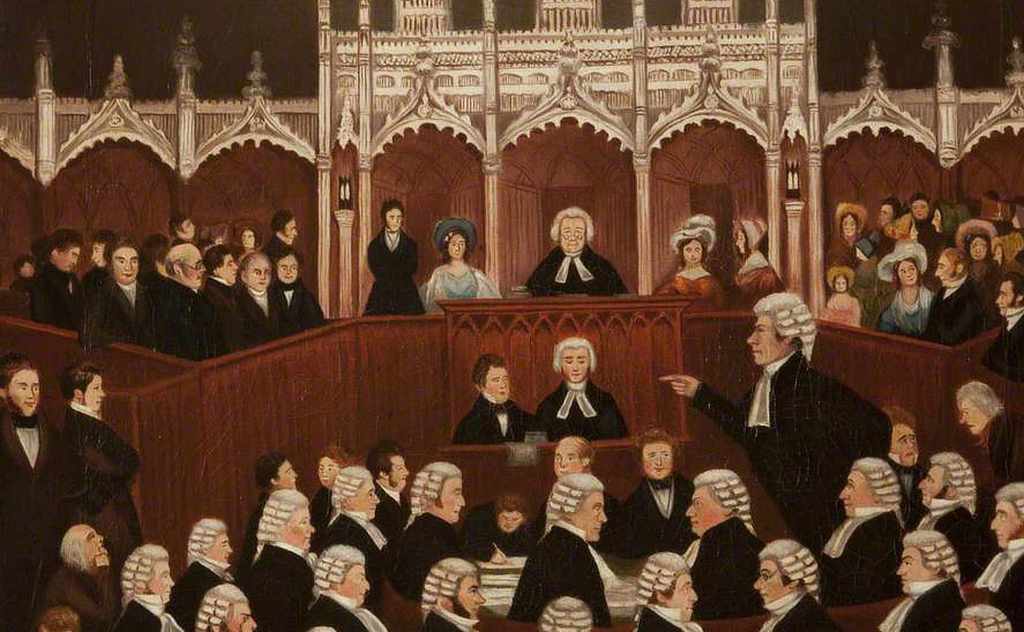
Abducting two heiresses with a view to forcing them into marriage is not as unbelievable as it may appear. Though the Victorians may be said to have “pioneered the emancipation of women” in substantial ways (Perkin), the status of women’s rights in law per se remained debatable. The question raised is whether the letter of… Read more
-

The unflappable Clara rebukes her “gentleman” kidnapper, Marsham: ‘You forget,’ she added, ironically, ‘the law against bigamy.’ Her quip anticipates Morticia Addams’, who, bitten by the green-eyed monster, tests a barb on her unwitting husband: ‘Gomez, do you know the penalty for bigamy?’ ‘… Two wives?’ It must be the narrator’s tone that provokes our… Read more
-

Willie will need to prove his mettle. He is well in the running to become Cambridge University’s Senior Wrangler for the year: referring to the highest scoring third year first-class honours student in the Mathematical Tripos. An amazing feat for a farm lad, but Willie is worn out with study, his brain over-taxed, and the… Read more
 Furin Chime Press