Saneatsu Mushanokoji’s The Innocent (Omedetaki Hito) translated by Michael Guest, and its Exploratory Companion
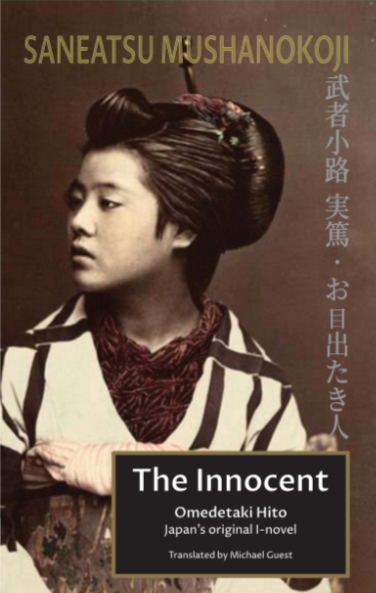
✴️ About The Innocent
Mushanokoji Saneatsu’s 1911 novel The Innocent (Omedetaki Hito) is a cornerstone of modern Japanese literature. Historically, this novella reflects a national imperative to construct a new concept of selfhood: one capable of existing and competing within the modern world. Existentially, The Innocent embodies an aesthetic quest for self-cultivation and transcendence.
Emerging from the Shirakaba (White Birch) movement, Mushanokoji’s work signalled a turn toward a humanist, introspective style that foregrounded the individual’s moral and emotional life. The Innocent (Omedetaki Hito) was a seminal contribution to the I-novel, often described as a defining mode of Japanese modernism, and is somestimes considered to be the first I-novel. The novella helped inspire a generation of writers to rethink what it meant to write with sincerity in a newly modern Japan, alive with Western influence, self-awareness, and artistic freedom.
✴️ The Furin Chime Translation
This English translation brings The Innocent to contemporary readers with clarity and historical nuance, preserving its subtle tone and psychological depth while illuminating Mushanokoji’s role in shaping Japan’s modern literary imagination. Although Omedetaki Hito is frequently discussed in English-language criticism of Japanese modernism, this edition is the first complete English translation. Publication permission was confirmed in writing by the Mushanokoji Saneatsu Association (the rights-management body) and signed by the author’s grandson as the Association’s representative. A museum-produced video about Mushanokoji’s work also features the Furin Chime edition.
•
✴️ The Exploratory Companion
The Exploratory Companion to The Innocent is conceived as a set of annotated reflections and contextual essays that help situate Mushanokoji’s work within the moral and intellectual climate of Meiji Japan. This series of brief pieces offers historical notes and interpretive commentary designed to illuminate pathways into the work and its context, bridging scholarly insight with reader discovery. Rather than serving as a formal academic study, the Companion invites reflection and open-ended exploration.
Saneatsu Mushanokoji
The Innocent (Omedetaki Hito, also referenced as “The Good Natured Person”): Introduction to Themes and Meiji Context. The selections from Maeterlinck are included to illustrate how Mushanokoji, shaped by Maeterlinck’s influence, appears to bypass the expected literary trajectory and align with modernists like Beckett. For readers of The Innocent, this resonance feels unexpectedly simpatico, particularly (though not excusively) in the later chapters of the “Addendum.”





 Furin Chime Press™