Content warning: This piece discusses domestic violence, mental illness, and historical accounts of murder.
I first came across the horrifying case of Jane Gray’s murder by her husband, John Gray, in the Sydney Morning Herald of 1870 . A story of homicidal paranoia rooted in delusions of jealousy, it occurred in the village of Calderwood, where I now live, about 67 miles (107 kilometres) south of Sydney, Australia. Then a quiet grazing community, Calderwood retains traces of its pastoral past.
Instances of paranoia, patriarchy, and domestic violence are sadly familiar to us, of course, today. Many have experienced these harms personally, and readers should proceed with caution if the subject matter may be too distressing. That said, my piece does not dwell on the horrific scene of the murder itself, but rather interrogates the issue of Gray’s madness.
I’ve fragmented Gray’s delusions and personified them, so that they become primary elements of the story’s point of view. The monologue may perhaps be read as filtered through his fractured consciousness. These delusions are embodied not only in imagined rivals, but also in symbolic elements such as shadows (referenced in the title Moonshades) and Gray’s axes – visual motifs that reflect the disturbed interiority of his madness.
Notably, the court’s attention to the victim’s appearance reveals something of the moral lens of the time, and of patriarchal society more broadly. Such commentary was considered “relevant” in establishing the delusional state of the accused – his visions of imagined suitors, for example. It is tempting to relate the situation to a collective male gaze at work in the historical account, as I heighten by my imagery.
This piece blends historical record with imaginative reconstruction. Beginning with the original newspaper report, I incorporate archival material alongside creative interpretation to inhabit the case and explore its emotional and moral dimensions. Historical news reportage, which I have appended, conveys the case with stark immediacy. Since my piece explores the use of historical data / reality as an experimental springboard for fiction, and maintains the historical documentation, I will label it as “creative nonfiction”, though as you can see, it is actually presented as a calculated combination, and my own piece may be read as fiction or fiction in dialogue with history.
Moonshades
John Gray’s wife was a respectable woman, as all who knew her agreed, when seldom they thought of her, when even less often had they to speak of her. Strapping wench she was, thirty-four at the time of her demise, wearing on her face that cheerful look which makes homely features pleasant to the eye. Alas, no longer! Natural fond heart, and her love for her children enabled her to endure all her troubles with nary a murmur. A female of no extraordinary beauty, how many are, except a small minority? Nonetheless, she was his missus and deserved better. Sweet lamb, and this story has a sorry end indeed, M’lud. But I should allow Your Honour to be the judge of that? Touché, M’lud, ha ha!
May no one doubt she was ever tender-hearted towards him and the little ones. Seven in number, poor Mary and Tom and Margaret and Jane and Johnny and the baby, and that snotty one with the squint.
Where was it he finally tipped? On the rising of this tumultuous tide beneath our trusty barque, the schooner Dairymaid. When the moon is high, then the flux of humours will abound. Seven blows to the left side of the skull, though no brain protruding, as the coroner will attest. Had this Court the power to prevent the unconscionable deed? Let us see about that. Myself, in God’s truth, I think not.

They call me Pryor, always already there, you see, ha ha! First became acquainted with this monster in the paddock at the back of his hut at Calderwood in the Illawarra. Dogged him from then until this moment and beyond. Yes, indeed, Your Grace, had a liking for his missus, I admit, a fact that he must’ve seen right off at once. Not much of a looker, no, but I am inclined to her sort and stuck in my ways, you know. Ha ha! That is my weakness. Hence, as Gray testifies to the Court, I started to sneak up from the creek and hide behind his lightning-blasted tree, whose limbs would not burn – mutilated, leafless all year round it was – and keep a bit of an eye on him and, particularly, on his missus. Who in turn responded generously to me as well, if I do say so, in humility.
Whippet-like, wiry John Gray – some may say gaunt, haunted – walked down a time or two and stared straight at me, almost right through my old heart, when I stepped out of the darkness. Swore and cursed me and my descendants. Had not lost the bog Irish accent after all these twelve years. Filthy rough hands with their dirty, hairy backs. His yellow teeth I remember well. Fellow was of a harsh, abrasive nature, of an insanely jealous temperament, and despicable in his behaviour towards his wife.
Now, the accursed – I meant to say the accused! – will complain for having been followed all over the show, by hill and dale and up the coast to Sydney and back, by a man named Beatson, whom Gray says he met at the Macquarie Rivulet near Tullimbar, not far from his place. And also by another man named Pryor, or Crier, from Shellharbour he be, apparently. That is to me meself he refers, this Pryor or Crier, Your Worship, though the defendant be the one what took up crying towards the end. And as for this other so-called “ruffian” Beatson – well, this Beatson, I can assure Your Worship, is an honest good mate of mine, and I cannot speak high enough of him in respect of his precious and noble character, which is as without blemish as my own, and which is why I love him as my dear friend and companion. And I will not hear him called names by no-one.
A short while after my meeting with him beneath his tree, Gray commences swearing and singing old Irish ditties at me, poorly, I might add. Starts berating his wife soon afterward and ill-using her. Believed she’d taken more than a passing, platonic interest in me and my mate, those times we had crept up along the rivulet and into his paddock.

“What the bejesus are youse two up to there?” he calls out one time.
“Digging a hole to bury you in,” we answers.
Jane Gray watches through a gap in the wall as her husband descends their moonlit paddock towards the creek, his long shadow anticipating his path at every step, lurching here to the right, there to the left. Yes, strangely the shadow seems to initiate the danse macabre. A stagger here, whoops-a-daisy there. Rifle in right hand serves as a walking stick, but then he wobbles in a circle and lets go a shot at the moon.
Drew her shawl about her shoulders. This was to be the last instance of it. He will not hurt me and sure as hell he will not harm my babies! But why, God, why? He was a good, good man, once my very love, but what’s become of all that? She harks back to the Cliffs of Moher, in County Clare, rearing up above the sea, where her heart too soared when he first kissed her, and then when their lips met through the arched window in the ruins of the Killonaghan Church. Ruins our lives have become, too, only taken weeks with the drink, why can he not see it for himself, what he is becoming, what he has become? She sobs, but it will do her no good. She sends her eldest son, Robert, off to fetch the police. “That will ne’er happen no more again, John Gray, you’ve done your dash!” She sobs. “My poor dear own John Gray, I did once so love ye.” Ample sighs.
He called me Beatson, Your Grace, for perhaps he feared I was that part of him would beat the brat. Jane Gray sought protection from the Bench, and her old man was committed to Wollongong nick for twenty-one days when he defaulted on his sureties. Pryor and meself kept watch on him during his incarceration. Whispered in his ear to put him right concerning the woman. She had him up to the coppers, swore he was mad. Saddled him with bastards not his own, she did, as we reminded him more than once or twice. It was at that time he started to weep for no apparent reason, a condition that stuck with him from then on.
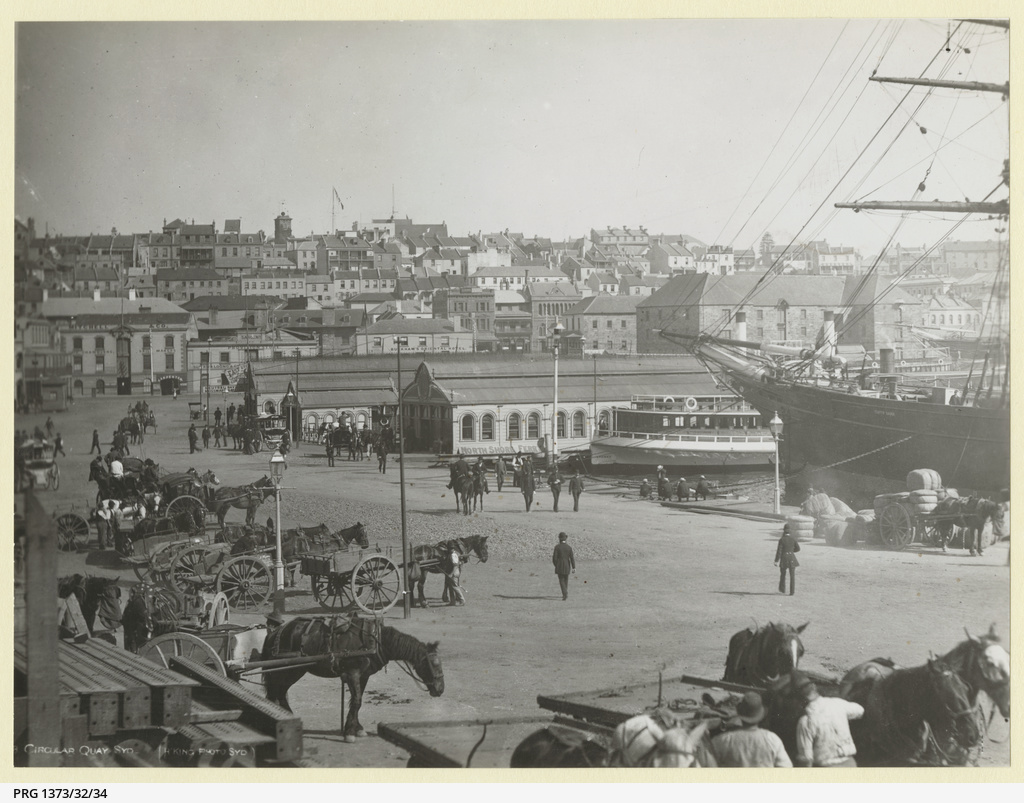
When he got out, he made for Sydney by steamer on the Pig and Whistle Line, through the heads to a finger wharf in Darling Harbour, where they unloaded the cargo: butter, pigs, calves, eggs, bacon, fowls, and maize. Hands in the pockets of his shabby old coat, he tramped off into the alleyways, losing himself in a maze of shipyards, factories, warehouses, slums. When it started to drizzle, he drew his collar up and slunk along close to walls, peeping inside a window where he could. They are alive, these walls and chinks, he murmured, and will reveal my future. At least I am free of my missus, who had me chucked in gaol, and free of those assassins with whom she is surely guilty of criminal intercourse.
“There is talking in my head along with my thoughts,” he mutters one evening in the common room of his dosshouse and starts to weep. His cohabitants, rough fellows, swap glances. Scribbles out his testament – a rambling, incoherent narrative. Disguised figures come into the room, whom only he can see. Hears the devil’s laugh, the shrieking of the dead mother, the wail of children, the song of angels. Night after night until he can endure no more. Staggers to a church in Newtown, bangs on the door and begs for the priest.
“My missus sent men after me! They’re chasing me down to dig my eyes out!”
“Father Fitzpatrick is not in, I tell you, sir,” said the servant, and has to send for the constable when the lunatic will not go away.
“What’s this then?” says Constable Lee.
“How dare you address me without your helmet!” The fool went on with his nonsense, concluding with (mark this) “Can I stay at your place?”
“I do not wish to hear about your private affairs. The priest is not here.” Sees Gray firmly into an omnibus going into Sydney, and directs the driver to stop at St Benedict’s Church, though whether he did or not is unknown.
“Remember, me name is Gray, lest anything should ’appen!”
Omnibus tears loose from its spot. Clippety-clop of hooves, ring of steel tyres, and Gray’s muffled ravings diminish in volume as the vehicle trundles down the lane. “I am a man of action, immediately after Zerubbabel!” What a loon!
On the deck of the schooner Dairymaid they wait for the tide to rise. Gray leans back against the rail. His mind seems to him more lucid than ever, contemplating his missus. Whatever others may say, to him she is an alluring creature, a seductive angel, as Pryor and Beatson agree. They whispered lewd suggestions into his ear while he slept behind a pile of timber near Grafton Wharf the night before last. He has overheard them from afar as well – how well their voices travel on the wind and in the echoing pitter-pat of the rain.

He spies the captain getting down from the helm to examine the rigging on the foremast. Shuffles to him up for’ard.
“What is the delay this time, Cap’n? Mate says we are two hours overdue already, on account of the headwind.”
Cap’n makes a mental note of the agitated tone. Not more persuaded of my own sanity than I am convinced he is a lunatic. Once seemed a decent bloke, always sober, wonder what’s got into him?
“We must wait for high tide to cross the rock bar at the entrance, boyo, no way around it,” he says. “She’s no more than twenty-five tons, but draws a good bit more than three foot six with what’s on board – up to five foot. Three-foot-six is the limit, you see, nothing if not quaint and diminutive, this Shellharbour anchorage. Cool your heels, me old son. We’ll be landing soon enough. Ready about!” he calls to the deck hands. Then, “Helms alee!” to warn of an imminent jibe.

“The boys back aft have it in for me, Cap’n, and they’ve got me spooked. How long till she rises? I have got to get away from them, far, far away as possible. They want to throw me overboard, man! I need to get home to my missus and young’uns!”
Sailor turns his weatherworn dial to the aft, where no one is in sight, though the moon casts trembling shadows off the sails. “Who are these ‘boys’ of whom you speak? Not those chaps below, certainly, local pig farmers whom I know very well, returning from the Sydney markets they are, that’s all.”
Gray peers after the diabolical shades, catching them as they slip from sight, just as a veil of shadow-cloud passes across deck. Every minute, cranes his neck to consult the ship’s clock, visible through the hatch. Cap’n watches how he shifts his feet about incessantly. The breeze freshens, carrying Beatson’s voice to him in the dark, “We’ll drive her out and find us a faithful missus!” Looks to the moon, sees in the cloud the image of his dead wife in a coffin.
“You need not be scared of no one on this vessel, man,” Cap’n says, but Gray has already turned away, headed back to where he was. Slumps down, wrings his hands and shrinks into his coat.
Gray looks heavenward. The beguiling moon governs all of this. It pronounces on time, for we shall not pass here until the tide rises, and it is the moon in charge of that, no escaping the moon this night. Oh, when does she rise? Sea churns in, with a roarin’ like the blood in his brain. Dairymaid tosses and creaks. He ought fain chuck himself to the flood, says a single kind voice amid a malevolent chorus, but sadly he forbears. “Where, oh where is my God of retribution?” In the end, he finds his god, and the waters carry them over the rock bar.
Homecoming. The dogs barked as he approached the hut. Take me, I teem with possibilities, says the long-handled axe with an inveigling smile, Take me up, do! But Gray draws back his hand – indeed, clasps his hands together behind his back. Noises inside his head: tolling of bells, murmur of the ocean, rising tide. Scrapes a stick across the wall of the hut, makes a bang and a rattle. Someone left the hatchet by the woodpile, and it speaks to him of what it offers, in the same language as the long-handled axe, but he shivers and shuffles past.
Seven o’clock, and Mother and we children were eating our suppers. He said nothing to us when he came in, but stood staring and swaying.
“What ails thee?” says Mother, but he went into the bedroom without saying a word. She lit a candle and followed him in. When he came out a while later, she cooked him an egg for his supper. He kissed her first, then each of us. We stopped up for an hour after supper, Father smoking his pipe by the fire. “Mr Prescott did not sell the keg of butter, yet he gave me two quid. I bought a pair of trousers and boots out of it, and a shirt. I have three pairs of boots for youse young’uns, and some butter and corn for Mother, still on the way down from Sydney.”

Mother awent to bed, then Father, then us children, apart from Mary and Robert, who being the eldest stayed up to quench the fire. Later we heard Father’s voice and the thumps of hard blows.
“Bloody whore, you’re not dead yet!”
Mary went in and reached for the baby beneath the still weight of Mother, soaked through. At daylight, Father went to the creek for a pail of water. Got his breakfast before going off to give himself up. Kissed the other children, but Mary and I would not kiss him, because he had killed our mother. She was a good wife to him and never gave him any cause to be jealous of her or angry with her. She did not go out anights to meet men, as he falsely said.
Two smug, blood-red–handled axes, one long, the other short, plotting inaudibly in the voices of Pryor and Beatson. Five days later, Jane Gray lifts her hand when her head is being shaved and dies without a word. In his cell, a focus on Gray’s vacant eye fades out to black.
© Michael Guest 2025
List of Historical Photographs
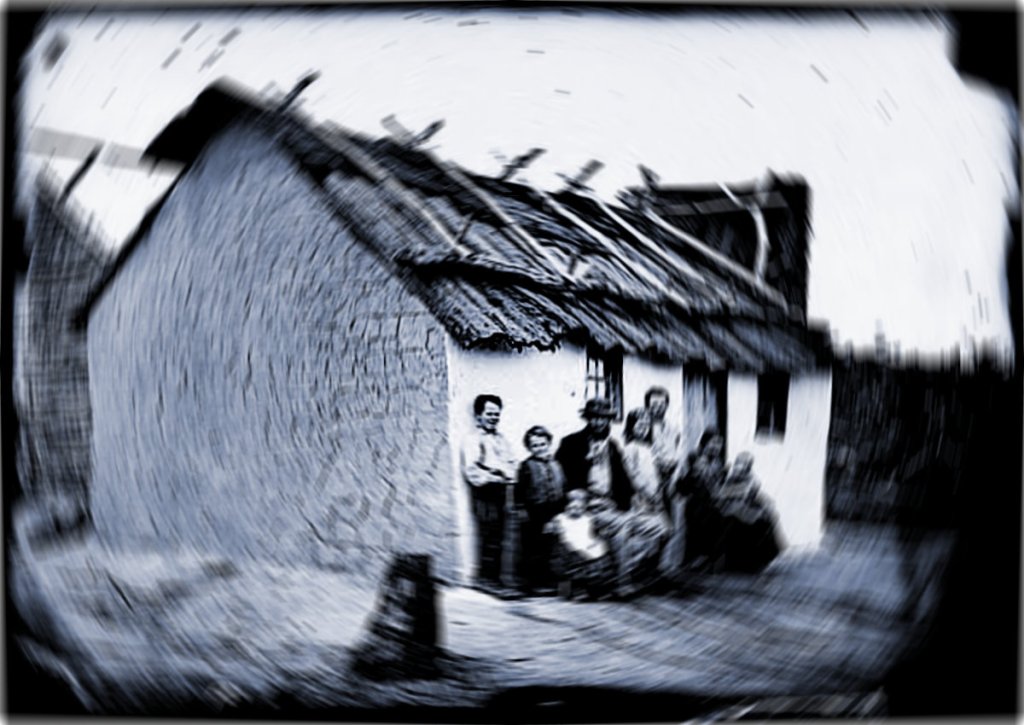
- Anonymous historical rural home
- The Old Fig Trees at Shellharbour, 1898
- Sydney Wharf scene, Circular Quay South, looking west, in the 1880’s with the bow of the ‘Cutty Sark’
- The schooner Dairymaid at Shellharbour, 1962
- The Breakwater at Shellharbour, Illawarra District, NSW, 1898
- Historical photo of anonymous children
Article 1
Illawarra Mercury
Tuesday, 9th of August, 1870
Central Criminal Court
(Before his Honor, Mr Justice Cheeke.)
Murder
John Gray was placed in the dock to stand his trial, for that he did, at Calderwood, on the 30th June last, feloniously, wilfully, and of malice aforethought, kill and murder one Jane Gray.
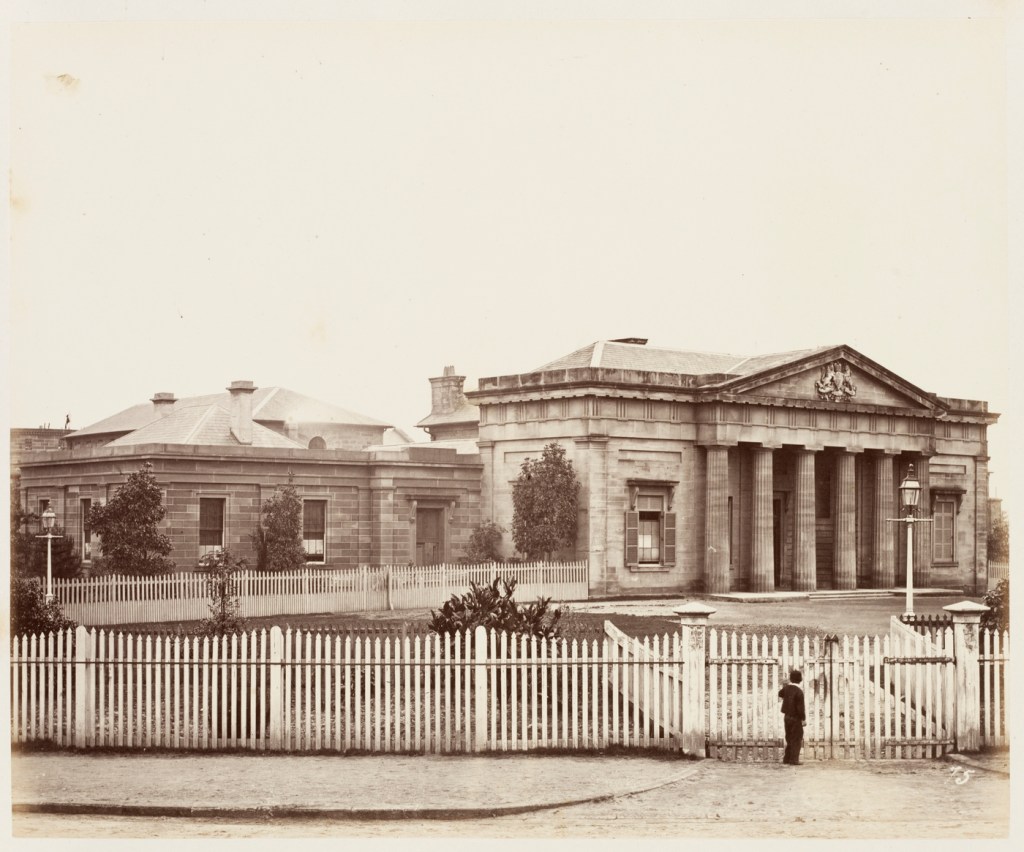
The prisoner was indicted for the crime on Monday last, the first of August. Mr W. J. Foster conducted the case for the Crown; Mr Buchanan, instructed by Mr Driver, appeared for the prisoner and conducted his defence.
The prisoner presented much the same appearance as on the day he was indicted. He stood up in the dock when the jury were sworn, but as soon as the first witness (his little daughter) was brought in, he sat down suddenly with his back to the Court.
The Crown Prosecutor opened the case, giving a brief outline of the facts which (as he was instructed) would be proved in evidence.
The first witness called was Mary Gray, daughter of the prisoner, an intelligent-looking child, of about 12 years of age.
Being sworn, she deposed to all the facts antecedent to the crime with which the prisoner stood charged; to his return from Sydney to his home, to his having come unexpectedly into tho house without noticing any of them; to his being in tears as he lay down on the bed; to his kissing his wife and children afterwards, and to his having his supper prepared by Mrs Gray; after supper they all went to bed, and the candle was put out; in the middle of the night witness was woke up by hearing heavy blows struck; she then heard her mother breathe hard; there was no light in the room then, but her father brought in a fire stick and lit a candle; the prisoner said, “You want a man, do you – you want to kill me, but you won’t get married within three weeks now”; he said she had rubbed ointment into his head, and it had given him pain; witness tried to get the infant away from under her mother, after she had been so struck, and while her father was standing by her mother, who was covered with blood, and did not answer her father when he spoke to her.
Witness did not hear any quarrelling at all before she was woke up by hearing the blows struck. Her father did not go to bed again after that, but remained up all night. In the morning he got his breakfast ready in the kitchen outside; he gave the baby some sugar to stop it from crying; when he had had his breakfast he went into the bedroom, and witness heard him say, “You are you not dead yet?” and then witness heard a heavy stroke; witness saw nothing in his hand when he then went into the room where her mother was lying, but she saw a large axe in the kitchen outside all covered with blood; it was in the morning early that she saw that; she saw the axe lying under the table in the kitchen when she went out to the breakfast; there were two axes; the large one – the one with the long handle – was given to Mr Moles; there was another smaller axe found in the room where the mother of the witness was killed; the long handled one was out in the kitchen, and the small handled one was found in the room.
“The prisoner,” said the witness, “ate his breakfast when he came out after he killed my mother”; he kissed the other children, but I and Julia would not kiss him, because he killed my mother, but he kissed us on the forehead; he gave my brother Robert some money; he went away, saying he would give himself up; I did not see him after he went away; my father and my mother. did not live on good terms of late – not for four or five months before all this happened; my father then began to quarrel with my mother constantly, and to say that she went out at night to meet men; I remember his seizing hold of her and trying to choke her, (the prisoner denied this); I did not see it, but I remember it happened; my father was always kind to me personally; my mother’s name was Jane Gray.
I remember that he said, when he came back from Sydney, that he had bought us three pair of boots and some butter and corn; he said this as he sat down by the fire, when he came out of the bedroom, where he lay down when he first came in; I recognise the clothes producedas being those which my mother wore when she was murdered; my father said, when he first came home, that there were men following him who wanted to throw him overboard; he then said also that he would be good, and would go to his work in the morning.
By Mr Buchanan: My father was kind and affectionate to my mother and to all of us five or six months before all this happened; I thought it very strange that his manner should become so changed; he said, when he so began to ill-treat my mother that she used to go out at night; my father came in unexpectedly on the night that he came home from Sydney; we did not know who it was; he went into the room at once, and throw himself down on the bed; when he came in he was crying; he did not speak; I did not think he was wrong in the head; it never occurred to me to think that he was; during the five or six months before the death of my mother he was sometimes kind and sometimes cross.
He brought home grog three times during the last five or six months; I think it was three times; he would, at such times, divide it all round; he is a very sober man; I never saw him drunk but once; I never heard my mother quarrelling with my father on that night; I was woke up by the blows; I was asleep at the time; my mother did not say anything to me about my father having come home crying; my mother was always affectionate to us all – to him and to us; my father had never been good during the five or six months before my mother’s death, as far as I know and believe, my mother was a good wife to him, and never gave him any cause to be jealous of her or angry with her: she did not go out at nights to meet men.
Robert Gray (an interesting little boy of eleven years of age, who had been taught to say his prayers by his late mother), being sworn, deposed that he was the son of the prisoner; he remembered the absence of his father from home before his mother’s death; his father was away at Sydney for seven or eight days; when his father came back he ran into the house and threw himself down on the bed and cried; “My mother,” said the witness, asked him “What ails you?” but he would not look up or answer her; afterwards he came out, and my mother boiled an egg for him for his supper, and he ate it.
He told us that he had three pair of boots for us, and some butter, and some corn, and that these were things coming down for us from Sydney; he was speaking kindly to us all then, and had kissed us all, myself, the other children, and mother; we all went to bed, my father first; there was no quarrel whatever between my father and mother; all was friendly between us; I was woke up by blows being struck in the dark; we were crying afterwards all the night: my father went out after the blows were struck and brought in a fire stick; my sister Mary pulled the baby away from under my mother: the child was crying at that time; I remember my father in the morning, strike my mother as she still lay bleeding in the bed, with the shorter handled axe; that was when he said to her “Are you not dead yet?”
By Mr Buchanan: My father was crying when he came in, and he laid down on the bed; he cried afterwards out at the door; my mother said she was glad he had come home; we did not know what to think of him, he ran a short stick over the outside of the wall of the house near the chimney, he looked frightened at that time, he said he had been followed by men, he was not drunk, he has been cruel to my mother since Christmas, he was kind to her before that time.
He frequently accused my mother of going out every night to be with men in the paddock; that was not true (a lie); my mother was a good woman; he got up soon from the bed, where he had thrown himself down; he got up in about a minute and kissed us all – my mother and the rest of us, my mother went to bed first, then the little ones, and then my father, I and my sister, Mary, being the eldest, were up afterwards, quenching the fire. I never heard one word of quarrelling between them that night, I went to bed, and fell asleep; I was awoke by my sister stepping (trampling) across my feet, I have heard my father speak of men following after him in the paddock — not that night.
The prisoner excitedly interrupted both of these witnesses on one or two of the immaterial facts of the case, but regarded most of their evidence with calm indifference.
William Pearson, a sawyer residing at Calderwood, being sworn, deposed: On the morning of the 1st of July I went to the prisoner’s house and saw a woman (Mrs Gray) lying insensible on a bed covered with blood: the sheets and pillows were covered with blood; I tried to move her; she appeared insensible; I saw a long handled axe in the kitchen, near the back door, covered with blood; I went away to Mr Moles’, where I saw the prisoner; I asked the prisoner “What he had done it for?” he said he had done for her, that he had murdered her – that she had kept pouring out something the doctor had given her upon his head – that that had given him a pain in his head – that the bloody wretch did not care how she punished him.
He said that his wife had sent men after him up to Sydney, hunting him about “like a bloody red shark”; that was all the conversation I had with him at that time.
By Mr Buchanan: I believe that the prisoner has been a sober man; I know that he did illuse his wife during the last three months; I was at the Police court when it was proved; I heard the prisoner say that men used to follow after him; I did not ever say much to him when I used to see him, except to bid him good day; I was not on bad terms with him.
Mr William Moles, being sworn deposed: I am magistrate; I live near the prisoner’s house at Calderwood; have known him about eleven years; he lived at the distance of about three-quarters of a mile from my house; about sunrise on the 1st day of July the prisoner came to my place and said, “I have killed my wife”; I asked him how he had killed her, had he killed her with a gun?; he said “No, with an axe”; I told him that he would be hung for it; said to him “Surely you are joking?” he said “No.” he said that he had come to me to give himself up; I asked him if his wife was really dead; he said “That he hoped she was”.
I then left him; he spoke afterwards to my wife about it; the prisoner said to me that he hoped his wife was dead; he said that then and afterwards, when going with me into Wollongong; with regard to his wife, he said that he had done it because she had criminal intercourse with other men; I do not remember the exact words; I left him in charge of a couple of men, and I went to his place to see if there was any foundation for what he had stated, and to take Mrs Gray’s declaration, if it should be required.
I saw Gray’s children at his house. I went into the bedroom and saw Mrs Gray lying in a bed on her side with her face to the wall; she was saturated with blood; Mrs Gray was in a state of insensibility, and could give me no answer, but she was still breathing and moved her right hand up to her head; I saw a short handled axe in the bedroom; Mr Pearson, one of the neighbors who came with me, showed me also a long handled axe he had found outside.
Sergeant Sheridan, stationed at Wollongong, being sworn, gave the necessary evidence in regard to the identity of the body of Mrs Gray examined by the doctor, and spoke as to the manner and general bearing of the prisoner whilst in his (witness’s) custody for this deed of violence. The officer deposed that the man seemed to him to be perfectly sensible on all topics but the one of jealousy; when anything was said that led to that, he became excited and incoherent. Dr Marshall attended Mrs Gray after she was found to be so severely hurt, and conducted the post-mortem examination at her death, five or six days afterwards.
This witness had received two letters purporting to come from deceased at the time that he must have been away in Sydney. In these letters the prisoner entered into an explanation as to why he had left his wife and family and had gone to Sydney.
The letters were both read in Court. They were rambling, and somewhat incoherent. In them the writer complained that he was persecuted by people who had followed him up to Sydney. The witness had been surprised at receiving these two letters. He had not had any such communication before. In one of the letters the writer explained that he had not quarrelled with his wife, but that she had consented to his coming up to Sydney. After the arrest of prisoner he spoke rationally, in witness’s presence, in all subjects but his supposed cause of jealousy.
He told Witness that he did not think the children were his. Witness believed (from all he could hear) that the prisoner had no cause whatever for his jealously of his late wife, who was well spoken of as a respectable prudent woman. The prisoner seemed indifferent as to his state.
Dr Marshall, of Wollongong, being sworn, deposed that he had been called in to see Mrs Gray on the 1st of July last; he attended her to the day of her death five days afterwards; her skull was badly fractured; witness made the post-mortem examination, anddescribed the exact nature of the injuries which had been inflicted on the deceased; she lifted her right hand when her head was being shaved but she never spoke [until] the time of her death.
By Mr Buchanan: I am inclined to think that the prisoner is not perfectly sane, but I think that he knew he was doing wrong in doing what he says he did; at the inquest I declined to state my belief positively as to whether the prisoner is or not insane; I am inclined to think that he is insane, but could not undertake to say (from what I have little seen of him) whether he is so or not; I do think his sanity doubtful; the fact that he was in the habit shedding tears frequently is a not an uncommon symptom of insanity. The learned counsel for the defence here recapitulated the statements of the two children as to the behaviour of the prisoner when he came back to his home from Sydney &c., and asked witness whether he thought that the behaviour described looked like the proceedings of a sane man.
The witness said that he thought such manner and conduct very foolish, and that such might perhaps be looked upon as proofs of insanity; he, however, could not undertake to say that the man was insane; witness was quite aware that there were persons perfectly sane on all points but one, and on that maybe absolutely mad; it was not an uncommon thing that such should be the case.
By Mr Foster: There was only one point upon which the prisoner appeared to be wrong in his head – that which I have mentioned; on all other points he was perfectly sane.
By Mr Buchanan: I have heard of the cases of which you speak (Macnaughten’s case and others), but it takes a long time, in some instances, even for an expert to find out the precise topic or point upon which an insane person’s mind is totally unsound.
The Rev. John Dwyer, Roman Catholic clergyman of St. Benedict’s Church, Sydney, being sworn and deposed that he knew the prisoner; he was in Sydney about two months ago, as near as witness can recollect, he came to witness in much mental distress; he told witness that persons were then pursuing him, following him about everywhere, he had seemed to witness at that time to be a man of unsound mind, witness believes him to [be] a monomaniac.
Thomas O’Neill, a settler, residing in the same locality as the prisoner, being sworn, deposed that he knew the prisoner; he had been living in the same neighbourhood for many years past; he saw him on the 10th of April last, at that time he had a conversation with him; the prisoner accused his wife of being criminally connected with other men, he stated to witness that men used to come into his paddock after dark to try to see his wife, understood the prisoner to say that these men came after his “missis”; thought that he was jealous, cannot say whether his jealousy was of such a character that his mind was affected thereby. Mrs. Gray was not, in witness’s opinion, a person of attractive appearance – nor a “person of any extraordinary beauty.”
Michael Byrne, another settler residing in the same neighbourhood, being sworn, deposed that he had known the prisoner for seven years past; remembered the night when Mrs Gray was very nearly murdered – so ill-used that she died after it; a short while before that time the prisoner had been to witness’s place; he then told witness that he had been followed about by a man named Beatson, of Macquarie River (in the neighbourhood of Calderwood), and by a man named Pryor, or Crier, of Shellharbor.
He told witness that these two men had followed him recently up to Sydney, and seemed to be very uneasy about them; he dined with witness and witness’s wife; there was a respectable woman dining there with them at that time, and prisoner took something into his head about that woman; he said “she was a bad woman and connected with his enemies“; witness told him it was no such thing, and that she was a highly respectable person – as she really was;
“Whilst prisoner was talking to me,” said the witness,” he stopped suddenly and asked me if I heard two men talking; I said “no – what are they saying?”
The prisoner answered: “They said they were digging a hole to bury me in.’” I said, “Nonsense, man.”
This was pure imagination because no one was within hearing or speaking at the time; I said to my wife afterwards, “that man is not right in this head.”
Being asked by the learned Counsel for the defence *whether he thought there was any truth in the notion of the prisoner that he had good cause for jealousy, witness answered, “I should be astonished if there was any ground for it; I think not,” Being further interrogated the witness said, “I never knew the prisoner to be fond of liquor; he is a sober man.”
James Hart another neighbor and fellow settler, being sworn, deposed that he knew the prisoner; saw him towards the end of June, when he came back from Sydney, he came to witness’ house and sat down and conversed with witness; he said that he couldhave got a place at Sydney for £37 a year, but for the persons who followed him up there from the Macquarie River; he said that they had stopped at the lodging-house where he was; he said he believed that their object had been and was to kill him. He did not say that they followed him about whilst he was in Sydney, but they were there.
He also said he had got up in the night at his first lodgings and had seen a cab at the door; that he had thereupon left that lodging and gone to live elsewhere. He told witness all this on the 29th of June. He made the remark that he was frightened of these two men. He seemed rather uneasy, but he talked quiet and steady.
William Wilson, master mariner (the captain of a coasting vessel called the Dairymaid), being sworn, deposed that he had known the prisoner for the last twelve years; prisoner came on board to go back by the Dairymaid. on the 27th June last. His conduct whilst on board seemed to witness to be very strange.
He came forward to witness and said that he was frightened of the “boys”. Witness told him that he need not be so. He stayed on board some considerable time. He was for most part silent, but restless. He kept looking every minute at the clock, and shifting his feet about. He did not speak much. He went away.
John Foley, produce agent in Sussex-street, knew the prisoner, who had been at his (witness’s) place towards the end. of June last. He inquired of witness what was the character of the lodging house he was staying at; he said there were two people in the same room with him, and he was afraid of them; he thought he was not safe from them; he said he thought he might be robbed and murdered by them; he did not seem to be much excited about it; witness advised him, if he did not like his lodgings, to change them.
James Quin, being sworn, deposed that he kept a lodging house in Sydney; the prisoner lodged with him three days; he was very fidgety and flighty giving annoyances to the other lodgers; they all thought him touched in the head; he talked foolishly; he complained of the agent delaying him in Sydney; men who then lodged with me have since left the colony.
Sergeant William Lawlor, being sworn, deposed that he saw him at No. 1 watchhouse in the latter days of last June; he came there and asked if there was a letter for him; he said he had written to Sergeant Sheridan, at Wollongong, and that he expected a reply; witness asked what made him think that Sergeant Sheridan would write to him there; the prisoner said he thought he would go back to his district; he said that he thought there were people at his lodgings who were trying to do him an injury; that had been why he had left the lodging he had occupied; his manner was so strange that witness asked if he had been drinking.
Constable William Lee. stationed at Newton [Sydney suburb], deposed that he saw the prisoner at Newtown towards the end of June last; he was called upon to make the man leave the premises of the residence occupied by the Roman Catholic priest of that borough; the prisoner said he was doing no harm; witness that nevertheless he would have to go. He said [he] only wanted to see the priest. He went out when witness told him that he had to go; he asked witness if he could stop at his (witness’s) place. Witness told him that he could not. Witness said, “If you want to see a priest you can see one in Sydney.” Witness advised him to go into Sydney.
The prisoner began to speak of his private affairs, and witness told him that he did not wish to hear of them. He spoke of some differences or troubles between himself and his wife. Witness advised him to go back to home and make it all “straight” again; he said (before he went away) remember, my name is “Gray” if anything should happen. Witness saw him into an omnibus going into Sydney, and directed the omnibus to stop at St Benedict’s Church the Rev. John Dwyer’s.
Patrick Rourke, a lad aged about 15 years, a servant of the Rev. Paul Fitzpatrick, the Roman Catholic priest stationed at Newtown, deposed the prisoner had called a short time ago, that constable Lee was sent for. The prisoner would not go away. Father
Fitzpatrick was not at home. The man told me that some men were trying to do him some harm, and he wanted to see the priest about it.
J.C. Read Governor of the gaol, deposed that he knew prisoner; he came into his charge about a month since – on the 7th of July: from what he saw of him he took him out of the usual trial ward and had him placed in the insane prisoner’s department; the man continued for some time in that ward under the special supervision of Dr. Aaron; he was afterwards returned by that officer to the ordinary trial ward; subsequently however, he had been sent back into the insane department. The object of the witness was that Dr Aaron (the proper officer) might be enabled to state legally whether the man was insane.
Mr Buchanan proceeded to address the jury in an argumentative and eloquent speech, in defence of the unhappy man whose cause he had generously undertaken in compliance with the special request of theJudge. The learned barrister began by saying that he was not more persuaded of his own sanity than he was convinced of the fact that the prisoner was insane – that he was the victim of a strong and terrible delusion, under the awful and potent influence of which he had been irresistibly hurried on to the commission of this most dreadful deed.
The apparently rational manner and conduct of the unfortunate being before, then, the wreck of what was once a responsible man, was no proof whatever of his sanity, which being one of the many mysterious phenomena of madness which were so often to be observed. All of the witnesses, both for the Crown and the defence. allowed that the prisoner was rational on all subjects but the one, and that on that – jealousy of his ill-fated wife – he was at once wild and incoherent, and betrayed symptoms, in greater or less degree, of absolute insanity.
Not one witness denied that. In all that had been placed on testimony, both for the
Crown and for the accused, he should entreat the jury to remark that not one word had been said, not one insinuation made against the character of the wife. There had evidently not been one shadow of truth, one scintilla of foundation for the sad, the fatal hallucination which had unhappily seized upon the mind of the prisoner against his wife. Always sober and always kind and affectionate to his family, it had been clearly shown that it was not until some sudden mental change had taken place that his actions exhibited a corresponding change.
An insane, horrible, groundless delusion appeared to have crept upon him, daily gaining strength until he ceased to become a fair agent, intellectually and morally – until the slave of the one dominant idea on which his mind was irretrievably and hopelessly unsound. He had capricously sudden changes of mood that was a well-known characteristic of insanity, and he had also that tendency to burst into tears, without any apparent cause, which was another of the marks of the hapless state of the insane. The governing, the directing power of the mind was utterly gone, and in this state, urged on by some sudden access of fury consequent upon the delusion by which he was enthralled, this unhappy wreck of a man had committed that act for which – under all the circumstances of the case, as disclosed by the evidence – it was impossible in any other way to account.
The learned counsel insisted strongly and eloquently upon the accumulative nature of insanity afforded by all the evidence of the case, comparing the man, as described before this hallucination possessed him, to what he had been during the last six months. His whole conduct had been changed, until at length the morbid delusion had hurried him into the most revolting crime; for that the deed was committed, and committed by this most unhappy man was beyond all shadow of doubt; and if the jury found him guilty of it (and guilty they must find him if they did not find him insane), the result would be his death upon the gallows. Nothing on earth could save the man from the hands of the executioner in expectation of this most revolting and cruel deed, but the presumption that he was of unsound mind, and a verdict of the jury to that effect.
That verdict they ought to give, and were bound to give, for all the evidence conclusively pointed to it, and to no other. In proof of this, the learned counsel here proceeded to analyse the evidence of Dr Marshall, and that of the Governor of the gaol, specially adverting to the fact that the man had within the last few days to be again sent back to the insane ward. In the opinion, also, of the Rev John Dwyer, a competent witness, this poor man was a monomaniac.
The evidence of his children and of his neighbours, and all who had come in contact with him, pointed to the same conclusion. And this conclusion was that he was not a responsible being; that when he committed this most appalling crime, he was no
longer subject to the control of reason. To the same conclusion pointed the incoherent letters which had been addressed to Sergeant Sheridan, which had been read in Court. The whole case, in his opinion, was one of the most complete exemplifications of the
phenomena of madness which had ever come under his notice. He left the case in their hands – with the most perfect confidence, relying upon a verdict of acquittal on the ground of insanity.
Mr Foster replied: If the killing in this lamentable case were proved, it would be for the jury to consider whether their verdict should be murder or manslaughter, or not guilty on the ground of insanity The defence set up was a plea of insanity – a defence which ought to be very clearly made out before it could be entertained. The fact of the commission of any great crime was but too apt to dispose men to entertain a presumption of insanity. But jurors must not be led away by their feelings. The law on this matter was that sanity in all cases was to be presumed until the contrary should be clearly proved.
Of course if a man was absolutely insane, he was altogether irresponsible. Partial insanity, however, was not sufficient to constitute the grounds of a
verdict of not guilty. Partial insanity did not exempt from responsibility; it did not affect the question except in so far as the thing done arose out of the action of that part of the mind diseased. The law was that every man should be presumed to be sane. If only partially insane, he was answerable to the law equally as if he had been in the full possession of his faculties at the time. He objected to the argument of the counsel for the defence in regard to the results apprehended to follow from their returning a verdict of not guilty. They had their duty to do, and after they had done, the duty of the Executive began.
His Honor summed up, and in so doing expressed his obligation to the learned counsel and to the solicitor, Mr Richard Driver, for the ability and energy with which they had undertaken the defence of the prisoner. No doubt the evidence of the doctor, of Sergeant Sheridan, and of the two children, had incontestably proved the killing of this woman; even the prisoner himself admitted it. The question for the jury was, was the prisoner insane at the time he committed the act, or not; or was he but partially insane and so far partially insane as not to be irresponsible. The learned Judge referred to McNaughton’s case which had been mentioned by Mr Buchanan, and he cited also a case wherein Baron Rourke, in summing up, had pointed out that it would be very
dangerous ground to take that a man was to be presumed insane because “no motive could be assigned for his criminal act.”
His Honor recapitulated much of the evidence, pointing out the bearing of certain points upon the question as to the guilt of the prisoner. He drew particular attention to the supposed idea which the prisoner had entertained to his wife pouring ointment on his head and causing him pain thereby.
The jury retired to deliberate, and after an absence of nearly two hours returned a verdict of guilty, but with a recommendation to mercy on account of the children.
The prisoner received the verdict with apparent unconcern. Being asked what he had to say why sentence of death should not be passed upon him, the prisoner said two men had followed him to the steamer when he left Sydney. He had been obliged to ask
the Boarding housekeeper to accompany him for fear he should be attacked. He did not much care now whether he were killed inside the gaol or outside of it. He had sought the protection of the Police Office at the Newtown Station, and at the Central Police Office for fear of the same thing. One man had followed him on board the Illalung [the steamer that took him up to Sydney; MG]. His wife swore, when he was put in gaol at Wollongong, that he was mad.
[He said] There was no law for the poor man. He did not want to escape death because he gave himself up to the police. He only put the gun up to his wife when she had
him up at Wollongong. He did not ill-use her. His Honor could pronounce what judgement he liked. The statement of the unhappy man was but partially audible
in the court. His Honor said a more terrible murder has seldom been brought before the Court. The victim was his own wife whom he had cut to pieces with an axe. It was a crime of the most brutal and horrible character.
The Judge then passed the sentence of death upon the prisoner, telling him that he could not hold out any hopes to him on the commendation to mercy. The prisoner asked to see his children. but his Honor said he could make no order. He understood that they refused to see him in the morning. The prisoner was then removed from the dock.
Article 2
Smith’s Weekly
SAT 27 DEC 1919
The Calderwood Crime: Mr and Mrs John Gray – and the madness that came between
by The Man in the Mask
Jane Gray was a homely woman. Everybody said so. Her manners were homely and her features were homely. She was strong and well-built. No one ever accused her of beauty with the exception, strange to say, of her husband. Like all his other accusations it was not based on truth. That smile of hers, which meant to others but a sign of patient cheerfulness, was interpreted by Mr. Gray as one of the lures of a Clytaemnestra. Mr. Gray was going to play no Agamemnon to his wife if he knew it! [Excerpt]
 Furin Chime Press™
Leave a comment